
If you're searching for a direct comparison between Hydrant and Liquid IV, the short answer is: they are solving the same problem with meaningfully different formulas, and the right pick depends on whether your body responds better to moderate sodium or aggressive rehydration. Hydrant costs $2.50 per stick versus Liquid IV at $1.56 per stick — a 60% price premium for roughly half the sodium, one-third the sugar, and a plant-based ingredient profile. Neither is a scam. But they are not interchangeable, and this guide walks through exactly where each one wins and where each one doesn't.

Affiliate disclosure: this article contains affiliate links. As an Amazon Associate, UsefulVitamins.com earns from qualifying purchases at no extra cost to you.
The 30-second answer
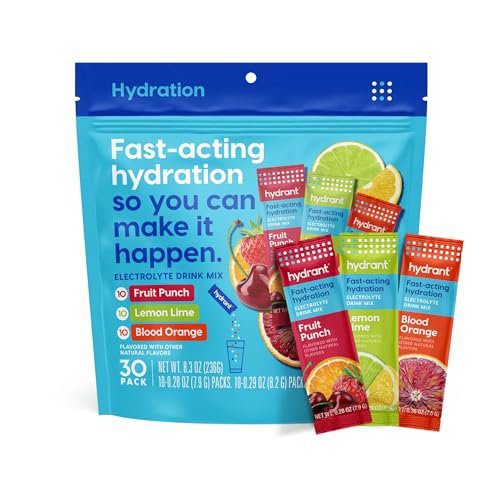
Hydrant is the cleaner, more expensive option: $2.50 per stick, 260mg sodium, 4g cane sugar, plant-based, no artificial colors. Liquid IV is the higher-dose, lower-cost option: $1.56 per stick, 510mg sodium, 11g sugar (sucrose plus dextrose), owned by Unilever.
Buy Hydrant if: You want lower sugar, cleaner ingredients, and moderate electrolyte support for everyday hydration — and you're willing to pay a premium for it.
Buy Liquid IV if: You need aggressive rehydration after heavy sweating, illness, or alcohol, and cost-per-stick matters more than sugar content.

Side-by-side at a glance
| Hydrant | Liquid IV | |
|---|---|---|
| Price per stick | $2.50 ($30 / 12-pack) | $1.56 ($24.99 / 16-pack) |
| Sodium | 260mg | 510mg |
| Potassium | 200mg | 370mg |
| Magnesium | 75mg | Not listed |
| Sugar | 4g (cane sugar) | 11g (sucrose + dextrose) |
| Calories | ~20 | ~45 |
| Artificial colors | No | No |
| Plant-based | Yes | Not certified |
| Parent company | Independent | Unilever (acquired 2020) |
| Subscription available | Yes | Yes |
Pricing based on standard Amazon 12-pack (Hydrant) and 16-pack (Liquid IV) as of May 2026. Prices fluctuate.
Where Hydrant wins
Lower sugar load with a cleaner source. Hydrant uses 4g of cane sugar per stick versus Liquid IV's 11g of sucrose plus dextrose. That 7g difference is not cosmetic. If you're mixing electrolytes into daily hydration — say, two sticks per day — Liquid IV adds 22g of sugar to your diet before you eat a single meal. Over a month of daily use, that's roughly 330g of added sugar from your hydration product alone. Hydrant keeps that number at 120g over the same period. The sugar source matters too: cane sugar is a single disaccharide; the sucrose-dextrose combination in Liquid IV front-loads glucose absorption more aggressively, which is useful for rapid rehydration but less useful for steady daily use.
Magnesium coverage. Hydrant includes 75mg of magnesium per stick. Liquid IV's standard formula does not list magnesium on its label. Magnesium plays a direct role in muscle relaxation, sleep quality, and electrolyte balance — it's often the mineral that's most depleted after heavy exercise or heat exposure. Getting 75mg from your hydration product is a meaningful addition, particularly for anyone not supplementing magnesium separately.
Plant-based formulation. Hydrant markets itself as plant-based with no artificial colors or flavors. For people sourcing products that align with a plant-based diet or who are sensitive to synthetic dyes, this is a non-trivial distinction. Liquid IV's standard formulas do not carry a plant-based certification.
Moderate sodium is sufficient for most daily contexts. The ORS (oral rehydration solution) framework that both products reference works across a range of sodium concentrations. For everyday hydration — desk work, moderate exercise, general wellness — 260mg of sodium per stick is physiologically adequate. The higher sodium dose in Liquid IV is an advantage in specific dehydration scenarios (see below) but becomes irrelevant, or counterproductive, for users whose daily diet already includes substantial sodium from food.
Where Liquid IV wins
Higher electrolyte dose for serious dehydration scenarios. 510mg of sodium per stick is close to clinical oral rehydration solution territory. WHO ORS formulation specifies 2.6g of sodium chloride per liter, which translates to roughly 1,000mg of sodium per liter of fluid. Liquid IV at 510mg per 16oz of water (roughly 500ml) sits at approximately 1,020mg per liter — nearly at WHO ORS levels. For genuine dehydration from illness, a long race, heavy heat exposure, or a bad hangover, that dose delivers faster fluid retention than Hydrant's more moderate 260mg. The potassium at 370mg (versus Hydrant's 200mg) reinforces this advantage in high-sweat scenarios where potassium loss is substantial.
Lower cost per stick. $1.56 versus $2.50 is a 37% cost difference per serving. If you're using two sticks a day, Liquid IV costs $93.60 per month versus Hydrant at $150. Over a year that's a $676 gap. The cost difference is real and compounds at volume. For households using electrolyte sticks as a daily ritual rather than an occasional supplement, that math is difficult to ignore.
Wider availability and flavor range. Liquid IV is sold in Costco, Target, Walmart, CVS, and most grocery chains in addition to Amazon. Hydrant's retail presence is more limited. If you want to pick up electrolyte sticks without planning ahead or waiting for delivery, Liquid IV is easier to find in most markets.
The Unilever footnote. Liquid IV was acquired by Unilever in 2020. Some buyers care about this; others don't. From a supply-chain and quality-consistency perspective, Unilever's manufacturing infrastructure means Liquid IV has industrial-scale batch consistency. The trade-off is that the brand is now a portfolio asset of a $50B CPG conglomerate rather than a founder-run company — which affects neither the electrolyte formula nor the price, but matters to buyers who weight brand independence in their purchase decisions.

The DIY angle
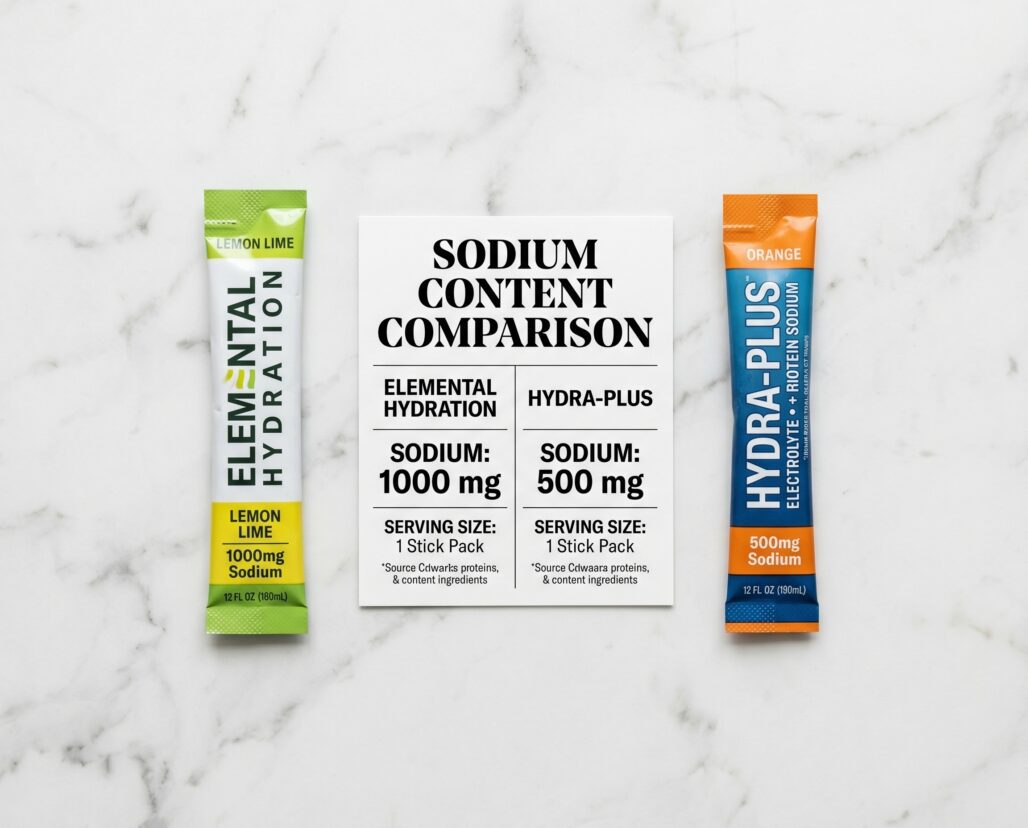
Both products price out at a meaningful premium over what it costs to make a functional electrolyte mix at home. A liter of DIY ORS — 1/4 teaspoon of salt (600mg sodium), a pinch of potassium chloride (No-Salt or Nu-Salt), a small squeeze of lemon — costs roughly $0.08 to $0.15 per serving depending on what you buy and in what quantities. Neither Hydrant nor Liquid IV can compete with that on price, and neither claims to.
What you're paying for in both cases is convenience packaging, flavor engineering, and the subscription infrastructure. Hydrant's $2.50/stick is a premium over DIY of roughly 16x. Liquid IV's $1.56/stick is a premium over DIY of roughly 10x.
If you go the DIY route, the formula that most closely tracks Hydrant's electrolyte profile: 1/4 teaspoon kosher salt (approximately 590mg sodium, so slightly higher — use a light 1/5 teaspoon for 260mg), a small pinch of Morton No-Salt (potassium chloride, approximately 200mg potassium per 1/8 teaspoon), 1/8 teaspoon magnesium glycinate powder (approximately 75mg elemental magnesium), juice of half a lime, and a touch of honey or cane sugar to taste. Mix into 16oz of water. Total cost: under $0.20 per serving.
This is not a recommendation to skip both products. Convenience has real value, especially for people who won't reliably mix a DIY solution before a workout or at their desk. But if you're debating Hydrant versus Liquid IV primarily on price, the DIY option reframes the question entirely.
Verdict by use case
| Scenario | Better pick | Reason |
|---|---|---|
| Daily desk hydration | Hydrant | Lower sugar, magnesium included, moderate sodium appropriate |
| Post-workout (light to moderate) | Hydrant | Adequate electrolyte replenishment without sugar overload |
| Post-workout (heavy sweat, 60+ min) | Liquid IV | Higher sodium and potassium for serious fluid loss |
| Illness recovery / GI dehydration | Liquid IV | Near-ORS sodium levels support faster fluid retention |
| Hangover recovery | Liquid IV | High-dose sodium and potassium address acute electrolyte deficit |
| Plant-based diet | Hydrant | Plant-based certified; Liquid IV not certified |
| Daily use at volume (budget matters) | Liquid IV | $0.94/stick cheaper; saves $340+ annually at two sticks/day |
| Sensitive to sugar or diabetic-adjacent | Hydrant | 4g vs 11g sugar; cane sugar vs sucrose+dextrose |
| Retail availability / no planning | Liquid IV | Available at Costco, Target, Walmart nationwide |
| Buying independently branded products | Hydrant | Independent; Liquid IV is now a Unilever property |
The subscription question
Both Hydrant and Liquid IV offer subscription pricing with a discount — typically 10-15% off the single-purchase price. Before subscribing to either, confirm three things: how many days' notice is required to cancel before the next billing cycle, whether cancellation can be completed online without contacting customer support, and whether you can pause the subscription without cancelling it.
Subscriptions for consumable products are commitments with friction built in. The discount is real, but it's also the mechanism that funds a customer retention system you'll eventually need to navigate. If you're buying to test whether you like the product, buy a single pack on Amazon first. Subscribing before you know your actual usage rate is the most common way people end up with a cabinet full of unopened electrolyte sticks and a pending charge they forgot about.
Settled on one? StackMyMed (our companion app) lets you scan the label and log it into your routine, then watches for overlaps and interactions across your whole cabinet.
Related reading
- Is Hydrant worth it? Full breakdown
- Is Liquid IV worth it? Full breakdown
- Hydrant alternatives on Amazon
- Liquid IV alternatives on Amazon
- How we review supplements
For 2026 pricing across DTC supplement subscriptions and their Amazon equivalents, see our DTC supplement pricing reference.
As an Amazon Associate, I earn from qualifying purchases. Product recommendations are based on real reviews and independent research.
This article is for informational purposes and not medical advice. Electrolyte supplements can interact with medications and health conditions, particularly for individuals managing blood pressure, kidney function, or diabetes. Consult a licensed physician before adding any supplement to your routine, especially if you are pregnant, nursing, taking prescription medications, or managing a chronic condition.
As an Amazon Associate, I earn from qualifying purchases. Product recommendations are based on real reviews and independent research.
Editorial independence note: UV earns affiliate commissions from Amazon and (selectively) from DTC brand affiliate programs. Commissions never determine our recommendations — top picks are chosen first; affiliate links are added second. Read our full methodology and editorial independence policy →
Frequently asked questions
What is the main difference between Hydrant and Liquid IV?
Hydrant uses moderate sodium (260mg) and low sugar (4g cane sugar) with added magnesium and plant-based ingredients for daily hydration. Liquid IV uses high sodium (510mg) and 11g of sugar (sucrose plus dextrose) for aggressive rehydration, and is cheaper per stick at $1.56.
Is Liquid IV better than Hydrant for hangovers or illness?
For rapid rehydration after alcohol, illness, or heavy sweat, Liquid IV’s higher 510mg sodium and glucose-forward sugar blend speed fluid absorption, making it the stronger choice. Hydrant’s lower dose is built for steady daily hydration rather than acute recovery.
Which has less sugar, Hydrant or Liquid IV?
Hydrant has far less sugar, 4g of cane sugar per stick versus Liquid IV’s 11g of sucrose plus dextrose. Over daily use that is roughly 120g of added sugar per month from Hydrant versus about 330g from Liquid IV.
