
If you're searching for Liquid IV alternatives, the short answer is: you can cover the same core hydration function for $0.30 to $1.20 per serving on Amazon. Liquid IV charges $1.56 per stick at its DTC price — or $13-$14 for the same 16-stick pack via Amazon Subscribe & Save, which is roughly half the price for the identical product. Whether any of the alternatives below are actually better for you depends on your sodium needs, your sugar tolerance, and whether you're buying hydration for a casual workout or a clinical recovery situation. This guide breaks it down with real prices, not hand-waves about "cheaper options."
Affiliate disclosure: this article contains affiliate links. As an Amazon Associate, UsefulVitamins.com earns from qualifying purchases at no extra cost to you.
Why people seek alternatives to Liquid IV
Liquid IV costs $24.99 for 16 sticks at the DTC site — $1.56 per stick. On a subscription that same 16-pack drops to around $13-$14 via Amazon Subscribe & Save, or roughly $0.85-$0.88 per stick. That Amazon S&S price is already a meaningful improvement, but it comes with its own friction: Subscribe & Save locks you into a delivery cadence, and canceling or pausing requires going into your Amazon subscriptions dashboard to manage it manually. That's a commitment most people don't think through at checkout.
The formula itself is worth looking at before assuming it's worth the premium. Liquid IV's Cellular Transport Technology (CTT) marketing is built on the sucrose-to-sodium ratio matching the WHO Oral Rehydration Solution (ORS) protocol — a legitimate mechanism for enhanced water absorption via the sodium-glucose cotransporter (SGLT1) in the small intestine. The actual per-stick numbers: 510mg sodium, 370mg potassium, 11g of sugar (sucrose and dextrose combined). That sugar load is functional, not incidental — it's what activates the transport mechanism. But for anyone on a low-sugar diet, managing blood glucose, or simply not exercising hard enough to need 11g of sugar in their hydration drink, it's more than necessary.
There are also people who want fewer additives, higher sodium doses for endurance use, or a tablet format that's easier to travel with. The alternatives below address all of those use cases at prices that range from $0.30 to $1.20 per serving.
How we picked
We evaluated five Amazon electrolyte products against four criteria:
- ORS proximity — Does the formula approximate WHO ORS sodium-to-glucose ratios, or does it take a different hydration approach (tablet, low-sugar, high-sodium)?
- Cost per serving — Calculated from the most common Amazon pack size at May 2026 pricing. Prices fluctuate.
- Sodium dose — Compared against Liquid IV's 510mg benchmark and ACSM guidelines for sweat-loss replacement.
- Sugar content — Whether the product matches, exceeds, or eliminates Liquid IV's 11g sugar load.
No product on this list is a perfect analog to Liquid IV. Each one makes a different trade-off. We flag the exact trade-off for each pick.
Comparison at a glance
| Brand | $/serving | Sodium | Sugar | Best for |
|---|---|---|---|---|
| Liquid IV (reference) | $0.85-$1.56 | 510mg | 11g | General hydration, CTT mechanism |
| Nuun Sport Electrolyte Tablets | $0.30 | 300mg | 1g | Everyday low-sugar hydration |
| Hydralyte Electrolyte Powder Sticks | $0.50 | 450mg | 5.8g | ORS-grade clinical rehydration |
| Pedialyte Electrolyte Powder packets | $0.85 | 370mg | 7g | Athletic recovery, clinical-grade |
| Re-Lyte Electrolyte Powder (Redmond) | $1.20 | 810mg | 0g | Keto, heavy sweaters, fasted training |
| Ultima Replenisher Electrolyte Powder | $0.60 | 55mg | 0g | Light activity, sugar-free priority |
Prices are estimates based on the most common Amazon pack size at May 2026 pricing. Amazon S&S discounts vary.
The picks
Top Pick: Nuun Sport Electrolyte Tablets

At $0.30 per tablet, Nuun Sport is the cheapest functional electrolyte product on this list — and the format is genuinely different from anything else here. These are effervescent tablets, not powders or sticks. Drop one in 16 oz of water, wait two minutes, drink. That means they're portable in a way that stick packs aren't: a single tube of 10 tablets fits in a jersey pocket, a pill organizer, or a carry-on toiletry bag without any leakage risk.
The formula is intentionally leaner than Liquid IV: 300mg sodium per tablet versus Liquid IV's 510mg, and roughly 1g of sugar (a small amount of dextrose is included as a tablet binder, not as a transport activator). Potassium sits at 150mg compared to Liquid IV's 370mg. You're not getting the WHO ORS sodium-glucose ratio here — Nuun is not an ORS product. The mechanism is simpler: replace electrolytes lost through sweat, maintain fluid balance, skip the sugar spike.
The trade-off: If you're doing high-intensity exercise for more than 90 minutes, or if you're recovering from illness-related dehydration, Nuun's lower sodium dose and minimal sugar may underperform Liquid IV's active transport mechanism. For everything else — a hot commute, a yoga class, daily hydration without added sugar — Nuun is the cleaner and substantially cheaper option.
Skip if: You need ORS-grade rehydration after vomiting, diarrhea, or extended endurance output. The sodium and glucose ratio won't activate SGLT1 transport the way Liquid IV's formula does.
Actionable takeaway: Nuun Sport is the right call when you want daily electrolyte maintenance without sugar, at a price ($0.30) that makes you comfortable using two tablets on a long day instead of rationing sticks at $1.56 each.
Budget Pick: Hydralyte Electrolyte Powder Sticks

Hydralyte is the most direct functional analog to Liquid IV on this list. The formula is built explicitly to match WHO ORS specifications — the same standard Liquid IV markets its CTT mechanism against — at 450mg sodium per stick and a glucose-to-sodium ratio within ORS range. The difference is price: approximately $0.50 per stick versus Liquid IV's $0.85-$1.56 per stick.
Where Liquid IV uses 11g of sugar (sucrose plus dextrose), Hydralyte uses approximately 5.8g of glucose. Both activate the SGLT1 cotransporter. Hydralyte's lower sugar load means a somewhat smaller osmolarity window, but still within effective ORS territory. The brand is Australian and has clinical positioning — it's used in pharmacy settings for post-illness rehydration, not primarily marketed as a fitness product.
The trade-off: Hydralyte's flavor options are more limited than Liquid IV's extensive variety pack portfolio, and the brand has lower name recognition in North American fitness communities. The formula, however, is doing the same job at 32-57% lower cost per stick.
Skip if: You're specifically looking for a sugar-free product. Hydralyte's ORS mechanism requires glucose — there is no zero-sugar version of this formulation that still works the same way.
Actionable takeaway: Hydralyte is the correct pick when ORS-grade rehydration is the actual goal and $1.56/stick is more than you want to spend to get it. At $0.50/stick, you can afford to use it every day rather than saving it for only the worst hangovers or illness recovery situations.
Best for Athletes: Pedialyte Electrolyte Powder packets

Pedialyte is a pediatric rehydration product, which means it is manufactured to a more tightly monitored standard than most adult sports hydration products. It is regulated as a medical food, and its formula — 370mg sodium, 7g sugar, 280mg potassium per packet — is designed for clinical dehydration correction, not just sweat replacement. At approximately $0.85 per packet, it overlaps with Liquid IV's Amazon S&S price, but the formula and manufacturing oversight are meaningfully different.
The reason this belongs in a Liquid IV alternatives guide is that many adult athletes have discovered Pedialyte powder after using the liquid version for post-race recovery. The powder format is more portable and cost-effective than the pre-mixed liquid, and the formula's sodium-to-glucose ratio sits within the ORS range — similar to Liquid IV's mechanism, but with a lower sugar ceiling and a formula that hasn't changed based on marketing cycles or flavor launches.
The trade-off: Pedialyte is not optimized for taste in the way that Liquid IV is. The flavor options are functional rather than curated, and the sweetness level is calibrated for a child's palate — which some adults find too mild. It also carries the pediatric branding, which some people find awkward to order in bulk on Amazon. Neither of those are formula problems.
Skip if: Sodium dose is your primary athletic concern. At 370mg sodium, Pedialyte trails Liquid IV (510mg) and falls well short of high-sodium options like Re-Lyte. Heavy sweaters doing endurance events in heat will want more sodium per serving.
Actionable takeaway: Pedialyte powder is for people who want the clinical rehydration mechanism with FDA-monitored manufacturing at a price that matches Liquid IV's best Amazon deal. If you're recovering from a stomach bug, a long race, or a day of travel dehydration, this is the most medically grounded option at this price point.
Best for Keto: Re-Lyte Electrolyte Powder (Redmond)

Re-Lyte from Redmond is a fundamentally different product from everything else on this list. It delivers 810mg of sodium per serving — 59% more than Liquid IV — with zero sugar, zero glucose activator, and a high-mineral profile that includes magnesium and chloride. The sodium comes from Redmond Real Salt, the brand's whole-food mineral salt sourced from an ancient seabed deposit in Utah.
At $1.20 per serving it is the priciest alternative on this list, but it's targeting a different need than $0.30 Nuun tablets. This is the product for people who are: on a ketogenic diet (where insulin suppression increases kidney sodium excretion dramatically), training fasted in the morning, doing long-duration endurance output in heat, or simply finding that standard sports drinks leave them cramping because the sodium dose isn't high enough.
The formula has no sucrose, no dextrose, no fructose. The hydration mechanism is passive osmotic gradient rather than SGLT1 transport — you're relying on adequate water intake alongside the electrolytes, not the sugar-sodium cotransporter. For people who drink plenty of water and primarily need electrolyte replacement rather than accelerated water absorption, this works fine.
The trade-off: At $1.20/serving, Re-Lyte is more expensive than Liquid IV's Amazon S&S price ($0.85-$0.88). The value case is the formula — 810mg sodium versus 510mg, no sugar, food-sourced minerals — not the absolute dollar amount. If you don't need high sodium and you don't care about keto compatibility, the premium isn't justified.
Skip if: You're looking for the cheapest option, or if your activity level doesn't generate the sweat volume that warrants 810mg sodium replacement. Using a high-sodium product as casual hydration when you're not sweating significantly can push daily sodium intake into ranges that may be problematic depending on your cardiovascular health.
Actionable takeaway: Re-Lyte is the right call for keto dieters, fasted trainers, and endurance athletes who keep cramping on standard electrolyte products. The higher price is paying for a substantially higher sodium dose and zero sugar — both of which matter specifically in those contexts.
Best Value Per Stick: Ultima Replenisher Electrolyte Powder
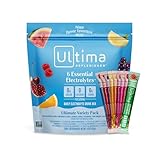
Ultima Replenisher is the best option on this list for people who want a pleasant-tasting, zero-sugar electrolyte product at a price meaningfully below Liquid IV. At $0.60 per stick, it costs 38-61% less than Liquid IV depending on where you're buying Liquid IV. The formula includes 55mg sodium, 250mg potassium, 100mg magnesium, and 100mg calcium — a broad mineral profile, but with a very low sodium dose compared to everything else on this list.
The zero-sugar formulation uses stevia and organic fruit flavors. The variety pack includes multiple flavors, which makes it genuinely pleasant to use daily without flavor fatigue. In community reports from r/HydroHomies, Ultima is consistently cited as the best-tasting no-sugar electrolyte option — ahead of both Nuun and Re-Lyte on flavor preference.
The 55mg sodium figure is the important one to understand. Liquid IV delivers 510mg sodium per stick — over nine times more. Ultima is not designed for people who sweat heavily. At 55mg sodium, it's replacing electrolytes lost through normal daily activity, minor exertion, and heat — not compensating for an hour of heavy training in summer. The ACSM recommends 500-700mg sodium per liter of fluid for athletes exercising more than 60 minutes. Ultima doesn't get you there.
The trade-off: Ultima's low sodium makes it the wrong choice for anyone using electrolytes specifically to prevent cramping during extended exercise. It's the right choice for people who primarily want a flavored, zero-sugar, mineral-balanced water upgrade for everyday use.
Skip if: You sweat heavily, train intensely for more than 60 minutes, or are using electrolytes for clinical or athletic recovery. The sodium dose is too low to cover meaningful sweat loss.
Actionable takeaway: Ultima is ideal for people who find Liquid IV's 11g of sugar unnecessary for their activity level but still want something better than plain water. At $0.60/stick with a good flavor lineup and a broader mineral profile, it's the best daily-use option for light-to-moderate activity.
How your body actually handles electrolyte powders
The mechanism that makes Liquid IV's marketing work is real — but it applies more narrowly than the marketing implies.
The SGLT1 cotransporter in the small intestine absorbs sodium and glucose together through a single protein channel. When sodium and glucose are present in roughly the right ratio (matching WHO ORS standards), water absorption from the intestine increases measurably compared to plain water. This is the basis of oral rehydration therapy, developed in the 1960s for cholera treatment and now used for any situation involving significant fluid loss. Liquid IV, Hydralyte, and Pedialyte all approximate this ratio. Nuun, Re-Lyte, and Ultima do not — they rely on passive absorption mechanisms instead.
The practical implication is narrower than Liquid IV's advertising suggests. The SGLT1 enhancement is most meaningful when you're clinically dehydrated — illness recovery, extreme heat exposure, endurance events exceeding 90 minutes. For a typical gym workout, a morning walk, or daily hydration maintenance, passive absorption is adequate. You do not need 11g of sugar in your water bottle to stay hydrated through a spin class.
Sodium dose matters more than the transport mechanism for most athletes. The ACSM recommends 500-700mg sodium per liter of fluid consumed during exercise lasting more than 60 minutes, and up to 1,000mg for high-sweat athletes. Liquid IV's 510mg per stick is at the low end of that range. Re-Lyte's 810mg covers it more fully for heavy sweaters. Nuun's 300mg and Ultima's 55mg do not.
Potassium and magnesium are secondary to sodium in acute hydration contexts but matter for cramping prevention over repeated training days. Liquid IV's 370mg potassium is solid. Ultima's 250mg potassium plus 100mg magnesium adds cramping-prevention coverage that pure sodium-glucose products skip. Re-Lyte includes magnesium as well. Nuun and Hydralyte are lighter on these minerals.
The sugar question is not about performance — it's about total daily intake. If you're using one stick of Liquid IV per day, you're adding 11g of sugar. Over a month that's 330g of sugar, or roughly the equivalent of adding a small can of soda every day. For most active adults this is not a problem. For anyone managing blood glucose, following a low-sugar diet, or simply trying to reduce added sugars across the board, it is worth factoring in.
Who should stick with Liquid IV anyway
Liquid IV at the Amazon S&S price ($0.85-$0.88 per stick) is a legitimate value compared to the DTC price ($1.56). If the formula matches your needs, there's no reason to switch away purely on cost.
Liquid IV is the right choice when:
- You're rehydrating from illness. The ORS-proximate formula is what you actually want when you've been vomiting or have diarrhea. Nuun's low sodium and sugar won't deliver the same clinical rehydration. Hydralyte and Pedialyte are the closest alternatives, but Liquid IV's flavor variety makes compliance easier when you're already feeling miserable.
- You want one product that handles everything. Liquid IV covers moderate athletic use, travel dehydration, illness recovery, and hot-day maintenance in a single SKU. If you don't want to think about which electrolyte to grab in which situation, the variety-pack Amazon purchase is a reasonable default.
- You've already canceled the DTC subscription. If you were on the DTC site at $24.99 per pack and recently switched to Amazon S&S at $13-14, you've already closed most of the cost gap. The remaining alternatives save you an additional $0.25-$0.58 per stick — meaningful if you're using two per day, less meaningful if you're going through one pack per month.
The DTC subscription is the version worth avoiding. At $24.99 per 16-stick pack with auto-ship and email-only cancellation, you're paying a 79-92% premium over Amazon pricing for the same product. The CTT mechanism does not improve at the DTC price.
Settled on one? StackMyMed (our companion app) lets you scan the label and log it into your routine, then watches for overlaps and interactions across your whole cabinet.
Related reading
For 2026 pricing across DTC supplement subscriptions and their Amazon equivalents, see our DTC supplement pricing reference.
As an Amazon Associate, I earn from qualifying purchases. Product recommendations are based on real reviews and independent research.
This article is for informational purposes and not medical advice. Electrolyte supplements can interact with medications and health conditions. Consult a licensed physician before starting any supplement, particularly if you are managing a chronic condition, are pregnant or nursing, or are using electrolytes as part of a clinical recovery protocol.
As an Amazon Associate, I earn from qualifying purchases. Product recommendations are based on real reviews and independent research.
Editorial independence note: UV earns affiliate commissions from Amazon and (selectively) from DTC brand affiliate programs. Commissions never determine our recommendations — top picks are chosen first; affiliate links are added second. Read our full methodology and editorial independence policy →
Frequently asked questions
What is the best cheaper alternative to Liquid IV on Amazon?
Nuun Sport is the best-rounded pick for everyday hydration. For the lowest cost per serving, Ultima Replenisher and Hydralyte run roughly $0.30 to $0.60 per stick. Re-Lyte suits keto and higher-sodium needs. All of them cover the same core hydration function as Liquid IV.
Is Liquid IV worth the price?
On its direct-to-consumer site Liquid IV is about $1.56 per stick, but the same 16-pack drops to roughly $0.85 per stick via Amazon Subscribe & Save. At the Amazon price it is a fair value; at full DTC pricing, cheaper alternatives cover the same function unless you specifically want its oral-rehydration-style illness-recovery formula.
What makes Liquid IV different from cheaper powders?
Its Cellular Transport Technology pairs an 11g sugar load with 510mg sodium to approximate the WHO Oral Rehydration Solution ratio, which supports water absorption during illness. Lower-sugar alternatives trade that specific mechanism for fewer calories, which is what most everyday users actually want.
