
Liquid IV is one of the most-marketed hydration products in the US right now, and the question of whether it's worth it is genuinely complicated. The science behind the core mechanism is real. The price premium is also real. This review covers what Liquid IV actually delivers against the published label, how its sodium-to-sugar ratio compares to the WHO oral rehydration solution standard it references, what Reddit's most critical communities actually say about it, and whether the $24.99 DTC subscription price is justified versus buying the same product on Amazon for less. You'll come away with a clear answer on who this product works for, who it overcharges, and which alternatives deserve your attention instead.
Affiliate disclosure: this article contains affiliate links. As an Amazon Associate, UsefulVitamins.com earns from qualifying purchases at no extra cost to you.

What is Liquid IV?
Liquid IV is a flavored electrolyte drink mix in stick-pack format, owned by Unilever since a 2020 acquisition reportedly valued at around $300 million. That corporate detail matters for context: this is not a scrappy startup making science-backed hydration products. It is a consumer packaged goods brand with a significant marketing infrastructure and a DTC subscription model designed to generate recurring revenue.
The product's core positioning is "Cellular Transport Technology" (CTT) — a proprietary name for what is, at its foundation, the glucose-sodium cotransport mechanism that underlies the WHO oral rehydration solution (ORS) formula. That mechanism is real and well-documented. When glucose and sodium are present together in the right ratio in the gut lumen, the SGLT1 transporter pulls both into the intestinal cell simultaneously, and water follows osmotically. This is how oral rehydration therapy works in clinical settings. Liquid IV is applying a legitimate physiological principle.
The question is whether they're applying it at the right ratio, with the right ingredients, at a price that makes sense.
What do you actually get?
Each Liquid IV stick pack (one serving) contains:
- Sodium: 510 mg — This is the highest-sodium electrolyte mix in the mainstream DTC hydration category. Clinical ORS formulas use approximately 575-600 mg of sodium per liter of water. Liquid IV instructs users to mix one stick into 16 oz (roughly 473 mL), which delivers a sodium concentration meaningfully higher than WHO ORS at equivalent volume. For heavy sweat scenarios — long runs, hot climates, manual labor — this is defensible. For casual desk-worker hydration, it is probably excess.
- Sugar: 11 g (from sucrose and dextrose) — This is the most contested number in Liquid IV's formula. The sucrose-dextrose split provides both glucose and fructose alongside free glucose, which covers the SGLT1 mechanism. The critique from r/keto and r/HydroHomies is straightforward: 11 g of sugar per serving adds up to 77 g of sugar across a week if you're using one stick daily. That's not a catastrophic number for an active person, but it rules Liquid IV out for anyone tracking carbohydrates, managing blood sugar, or seeking a genuinely low-sugar hydration option.
- Potassium: 380 mg — roughly 8% of daily recommended intake, functional but not high.
- Vitamin C: 76 mg (85% DV), B3: 22.4 mg (140% DV), B5: 4.9 mg (98% DV), B6: 2.3 mg (135% DV), B12: 3.5 mcg (146% DV) — The B-vitamin panel is the main supplement angle beyond electrolytes. The doses are real but not dramatic.
The formula does not contain magnesium, which is a notable gap for anyone interested in post-exercise recovery. It also does not contain calcium. For pure electrolyte replenishment, you're getting sodium and potassium with sugar as the transport driver — nothing more.
The price math
Liquid IV sells a 16-stick pack on its DTC site for approximately $24.99 on subscription — that works out to $1.56 per stick. If you're using one stick daily, that's $46.80/month and starts a $47/month commitment before you've tried the second flavor or confirmed it fits your digestive tolerance.
The multi-pack subscription tiers run higher: a monthly cadence for larger packs can reach $50-$99/month depending on the quantity, locking in a recurring charge that can exceed $600/year before most people think to audit it.
The cancel policy is relatively benign by DTC standards — account login, "manage subscriptions," cancel anytime — but "cancel anytime" language in DTC hydration subscriptions is not a neutral statement. It means you are responsible for actively ending the charge before the next billing date. If you forget, you've bought another month.
The smarter price comparison: $24.99/16-pack DTC vs. the same 16-stick pack on Amazon at approximately $14/pack via Subscribe & Save — a 1.8x premium for buying through Liquid IV's website directly. The formula is identical. The difference is who captures the margin.

If you've already decided Liquid IV is the right product, there is no rational reason to buy it from the DTC site at $1.56/stick when the same stick is available on Amazon through Subscribe & Save at a materially lower per-unit cost, with Amazon's cancellation flow rather than Liquid IV's.
What works
The mechanism is legitimate. Glucose-sodium cotransport is not marketing fiction. The WHO ORS formula has been validated in decades of clinical research in dehydration and diarrheal illness contexts. Liquid IV's CTT branding is an overstatement — they did not invent or meaningfully extend this science — but the underlying physiological principle is sound. If you are severely dehydrated, the combination of sodium, glucose, and water will rehydrate you more efficiently than water alone.
The sodium dose is genuinely high. 510 mg of sodium per 16 oz is appropriate for athletes losing meaningful sodium through sweat during extended sessions. Marathon runners, hot-climate outdoor workers, and anyone doing multi-hour physical activity in warm conditions are the correct users for a sodium load this high. This is not marketing positioning — it is a real match between the formula and the physiological demand.
The format is convenient. Single-serve stick packs with a 16 oz instruction are about as frictionless as electrolyte supplementation gets. No measuring, no scooping, no mixing complexity. For travel, endurance events, or illness recovery, this format has genuine utility.
Flavor variety is broad. Liquid IV offers 12+ flavors, and the product scores consistently well on taste in verified Amazon reviews. This is a real advantage over competitors with narrower or more medicinal flavor profiles.
What doesn't work
The sugar load conflicts with how the product is marketed. Liquid IV presents itself as a "hydration multiplier" for daily use. At 11 g of sugar per stick, daily use adds 77 g of weekly sugar from hydration alone — before food, juice, or any other source. The brand's marketing does not emphasize this. Users in r/HydroHomies and r/keto regularly surface surprise at finding a hydration product that delivers the same sugar as a small cookie per serving.
The CTT science is overstated. Liquid IV's marketing implies that CTT is a proprietary breakthrough. It is not. The glucose-sodium cotransport mechanism is foundational physiology published in the 1960s and formalized in the WHO ORS formula. The Liquid IV formula differs from WHO ORS — notably in its higher sodium concentration and the sucrose-dextrose split — but the core mechanism is not novel. Users who buy in expecting pharmaceutical-grade innovation are paying for positioning, not a discovery.
There is no magnesium. For muscle cramp prevention and post-exercise recovery, magnesium is a commonly sought electrolyte. Liquid IV's formula omits it entirely. If magnesium is part of why you're looking at hydration supplements, this product does not address that need.
The DTC subscription price does not reflect the value differential over Amazon. A $24.99/16-pack DTC subscription vs. $14/pack on Amazon Subscribe & Save is a $10.99 per pack premium — roughly $130/year extra if you maintain a monthly cadence — for the convenience of ordering from Liquid IV's website rather than Amazon. That differential buys you nothing in terms of product quality. The formula is identical.
Who should buy it
Endurance athletes and outdoor workers. If you're losing meaningful sodium through sweat — long runs, cycling, outdoor construction, hiking in heat — 510 mg of sodium per serving in a portable stick pack is a practical match for real physiological demand. The glucose transport mechanism supports absorption speed under physiological stress. This is the correct use case.
Illness and travel recovery. The ORS-adjacent formula is appropriate for rehydration after vomiting, diarrhea, or fever. The convenient format works when you don't have access to pharmacy-grade oral rehydration sachets. A package of Liquid IV in your travel kit is a reasonable call.
People who want a flavored daily electrolyte and don't track sugar. If the 11 g of sugar per serving isn't a consideration for your diet and you find plain electrolyte powders unpleasant, Liquid IV's flavor quality and ease of use make it a genuinely good product in its category.
Buy on Amazon, not from the DTC site. This applies regardless of your use case. The $1.56/stick DTC price is a 1.8x premium over the Amazon Subscribe & Save price for the same product. There is no formulation difference, no exclusive flavor access, and no faster shipping that justifies buying direct.
Who should skip it
Anyone counting carbohydrates or managing blood sugar. 11 g of sugar per serving is not a trace amount. Daily use produces a meaningful cumulative carbohydrate load from hydration alone. If you're on a low-carb, ketogenic, or diabetic management diet, Liquid IV is the wrong formula for you.
People seeking a low-sodium casual hydration option. 510 mg of sodium per 16 oz is calibrated for sweat loss, not for replacing water at a desk. If your hydration goal is general daily fluid intake rather than exercise recovery, you're paying for a sodium dose you don't need.
Anyone who wants no-sugar electrolyte replenishment. The glucose in Liquid IV is not an additive — it is structural to the cotransport mechanism the product is built around. There is no low-sugar or zero-sugar version. If sugar is your primary concern, you need a different product entirely.

LMNT delivers 1,000 mg sodium (nearly 2x Liquid IV) with zero sugar, zero carbohydrates, and a 30-pack size that comes to approximately $1.50/stick — roughly matching Liquid IV's DTC per-stick price but at twice the sodium and no sugar load. For keto users and serious athletes, this is the direct comparison to make.
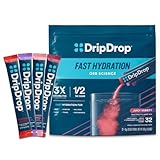
DripDrop is a FDA-recognized medical oral rehydration solution that uses a sodium-to-glucose ratio closer to the WHO ORS standard than Liquid IV does. At approximately $0.80/stick, it costs roughly half of Liquid IV's DTC price per serving. If your use case is illness recovery or clinical-grade rehydration, DripDrop is the more appropriate — and significantly less expensive — choice.
Verdict
Liquid IV works. The mechanism is real, the sodium dose is meaningful for the right user, and the format is genuinely convenient. The problem is not the product — it is the pricing structure and the marketing framing.
At $1.56/stick DTC vs. $0.88/stick on Amazon Subscribe & Save, there is a clear better path for anyone who has decided Liquid IV is their product: buy it on Amazon. The 1.8x DTC premium buys you nothing the formula doesn't already deliver through any channel.
More fundamentally, Liquid IV is the right product for a narrow use case — high-sweat athletic performance and illness recovery — and an overpriced, over-sugared option for everyone else. If you're using it as casual daily hydration, you're paying $47/month for 77 g of weekly sugar you probably didn't budget for, from a subscription that starts a $564/year commitment at the multi-pack cadence.
For the right user — endurance athlete, outdoor worker, travel kit — buying Liquid IV on Amazon at Subscribe & Save pricing is a defensible call. For everyone else, LMNT (no sugar, higher sodium, similar price per stick) or DripDrop (true ORS formula, half the per-stick cost) are more honest product matches.
Once you have picked a product, our companion app, StackMyMed, scans its label and tracks it alongside everything else you take, with timing and interaction checks built in.
Related reading
- Best Liquid IV Alternatives on Amazon
- Liquid IV vs LMNT: Which Electrolyte Wins for Athletes?
- How We Review Supplements at UsefulVitamins
This article is for informational purposes and not medical advice. Electrolyte supplements can interact with medications and health conditions. Consult a licensed physician before starting any supplement, particularly if you are managing hypertension, kidney disease, diabetes, or any condition affecting fluid or electrolyte balance.
For 2026 pricing across DTC supplement subscriptions and their Amazon equivalents, see our DTC supplement pricing reference.
As an Amazon Associate, I earn from qualifying purchases. Product recommendations are based on real reviews and independent research.
As an Amazon Associate, I earn from qualifying purchases. Product recommendations are based on real reviews and independent research.
Editorial independence note: UV earns affiliate commissions from Amazon and (selectively) from DTC brand affiliate programs. Commissions never determine our recommendations — top picks are chosen first; affiliate links are added second. Read our full methodology and editorial independence policy →
