
Affiliate disclosure: this article contains affiliate links. As an Amazon Associate, UsefulVitamins.com earns from qualifying purchases at no extra cost to you.
Before you buy
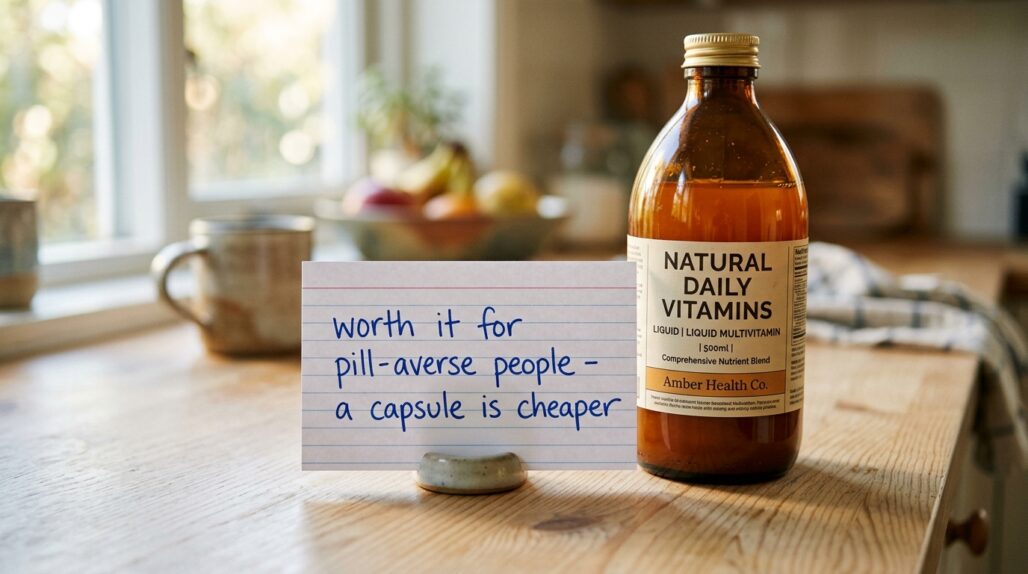
The real question with MaryRuth's is not whether it "works." A clean, broad-spectrum multivitamin is a low-stakes purchase that fills small dietary gaps. The question is whether the liquid format is worth paying two to four times more per serving than a capsule.
That decision splits cleanly. If swallowing pills is a daily struggle – and for a lot of older adults, kids, and people with reflux, it is – the liquid is a fair answer to a real problem. If you can take a capsule without thinking about it, the absorption upgrade you are paying for is mostly marketing.
This review looks at what is actually in the bottle, whether the "liquids absorb better" claim holds up, what the third-party testing covers, and the cost-per-serving math against a plain capsule multi. We will tell you when to buy it and when to keep your money.
What MaryRuth's Liquid Morning Multivitamin actually is
It is a flavored liquid multivitamin you take by the tablespoon, usually in the morning. The flagship is the Raspberry Liquid Morning Multivitamin, and there is an Essentials+ version with a slightly broader nutrient list. Both are vegan, non-GMO, made with organic ingredients, and contain no iron.
The blend is a familiar daily-multi spread: vitamins A (as beta carotene), C, D3, and E, plus a B-complex (B6, biotin, folate, pantothenic acid, and B12), with zinc and, in the Essentials+ formula, vitamin K2. It is dosed to be gentle – think topping-off amounts, not the mega-doses some capsule multis pack in.
A few things to set expectations:
- No iron, on purpose. MaryRuth's leaves iron out because it can compete with other minerals for absorption and because most adults who are not menstruating heavily or pregnant do not need supplemental iron. They sell a separate liquid iron if you do.
- Low on the bulky minerals. Like most liquid and gummy multis, it carries little to no calcium or magnesium – those simply do not fit in a palatable spoonful. You are not getting a full mineral profile here.
- It is a "morning" multi by design, marketed as energy-and-immunity support rather than a comprehensive one-and-done. That framing is honest about what it is.
So this is a gentle, family-friendly, low-dose multi – not a heavy-duty formula. That is a feature for the people it is built for and a limitation for anyone hoping a single product covers everything.

The liquid-absorbs-better claim, examined
This is the marketing hook for nearly every liquid supplement, MaryRuth's included. The pitch: liquids are pre-dissolved, skip the breakdown a pill needs, and therefore absorb faster and more completely.
Here is the honest version. The theory is plausible, but the evidence that it matters for a healthy adult is thin. Liquids do not have to disintegrate, and that can speed up how quickly a nutrient becomes available. For someone with a compromised gut or trouble breaking down tablets, that may be a genuine edge.
For most people, the difference between a well-made liquid and a well-made capsule is small and not clearly meaningful. A frequently cited 2022 review noted liquids may absorb more easily but called for more research before treating it as settled. Much of the "liquids absorb X percent better" content online traces back to supplement sellers, not independent trials.
What actually drives absorption is the chemical form of each nutrient and whether you take fat-soluble vitamins with food – not whether it arrived as a spoonful or a pill. So treat the absorption claim as a reasonable maybe, not a reason to pay a premium. If you can swallow a capsule, you are not leaving meaningful nutrition on the table by choosing one.
Third-party testing and quality
This is where MaryRuth's earns real credit. The brand is Clean Label Project Certified, and that certification is not just a sticker.
The Clean Label Project tests for heavy metals, pesticides, and plasticizers – including lead, arsenic, mercury, cadmium, glyphosate, BPA, and phthalates, the environmental contaminants that creep into supplements through soil, water, and manufacturing. According to MaryRuth's, the certification spans well over a hundred of its products screened against more than 200 contaminants.
That matters because the supplement category is loosely regulated, and contaminant testing is exactly the kind of quality check the FDA does not perform before a product hits shelves. The FDA regulates supplements as food, not drugs, so a brand voluntarily submitting to outside contaminant testing is doing more than it has to.
One clarification so you do not over-read the badge: Clean Label Project focuses on contaminants and label accuracy, not on whether the formula is clinically effective. It is not the same as USP or NSF verification, which center on potency and identity. It is a meaningful signal of a clean product, just not proof that the doses do anything special. The brand also states its products are made in a GMP-compliant facility, which is the baseline manufacturing standard you want.
Cost per serving and the value math
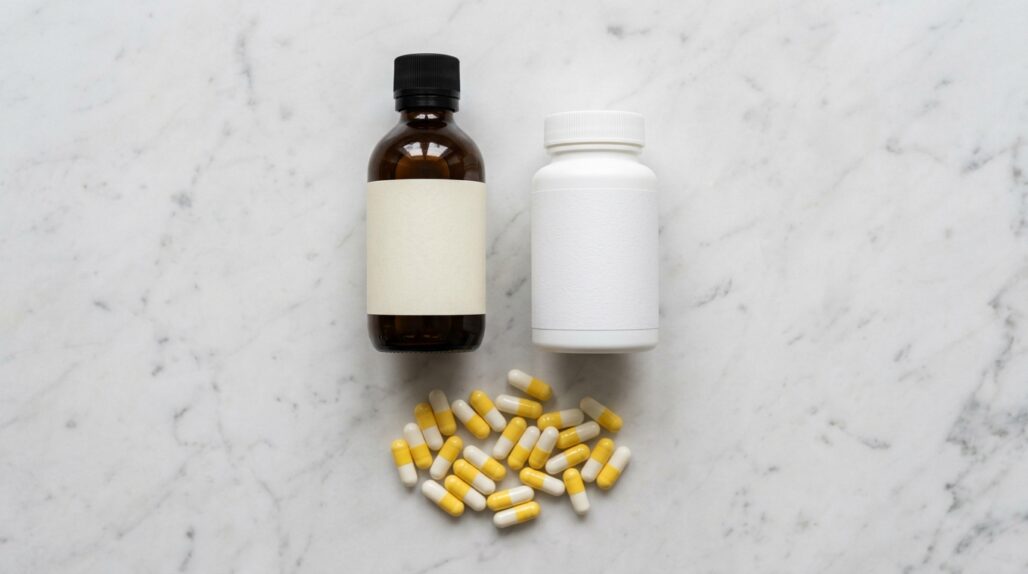
This is where the liquid loses on paper. Here is how the formats stack up on the numbers that decide value.
| Option | Format | Approx. price | Servings | Cost per serving |
|---|---|---|---|---|
| MaryRuth’s Liquid (32 oz) | Liquid, by the tablespoon | Around $33 to $43 | ~16 adult servings | ~$2.00 to $2.70 |
| Typical capsule multivitamin | 1 to 2 capsules daily | Around $12 to $20 | 60 to 90 servings | ~$0.15 to $0.30 |
| MaryRuth’s liquid (kid-dose count) | Liquid, smaller spoonful | Around $33 to $43 | ~32 kid servings | ~$1.00 to $1.35 |
Prices and serving counts shift between Amazon, the brand site, and sales, so check the current price before you buy. The official MaryRuth's product page lists the 32 oz bottle at around $42.95. Note the serving trap: the same 32 oz bottle is roughly 16 adult servings but about 32 kid-sized servings, so a "32 servings" label may not mean 32 adult doses. That detail is easy to misread.
The takeaway is blunt. A capsule multivitamin delivers a comparable nutrient gap-fill for somewhere around a tenth of the per-serving cost. You are paying the MaryRuth's premium for the liquid experience, the clean-label testing, and the flavor – not for measurably better nutrition.
Who should buy it, and who should buy something cheaper
Buy MaryRuth's if you fit one of these:
- You or someone in your house cannot swallow pills. Kids, many older adults, post-surgery patients, and people with strong gag reflexes get real value from a spoonful that goes down with juice.
- You want one clean, no-iron multi the whole family can share. The low, gentle dosing and the iron-free formula make it sensible for mixed-age households where a separate kids' product would otherwise be needed. The NIH notes that most adults who are not menstruating or pregnant do not need supplemental iron, so leaving it out is sensible for a shared multi.
- Contaminant testing is a priority for you and you are willing to pay for the Clean Label Project assurance.
Buy a capsule instead if:
- You can take a pill without a second thought. A simple one-a-day capsule multi covers the same gaps for a fraction of the price. If you want a thoughtfully formulated capsule option, our look at whether Ritual is worth the spend walks through what you are actually paying for there.
- You need real mineral coverage – meaningful magnesium, calcium, or iron – which this liquid does not provide.
- You are pregnant or planning to be. A liquid morning multi is not a prenatal. If you specifically want to avoid iron for tolerance reasons, see our guide to a prenatal vitamin without iron and talk to your clinician first.


As an Amazon Associate, UsefulVitamins.com earns from qualifying purchases at no extra cost to you.
Some links on this page are affiliate links. If you buy through them we may earn a small commission at no extra cost to you. It never changes our verdict.
If you already like MaryRuth's liquids and want to round out your routine, their probiotic is the other product people ask about most – our MaryRuth's liquid probiotic review covers whether that one earns a spot.

A reality check on multivitamins in general
Worth saying plainly, because it applies to MaryRuth's and every competitor: a multivitamin is insurance, not a fix.
The NIH Office of Dietary Supplements is measured about this. Per its consumer fact sheet on multivitamins, a basic multi can help you reach recommended nutrient amounts when food alone falls short, and a standard multi is unlikely to harm a healthy adult. But it stresses that multivitamins cannot replace a varied diet and that large trials have not shown a daily multi prevents major chronic disease in well-nourished people.
So set the bar correctly. MaryRuth's will not give you noticeably more energy than a cheaper multi if your diet is already solid. Where any decent multi helps is filling specific gaps – vitamin D in winter, B12 on a vegan diet, and so on. Because some of those nutrients interact with prescription medications, it is worth a quick scan of our drug and supplement interactions guide if you take anything regularly.
FAQ
Is MaryRuth’s liquid multivitamin actually better absorbed than pills? Maybe slightly, but the evidence is weak and mostly comes from supplement sellers. For a healthy adult, a quality capsule absorbs about as well. The bigger absorption factors are the nutrient form and taking fat-soluble vitamins with food.
Does it contain iron? No. MaryRuth’s deliberately leaves iron out so it does not compete with other minerals and because most adults do not need extra iron. The brand sells a separate liquid iron if your clinician says you need it.
How much does it cost per serving? Roughly $2 to $2.70 per adult serving for the 32 oz bottle, which runs around $33 to $43 as of writing. A capsule multivitamin costs closer to $0.15 to $0.30 per serving. Check the current price before buying.
Is it third-party tested? Yes. MaryRuth’s is Clean Label Project Certified, which screens for heavy metals, pesticides, and plasticizers. That covers contaminants and label accuracy, not whether the doses are clinically proven to do anything special.
Can kids and adults use the same bottle? Yes, that is part of the appeal – the dose just changes by age, so one bottle is roughly 16 adult servings or about 32 kid servings. Confirm the right amount on the label for each age.
Is a liquid multivitamin worth it if I can swallow pills fine? Usually not. If pills are no problem for you, a capsule multi gives you the same gap-filling for far less money. The liquid’s main advantage is being easy to take, not being more effective.
The verdict
MaryRuth's Liquid Morning Multivitamin is a genuinely clean, well-tested product that solves one specific problem – taking a daily multi without a pill. The Clean Label Project certification is a real plus, the no-iron formula is sensible, and the family can share it.
But you are paying a steep premium for format, not for better nutrition. The absorption advantage is, at best, modest and unproven, and a plain capsule multivitamin fills the same gaps for roughly a tenth of the cost per serving.
So the honest call: if you or your family struggle with pills, buy it with confidence. If you can swallow a capsule, save your money and grab a basic capsule multi instead – then put the difference toward the parts of your diet that actually move the needle. Either way, if you take prescription medication, run your supplement list past your doctor or pharmacist before starting.
This article is for general information and is not medical advice. Supplements can interact with medications and health conditions. Talk to a qualified healthcare professional before starting any new supplement, especially if you are pregnant, nursing, or managing a medical condition.
Reviewed by the UsefulVitamins Editorial Team.
