
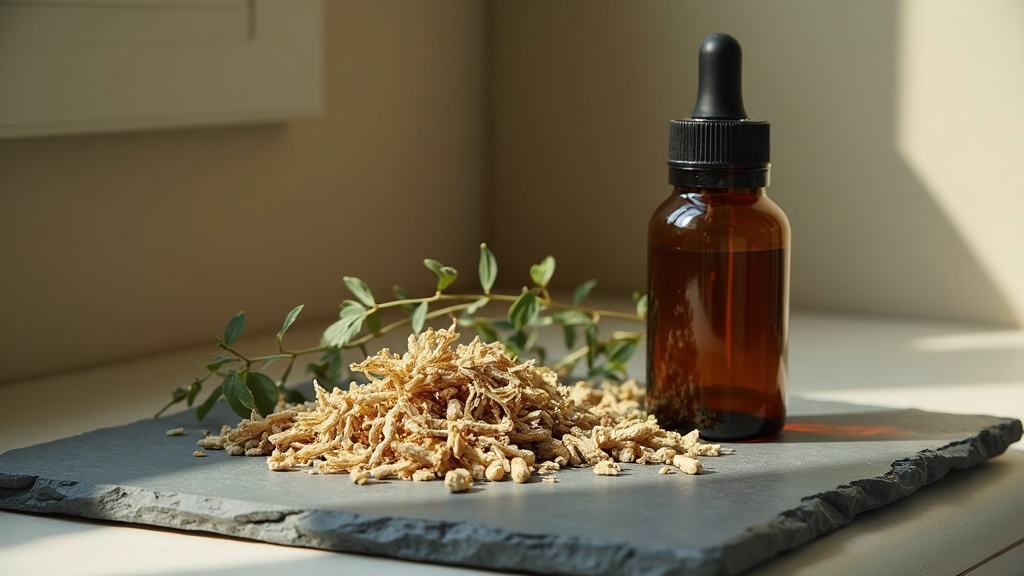
If you have searched for the best Fadogia agrestis supplements, you have probably heard a podcaster mention it as part of a testosterone-support stack and you want to know whether the human evidence is actually there.
Quick Answer: which Fadogia agrestis supplements would I actually start with?
If a healthy adult man wants to experiment with Fadogia despite the lack of human data, the only versions I would consider are products from brands that publish a third-party Certificate of Analysis, use a standardized stem extract, and disclose the assay method. Momentous Fadogia Agrestis is the most credible option in the category because Momentous is the supplement partner of the podcaster who popularized this compound and the brand publishes per-batch testing. Double Wood Supplements Fadogia Agrestis is a reasonable second option because Double Wood publishes COAs and uses a standardized 20:1 stem extract. Most other Amazon listings have no published assay, unclear standardization, and a real chance of containing the wrong plant material entirely.
- Best for: an informed adult man with normal liver function who has already optimized sleep, training, protein, body fat, and stress, who understands he is paying to be part of an uncontrolled experiment without a real readout, and who is willing to pause and run a liver panel if anything feels off.
- Not ideal for: anyone with elevated liver enzymes, fatty liver, hepatitis, or a history of drug-induced liver injury, anyone on hepatotoxic medications, anyone with suspected hypogonadism who has not yet seen a clinician, anyone under 25 with a still-maturing endocrine system, and women, because there is no human safety or efficacy data in women at all.
- What to do FIRST: before paying for Fadogia, do the boring stuff. Sleep 7 to 9 hours, lift heavy three to four times a week, eat enough protein and total calories, keep body fat in a reasonable range, and get a real lab workup. If symptoms suggest low testosterone, see a primary care doctor or endocrinologist and ask for a morning total testosterone, free testosterone, SHBG, LH, FSH, prolactin, estradiol, TSH, and a CBC plus comprehensive metabolic panel. That sequence is the standard of care under the Endocrine Society Clinical Practice Guideline on testosterone therapy. A bottle of plant powder is not a substitute for that workup.
What Fadogia agrestis actually is, briefly
Fadogia agrestis is a West African shrub in the Rubiaceae family, traditionally used in parts of Nigeria as a folk remedy for erectile dysfunction and as a general male tonic. The stem is the part typically used. In traditional use it is prepared as a decoction, often combined with other herbs, at doses and concentrations that have never been formally characterized in published literature. The plant contains alkaloids, saponins, flavonoids, and anthraquinones, but the active constituents responsible for any androgenic signal in animal studies have not been definitively isolated.
Mechanistically, the speculation is that Fadogia may increase luteinizing hormone release and downstream testicular steroidogenesis. This is inferred from rat studies that measured serum testosterone after Fadogia dosing and saw it rise, with the proposed mechanism being upstream stimulation of the hypothalamic-pituitary-gonadal axis rather than direct androgen receptor agonism. The receptor-level pharmacology in humans is essentially unknown.
Conventional medicine does not use Fadogia agrestis for anything. The standard of care for confirmed hypogonadism is testosterone replacement therapy with appropriate monitoring per Endocrine Society guidance, after a workup confirms low testosterone on two separate morning blood draws plus a relevant clinical picture. The honest framing of Fadogia is "traditional West African herb with intriguing rat data and zero published human RCTs", not "natural testosterone booster."
The evidence with the strongest signal (and how thin that signal is)

The Yakubu rat studies
The entire modern interest in Fadogia agrestis traces back to a small cluster of papers by Mohammed Yakubu and colleagues, working primarily in Nigeria in the mid-2000s. The most-cited paper is Yakubu, Akanji, Oladiji 2005 (PubMed 15814261) in the Asian Journal of Andrology, which reported that an aqueous extract of Fadogia agrestis stem, dosed orally at 18, 50, and 100 mg/kg for 5 days, produced dose-dependent increases in serum testosterone in male albino rats compared with controls. The same group also published behavioral endpoints, with Fadogia-treated rats showing increased mounting frequency and reduced mount latency in standardized sexual behavior tests.
These are the studies the podcast-and-supplement industry built a category on. A few important caveats.
First, this is rat work, not human work. There are no published human RCTs of Fadogia agrestis for testosterone, libido, or any other endocrine endpoint. None. The supplement marketing implicitly extrapolates from rat data, and the listener implicitly trusts the extrapolation, but extrapolation is an assumption, not a tested fact. The dose translation from rat to human is not a simple multiplication, and even species that respond similarly to a compound at the receptor level can show divergent pharmacokinetics and downstream effects.
Second, the entire signal comes from a single research group. Independent replication in another lab, at the same dose, with the same endpoints, has not been published. In any other supplement category I would call this "preliminary, awaiting replication." That description applies here, except the supplement aisle skipped the awaiting-replication step.
Third, the studies that reported the testosterone increase also reported toxicity. The follow-up toxicological evaluation in male albino rats reported by the same group (Yakubu et al. 2008, related toxicology literature, PubMed 18308155) found that at higher doses the aqueous Fadogia extract caused changes consistent with hepatotoxicity, including elevated liver enzymes and histological changes in liver tissue. This is not a minor footnote. It is the same compound, in the same model, at doses that overlap the range that produced the testosterone effect.
Translated into supplement-aisle reality: if you take a Fadogia capsule, you are dosing yourself with a botanical that has never been tested in a single human RCT, with a known hepatotoxicity signal in the rat model that everyone is citing for the testosterone claim, and with no human dose-response data to tell you where the line is. We trace every one of those claims back to its source study in our full breakdown of does fadogia agrestis actually work.
- Dose typically used in supplements: capsules generally provide 400 to 600 mg of Fadogia agrestis extract per day, sometimes split across two doses. The "5 days on, 2 days off" cycling protocol that circulates online is speculative and not based on any published human or animal pharmacokinetic data. It is a vibe, not a protocol.
- Form to look for: a standardized stem extract with a stated extract ratio (typically marketed as 20:1) and a published Certificate of Analysis confirming the actual material identity. Botanical identity confirmation matters here because Fadogia agrestis is not a common commercial herb and adulteration with cheaper plant material is a real risk in poorly sourced products.
- Skip if: you have any history of liver disease, elevated liver enzymes, hepatitis, fatty liver, or alcohol-use disorder. Skip if you are on hepatotoxic medications such as methotrexate, isoniazid, valproate, or high-dose acetaminophen. Skip if you are under 25 or have an estrogen-sensitive condition. Skip if you cannot find a published COA on the bottle you are considering.
Actionable takeaway: the entire Fadogia category sits on rat studies from a single research group, with a hepatotoxicity signal in the same model. Treat any self-experiment as preliminary and reversible. If you run it, run it short, run it at the lower end of the marketed dose, and run a baseline plus follow-up liver panel (ALT, AST, ALP, GGT, total bilirubin) so you have a real readout, not a vibe.
Mechanism speculation: LH and steroidogenesis
Mechanistically, the proposal is that Fadogia stimulates luteinizing hormone release from the pituitary, which then drives Leydig cell testosterone production in the testes. This is inferred from the pattern of testosterone elevation seen in the rat work and consistent with how some other plant compounds appear to act on the HPG axis. Whether this mechanism operates in humans, at the doses people actually take, with any clinically meaningful magnitude, is unknown. There is no published human pharmacokinetic data, no LH-response data in men, and no testosterone-response data in men. The mechanism story is plausible and untested.
Popular but evidence-thin: the marketing pitch
"Natural testosterone booster, study-backed"
The most common marketing line on Fadogia bottles and influencer posts is some version of "study-backed natural testosterone booster" or "boosts testosterone naturally." The real question is not whether Fadogia did something in a Nigerian rat lab in 2005. It is whether that something translates to a clinically meaningful testosterone change in adult human men at the doses sold in capsules, with a known safety profile. The honest answer is that the human evidence does not exist. The podcaster who popularized this compound has consistently described his own use as experimental. The supplement market did not preserve that framing. "Experimental" became "boosts testosterone" became "best Fadogia for low T" within a single product cycle.
A supplement brand can look impressive on a label and still miss the basics. In this case the missing basic is a single placebo-controlled trial in human beings.
Fadogia stacked with Tongkat Ali
Many Fadogia products are sold as a stack with Tongkat Ali (Eurycoma longifolia), which has a more mature human evidence base for testosterone-related endpoints than Fadogia, though that evidence is still modest and inconsistent. The marketing implication is that combining them produces an additive or synergistic effect. There is no combination trial in humans. If you are interested in this category, Tongkat Ali on its own is a more honest starting point than a Fadogia plus Tongkat blend, because at least Tongkat has human pilot data to discuss. For a different supplement in this same male-vitality category with similar evidence and label-honesty issues, see our review of the best turkesterone supplements where the same "rat data, big claims, small human signal" pattern appears, and for an adaptogen with a single replicated testosterone signal in middle-aged men, see the best shilajit supplements breakdown.
What to look for when buying
If you have read this far and you still want to run a self-experiment, the brand decision is the entire game. Look for:
- A standardized stem extract with a stated ratio (typically 20:1) and a stated daily dose between 400 and 600 mg
- A published Certificate of Analysis on the brand's site, with the lot number on your bottle matching the lot on the COA
- Third-party identity confirmation that the plant material is actually Fadogia agrestis, not a substitute species
- Vegetable capsules, with no proprietary blend, so the per-capsule mg is clearly stated
- A short ingredient list, ideally just the extract and the capsule
- A brand that does not also make objectively absurd category claims (avoid brands selling "natural Trenbolone" or similar marketing)
Red flags: proprietary blends without per-ingredient milligrams, no published COA, vague "wildcrafted" claims with no testing, marketing language that implies disease treatment, brands with FDA warning letters, and stacks that bury Fadogia inside a mystery formula.
When supplements are not enough
If you are searching for a testosterone booster because you suspect your testosterone is low, supplements are not the right starting point and Fadogia specifically is the wrong starting point. Specific signals that mean stop self-treating and see a clinician:
- Persistent fatigue, low libido, loss of morning erections, decreased muscle mass, or depressed mood that lasts more than a few weeks
- Total testosterone confirmed below the reference range on two separate morning blood draws
- Symptoms paired with infertility concerns
- Unexplained gynecomastia, testicular atrophy, or visual field changes (which can suggest a pituitary issue, not a supplement issue)
- Any history of elevated liver enzymes or known liver disease before you put a hepatotoxic-in-rats botanical into your stack
The Endocrine Society guideline framework is total T plus free T plus SHBG plus LH and FSH plus prolactin on a morning draw, repeated to confirm, with treatment options that can include lifestyle changes, treatment of the underlying cause if one is found, or testosterone replacement therapy with appropriate monitoring. That conversation belongs in a clinic, not in a supplement aisle.
FAQ
Does Fadogia agrestis actually boost testosterone in humans?
There are no published human RCTs of Fadogia agrestis. The testosterone-elevation claim rests on a small set of rat studies from a single research group in the mid-2000s. Whether the rat signal translates to a clinically meaningful testosterone change in human men is unknown.
Is Fadogia agrestis safe?
The same rat studies that reported the testosterone effect also reported hepatotoxicity at higher doses. There is no human safety data and no human dose-response data. People with any history of liver disease, elevated liver enzymes, fatty liver, or hepatotoxic medications should avoid it. A baseline and follow-up liver panel is reasonable for anyone running a self-experiment.
What dose of Fadogia agrestis is recommended?
Supplement bottles typically suggest 400 to 600 mg per day of a standardized stem extract. This dose is extrapolated from rat work and is not validated in humans. The "5 days on, 2 days off" cycling protocol that circulates online is speculative and not based on any published human or animal pharmacokinetic data.
Should I take Fadogia or see a doctor for low testosterone?
See a doctor. Low testosterone has a defined diagnostic workup under Endocrine Society guidance: morning total testosterone, free testosterone, SHBG, LH, FSH, prolactin, on two separate occasions. A bottle of Fadogia is not a substitute for that workup, and a supplement that has never been tested in humans is not a reasonable first-line response to a treatable medical condition.
Which Fadogia brands are most credible?
Momentous publishes per-batch testing and is the supplement partner of the podcaster who popularized the compound, which makes it the most publicly accountable option. Double Wood Supplements publishes Certificates of Analysis and uses a standardized stem extract. Most generic Amazon listings have no published assay and a real risk of adulteration or mislabeling.
Conclusion: the bottom line on best Fadogia agrestis supplements
The bottom line is that Fadogia agrestis is a botanical with intriguing rat data from a single research group, zero published human RCTs, and a hepatotoxicity signal in the same rat model used to claim the testosterone effect. The podcaster who put this compound on the map described it as experimental, and that framing is the honest one. If you still want to run a careful self-experiment, the brand decision matters more than the dose decision, because most products on Amazon have no published assay and a real chance of containing the wrong plant material entirely. Momentous and Double Wood are the most credible options because they publish testing.
Next steps:
- Get a real lab workup before treating suspected low testosterone with any supplement, following the Endocrine Society guideline framework
- If you choose to experiment, run a baseline and a 6-week follow-up liver panel and stop at the first sign of elevated enzymes
- Read our how we review supplements page for the broader UV evidence-quality framework, and our author bio for Jonathan Reynolds, ND for the naturopathic perspective on botanicals with thin human evidence
Reviewed by Jonathan Reynolds, ND, focused on botanical and naturopathic protocols.
This article is for informational purposes and not medical advice. Botanicals marketed for testosterone or hormonal effects can interact with medications and pre-existing conditions, and some have documented hepatotoxicity in animal models. Consult a licensed physician before starting any supplement, particularly if you have liver disease, are taking prescription medications, or are managing a chronic condition.
