
Affiliate disclosure: this article contains affiliate links. As an Amazon Associate, UsefulVitamins.com earns from qualifying purchases at no extra cost to you.
Before you buy
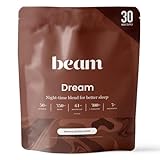
Beam Dream is a TikTok-famous "sleepy cocoa" you stir into warm milk or water before bed. It tastes good, it mixes cleanly, and the brand has built a tidy nighttime ritual around it. That part is real.
The question is not whether it is pleasant. It is whether the powder does anything a much cheaper combination could not. For a sleep supplement, that comes down to two things: what is actually in each scoop, and how those doses compare to what the research used.
When you run that math, Beam Dream looks less like a clever formula and more like a premium delivery system for two cheap ingredients. You are paying a large markup for flavor, packaging, and a calming routine – which is fine if that is what you want, but worth knowing before you commit to a subscription.
This review is written for the person deciding between Beam and a do-it-yourself stack. If you already love the ritual and the price does not bother you, none of this will change your mind, and that is okay.
What Beam Dream actually is
Beam Dream is a flavored powder – cocoa, brownie batter, and similar – sold in a tub of 30 servings. Each 6-gram serving carries a short list of sleep ingredients, and the brand sells both a melatonin version and a melatonin-free version for people who do not want the hormone.
Per serving, the standard formula provides roughly:
- Magnesium (as citrate and malate): about 60 mg total
- L-theanine: 300 mg
- Reishi mushroom extract: 350 mg
- Apigenin: 50 mg
- Melatonin: 3 mg (in the standard melatonin version)
That is a sensible-looking lineup. The problem is hidden in the numbers, and you only see it once you compare each dose to the studies behind it. The full breakdown is on Beam's official Dream Powder page, and the supplement facts are worth reading before you buy anything.
The doses, against the research
This is where Beam Dream gets shaky. A nice flavor cannot fix a dose that is too small to matter.
Magnesium is the weakest link. Beam gives you about 60 mg of magnesium, and because that comes from citrate and malate salts, the actual elemental magnesium is even lower – somewhere around 30 mg per serving. For context, the NIH Office of Dietary Supplements puts the adult magnesium recommended daily allowance at 310 to 420 mg. Sleep trials that found a benefit generally used 200 to 400 mg of elemental magnesium. Beam delivers a small fraction of that. If magnesium is part of why you want this powder, you are not getting a meaningful dose.
Melatonin is the other workhorse, and Beam's 3 mg is fine but not special. Many clinicians favor a low 0.5 to 1 mg dose because it mimics the body's own melatonin and tends to limit next-morning grogginess. Notably, a 2024 dose-response meta-analysis in the Journal of Pineal Research actually reported the strongest sleep-onset effect at around 4 mg taken roughly three hours before bed. So 3 mg is squarely a normal dose, not an excessive one, and a 1 mg tablet would do a similar job for pennies if you prefer to start low.
L-theanine is the one dose Beam gets right. At 300 mg it sits squarely in the range a systematic review of L-theanine trials found useful for relaxation and subjective sleep quality, typically 200 to 400 mg. This is the most defensible ingredient in the tub.
Reishi, apigenin, and GABA are the marketing layer. They sound impressive and they have plausible mechanisms, but the human evidence is thin. Reishi's sleep data in people is, at best, preliminary – most of the encouraging results come from rodents, as a review of reishi research lays out. Apigenin has essentially no isolated human sleep trials; the studies people cite used whole chamomile extract, like this chamomile insomnia pilot RCT, and even that did not reach statistical significance for sleep quality. Oral GABA struggles to cross into the brain in the first place. Treat these three as pleasant extras, not the reason to buy.
What is doing the work
Strip away the parts with weak evidence and Beam Dream is, functionally, a melatonin tablet plus a small magnesium dose plus a real serving of L-theanine, wrapped in cocoa.
That is not nothing. Melatonin genuinely helps many people fall asleep faster, and L-theanine genuinely takes the edge off a busy mind. The warm-drink ritual itself probably helps too, because winding down with something soothing is a legitimate sleep-hygiene move.
But notice what that means for value. The active effect you feel is mostly melatonin and theanine – two of the cheapest, most widely sold supplements on the shelf. You are paying Beam's premium largely for taste and routine, not for a dose you cannot get elsewhere.
If you want a deeper look at why magnesium form and dose matter so much for relaxation and sleep, our complete guide to magnesium walks through the details.
The price, and the value math
Bought directly, Beam Dream runs around $65 for a 30-serving tub, or about $52 on subscription, which works out to roughly $1.73 to $2.17 a serving. Through some retail and marketplace listings it climbs toward $85, or closer to $2.80 a night. Prices shift with promotions, so check the current price and the per-serving math before you commit.
Now compare that to building the same effect yourself.
| Option | What you get nightly | Rough cost per night | Honest take |
|---|---|---|---|
| Beam Dream | ~30 mg elemental magnesium, 300 mg L-theanine, 3 mg melatonin, reishi/apigenin/GABA, cocoa flavor | ~$1.73 to $2.80 | Tasty ritual, underdosed magnesium, premium markup |
| DIY magnesium glycinate + melatonin | 200 to 400 mg elemental magnesium, 0.5 to 1 mg melatonin | ~$0.20 to $0.40 | Higher magnesium dose, far cheaper, no flavor |
| Add L-theanine capsule | 200 to 400 mg L-theanine on top of the above | ~$0.10 to $0.20 extra | Matches Beam’s one strong ingredient for cents |
The gap is large. A magnesium glycinate capsule plus a 1 mg melatonin tablet covers most of Beam's real effect for well under fifty cents a night – and it actually gives you a research-grade magnesium dose, which Beam does not. Glycinate is also gentle on the stomach, while citrate (Beam's form) can loosen the bowels at higher amounts, per the same NIH fact sheet.
A cheaper way to get the same effect
If your goal is sleep, not cocoa, here is the swap most people should make.
- Magnesium glycinate, 200 to 400 mg elemental, in the evening. This is the dose the sleep research actually used, and glycinate is well absorbed and easy on digestion.
- A low-dose melatonin, 0.5 to 1 mg, about an hour before bed. Lower is better here; you can always nudge up, but most people never need to.
- Optional L-theanine, 200 mg, if a racing mind is your main problem.
That stack is close to what Beam delivers on the parts that matter, at a small fraction of the cost. If you specifically want the highest-quality magnesium for relaxation, our roundup of the best magnesium for leg cramps on Amazon leans heavily on glycinate picks that double as sleep support.

As an Amazon Associate, UsefulVitamins.com earns from qualifying purchases at no extra cost to you.
Some links on this page are affiliate links. If you buy through them we may earn a small commission, at no extra cost to you. It never changes our verdict.
A few quick safety notes before you swap anything. Melatonin can interact with blood thinners, blood-pressure drugs, sedatives, and some seizure medications, and magnesium can interfere with certain antibiotics and thyroid meds. If you take prescription medication, run it through our drug and supplement interactions guide and talk to a pharmacist or doctor first. Pregnant or breastfeeding readers should clear melatonin with a clinician, since the safety data is limited.

How it stacks up against other premium powders
Beam is not the only brand selling expensive magnesium-for-sleep in a tub. If you are weighing it against the other big name in this lane, our Beam Dream vs Moon Juice Magnesi-Om comparison breaks down the magnesium forms, doses, and price per serving side by side. The short version: both are premium, both lean on the ritual, and a standalone glycinate still wins on value.
The pattern across this whole category is the same one you see with Beam: lovely packaging, real but modest active doses, and a price that assumes you are buying an experience. That is a legitimate thing to buy. Just buy it with your eyes open.
FAQ
Does Beam Dream actually work for sleep? For many people it helps, mostly thanks to the 3 mg of melatonin and 300 mg of L-theanine, plus the calming warm-drink routine. The magnesium dose is too low to contribute much, and the reishi, apigenin, and GABA have weak human evidence for sleep.
Why is Beam Dream so expensive? You are paying for flavor, brand, packaging, and the ritual far more than for the doses. At roughly $1.73 to $2.80 a serving, it costs several times what a magnesium glycinate capsule plus a low-dose melatonin would.
Is the melatonin dose in Beam Dream too high? It is not dangerous, but 3 mg is more than most people need. Research suggests 0.5 to 1 mg works just as well for sleep onset, and higher doses can leave some people groggy in the morning.
What is the cheapest way to replace Beam Dream? A magnesium glycinate supplement at 200 to 400 mg of elemental magnesium, plus a 0.5 to 1 mg melatonin tablet, and optionally 200 mg of L-theanine. That covers the parts with the strongest evidence for well under fifty cents a night.
Is Beam Dream third-party tested? Beam markets Dream as third-party tested and non-GMO, but the company does not publish specific certificate numbers or the testing lab on the product page, so treat it as a brand claim rather than a verified certification you can independently check.
Can I take Beam Dream with my medications? Maybe not safely. Melatonin and magnesium both interact with several common drug classes. Check our interactions guide and confirm with a pharmacist or doctor before combining them with anything you take regularly.
The verdict
Beam Dream is a genuinely nice product that does not justify its price as a sleep aid. The flavor is good, the formula is clean, and the melatonin and L-theanine doses are reasonable – but the magnesium is badly underdosed, and the headline botanicals are mostly there for the label.
If you want the ritual and the price does not sting, buy it and enjoy it; there is nothing wrong with paying for an experience you look forward to. But if you came here to sleep better for less, the honest call is to skip the powder and build a magnesium glycinate plus low-dose melatonin stack instead. You will get a stronger magnesium dose and the same melatonin effect for a tiny fraction of the cost.
Your next step: read the magnesium guide, pick a glycinate that suits you, add a 1 mg melatonin, and check both against your medications before bed.
This article is for general information only and is not medical advice. Supplements can interact with medications and health conditions. Talk to a qualified healthcare professional before starting or changing any supplement, especially if you are pregnant, nursing, or taking prescription drugs.
Reviewed by the UsefulVitamins Editorial Team.
