

Affiliate disclosure: this article contains affiliate links. As an Amazon Associate, UsefulVitamins.com earns from qualifying purchases at no extra cost to you.
Before you buy
The real question here is not which brand is "best." It is what you actually want a bedtime drink to do. One of these is built around magnesium. The other is built around a relaxing cocoa habit with a heavier melatonin dose.
Both are premium products with premium pricing. Neither is cheap, and neither is doing anything a few standalone supplements could not do for less. That matters, because the entire pitch for a $49 to $65 sleep powder rests on convenience and taste, not on some ingredient you cannot buy on its own.
So before you spend, decide which camp you are in. If you sleep poorly and suspect low magnesium is part of it, the form and dose of magnesium is the thing to read. If you just want a calming ritual that signals "the day is over," flavor and texture carry more weight than the label.
This comparison breaks down both on the numbers, then names a swap that covers most of the benefit for less.
What each one actually is
Beam Dream is a flavored cocoa sleep powder you stir into hot water or milk about 30 to 45 minutes before bed. It leans into the experience: cinnamon cocoa, brownie batter, sea salt caramel, and similar flavors. The stack pairs a modest dose of magnesium with reishi mushroom, L-theanine, apigenin, and melatonin.
Moon Juice Sleepy Magnesi-Om is a berry-flavored magnesium drink with added melatonin, meant to be mixed into water. It is the sleep-focused version of Moon Juice's popular Magnesi-Om relaxation powder, and the formula is built around magnesium first, with L-theanine and a very small melatonin dose layered on top.
The difference in philosophy shows up immediately. Beam is a treat that happens to contain sleep ingredients. Moon Juice is a magnesium supplement that happens to taste like berries. Keep that framing as we go through the doses.

Magnesium form and dose
This is where the two genuinely diverge, and it is the single most useful thing to know.
Moon Juice Sleepy Magnesi-Om delivers about 200 mg of elemental magnesium per serving, mostly as magnesium bisglycinate (around 170 mg) with a little magnesium gluconate. Bisglycinate is the chelated, glycine-bound form that tends to be easy on the stomach and well absorbed, which is exactly what you want in a nightly product.
Beam Dream delivers roughly 60 mg of elemental magnesium per serving as magnesium citrate. Citrate is fine and absorbable, but 60 mg is a small dose next to the 200 mg in the Moon Juice formula, and citrate at higher amounts is the form most likely to loosen your stool.
For context, the adult RDA for magnesium sits around 310 to 420 mg per day, and the NIH Office of Dietary Supplements magnesium fact sheet sets the tolerable upper limit from supplements at 350 mg per day. So Moon Juice's 200 mg is a meaningful contribution toward your daily intake. Beam's 60 mg is more of a token amount.
If your interest in these powders is largely about magnesium, that gap is decisive. Moon Juice wins this round clearly.
Melatonin and the extras
Melatonin is where the comparison flips in an interesting way.
Beam Dream uses 3 mg of melatonin. Moon Juice Sleepy Magnesi-Om uses 0.3 mg of plant-derived melatonin – ten times less. More is not better here. Research from MIT's group, including a low-dose melatonin study by Zhdanova and colleagues and later follow-up work the MIT team summarized, found that doses near 0.3 mg restored sleep in adults without the grogginess that larger doses can cause.
In plain terms: Moon Juice's tiny melatonin dose is closer to what the evidence favors, and it is less likely to leave you foggy in the morning. Beam's 3 mg is a common over-the-counter amount, but it is not automatically more effective, and some people find higher melatonin doses backfire.
The rest of the extras are a wash with a slight edge to Beam on novelty:
- L-theanine: Beam packs about 300 mg, Moon Juice about 200 mg. Both are reasonable calming doses.
- Reishi mushroom: Beam includes roughly 350 mg. Moon Juice does not. Reishi has a traditional reputation for relaxation, but the human sleep evidence is thin, so treat it as a nice-to-have.
- Apigenin: Beam adds apigenin, a compound found in chamomile that is popular in sleep circles, though robust dosing data is limited.
So Beam offers more ingredients on the label. Whether those extra ingredients are doing much is an open question. The two things with the strongest evidence behind them – adequate magnesium and an appropriate melatonin dose – favor Moon Juice.

Third-party testing and quality
Quality control is one area where Beam Dream has a concrete, checkable advantage.
Beam states its products are made in GMP-certified facilities and third-party tested by batch, and the brand lets you enter a packet's batch number on its site to view the lab results. That batch-level transparency is more than most supplement brands offer. (Beam has also referenced NSF Certified for Sport status; if that matters to you as a tested athlete, verify the current certification directly before relying on it, since that listing was hard to confirm at the time of writing.)
Moon Juice describes its Sleepy Magnesi-Om ingredients as traceable and unadulterated and the product as vegan and non-GMO, but we did not find published third-party batch testing on the product page. That does not mean it is untested; it means the proof is less accessible to you as a buyer.
If verifiable testing is a deciding factor, Beam edges ahead on transparency even though its formula is weaker. That is a fair trade to weigh, not a tiebreaker on its own.
Price per serving
Both are firmly premium. Here is the honest math.
- Beam Dream: around $65 for a 30-serving tub as a one-time purchase, or roughly $52 on subscription. That works out to about $2.17 per serving at full price, near $1.73 subscribed.
- Moon Juice Sleepy Magnesi-Om: around $49 for a 30-serving jar, with subscription pricing lower. Call it roughly $1.63 per serving at the one-time price.
So Moon Juice is both the stronger formula and the cheaper option per serving. Beam's premium buys you flavor variety, reishi, and the cocoa experience, not better core ingredients.
| Dimension | Beam Dream | Moon Juice Sleepy Magnesi-Om |
|---|---|---|
| Format | Cocoa drink, hot | Berry drink, cold or warm |
| Magnesium form | Citrate | Bisglycinate plus gluconate |
| Elemental magnesium | About 60 mg | About 200 mg |
| Melatonin | 3 mg | 0.3 mg |
| L-theanine | About 300 mg | About 200 mg |
| Extras | Reishi, apigenin | None added |
| Batch third-party testing | Yes, lookup by batch | Not published on page |
| Servings | 30 (also 20) | 30 |
| Price per serving | About $2.17 | About $1.63 |
Prices and doses are approximate and as of writing; check the current label and price before buying.
The cheaper swap most people should consider
Here is the uncomfortable part for both brands. The two ingredients with the most evidence behind them are magnesium and a sensible melatonin dose, and you can buy both separately for a few dollars a month.
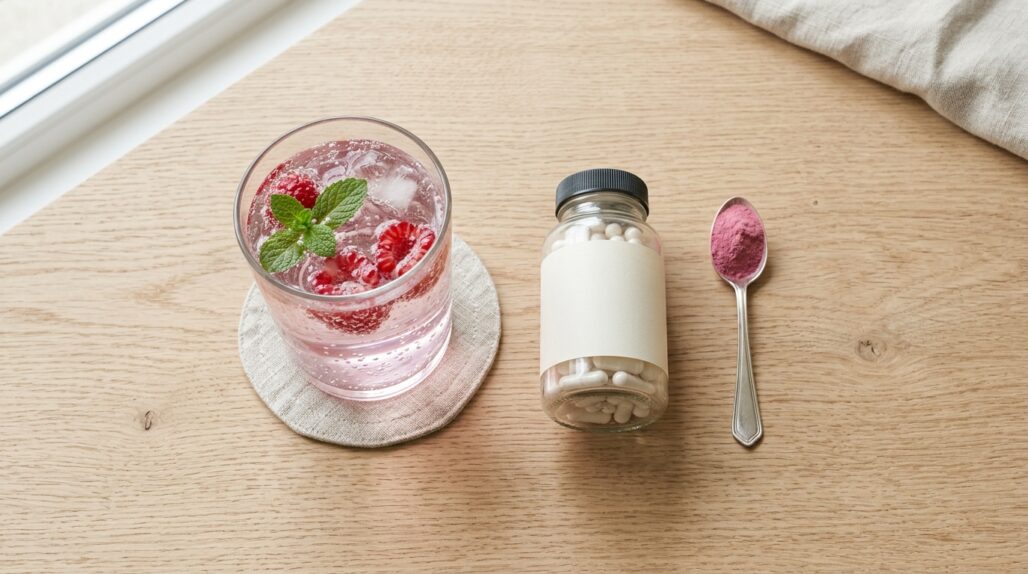
A plain magnesium glycinate (bisglycinate) capsule is the value play. A reputable bottle from a brand like NOW or Doctor's Best often runs in the $15 to $20 range for one to two months of servings as of writing, which can land well under $0.30 per serving depending on dose – far below either powder. It is the same gentle form Moon Juice uses, usually at a higher elemental dose. A 2025 randomized trial of magnesium bisglycinate found improved sleep scores in adults with poor sleep, which is about as good as the magnesium-and-sleep evidence gets.
If you want the melatonin piece too, add a low-dose 0.3 mg melatonin a few nights a week rather than nightly. That mirrors what the research favors and costs almost nothing.
Use a powder when the ritual or the flavor is genuinely what helps you wind down. Use capsules when you just want the magnesium to work. Our complete guide to magnesium covers daily targets, and the breakdown of magnesium forms and bioavailability explains why glycinate is the usual pick for sleep and sensitive stomachs.


As an Amazon Associate, UsefulVitamins.com earns from qualifying purchases at no extra cost to you.
UsefulVitamins may earn a commission from qualifying purchases made through links on this page, at no extra cost to you.
A quick word on safety
A few cautions worth keeping in mind, since these are easy to overlook in a tasty bedtime drink.
Magnesium can interact with some medications, including certain antibiotics and thyroid medications, by affecting absorption if taken too close together. Melatonin can interact with blood thinners, some blood pressure medications, and sedatives, and it is not a fit for everyone.
If you take prescription medication, are pregnant, or manage a chronic condition, talk to a pharmacist or doctor before adding either powder. It is worth reading the full dose breakdown in our standalone Beam Dream review too, and if you are weighing a higher-dose blend instead, see whether a popular magnesium blend is worth it. These products are not a treatment for a sleep disorder; persistent insomnia deserves a clinician's input.
FAQ
Which has more magnesium, Beam Dream or Moon Juice? Moon Juice Sleepy Magnesi-Om has far more, about 200 mg of elemental magnesium per serving versus roughly 60 mg in Beam Dream. Moon Juice also uses bisglycinate, a gentler, well-absorbed form.
Is Beam Dream’s 3 mg of melatonin better than Moon Juice’s 0.3 mg? Not necessarily. Research suggests doses near 0.3 mg can restore sleep with less morning grogginess, so Moon Juice’s smaller dose is closer to what the evidence supports. Higher melatonin is not automatically more effective.
Are these worth the price? Only if flavor and ritual matter to you. The core ingredients, magnesium and a low melatonin dose, are cheap to buy separately. A magnesium glycinate capsule delivers more magnesium for a fraction of the per-serving cost.
Can I take either one every night? Magnesium nightly is generally fine within the supplement upper limit of 350 mg per day. Many people prefer to use melatonin only a few nights a week rather than every night. Check with a clinician if you take medications.
Which tastes better? That is personal, but they are different categories. Beam is a warm cocoa drink with several dessert-style flavors, while Moon Juice is a light berry mineral drink mixed into water. If you want a cozy nighttime cup, Beam wins on experience.
Are they third-party tested? Beam publishes batch-level third-party test results you can look up by packet number and uses GMP-certified manufacturing. Moon Juice describes its ingredients as traceable and unadulterated but does not publish batch testing on its product page.
The verdict
On the formula, Moon Juice Sleepy Magnesi-Om is the stronger sleep product and the better value – more magnesium in a gentler form, plus a melatonin dose the research actually favors, at a lower price per serving. If you are choosing strictly on what is inside the tub, that is your pick.
Beam Dream earns its place as a ritual, not a powerhouse formula. The cocoa experience, the flavor range, the reishi, and the genuinely transparent batch testing are real selling points. If the act of making a warm drink is what gets you to actually wind down each night, that value is hard to put on a label.
But be honest about the trade. For pure cost-effectiveness, neither beats a magnesium glycinate capsule plus an optional low-dose melatonin. That combination covers the parts with the best evidence for a few dollars a month.
Your next step: if you want the drink, buy Moon Juice for the formula or Beam for the experience. If you want results for less, start with a glycinate-form magnesium and see how you sleep before spending $50-plus on a tub. If you are still unsure how much magnesium you actually need each day, our complete magnesium guide sets the targets.
This article is for general information and is not medical advice. Supplements can interact with medications and are not a substitute for care from a qualified professional. Talk to your doctor or pharmacist before starting any new supplement.
Reviewed by the UsefulVitamins Editorial Team.
