
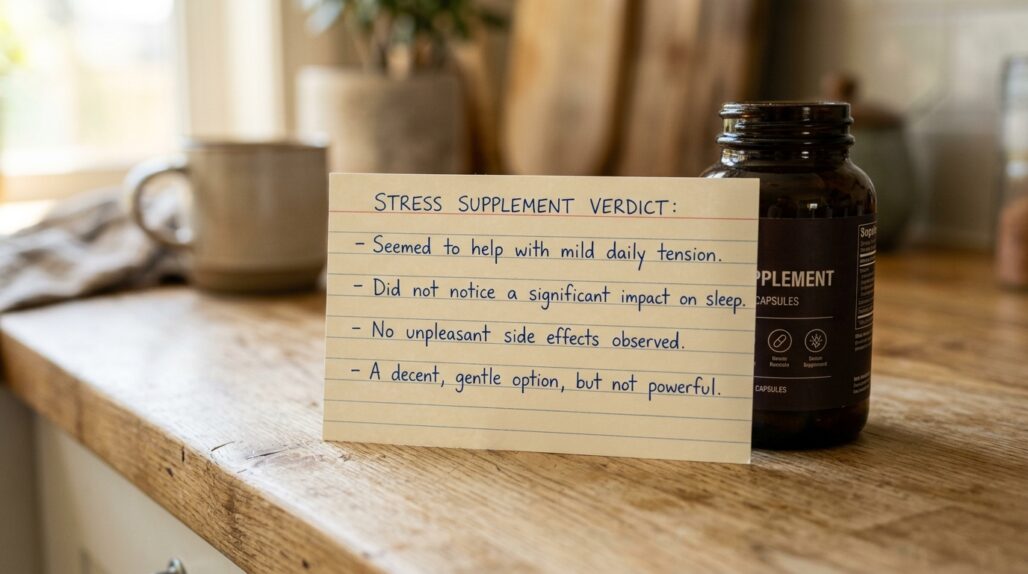
Affiliate disclosure: this article contains affiliate links. As an Amazon Associate, UsefulVitamins.com earns from qualifying purchases at no extra cost to you.
Before you buy
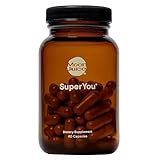
Moon Juice SuperYou is one of the better-known "stress capsule" products in the wellness aisle, and the marketing leans hard on a single number: a 24 percent drop in cortisol. That sounds clinical. The real question is whether the formula inside the bottle is dosed the way the studies were.
Here is the honest framing. SuperYou is a four-ingredient adaptogen blend, and the headline ingredient is ashwagandha at 250 mg per daily serving. The blend is clean, vegan, and genuinely third-party tested. None of that is in dispute.
What you are actually deciding is whether the convenience and the brand are worth roughly three to nine times the cost of buying the same active ingredient on its own. For a lot of readers, the answer is no – and we will show the math.
One more thing worth clearing up before you spend: many shoppers assume SuperYou uses KSM-66, the most-studied branded ashwagandha extract. Based on the current label, it does not. That detail changes how you should read the cortisol claim.
What SuperYou actually is
SuperYou is a daily two-capsule supplement built around four botanicals. Per the Moon Juice product page, one serving (2 capsules) delivers:
- Ashwagandha – 250 mg, standardized to 10 percent withanolides
- Shatavari – 450 mg, standardized to 20 percent saponins
- Rhodiola – 150 mg, standardized to 3 percent rosavins and 1 percent salidrosides
- Amla – 150 mg
A bottle holds 60 capsules, which is 30 servings, or one month at the standard dose. The capsules are vegan and the brand markets the line as organic, non-GMO, and "100 percent traceable."
The pitch is stress support: calmer mood, steadier energy, fewer cortisol spikes. That is a reasonable thing to ask of ashwagandha and rhodiola. The amla and shatavari are more about rounding out the formula than driving the stress effect.
Note the ashwagandha is a proprietary 10-percent-withanolide extract, not KSM-66 or Sensoril. Moon Juice describes a "patented extraction" but does not name a recognized branded extract on the label. That matters because the cortisol research everyone cites was run on specific branded extracts at specific doses.
Does the ashwagandha dose match the research?
This is the part the marketing skips over, so let's be direct. The 24 percent cortisol figure leans on ashwagandha trials – but those trials mostly used higher doses than SuperYou delivers.
The most useful comparison is a 2019 randomized, placebo-controlled trial that tested two doses head to head. Both 250 mg and 600 mg of ashwagandha root extract beat placebo for stress, anxiety, and serum cortisol – but the 600 mg dose was clearly more effective than 250 mg. SuperYou sits at the lower 250 mg rung.
So SuperYou is not underdosed to the point of being useless. A 250 mg dose has real human data behind it. It is just the weaker of the two doses studied, and you are paying a premium for it.
The bigger asterisk is the extract itself. Withanolide percentage and extraction method affect potency, and a generic 10-percent-withanolide extract is not automatically equivalent to the KSM-66 material used in many of the stronger cortisol trials. If you specifically want the most-studied ashwagandha at a study-level dose, SuperYou is not the cleanest way to get it.
If you are weighing extract types, our breakdown of KSM-66 vs Sensoril explains why the branded extract on the label changes what the evidence actually supports.
What the rest of the blend does
The other three ingredients are not filler, but they are not pulling equal weight either.
Rhodiola (150 mg) is the second real adaptogen here. Human trials suggest rhodiola can help with stress-related fatigue and mental tiredness, though effective doses in the fatigue research often land around 200 to 400 mg per day of a standardized extract. SuperYou's 150 mg is on the light side again, but in the plausible range.
Amla (150 mg) has decent antioxidant data and very little stress data. A randomized crossover trial in healthy adults found amla improved oxidative-stress biomarkers and cholesterol markers – useful, but not the same as lowering psychological stress or cortisol. Treat it as a supporting antioxidant, not a calming agent.
Shatavari (450 mg) is the largest dose by weight and is traditionally used in Ayurveda, mostly for women's health. Modern human evidence for a daily stress benefit is thin. It is a reasonable inclusion, not a proven stress driver.
Put simply: ashwagandha and rhodiola are doing most of the real work, and both sit at the lower end of their studied ranges. If you want to understand how those two compare for stress specifically, our guide on ashwagandha vs rhodiola for stress is the better read before you commit to a blend.
Testing and quality – this part holds up
Credit where it is due. SuperYou's quality story is one of its stronger selling points.
Moon Juice states that individual ingredients are tested for identity, microbiological safety, heavy metals, and contaminants, and that the finished product is tested again at a third-party lab. That is more transparency than a lot of adaptogen brands offer, and it is a legitimate reason some buyers stick with it.
A couple of honest caveats:
- The brand does not publish a public Certificate of Analysis on the product page, so you are trusting the testing language rather than seeing the numbers.
- "Third-party tested" is not the same as carrying a USP Verified or NSF Certified mark, which are the seals we point readers to when independent verification is the priority.
Bottom line on quality: believable and above average for the category, but not independently certified. If clean sourcing is your top concern and budget is secondary, this is where SuperYou earns part of its price.
The price – and the value problem
Here is where the verdict gets sharp. SuperYou runs about $54 for a 30-serving bottle one-time, or roughly $37.80 on subscription, as of writing – always check the current price.
That is $1.26 to $1.80 per day for 250 mg of ashwagandha plus three supporting botanicals.
Now compare it to buying the headline ingredient at a stronger dose on its own.
| Product | Ashwagandha per serving | Extract | Approx. price | Cost per serving |
|---|---|---|---|---|
| Moon Juice SuperYou | 250 mg | Proprietary 10% withanolides | ~$54 / 30 servings | ~$1.80 |
| SuperYou (subscription) | 250 mg | Proprietary 10% withanolides | ~$37.80 / 30 servings | ~$1.26 |
| Standalone KSM-66 capsule | 600 mg | KSM-66 branded | ~$17 / 60 servings | ~$0.28 |
Read that last row again. A standalone 600 mg KSM-66 capsule costs roughly a sixth of SuperYou per day – and delivers the higher, better-studied ashwagandha dose. Prices move, so verify before buying, but the gap is wide enough that the conclusion does not flip with normal fluctuation.
You are paying the SuperYou premium for three things: the brand, the convenience of a single blended capsule, and the testing transparency. None of those is the ashwagandha dose itself, which you can buy stronger and cheaper.
Who should buy it – and who shouldn't
Buy SuperYou if you want one clean, tested capsule covering several adaptogens, you value not assembling your own stack, and the monthly cost is not a deciding factor.
Skip it and buy a standalone KSM-66 capsule if your goal is study-level ashwagandha at the lowest cost, or if you would rather dose rhodiola separately to hit the higher researched range.
If you like the gummy or blend format generally, it is worth seeing how a similar mass-market product stacks up in our look at whether Goli ashwagandha gummies are worth it – same underdosing pattern, different delivery.
A cheaper, clinically-dosed pick
If the value math above sold you on going standalone, here is where to start. A plain 600 mg KSM-66 capsule gives you the most-studied extract at the dose the stronger trials used, usually for around $0.28 per serving.


As an Amazon Associate, UsefulVitamins.com earns from qualifying purchases at no extra cost to you.
UsefulVitamins may earn a commission from qualifying purchases made through links on this page, at no extra cost to you. This does not affect our verdicts or which products we recommend.
You lose the rhodiola, amla, and shatavari by going standalone. If you want rhodiola too, add a separate standardized rhodiola capsule and you will still spend less than a SuperYou subscription while hitting both ingredients at fuller doses.
A safety note worth reading first
Ashwagandha is generally well tolerated, but it is not risk-free, and this applies to SuperYou or any ashwagandha product.
- Avoid it in pregnancy and while breastfeeding.
- Be cautious with thyroid or autoimmune conditions – ashwagandha can affect thyroid hormone levels and immune activity.
- There are documented, though rare, cases of ashwagandha-linked liver injury, typically appearing weeks after starting. Stop and see a clinician if you notice jaundice, dark urine, or unusual fatigue.
- It can interact with sedatives, blood-sugar and blood-pressure medications, immunosuppressants, and thyroid drugs.
If you take any prescription medication, check for conflicts before starting – our drug and supplement interaction guide covers the common ones, and talk to your own clinician or pharmacist before adding any new adaptogen.
FAQ
Does Moon Juice SuperYou use KSM-66 ashwagandha? Based on the current label, no. It uses a proprietary ashwagandha extract standardized to 10 percent withanolides, not the branded KSM-66 extract used in many of the higher-dose stress trials.
Is 250 mg of ashwagandha enough to lower cortisol? It can help – a 250 mg dose beat placebo in a controlled trial – but the same study found 600 mg worked better. SuperYou sits at the lower, weaker end of the studied range.
How much does SuperYou cost per serving? Around $1.80 per serving at the one-time price of about $54, or roughly $1.26 on subscription, as of writing. Check the current price before buying.
Is there a cheaper alternative that works? Yes. A standalone 600 mg KSM-66 capsule typically costs around $0.28 per serving and delivers a higher, better-studied ashwagandha dose, though you lose the rhodiola, amla, and shatavari.
Is SuperYou third-party tested? Moon Juice says both the individual ingredients and the finished product are tested at a third-party lab. That is above average for the category, though there is no public USP or NSF certification.
Who should not take SuperYou? Avoid it during pregnancy or breastfeeding, and be cautious with thyroid, autoimmune, or liver conditions, or if you take medications that interact with ashwagandha. Ask a clinician first.
The verdict
SuperYou is a genuinely clean, well-tested adaptogen blend, and the convenience of one daily capsule is real. But the ashwagandha sits at 250 mg – the lower of the two studied doses – and it is not the KSM-66 extract many buyers assume they are getting.
For people who want simplicity and trust the brand's testing, it is a defensible buy. For anyone focused on getting study-level ashwagandha for the money, it is hard to justify $54 a month when a 600 mg KSM-66 capsule does the heavier lifting for around $0.28 a serving.
Our honest call: try the cheaper standalone KSM-66 first, add a standardized rhodiola if you want the energy angle, and reserve SuperYou for when you specifically value the all-in-one format. Either way, clear it with your clinician if you take medication or have a thyroid condition.
This article is for general information only and is not medical advice. Supplements are not evaluated by the FDA to treat or prevent any condition. Talk to a qualified healthcare professional before starting any new supplement, especially if you are pregnant, nursing, have a health condition, or take medication.
Reviewed by the UsefulVitamins Editorial Team.
