
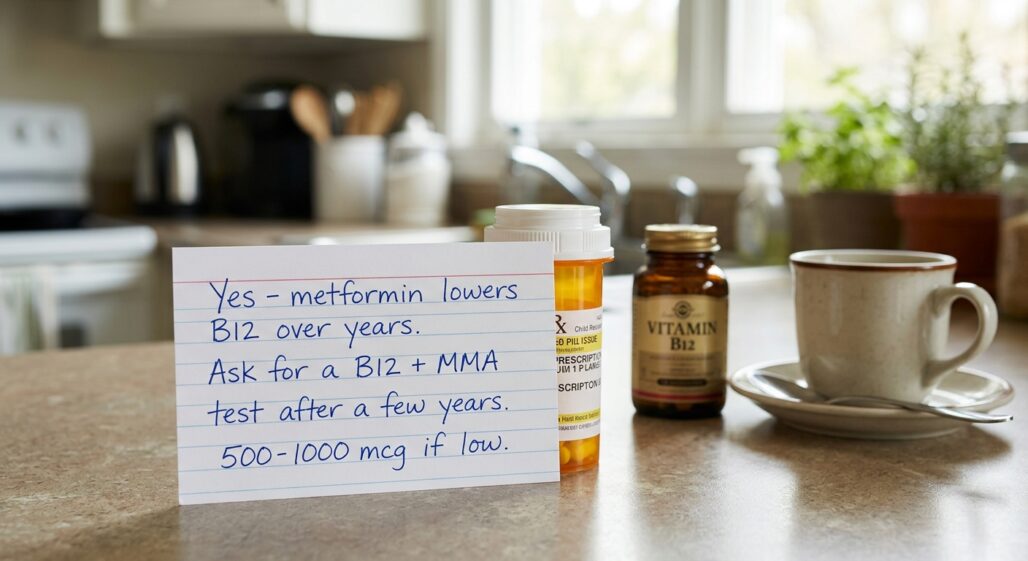
If you take metformin and you have been Googling whether it quietly drains your vitamin B12, the short answer is: often, yes, but slowly, and it is the kind of gap a single blood test settles. Years of metformin lower B12 in a meaningful minority of users, and the longer and higher the dose, the bigger the risk. This article breaks down how big the effect actually is in the numbers, why it happens in your gut, who needs to watch closely, and the exact dose and form that close a real gap. The B12 picks I mention at the end are the same ones I would keep in my own family's medicine drawer if a relative on metformin came back low.
Affiliate disclosure: this article contains affiliate links. As an Amazon Associate, UsefulVitamins.com earns from qualifying purchases at no extra cost to you.
Before you decide
This article is general information, not medical advice, and it is not a reason to change anything about your prescription. Never stop, lower, or skip metformin on your own, because the blood-sugar control it gives almost always outweighs a B12 gap you can fix separately. Metformin remains a first-line diabetes medication for good reason.
The people who should pay closest attention are those on metformin for four or more years, on doses at or above 1,500 mg a day, plus anyone already prone to low B12: vegans and strict vegetarians, older adults, people with prior gastric or small-bowel surgery, and anyone with unexplained anemia or nerve symptoms.
Call your doctor or pharmacist promptly if you notice numbness or pins-and-needles in the hands or feet, balance problems, a sore smooth tongue, unusual fatigue, or memory fog. These can signal B12 deficiency, and your clinician can order the test and tell you whether and how to supplement. You can read about how we review supplements to see how I weigh this kind of evidence.
What the metformin and B12 interaction actually is
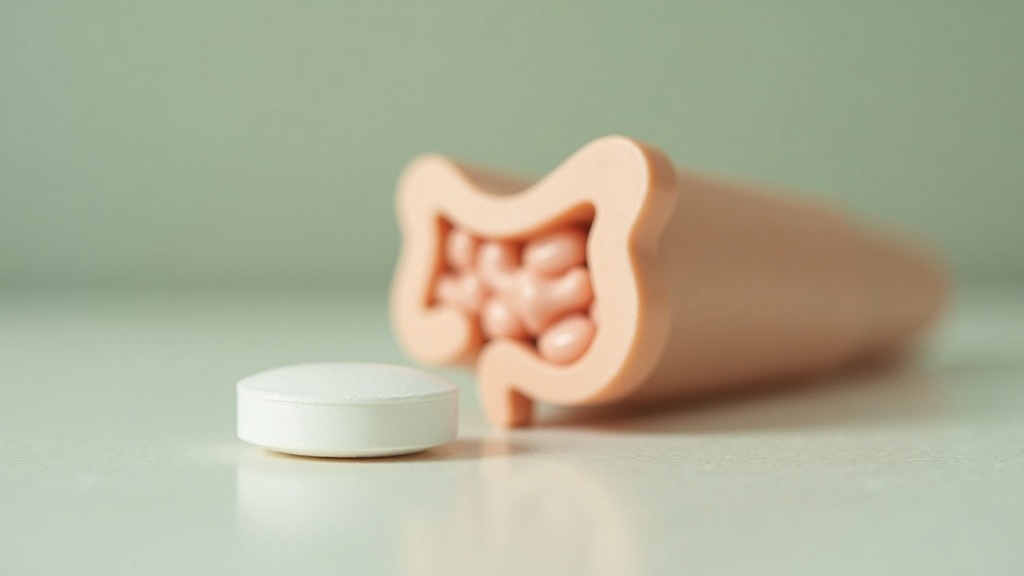
Metformin does not destroy B12 or burn it up. It interferes with how your gut absorbs the B12 you already eat, so levels drift down over time rather than crashing overnight. That slow timeline is exactly why so many people miss it.
The leading mechanism is mechanical and elegant. Vitamin B12 binds a protein called intrinsic factor, and that complex is taken up in the terminal ileum, the last stretch of small intestine, through a receptor process that depends on calcium. A long-standing American Academy of Family Physicians review describes how metformin appears to impair the calcium availability that ileal cells need to grab the B12-intrinsic-factor complex.
Other proposed pathways add to it: changes in gut motility, shifts in the bacteria of the small intestine, and altered bile-acid handling. A 2024 pathogenesis and recommendations review lays out how these overlap. Think of it less like a leak in the tank and more like a partially clogged intake valve. The fuel is there; less of it gets in.
That mechanism also explains the fix: because the problem is absorption, swallowing more B12 than a normal day's worth lets a small fraction slip through by passive diffusion. Whole-food intake alone rarely closes the gap once metformin is throttling the receptor pathway.
How big is the effect, in real numbers
Here is where the honest framing matters. The risk is real and it is dose- and time-dependent, but most metformin users do not develop frank deficiency, and the absolute jump in any single year is small.
The strongest data come from a randomized-trial cohort. A secondary analysis of the Diabetes Prevention Program Outcomes Study (J Clin Endocrinol Metab, 2016) followed people on 850 mg of metformin twice daily. Each year of metformin use raised the odds of B12 deficiency by about 13 percent (odds ratio 1.13), and combined low or borderline-low B12 reached 19.1 percent of metformin users at five years versus 9.5 percent on placebo.
A larger 2022 meta-analysis in Cureus pooled 17 studies and 18,393 patients. It found B12 deficiency in 23.16 percent of metformin users versus 17.4 percent of non-users, an odds ratio of 2.95. The dose-response was steep: users on 1,000 to 2,000 mg a day had roughly 2.6 times the odds, and those at or above 2,000 mg a day had nearly 6 times the odds.
So the real question is not "does metformin lower B12" but "how long have you taken it, at what dose, and have you ever actually checked." A practitioner-facing summary from the NIH Office of Dietary Supplements agrees the association is confirmed across cohorts and trials. Numbers vary by study and by how each defined "low," which is why your own lab value beats any population average.
What to do: testing, dose, and which form

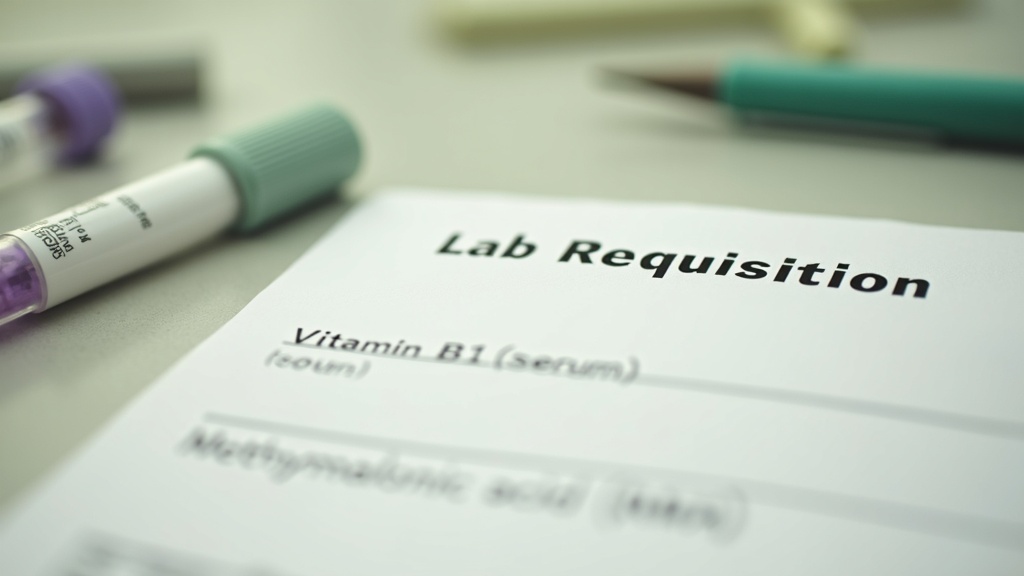
Blood work changes the question. Without it you are guessing whether you are one of the 1-in-5 who drifts low or one of the majority who stays fine. Ask your doctor for a serum vitamin B12 test, and if the result lands in the gray zone, ask to add a methylmalonic acid (MMA) test, because MMA rises early and catches a functional shortage that serum B12 alone can miss.
The American Diabetes Association now bakes this into routine care. Its 2026 Standards of Care recommend periodic B12 measurement for people on long-term metformin, with annual checks reasonable past about four years of use or at higher doses.
If a test confirms you are low, the food-first answer hits a ceiling here, and a supplement earns its place. The B12 RDA for adults is just 2.4 mcg, but a deficiency caused by malabsorption is treated with far more, because only a sliver gets through.
| Scenario | Typical approach | Why |
|---|---|---|
| Confirmed low B12, no severe symptoms | 500-1000 mcg oral daily | High oral doses can match injections for many people; about 1% absorbs passively |
| Borderline B12, high MMA | Recheck and discuss 500 mcg oral with your clinician | Functional shortage worth correcting before symptoms set in |
| Neurologic symptoms or pernicious anemia | Clinician decides; injections may be used | Oral can be too undependable when absorption is badly impaired |
For most people with a metformin-driven gap, the NIH notes that high-dose oral cyanocobalamin around 1,000 mcg daily can be as effective as intramuscular injection. Spacing does not matter much the way it does with iron or thyroid pills; you do not need to time B12 hours away from your metformin. Just be consistent. B12 is also one of several nutrients worth reviewing if you are on the drug long term; our roundup of the best supplements for metformin users covers the wider picture.
A quick note on tracking: if you take metformin alongside several supplements, StackMyMed can help you log the stack and flag conflicts to raise with your pharmacist, though it is a prompt to ask, not a replacement for that conversation.
What to look for when buying a B12 supplement
Forms first. Despite marketing, the NIH ODS states there is no good evidence that methylcobalamin absorbs better than cyanocobalamin, and cyanocobalamin is the form used in the trials and on the FDA-listed drug label. For a metformin gap, a plain 500-1000 mcg cyanocobalamin or methylcobalamin tablet is fine, and the cheaper one usually wins on cost-per-active-mcg.
Sublingual versus swallowed barely matters here. Because high oral doses drive absorption through passive diffusion, both routes work; pick whichever you will take daily. Skip the expensive multi-B "energy" stacks if you only need B12, since the extra B vitamins just stack up and get excreted.
A clean label is the real value test: a stated B12 dose, minimal fillers, and ideally third-party verification (USP Verified or NSF Certified). For the broader nutrient picture, see our vitamin B12 dosage guide and our roundup of the best vitamin B12 supplements.


As an Amazon Associate, UsefulVitamins.com earns from qualifying purchases at no extra cost to you. We only recommend products supported by published research or third-party testing.
Who is most at risk
Risk stacks. The highest-risk profile is a long-term, high-dose metformin user who also starts with thin B12 reserves. That combination is where deficiency shows up first.
Watch most closely if you are: on metformin four-plus years, at or above 1,500 mg a day, a vegan or strict vegetarian (animal foods are the main dietary source), an older adult with reduced stomach acid, someone with prior gastric bypass or small-bowel surgery, or anyone with unexplained anemia, neuropathy, or chronic kidney disease.
There is also a quiet trap worth naming: a metformin-driven B12 deficiency can mimic or worsen diabetic nerve pain, so numb, tingling feet get blamed on diabetes when low B12 is part of the cause. A 2016 trial-cohort analysis and later reviews both flag this overlap. If you have neuropathy on metformin, B12 deserves a look. Our overview of diabetes medication and herbal supplement risks covers other interactions worth knowing.
When to see a clinician
Some symptoms are a "book the appointment" signal, not a "wait and see" one.
Contact your doctor if you develop persistent numbness or tingling in the hands or feet, worsening balance, a sore or beefy-red tongue, unexplained tiredness, breathlessness, pallor, or new memory and concentration problems. Neurologic damage from prolonged B12 deficiency can become permanent, so the symptoms above earn a prompt call rather than a self-prescribed bottle. Your clinician can confirm with labs and choose oral versus injected B12 based on severity.
FAQ
Should I stop metformin to protect my B12?
No. The fix is adding B12 if you are low, not removing a medication that controls your blood sugar. Discuss any change only with your prescriber.
How long until metformin affects B12?
The effect builds over years. The AAFP review notes deficiency may not surface for five to ten years of use, which is why periodic testing past about four years makes sense.
Do I need injections or are pills enough?
For most people with a metformin gap, the NIH says high-dose oral B12 (around 1,000 mcg daily) can be as effective as injections. Injections are usually reserved for severe deficiency, neurologic symptoms, or pernicious anemia, and that is a clinician's call.
Will calcium fix the absorption problem?
Small studies suggest extra calcium can partly reverse the malabsorption, but it is not a reliable strategy, and experts have favored simply supplementing B12 instead. Do not start calcium for this without your doctor.
Is methylcobalamin worth the extra money?
For closing a metformin gap, no clear advantage over cyanocobalamin in absorption. Buy on price and label quality. See the drug-supplement interaction checker for related pairings.
The bottom line on metformin and vitamin B12
Yes, metformin lowers vitamin B12 in a meaningful share of long-term users, and the risk climbs with dose and years on the drug. But this is a manageable, testable gap, not a reason to question a medication that earns its place in diabetes care. For a fuller map of pairings, see our guide to drug and supplement interactions and the work of the UsefulVitamins Editorial Team.
Next steps:
- Note how long you have been on metformin and your daily dose; four-plus years or 1,500-plus mg a day raises the priority.
- Ask your doctor for a serum B12 test, and add MMA if the result is borderline.
- If you are confirmed low, discuss a 500-1000 mcg daily oral B12 with your clinician or pharmacist.
- Watch for numbness, tingling, or unexplained fatigue and report them promptly.
As an Amazon Associate, I earn from qualifying purchases. Product recommendations are based on real reviews and independent research.
This article is for informational purposes and not medical advice. Drug-nutrient interactions can be serious. Never start, stop, or change a prescription medication on your own. Consult a licensed physician or pharmacist before starting any supplement, particularly if you are pregnant, nursing, taking prescription medications, or managing a chronic condition such as diabetes. Reviewed by the UsefulVitamins Editorial Team.
