
Before you decide
This article is general information, not medical advice for your situation. Levothyroxine dosing is sensitive, and the right plan depends on your labs and your prescriber.
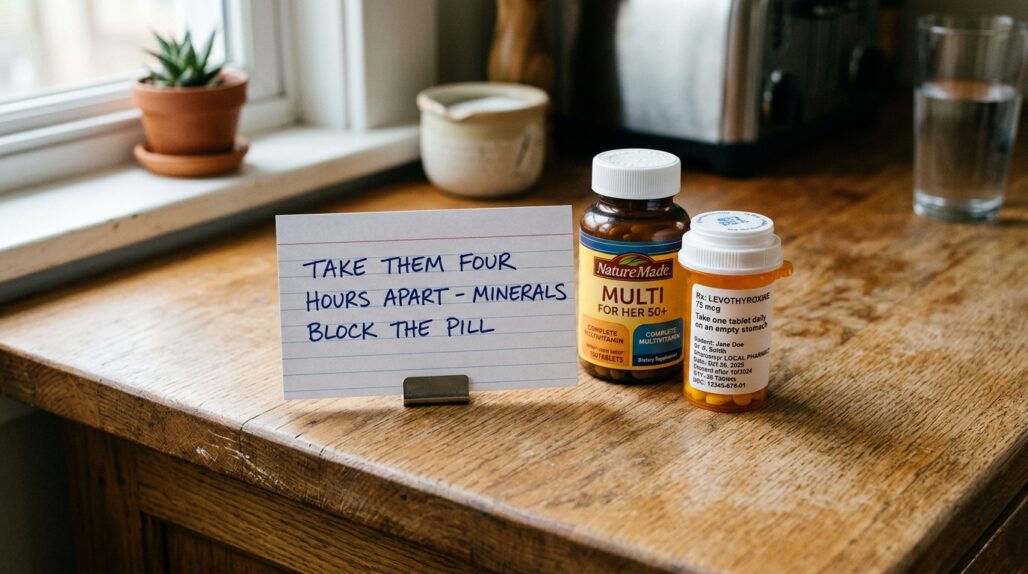
A daily multivitamin and a thyroid pill are both common, and most people can use both safely. The catch is timing, not the multivitamin itself. The problem starts when both go down with the same glass of water.
The people most affected are those whose thyroid is hard to keep stable: anyone recently started on levothyroxine, people with thyroid cancer histories, and pregnant patients, where small absorption swings matter more. If that is you, treat the timing rule as firm, not optional.
What actually happens in your gut
Levothyroxine is the synthetic version of T4, the main thyroid hormone. Your gut only absorbs it well under specific conditions, which is why the pill is taken fasting.
Several minerals get in the way through a process called chelation. Calcium, iron, and magnesium bind to levothyroxine and form a complex your intestine cannot take up, so the bound hormone passes through and leaves the body unused. A typical multivitamin contains all three of those minerals, which is what makes a one-a-day a quiet offender.
A 2021 systematic review in the journal Pharmaceuticals looked across the studied supplements and found that calcium, iron, fiber, soy, and coffee all reduced levothyroxine absorption, even where the overall evidence was limited. The review by Wiesner and colleagues reported calcium cutting absorption by roughly 20 to 25 percent and iron raising TSH in a meaningful share of patients taking it alongside the hormone. The direction of the effect is consistent: less hormone in, higher TSH, returning symptoms.
The detail people miss is that levothyroxine has a narrow therapeutic window. A 20 to 50 percent drop in what you absorb is enough to move you from controlled to symptomatic, even though nothing about your dose changed on paper.

Which minerals in your multivitamin are the problem
Not every ingredient interferes. The trouble is concentrated in a few minerals that show up in almost every general formula.
| Multivitamin ingredient | Interferes with levothyroxine? | What to do |
|---|---|---|
| Calcium | Yes – binds the hormone; can raise TSH | Separate by 4+ hours |
| Iron | Yes – forms an insoluble complex | Separate by 4+ hours |
| Magnesium | Likely – same binding mechanism, less data | Separate by 4+ hours |
| Biotin (B7) | No effect on absorption, but skews thyroid lab tests | Pause before blood draw |
| Vitamin C, B vitamins, vitamin D | No meaningful binding effect | No special timing |
Calcium is the best-documented offender. A clinical evaluation of calcium carbonate and levothyroxine showed the mineral lowering hormone absorption when the two were taken together, with TSH rising and then falling again once the calcium was separated out.
Iron behaves the same way. The NIH Office of Dietary Supplements iron fact sheet notes that iron supplements can reduce the absorption of levothyroxine and advises taking the two at least a couple of hours apart, with longer separation often recommended in practice.
Magnesium has less published data, but it binds through the same route, so it earns the same 4-hour spacing by default. If your multivitamin lists any of these three, the timing rule applies.
The biotin trap: it does not block the pill, but it wrecks your labs
This one is different and easy to miss. Biotin does not reduce levothyroxine absorption at all. It causes a separate, sneaky problem: it distorts your thyroid blood tests.
Most labs measure TSH, free T4, and free T3 using assays built on biotin-streptavidin chemistry. When you have a lot of biotin circulating, it interferes with that chemistry and produces wrong numbers. The FDA warned that biotin can cause falsely high or falsely low results depending on the test, and that this can lead to misdiagnosis or the wrong treatment change.
In thyroid panels, the classic pattern is a falsely low TSH with falsely high free T4 and free T3, a picture that can look like overactive thyroid when nothing is actually wrong. A doctor who trusts that result might cut your dose for no reason.
Many hair, skin, and nail multivitamins pack in high-dose biotin, sometimes 5,000 to 10,000 micrograms. Laboratory guidance from ARUP urges patients to disclose every supplement they take and have the lab consulted when results look off. Endocrine guidance goes further, suggesting you hold high-dose biotin for about 48 to 72 hours before testing so the supplement clears your system. Tell your lab or prescriber what you take, and ask how long to pause before a draw.
Why morning routines quietly fail
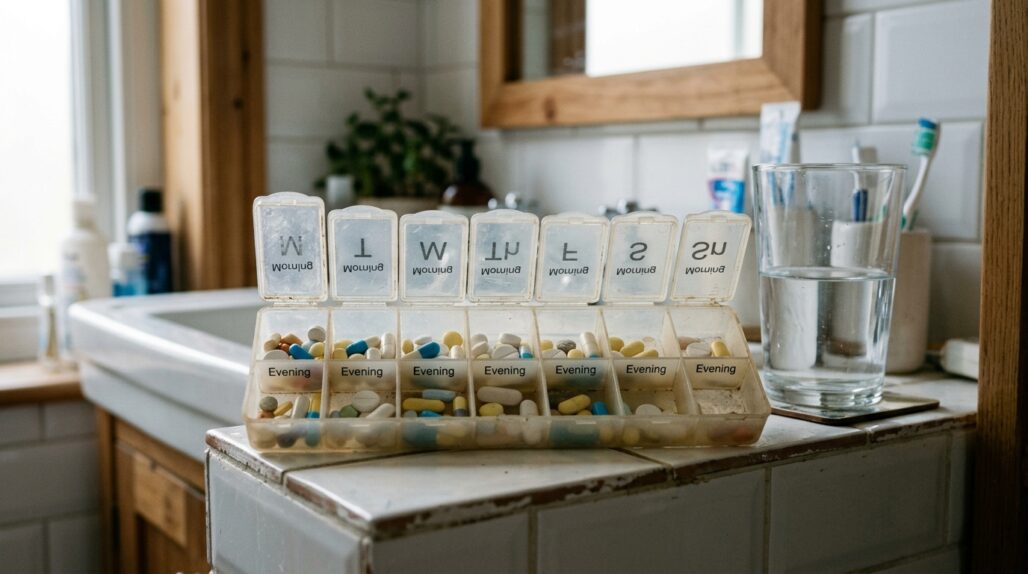
Here is the pattern we see. Someone takes their thyroid pill with breakfast, swallows their multivitamin with the same coffee and the same glass of water, and feels fine about it because both are sitting right there on the counter.
Months later their TSH creeps up, their dose gets raised, and nobody connects it to the multivitamin. The dose was never the problem – the absorption was. The minerals were eating into a chunk of every pill.
The fix costs nothing. Take levothyroxine first thing on an empty stomach, wait 30 to 60 minutes before eating, then take the multivitamin later in the day. Lunch, mid-afternoon, or bedtime all work, as long as you stay 4 hours clear of the thyroid pill.
If mornings are chaotic, an evening levothyroxine routine is a legitimate option for some people. The American Thyroid Association notes that levothyroxine is usually taken on an empty stomach 30 to 60 minutes before food. Separately, ATA Clinical Thyroidology for patients reports that some patients absorb it better shifting the dose to bedtime, well away from the evening meal. Whatever you pick, do it the same way every single day – consistency matters more than the exact clock time.
A few practical pointers:
- Levothyroxine in the morning, fasted. Water only. No coffee, no food, no supplements for 30 to 60 minutes.
- Multivitamin at a meal later in the day, at least 4 hours after the thyroid pill.
- Calcium and iron specifically deserve the full 4-hour buffer even if you take them outside the multivitamin.
- Pick a routine you can actually keep. A perfect plan you abandon is worse than a simple one you follow.
If you juggle several supplements and a prescription, it helps to log the whole stack in one place so you can show a pharmacist exactly what overlaps. A free app like StackMyMed lets you record what you take and flag timing clashes to raise at your next visit. It does not replace your clinician's judgment – it just makes the conversation faster.
Re-test before you assume your dose is wrong
If you have been taking your multivitamin and levothyroxine together and you change the timing, your absorption will change too. That means your old TSH no longer reflects how you are doing.
Give the new routine time to settle, then have your TSH re-checked on your prescriber's schedule, usually around 6 to 8 weeks after any change that affects absorption. Do not adjust your own dose to compensate for the timing fix. Separating the pills may mean you now absorb more, and a dose set during the overlap period could become too high.
Bring two things to that appointment: your full supplement list, and a note of any biotin you take and when you last took it. Both can change how your results should be read.

When to call your clinician sooner
Most of this is routine housekeeping. A few situations deserve a faster call.
- Returning hypothyroid symptoms – fatigue, weight gain, cold intolerance, low mood – after months of stability.
- A surprising thyroid result, especially a low TSH that does not match how you feel, while taking high-dose biotin.
- You are pregnant or trying to conceive, where thyroid control is tighter and absorption swings matter more.
- You started a new high-dose calcium or iron supplement on top of your multivitamin.
For chest pain, a racing or irregular heartbeat, or severe symptoms, treat that as urgent and seek same-day care rather than waiting for a routine review.
FAQ
Can I take my multivitamin and levothyroxine at the same time? It is better not to. The calcium, iron, and magnesium in most multivitamins bind the hormone and can cut absorption by roughly 20 to 50 percent. Separate them by at least 4 hours.
How long should I wait between levothyroxine and a multivitamin? At least 4 hours. The simplest plan is levothyroxine fasted in the morning and the multivitamin at lunch, the afternoon, or bedtime.
Which multivitamin ingredients actually interfere? Calcium, iron, and magnesium reduce absorption through binding. Biotin does not affect absorption but can distort thyroid blood tests. Vitamin C, vitamin D, and the B vitamins do not need special timing.
Should I stop biotin before a thyroid blood test? Many laboratories suggest pausing biotin for at least 48 to 72 hours before testing, because it can cause falsely low TSH and falsely high free T4 and T3. Confirm the exact window with your lab or prescriber.
Do I need to re-test my TSH if I change the timing? Yes. Changing when you take the multivitamin changes how much levothyroxine you absorb, so an earlier TSH may no longer apply. Re-check on your prescriber’s schedule and do not self-adjust your dose.
Is a multivitamin without minerals safer with levothyroxine? A formula with little or no calcium, iron, or magnesium is less likely to interfere with absorption, but watch the biotin content for lab reasons. For more on what to pick, see our guide to the best supplements for levothyroxine users. When unsure, ask a pharmacist to review the label.
Conclusion: keep the pills, just split the clock
A daily multivitamin and levothyroxine can coexist without trouble. The whole risk lives in taking them together, where calcium, iron, and magnesium quietly bind the hormone before your body can use it.
Take the thyroid pill fasted in the morning, push the multivitamin at least 4 hours out, watch the biotin around lab tests, and keep your routine identical day to day. Then let your prescriber confirm with a TSH check rather than guessing. For the wider picture on what does and does not mix with your medications, see our ultimate guide to drug-supplement interactions or run your stack through the drug-supplement interaction checker. The same spacing logic shows up with single minerals too – we cover it in calcium and levothyroxine timing and magnesium and levothyroxine. If you are choosing a product, our best multivitamins comparison, notes on supplements for thyroid health, and guide to the best iron supplements can help you pick one that plays nicely with your routine.
This article is for general education and does not replace personalized medical advice. Talk to your doctor or pharmacist before changing how or when you take levothyroxine or any supplement.
Reviewed by the UsefulVitamins Editorial Team.
