
Affiliate disclosure: this article contains affiliate links. As an Amazon Associate, UsefulVitamins.com earns from qualifying purchases at no extra cost to you.
Before you buy
The real question here is not which brand is "better." It is whether the extra money for Nordic Naturals buys you anything you will actually feel or measure. For a lot of people, the honest answer is no.
Both bottles deliver EPA and DHA, the two omega-3 fatty acids your heart, brain, and eyes use. Where they split is on three things: the chemical form of the oil, the dose per softgel, and the third-party seal on the label. Those three differences explain almost the entire price gap.
If you take fish oil as cheap insurance for a decent diet, the cheaper, verified option is fine. If you are dosing higher for triglycerides, joint comfort, or pregnancy on a doctor's advice, the form and concentration start to matter, and that is where premium can pay off.
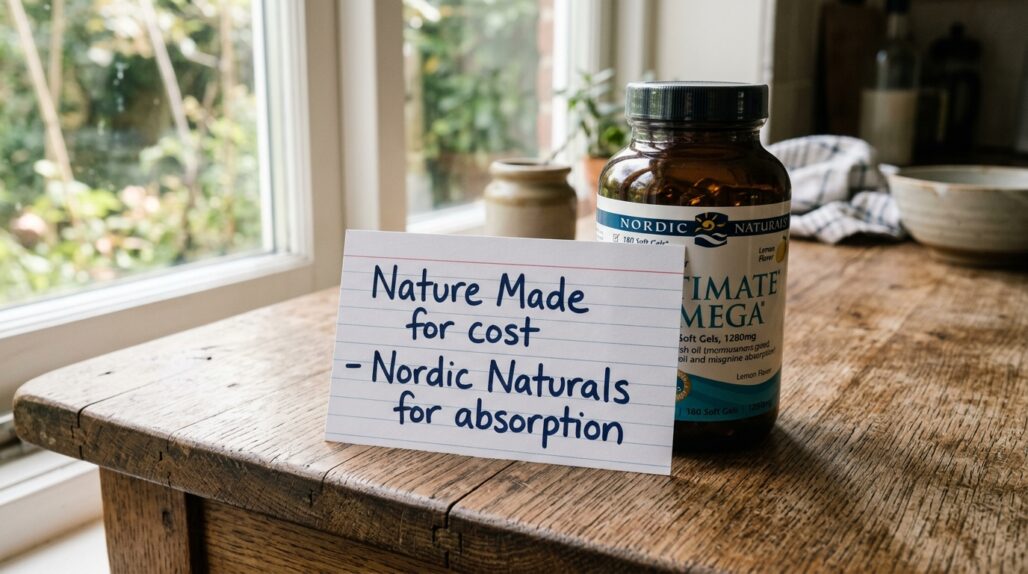
This comparison sticks to the two flagship products people actually cross-shop: Nature Made Omega-3 from Fish Oil 1200 mg and Nordic Naturals Ultimate Omega.
What each one actually is
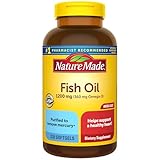
Nature Made Omega-3 from Fish Oil 1200 mg is the drugstore default. Each softgel provides 1200 mg of fish oil yielding about 360 mg of total omega-3s, and Nature Made's own label directs a serving of two softgels (roughly 720 mg total omega-3, about 600 mg combined EPA and DHA) taken with a meal. It is USP Verified, which is the seal that matters most on a mass-market supplement.
The catch is the form. Nature Made's concentrated fish oil is in the ethyl ester (EE) form, the cheaper-to-produce version that shows up in most budget and prescription omega-3s. More on why that matters below.
Nordic Naturals Ultimate Omega is the brand most "best fish oil" lists default to. A serving is two softgels delivering 650 mg EPA and 450 mg DHA, or 1,280 mg total omega-3s per serving, which is a meaningfully bigger dose than Nature Made's two-softgel serving.
Nordic Naturals uses the triglyceride and re-esterified triglyceride (rTG) form, plus a lemon flavoring most people find easier on the stomach. It is third-party tested for purity and freshness, with certificates of analysis published per batch, and it is Friend of the Sea certified for sourcing.
Ethyl ester vs triglyceride – does the form really matter?
This is the part the marketing leans on hardest, so it is worth being precise rather than dramatic.
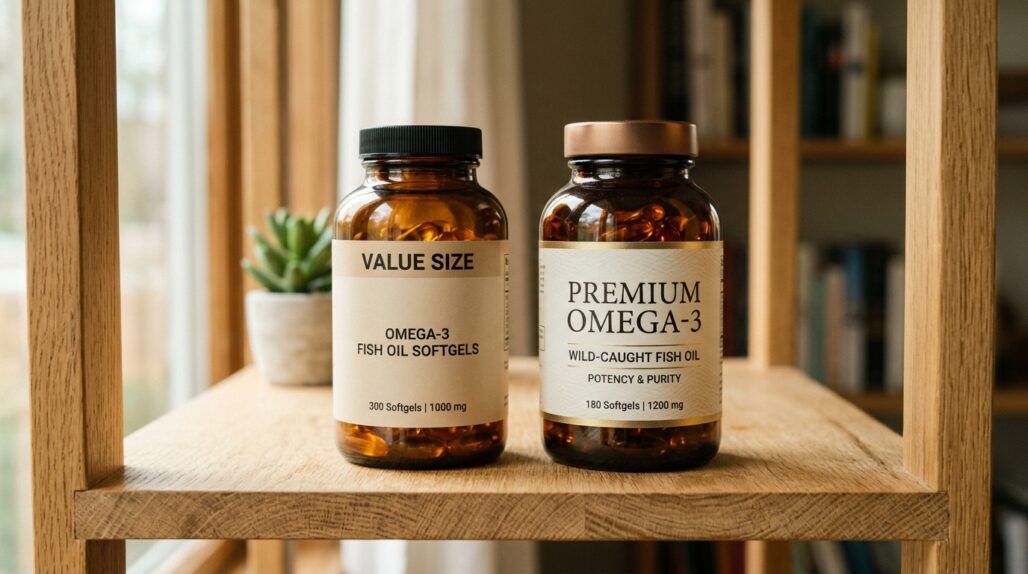
Fish oil naturally exists in triglyceride form. To concentrate the EPA and DHA, manufacturers convert it to ethyl ester, which is cheaper. Premium brands then re-attach the fatty acids to a glycerol backbone, giving you re-esterified triglyceride (rTG) – closer to the natural form, more expensive to make.
The most-cited human data comes from a 2010 crossover trial led by Dyerberg. Setting natural fish oil at a 100 percent absorption index, the study put the re-esterified triglyceride form at about 124 percent and the ethyl ester form at about 73 percent for the rise in blood EPA and DHA over two weeks, per the Dyerberg 2010 study in Prostaglandins, Leukotrienes and Essential Fatty Acids.
So the difference is real, not invented. The rTG form does absorb better. But two honest caveats keep it from being a knockout:
- The gap shrinks when you take ethyl ester fish oil with a fatty meal, which improves EE absorption considerably.
- Over weeks of daily use, your blood and tissue omega-3 levels rise on either form. Consistency beats form for most people.
The practical read: if you take a cheaper ethyl ester oil reliably with food, you are not throwing your money away. If you want the most efficient milligram-for-milligram absorption and are willing to pay, rTG is the better molecule.
EPA and DHA per dose, and per dollar
This is where the price gap gets less scary. Nordic Naturals costs roughly 2x to 3x per serving, but it also delivers more omega-3 per serving, so the cost per gram of EPA+DHA narrows.
| Spec | Nature Made Fish Oil 1200 mg | Nordic Naturals Ultimate Omega |
|---|---|---|
| Serving size | 2 softgels | 2 softgels |
| EPA per serving | ~360 mg | 650 mg |
| DHA per serving | ~240 mg | 450 mg |
| Total omega-3 per serving | ~720 mg (about 600 mg combined EPA+DHA) | 1,280 mg |
| Form | Ethyl ester (EE) | Triglyceride / rTG |
| Third-party seal | USP Verified | Friend of the Sea, per-batch COA, NSF-certified facility |
| Approx. cost per serving | ~$0.30-0.35 | ~$0.90-1.20 |
A note on Nature Made's label math: the bottle counts a "serving" as two softgels, and different lots phrase the omega-3 total differently, so read the panel on the bottle you buy rather than trusting a round number. As of writing these prices move with promotions and pack size – check current price before you buy.
The takeaway: per serving, Nordic costs much more. Per gram of usable omega-3, the gap is smaller once you weight Nordic's rTG absorption advantage. It is still the pricier oil, just not 3x worse value than the sticker suggests.
Third-party testing – USP vs Nordic's program
Purity matters more than brand name. Fish oil can carry mercury, PCBs, and oxidation (rancidity), so a credible seal is worth more than any "pharmaceutical grade" marketing phrase, which means nothing on its own.
Nature Made carries the USP Verified mark, run by the nonprofit U.S. Pharmacopeia. It confirms the product contains what the label says, dissolves properly, and is screened for contaminants under the USP Verified program. It is the strongest widely available consumer seal, and Nature Made having it on a budget product is a genuine point in its favor.
Nordic Naturals takes a different route. It is not currently IFOS-listed despite a reputation built partly on past IFOS five-star results. Instead it publishes a batch-specific certificate of analysis for purity and freshness, manufactures in an NSF-certified facility, and holds Friend of the Sea sourcing certification.
That is a legitimate testing program, but it asks you to trust the brand's own published COAs rather than an independent pass/fail seal on the bottle. Both products are well-tested. Nature Made's USP mark is the more standardized, easier-to-verify badge; Nordic's transparency is real but brand-run. Keep in mind the FDA does not approve supplements before sale, which is exactly why third-party verification carries the weight it does.
Who should buy which
Here is the honest split, because the right pick depends entirely on why you take fish oil.
Buy Nature Made if you:
- Take fish oil as general-health insurance and want the cheapest verified option.
- Are happy to swallow it with a meal to close the absorption gap.
- Value the USP Verified seal and a price you will not resent re-buying.
Buy Nordic Naturals if you:
- Want a higher, better-absorbed dose without choking down four-plus softgels.
- Have had fishy burps on cheaper oils and want the gentler rTG plus lemon flavoring.
- Are dosing up for a specific reason and absorption efficiency justifies the cost.
For context on dose, most major health bodies put 250-500 mg of combined EPA and DHA per day as a reasonable general-health target, summarized in this GOED intake overview. Both products clear that easily in one serving, so for basic maintenance you do not need the premium dose at all.
If you are weighing Nordic specifically, our deeper look at whether Nordic Naturals Ultimate Omega is worth it digs into the same value question from the other side.
Cheaper picks worth a look
Nature Made is not the only value play, and Nordic is not the only premium one. A few alternatives sit between them on price and form, and some match Nordic's rTG quality for less.


As an Amazon Associate, UsefulVitamins.com earns from qualifying purchases at no extra cost to you.
UsefulVitamins may earn a commission from purchases made through the links above, at no extra cost to you.
If you want a triglyceride-form oil closer to Nordic's quality but cheaper, it is worth comparing the field. Our Nordic Naturals vs Sports Research omega-3 breakdown covers a strong mid-price rTG option, and if you want to understand why form keeps coming up, the TG vs EE vs krill bioavailability guide lays out the trade-offs in one place.
One more thing before you stack omega-3 with anything else: high-dose fish oil can thin blood slightly. If you take blood thinners or other medication, run it through our drug and supplement interaction guide first.
FAQ
Is Nordic Naturals really worth twice the price of Nature Made? Only if absorption and a higher per-dose amount matter to you. For routine general-health use, Nature Made’s USP-verified ethyl ester oil taken with food does the job for far less money.
Does ethyl ester fish oil actually work? Yes. Ethyl ester absorbs somewhat less efficiently than the triglyceride form, but taking it with a fatty meal narrows the gap, and consistent daily use raises your omega-3 levels on either form.
Which has more EPA and DHA per serving? Nordic Naturals Ultimate Omega delivers about 650 mg EPA and 450 mg DHA per two-softgel serving, a higher concentration than Nature Made’s standard two-softgel serving.
Is Nature Made fish oil third-party tested? Yes. It carries the USP Verified mark, which independently confirms label accuracy, potency, and contaminant screening – one of the strongest consumer seals available.
Is Nordic Naturals IFOS certified? Not currently. It publishes per-batch certificates of analysis and manufactures in an NSF-certified facility, but it does not display a current IFOS listing, so you are trusting the brand’s own published testing.
How much fish oil should I take per day? Most health organizations suggest 250 to 500 mg of combined EPA and DHA daily for general health. Both products exceed that in a single serving, so check with your doctor before going much higher.
The verdict
For the typical buyer, Nature Made wins on value and is the one we would point most people to. It is USP Verified, cheap enough to take every day without thinking about it, and clears the general-health omega-3 target in one serving. Its only real weakness is the ethyl ester form, and you can largely cancel that out by taking it with a meal.
Nordic Naturals is the better product, not the better value. The triglyceride form genuinely absorbs better, the dose is higher, and the lemon flavoring is easier on sensitive stomachs. If you are dosing up for a specific reason or you have had burps and aftertaste on cheaper oils, the premium is defensible.
Next step: decide your "why." General insurance, with food, on a budget – buy Nature Made. Higher dose, best absorption, gentler on the gut – buy Nordic Naturals and check the current price first, since promotions swing the per-serving math.
This article is for general information only and is not medical advice. Supplements can interact with medications and health conditions; talk to your doctor or pharmacist before starting fish oil, especially if you take blood thinners or are pregnant.
Reviewed by the UsefulVitamins Editorial Team.
