
Ozempic and Rybelsus are the same drug — semaglutide — delivered two entirely different ways. One goes under the skin once a week. The other goes through your stomach every morning, after a ritual that requires an empty stomach, a small glass of water, and thirty minutes of nothing else. The active molecule in both tablets and injections is chemically identical. Once it reaches your bloodstream, it behaves identically. The journey to get there is where everything diverges.
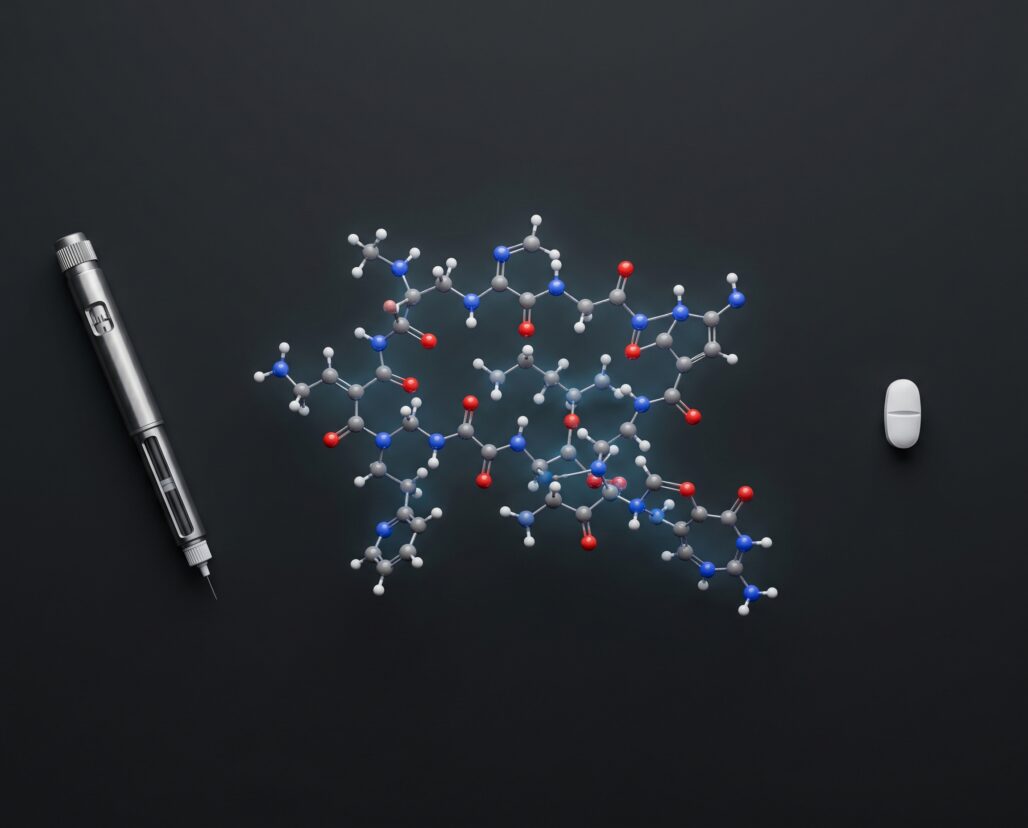
The honest answer to which is better depends entirely on what you can swallow, what you can inject, what you can afford, and what your prescriber thinks you will actually take consistently. The injectable version produces modestly better glycemic control and somewhat greater weight loss at their respective maximum doses. The oral version removes needles from the equation. Neither advantage is so overwhelming that it erases the other option for every patient. What follows is a clear look at what the clinical trial record and the FDA prescribing labels actually show, so that conversation with your prescriber is more informed.
Summary
- Ozempic is semaglutide injection, FDA-approved in December 2017 as an adjunct to diet and exercise for glycemic control in adults with type 2 diabetes, and for cardiovascular risk reduction in adults with T2D and established cardiovascular disease. It is not FDA-approved as Ozempic for weight loss — Wegovy is the weight-loss-labeled brand of semaglutide.
- Rybelsus is oral semaglutide, FDA-approved in September 2019 as the first oral GLP-1 receptor agonist for glycemic control in adults with type 2 diabetes. It is also not labeled for weight loss.
- Both carry a boxed warning for thyroid C-cell tumors, are contraindicated in personal or family history of medullary thyroid carcinoma (MTC) or Multiple Endocrine Neoplasia syndrome type 2 (MEN 2), and share warnings about acute pancreatitis and severe gastroparesis.
- The SUSTAIN trial program (subcutaneous semaglutide) showed HbA1c reductions of 1.5-1.8 percentage points with semaglutide 1 mg weekly. The PIONEER program (oral semaglutide) showed HbA1c reductions of 1.0-1.4 percentage points with 14 mg daily.
- Oral bioavailability of Rybelsus is approximately 0.8%, versus roughly 89% for subcutaneous Ozempic. SNAC, the absorption enhancer in the tablet, makes that low number workable.
- Neither drug is available without a prescription. Both require ongoing physician supervision.
Same Molecule, Two Very Different Delivery Routes
The active ingredient is identical. Semaglutide is a GLP-1 receptor agonist, a synthetic analog of the gut hormone GLP-1 with structural modifications that extend its half-life to approximately seven days. That long half-life is what makes once-weekly injection practical for Ozempic and once-daily oral dosing feasible for Rybelsus.
When semaglutide reaches the bloodstream, it does the same things regardless of route: stimulates glucose-dependent insulin secretion, suppresses glucagon, slows gastric emptying, and reduces appetite via central signaling. The mechanism is identical. The pharmacokinetic journey is where the two formulations diverge.
Subcutaneous injection bypasses the gastrointestinal tract entirely. Bioavailability is approximately 89%, absorption is predictable, and steady-state plasma concentrations are reached within four to five weeks. You inject into the abdomen, thigh, or upper arm, rotating sites weekly.
Oral delivery of a peptide drug is, to put it plainly, a pharmacological problem. Peptides are digested before they can be absorbed through the intestinal wall under normal conditions. Rybelsus solves this through SNAC.
The SNAC Technology Behind Oral Semaglutide
SNAC stands for sodium N-[8-(2-hydroxybenzoyl)amino]caprylate. It is a small-molecule absorption enhancer coformulated with the semaglutide in each Rybelsus tablet. Without it, oral semaglutide would have no meaningful bioavailability.
According to research published in PMC (PMC9515042), SNAC works through three mechanisms acting simultaneously in the stomach: first, it buffers the local pH around the dissolving tablet, reducing pepsin activity and protecting semaglutide from enzymatic degradation before it can be absorbed; second, it promotes monomerization of semaglutide molecules by altering the polarity of the solution, preventing the clustering that would block absorption; and third, it is incorporated into the lipid membranes of local gastric epithelial cells and fluidizes those membranes, enabling transcellular transport — meaning semaglutide passes through the gastric cell wall rather than through gaps between cells.
Absorption happens in the stomach, not the small intestine. This is an important distinction, because it is why the fasting requirements are so strict. Food in the stomach changes the pH, competes with SNAC for membrane interaction, dilutes the local drug concentration, and substantially reduces absorption. The pharmacokinetic data show limited or no measurable absorption in fed participants.
The result: oral bioavailability of approximately 0.8%, compared to 89% for subcutaneous injection. That gap is why Rybelsus requires higher absolute doses (7-14 mg daily) to achieve semaglutide plasma concentrations comparable to lower doses of Ozempic (0.5-1 mg weekly). And it is why the fasting ritual is non-negotiable, not a loose suggestion.
PIONEER vs. SUSTAIN: What the Trial Data Show
Both formulations were studied in large, phase 3, randomized controlled trial programs. They were not studied head-to-head against each other. Comparing them requires an indirect cross-program analysis, which has inherent limitations — trial populations, background therapies, and comparator arms differed. That caveat matters.
The SUSTAIN program (subcutaneous semaglutide, Ozempic): Once-weekly subcutaneous semaglutide 1.0 mg reduced HbA1c by 1.5-1.8 percentage points over 30-56 weeks, outperforming sitagliptin, liraglutide, exenatide extended release, dulaglutide, canagliflozin, and insulin glargine. SUSTAIN-6 (NCT01720446) added a cardiovascular benefit signal: a 26% relative risk reduction in the composite MACE outcome versus placebo.
The PIONEER program (oral semaglutide, Rybelsus): More than 9,500 patients across PIONEER 1-10. Key results:
- PIONEER 3 (NCT02607865): Oral semaglutide 14 mg reduced HbA1c by 1.3 percentage points versus 0.8 percentage points for sitagliptin 100 mg at 26 weeks, in patients on background metformin with or without sulphonylurea.
- PIONEER 5 (NCT02827708): Oral semaglutide 14 mg reduced HbA1c by 1.0 percentage point versus 0.2 percentage points for placebo in patients with moderate renal impairment.
- PIONEER 4 (NCT02863419) is the most instructive comparison for this article. It randomized patients to oral semaglutide, subcutaneous liraglutide 1.8 mg (a different GLP-1 agonist, not semaglutide injection), or placebo. At 26 weeks, oral semaglutide produced HbA1c reduction of -1.2 percentage points versus -1.1 percentage points for liraglutide — demonstrating non-inferiority to a subcutaneous GLP-1 agonist and superiority over placebo. Weight loss also favored oral semaglutide (-4.4 kg) over liraglutide (-3.1 kg) and placebo (-0.5 kg).
Cross-program indirect comparison: Analyses suggest injectable semaglutide at its approved doses produces approximately 0.2-0.3 percentage points greater HbA1c reduction and 1-2 kg greater weight loss than oral semaglutide at maximum dose. A real-world retrospective study (PMC11559783) over 26 weeks found no statistically significant HbA1c difference in clinical practice, though injectable produced numerically greater weight loss (-5.26 kg vs. -3.64 kg, p=0.312). The 105-patient sample limits generalization.
The evidence points in a consistent direction: the injectable delivers modestly better glycemic control and weight reduction on average. Whether that edge matters for a specific patient depends on what they can realistically stick to.
Dosing Schedules and Fasting Requirements
The practical experience of being on these drugs is quite different, and those differences affect adherence.
Ozempic (subcutaneous semaglutide): Per the Ozempic FDA prescribing information, the starting dose is 0.25 mg once weekly for four weeks — a dose too low to have meaningful glycemic effect, designed purely to reduce GI side effects during initiation. After four weeks, the dose increases to 0.5 mg weekly. If additional glycemic control is needed after at least four weeks at 0.5 mg, the dose escalates to 1 mg weekly. A 2 mg weekly dose is available for patients needing further control. There is no food or drink restriction around injection time. The injection can be given at any time of day, on any day of the week, as long as the weekly cadence is maintained.
Rybelsus (oral semaglutide): Per the Rybelsus FDA prescribing information, the starting dose is 3 mg once daily for the first 30 days — again, a dose below the therapeutic threshold, used to improve gastrointestinal tolerance. At day 31, the dose increases to 7 mg once daily. If additional glycemic control is needed after at least 30 days at 7 mg, the dose may increase to 14 mg once daily.
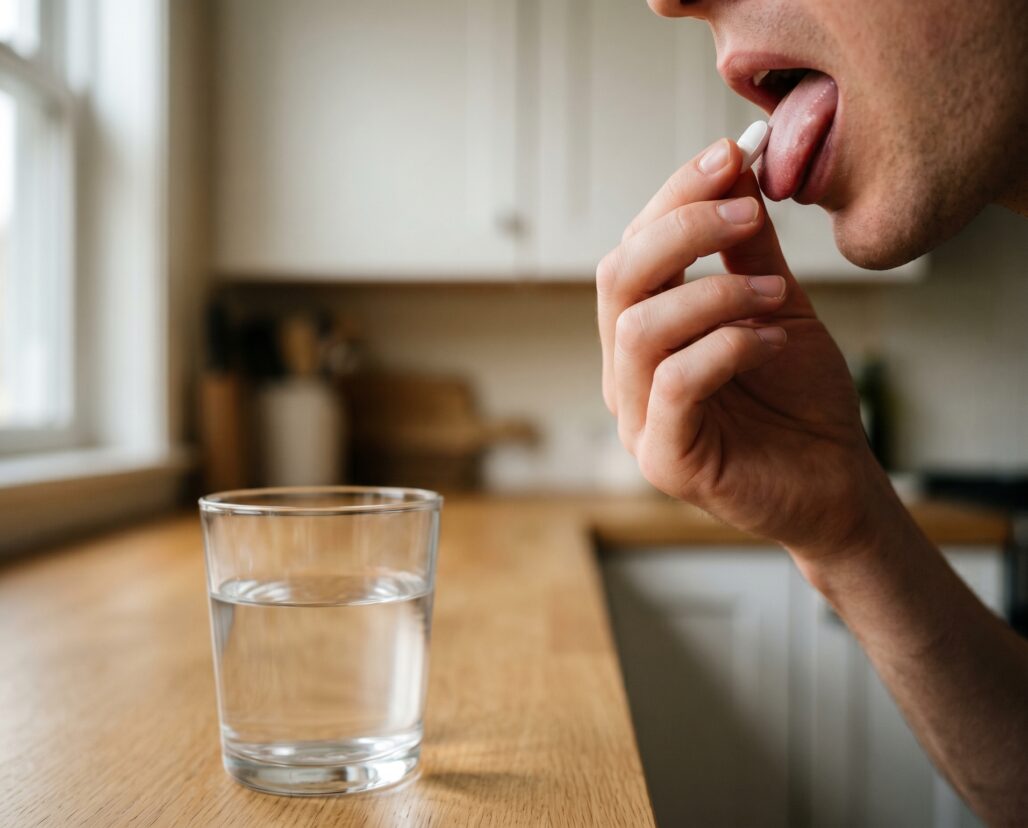
The fasting requirement for Rybelsus is explicit and non-negotiable: take the tablet every morning on an empty stomach with no more than 4 ounces (approximately 120 mL) of water. Wait at least 30 minutes before eating any food, drinking any beverage other than that initial small amount of water, or taking any other oral medication. Larger volumes of water reduce absorption. Food substantially reduces or eliminates absorption. Missing the fast is not a minor inconvenience — it can render the dose pharmacologically inactive.
For many patients, this routine is manageable. For others — those with variable morning schedules, early-shift workers, those who take morning medications with food — it creates a real adherence burden that the weekly injection does not.
GI Tolerability and Side Effects
Gastrointestinal side effects are the most common adverse events with both formulations. Nausea, diarrhea, vomiting, and constipation appear across both trial programs and are the most frequent reasons for discontinuation.
The real-world comparison study (PMC11559783) reported adverse events more frequently with oral semaglutide than injectable (16.7% vs. 4.9%), with nausea and diarrhea predominating. The higher GI event rate with the oral form likely reflects direct gastric contact during SNAC-mediated absorption.
Both share these FDA label warnings:
- Acute pancreatitis: Discontinue if suspected. Symptoms include persistent severe abdominal pain, possibly radiating to the back.
- Gastroparesis: Neither drug is recommended with severe gastric emptying impairment. Further slowing motility in an already-impaired stomach can cause serious complications.
- Diabetic retinopathy: Rapid glycemic improvement has been associated with worsening retinopathy. Patients with a history require monitoring.
Nausea with both drugs tends to peak during dose escalation and diminish as the body adjusts. The graduated starting doses in both protocols exist specifically to limit this burden.
Boxed Warning: Thyroid C-Cell Tumors
Both Ozempic and Rybelsus carry the same boxed warning, the FDA's strongest safety alert. In rodent studies, semaglutide caused dose-dependent and duration-dependent thyroid C-cell tumors at clinically relevant exposures. Whether semaglutide causes thyroid C-cell tumors, including medullary thyroid carcinoma (MTC), in humans is unknown — human relevance of the rodent findings has not been established.
Contraindicated in:
- Personal or family history of medullary thyroid carcinoma
- Multiple Endocrine Neoplasia syndrome type 2 (MEN 2)
- Prior serious hypersensitivity reactions to semaglutide
Patients should be counseled about the theoretical risk and told to report symptoms such as a neck lump, hoarseness, difficulty swallowing, or shortness of breath.
Comparison Table
| Property | Ozempic | Rybelsus |
|---|---|---|
| Active ingredient | Semaglutide | Semaglutide |
| Route | Subcutaneous injection | Oral tablet |
| Dosing frequency | Once weekly | Once daily |
| Starting dose | 0.25 mg x 4 weeks | 3 mg x 30 days |
| Maintenance doses | 0.5 mg, 1 mg, 2 mg/week | 7 mg, 14 mg/day |
| Bioavailability | ~89% | ~0.8% |
| Food restriction | None | Empty stomach required |
| Water restriction | None | Max 4 oz (120 mL) water |
| Post-dose fast | Not required | 30 minutes minimum |
| FDA approval year | 2017 | 2019 |
| FDA-approved indication | T2D (glycemic control + CVD risk reduction) | T2D (glycemic control only) |
| Boxed warning | Thyroid C-cell tumors | Thyroid C-cell tumors |
| List price (approx.) | ~$1,028/month | ~$998/month |
| PIONEER/SUSTAIN HbA1c reduction (max dose) | ~1.5-1.8 pp | ~1.0-1.4 pp |
| Average weight loss (trials) | ~4-6 kg | ~3-4 kg |
| Primary trial program | SUSTAIN | PIONEER |
Frequently Asked Questions
Are Ozempic and Rybelsus the same drug? Same active molecule, different products. The bioavailability, absorption mechanism, dosing schedule, and administration conditions differ enough that they are not interchangeable without prescriber guidance.
Can Rybelsus replace Ozempic for someone who dislikes injecting? It can, for the right patient. Prescribers generally weigh needle aversion against the fasting requirement, morning schedule constraints, and gastric motility. That tradeoff belongs in a clinical conversation.
Does the 0.8% bioavailability of Rybelsus mean it is a weaker drug? Not exactly. The formulation is engineered to deliver therapeutic plasma concentrations despite low absolute bioavailability. PIONEER trial results confirm that 14 mg daily produces clinically meaningful HbA1c reductions. The lower bioavailability does contribute to a modestly lower efficacy ceiling versus injection, but it does not make Rybelsus a trivially ineffective drug.
Is compounded semaglutide a safe substitute? The FDA has explicitly cautioned against it. Compounded versions are not FDA-approved, may contain different salt forms of semaglutide, and lack the safety and efficacy data of the approved products. Discuss this with your prescriber before considering any compounded formulation.
Can either drug be used during pregnancy? No. Both should be discontinued before pregnancy. The Ozempic label recommends stopping at least two months before a planned pregnancy due to the long washout period. If pregnancy occurs during treatment, discontinue the drug.
Which is covered by insurance? Both are generally covered for type 2 diabetes when properly documented. Off-label weight loss coverage is far less consistent. List prices run approximately $1,028/month for Ozempic and $998/month for Rybelsus; savings programs can reduce costs to $25-$150/month for eligible commercially insured patients. Medicare-negotiated pricing for both is expected in 2027.
If you are managing a protocol like this, StackMyMed (our companion app) keeps your doses, timing, and interaction checks in one place. It does not replace medical advice — bring the log to your clinician.
Conclusion
Ozempic and Rybelsus are the same molecule solving the same problem — type 2 diabetes management — through mechanistically different delivery systems. Injectable semaglutide reliably produces somewhat stronger HbA1c reduction and weight loss across the clinical trial record. Oral semaglutide eliminates injections and achieves meaningful glycemic control in a needle-free format, at the cost of a daily morning ritual with strict food and water restrictions.
The actionable takeaway: if you are weighing these two options with your prescriber, the decision is not about which drug is objectively better. It is about which drug you will take correctly and consistently, given your actual daily schedule, your comfort with injection, your insurance coverage, and any complicating factors like gastroparesis or morning oral medications. Modest efficacy differences mean far less than consistent adherence. That conversation belongs in a prescriber's office, not on a search results page. This article gives you the vocabulary to have it.
For the complete semaglutide mechanism and SUSTAIN trial breakdown, see the semaglutide complete guide. For a broader map of peptide therapies with FDA approval, see FDA-approved peptides. For the injectable semaglutide vs. tirzepatide comparison, see Ozempic vs. Mounjaro.
This article is for informational and educational purposes only. It does not constitute medical advice, and it does not create a patient-provider relationship. Ozempic and Rybelsus are prescription medications approved by the FDA for type 2 diabetes in adults. They are not approved for weight loss under these brand names. Both carry a boxed warning for thyroid C-cell tumors. Do not start, stop, or adjust any prescription medication without consulting a licensed healthcare provider who knows your full medical history. If you are experiencing a medical emergency, call 911 or your local emergency number immediately.
This article is for informational purposes and not medical advice. Peptides, especially those marketed for therapeutic use, can interact with medications and health conditions. Consult a licensed physician before starting any supplement, particularly if you are pregnant, nursing, taking prescription medications, or managing a chronic condition.
