
Affiliate disclosure: this article contains affiliate links. As an Amazon Associate, UsefulVitamins.com earns from qualifying purchases at no extra cost to you.
If you searched for iron bioavailability, you are probably trying to figure out why one bottle says 65 mg of iron and another says 25 mg, and whether the cheap drugstore tablet is going to wreck your stomach for no good reason.
Before you decide
Who should NOT pick iron by feel: anyone with hemochromatosis or a family history of it, anyone with thalassemia, anyone with active GI bleeding before the source is identified, and any child or pregnant patient outside the clinician-supervised dose. Iron is the leading cause of fatal pediatric supplement poisoning in the US per the American Association of Poison Control Centers data. Keep bottles in a child-locked cabinet and call Poison Control at 1-800-222-1222 for any suspected pediatric ingestion.
Do this first before buying anything: ask your doctor for a full iron panel including serum ferritin, transferrin saturation, and a CBC. Without ferritin under about 30 ng/mL or a confirmed iron-deficiency anemia diagnosis, you are guessing whether you need iron at all.
What bioavailability means for iron
Iron absorption is unusual among nutrients because the gut has a hard ceiling on how much it will let in, and that ceiling is enforced hormonally. The hormone is hepcidin, made by the liver. When hepcidin is high it tags the gut iron exporter ferroportin for degradation, and absorbed iron stops crossing from the enterocyte into the bloodstream. A single oral iron dose, especially a large one, drives hepcidin up for the next 24 hours or so. That is the mechanism behind the alternate-day dosing finding and the reason huge daily doses do not always translate to faster repletion.
There are two chemically distinct iron pools in the diet, and they use different uptake routes. Heme iron comes from animal hemoglobin and myoglobin in red meat, fish, and especially organ meats. It is absorbed as the intact heme molecule by HCP1 on the brush border, kept inside the cell by heme oxygenase, and is largely shielded from the dietary inhibitors that wreck non-heme uptake. Reported absorption sits around 15 to 35 percent depending on iron status. Non-heme iron is the ionic iron in plants, fortified grains, and supplements. It needs to be reduced from ferric (Fe3+) to ferrous (Fe2+) by gastric acid and brush-border reductases before DMT1 can carry it into the enterocyte. Reported absorption is wide, around 2 to 20 percent, and it is profoundly affected by what else is in the meal.
The proxy metrics used in trials matter. Acute serum iron rises after a dose are easy to measure but only show one window of the absorption curve. Stable isotope studies using 57Fe or 58Fe and red-cell incorporation are the gold standard for fractional absorption. Serial ferritin over 4 to 12 weeks is the practical real-world measure that ties back to whether the supplement actually moved your stores.
The forms compared

Ferrous sulfate
Ferrous sulfate is the reference form. It is what most of the published RCTs use, it is cheap, and at 325 mg of the salt it delivers about 65 mg of elemental iron. In iron-depleted adults the fractional absorption from a single dose typically lands around 10 to 20 percent. The downside is well documented. Nausea, epigastric pain, constipation, and black tarry stools push a meaningful share of patients off the drug within weeks. Splitting the dose, taking with a small amount of food, or moving to alternate-day dosing reduces these effects but does not eliminate them.
Ferrous gluconate
Ferrous gluconate is a gentler organic salt, usually labeled at about 27 to 36 mg of elemental iron per tablet. Absorption is in the same ballpark as ferrous sulfate on a per-mg-elemental basis, around 12 percent in healthy adults. Many clinicians use it as a first step down for patients who cannot tolerate sulfate. It is still ionic iron, so the same enhancers and inhibitors apply at the meal.
Ferrous bisglycinate (chelated iron)
Ferrous bisglycinate is iron chelated to two molecules of glycine. The structure is stable through stomach acid, soluble in the small intestine, and absorbed through a partly separate pathway that is less dependent on a low gut pH. The Pineda et al. 2001 trial in anemic women reported about 2 to 4 times higher fractional absorption per mg elemental versus ferrous sulfate, with substantially fewer GI side effects. Typical supplement doses are 25 to 50 mg elemental iron, sold under names like Solgar Gentle Iron and Thorne Iron Bisglycinate. Cost runs $0.20 to $0.40 per dose, more than sulfate but often the difference between adherence and abandonment.
Heme iron polypeptide (Proferrin)
Heme iron polypeptide is purified hemoglobin from bovine sources. The patented form is Proferrin. It is absorbed through the heme pathway and is therefore largely unaffected by phytates, tannins, and calcium at the same meal. Small comparative trials report roughly an order of magnitude higher absorption per mg elemental than ferrous sulfate, although head-to-head trial volume is small and most absorption claims are extrapolated. Cost is high, often $0.50 to $1.00 per dose. A reasonable pick for patients who genuinely cannot tolerate any non-heme oral iron and who want to avoid IV iron.
Liposomal and sucrosomial iron (Sideral)
Liposomal and sucrosomial iron encapsulate the iron salt in a phospholipid or sucrester matrix. The marketing claim is that this packaging bypasses the brush-border transporters and the hepcidin gate, getting iron into the lymphatic system and lowering GI exposure. The patented sucrosomial form is Sideral. Tolerance is consistently better in trials, although the absorption advantage over equivalent doses of bisglycinate is modest and the cost is high. A defensible pick for patients with inflammatory bowel disease or chronic inflammation where hepcidin is chronically elevated.
IV iron (Venofer, Injectafer, Monoferric)
Intravenous iron is the clinical option when oral iron cannot work or works too slowly. It is used for severe iron-deficiency anemia, dialysis patients, IBD with active inflammation, post-bariatric-surgery malabsorption, late-pregnancy deficiency that needs rapid correction, and oral-intolerant patients. It is administered in a clinic, dosed in grams over one to a few infusions, and managed by a physician. It is not a consumer choice.
| Form | Relative bioavailability vs sulfate | Typical elemental dose | Cost per dose (US) | Notes |
|---|---|---|---|---|
| Ferrous sulfate | 1.0x (reference) | 18 to 65 mg | ~$0.05 | Cheap, well studied, GI heavy |
| Ferrous gluconate | ~1.0x | 27 to 36 mg | ~$0.08 | Gentler than sulfate at similar absorption |
| Ferrous bisglycinate | ~2 to 4x | 25 to 50 mg | $0.20 to $0.40 | Best adherence in most adults |
| Heme iron polypeptide (Proferrin) | ~10x per mg | 11 mg | $0.50 to $1.00 | Bypasses dietary inhibitors |
| Sucrosomial iron (Sideral) | ~2 to 3x | 14 to 30 mg | $0.50 to $0.80 | Lower hepcidin response, IBD-friendly |
| IV iron | Not comparable, full dose delivered | grams per infusion | clinical billing | Physician-administered only |
The RCT evidence per form
Direct comparative trials in humans are smaller than the marketing implies, and most cross-form work was done before the hepcidin pathway was fully described.
The bisglycinate case rests on the Pineda et al. 2001 trial in 80 anemic women dosed with iron bisglycinate or ferrous sulfate for 4 weeks. The bisglycinate arm reached comparable or higher hemoglobin gains at a lower elemental dose with substantially fewer GI complaints. The trial is small and old, but the absorption signal is consistent with later stable-isotope work, and bisglycinate has become a clinical default for sulfate-intolerant patients in many practices.
The alternate-day dosing case rests on a series of stable-isotope trials from the Zimmermann group in Zurich. The Stoffel et al. 2017 Lancet Haematology trial gave iron-depleted women 60 mg of elemental iron either every morning for 14 days or on alternate mornings. Same daily dose, alternate days delivered more total absorbed iron because the morning-after hepcidin spike was avoided. The Moretti et al. 2015 trial traced the hepcidin response to single oral iron doses and showed the same shutdown signal, which is the mechanism the alternate-day work is built on.
The vitamin C enhancement effect was characterized by Hallberg and colleagues in the 1980s in radiolabel absorption studies. Adding 50 to 100 mg of ascorbic acid roughly doubled non-heme iron absorption from a meal, mostly by keeping iron in the Fe2+ state and stripping it from inhibitor complexes. The effect is meal-specific. Vitamin C taken hours away from the iron meal does not carry forward.
For heme iron polypeptide and the liposomal and sucrosomial forms, the comparative human evidence is thinner. Most absorption claims come from sponsor trials or small single-site work, and the absolute superiority over a well-dosed bisglycinate regimen is not established. The argument for these forms is tolerance and inflammation context, not a settled bioavailability win.
Actionable takeaway: the cleanest evidence-based playbook for most adults with confirmed iron deficiency is ferrous bisglycinate at 25 to 50 mg elemental, every other day, with 100 mg of vitamin C, retested at 8 to 12 weeks.
Cost-vs-bioavailability decision matrix
Here is the honest math. A 25 mg elemental bisglycinate dose at $0.30 works out to $0.012 per mg of elemental iron on the label. If real absorption is around 25 percent, you are paying roughly $0.05 per absorbed milligram. A 65 mg elemental sulfate dose at $0.05 is $0.0008 per label mg, and at 15 percent absorption that is about $0.005 per absorbed milligram. Sulfate wins on per-absorbed-mg math by an order of magnitude. It loses on adherence, which is the variable that actually determines whether your ferritin moves over 3 months.
When does the premium form pay off? When the cheap form pushes you off the regimen. An 18 percent absorbed-mg advantage is meaningless if you stop the tablet at week 2 because of nausea or constipation. Adherence is the rate-limiting step for repletion in clinical practice.
When is sulfate fine? Short-term repletion in adults who tolerate it without complaints, alternate-day dosed, with a clear retest plan. It is also the right pick when budget is the binding constraint and the patient can stick with the schedule.
When is IV iron the right answer? Severe iron-deficiency anemia, active IBD with high hepcidin, post-bariatric-surgery malabsorption, late-pregnancy correction under obstetric supervision, and oral-intolerant patients who have already failed bisglycinate. This is a clinician decision, not a consumer one.
How to choose the right form for your goal
If your bloodwork shows mild iron depletion without anemia (ferritin 15 to 30, normal hemoglobin)
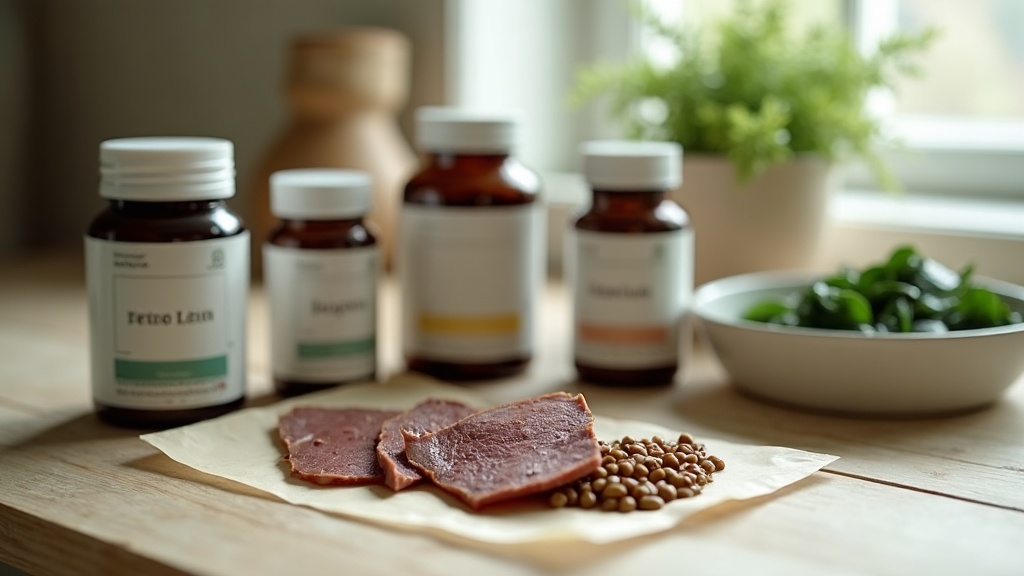
Try food first. Add a 3-ounce serving of beef liver weekly (about 9 mg heme iron), oysters when available (about 6 mg per 3 ounces), and cooked lentils or chickpeas (about 3 to 6 mg per cup) paired with citrus or peppers for the vitamin C boost. Retest ferritin in 12 weeks before adding a supplement.
If your bloodwork shows iron-deficiency anemia (ferritin under 30 with low hemoglobin)
Ferrous bisglycinate, 25 to 50 mg elemental iron every other day, with 100 mg vitamin C and away from coffee, tea, calcium, and dairy by at least an hour. Retest CBC and ferritin at 8 to 12 weeks with your physician.
If you are GI-sensitive and ferrous sulfate has caused nausea or constipation
Switch to ferrous bisglycinate. Brands like Solgar Gentle Iron and Thorne Iron Bisglycinate are widely sold and meet the studied form. If bisglycinate also fails, ask about sucrosomial iron or, in clinical settings, IV iron.
If you are vegan or vegetarian
You have non-heme intake only, so the enhancer and inhibitor logic matters more. Pair iron-containing meals with vitamin C, separate from tea and coffee by an hour, and consider a 25 mg elemental bisglycinate alternate-day regimen if ferritin sits in the deficient range despite a careful diet.
If you are pregnant
Iron needs jump to about 27 mg elemental per day per the NIH ODS Iron fact sheet. Most prenatals already contain this. Higher repletion doses, especially in the second and third trimesters, need to be set by your OBGYN based on a ferritin and CBC, not self-prescribed. Consult your OBGYN before adding iron beyond the prenatal.
If you have IBD, celiac, post-gastric-bypass, or chronic inflammation
Oral iron often fails because hepcidin is chronically elevated. Sucrosomial iron is a reasonable oral try, and IV iron is the clinical default in this population. This is a gastroenterology and primary care decision. Do not self-manage.
Pediatric scenarios
Pediatric iron dosing is a clinician-set parameter. Do not self-prescribe iron for any child. Iron is the leading cause of fatal pediatric supplement poisoning, and even adult bottles in a household with kids need to live behind a child-proof latch. For any suspected ingestion, call Poison Control at 1-800-222-1222 immediately. Consult your pediatrician before adding any iron product for a child.
FAQ
Is a low-dose multivitamin enough to fix iron deficiency? Almost never. A typical multivitamin contains about 18 mg of ferrous sulfate, of which a couple of milligrams are absorbed. That is fine for maintenance in a non-deficient adult, not for closing a real gap.
Why does my iron pill come with a constipation warning? Most of an oral iron dose is not absorbed and continues down the gut, where the unabsorbed iron pulls water in the wrong direction and slows transit. Bisglycinate is better tolerated, but constipation is a class effect of oral iron.
Can I take iron with my morning coffee? No. Tannins in coffee and tea drop non-heme iron absorption substantially when consumed within an hour of the dose. Separate by at least 60 minutes, ideally longer.
Does iron interact with my medications? Yes, several. Per the NIH ODS Iron fact sheet and the Drugs.com iron interactions monograph, oral iron binds in the gut with levothyroxine (separate by 4 hours), fluoroquinolones and tetracyclines (separate by at least 2 to 4 hours), bisphosphonates, and methyldopa. Long-term PPI use lowers iron absorption by raising gastric pH. Calcium supplements over 300 mg at the same meal can also blunt iron uptake. Review your full med list with your pharmacist or prescriber.
Can I overdose on iron? Yes. Adult acute toxicity becomes a concern over roughly 20 mg of elemental iron per kg of body weight, and fatal poisonings have occurred in children at much lower total doses. Iron is the leading cause of fatal pediatric supplement poisoning in the US. Keep bottles locked away from children and call Poison Control at 1-800-222-1222 for any suspected pediatric ingestion.
Stacking this with other supplements? Our companion app, StackMyMed, totals your real daily intake of each mineral and spaces anything that should not be taken together, with reminders for the right timing.
Conclusion: the bottom line on iron bioavailability
For most adults with confirmed iron deficiency, ferrous bisglycinate at 25 to 50 mg of elemental iron, taken every other day with about 100 mg of vitamin C and separated from coffee, tea, calcium, and key medications, is the right answer. It delivers more usable iron per dose than ferrous sulfate at the same elemental amount and keeps people on the regimen long enough for ferritin to actually rise. Ferrous sulfate remains a legitimate budget pick when GI tolerance is fine. Sucrosomial iron, heme iron polypeptide, and IV iron are reserved for malabsorption, chronic inflammation, severe anemia, and pregnancy-specific correction directed by a clinician.
Before any of this, ask your doctor about a blood test for ferritin, transferrin saturation, and a CBC. Iron is one of the few supplements where the wrong call cuts both ways, and routine repletion without a confirmed gap is a setup for unnecessary GI distress or, in patients with undiagnosed hemochromatosis, harm. Keep iron locked away from children and call Poison Control at 1-800-222-1222 for any suspected pediatric ingestion.
Next steps
- Read how we review supplements to see what testing standards we use to vet brands.
- Read the complete guide to iron for the broader picture on dose, deficiency thresholds, food sources, and lab interpretation.
- See more from Sarah Thompson, RD for the rest of the vitamin and mineral coverage.
This article is for informational purposes and not medical advice. Iron supplements can interact with prescription medications including levothyroxine, fluoroquinolones, tetracyclines, bisphosphonates, and methyldopa, and absorption is reduced by long-term PPI use. Consult a licensed physician before starting any supplement, particularly if you are pregnant, nursing, taking prescription medications, or managing a chronic condition. Keep iron supplements locked away from children and call Poison Control at 1-800-222-1222 for any suspected pediatric ingestion.
Reviewed by Sarah Thompson, Registered Dietitian, focused on vitamin and mineral nutrition.
Recommended Products


As an Amazon Associate, UsefulVitamins.com earns from qualifying purchases at no extra cost to you. We only recommend products supported by published research or third-party testing.
