
Long COVID does not have a single approved treatment. That sentence is not pessimism — it is the state of a condition that the NIH spent more than a billion dollars studying and still cannot reliably reverse. Into that gap, wellness content has pushed BPC-157 and thymosin alpha-1 as "immune-modulating" peptides that might address what conventional medicine cannot. The interest is understandable. The evidence is far more complicated than the pitch.
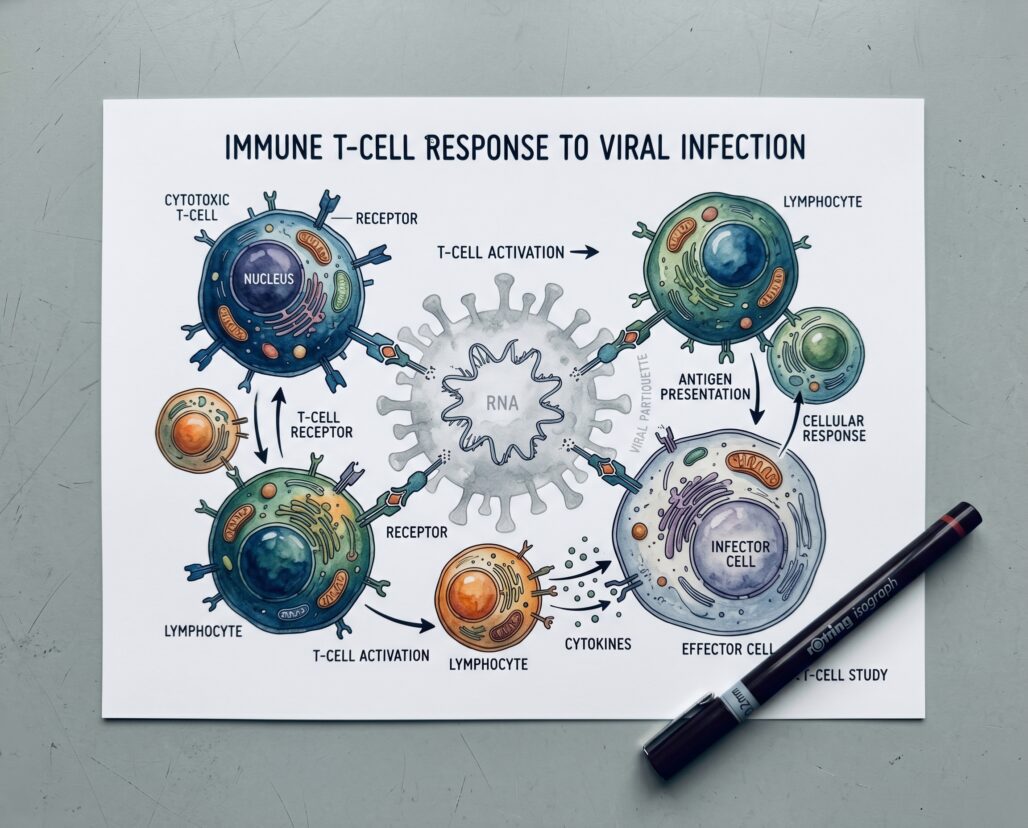
This article covers what Long COVID actually is at a biological level, why peptides surface as a candidate category, what BPC-157 and thymosin alpha-1 research does and does not show, what the NIH RECOVER initiative found after years of structured clinical trials, and where genuine evidence-based care fits into a realistic recovery picture.
Quick Summary
Bottom line: No peptide is FDA-approved to treat Long COVID. BPC-157 has zero published human trials for any Long COVID application — every claim rests on animal-model data extrapolated to human biology without clinical validation. Thymosin alpha-1 has a more serious research base: small human studies suggest it may partially restore immune exhaustion markers in post-acute COVID patients, but no controlled trial has demonstrated clinical benefit in Long COVID outcomes. The NIH RECOVER initiative's largest non-drug trial found that none of three tested cognitive rehabilitation approaches outperformed control, which illustrates how difficult this condition is to treat even in well-funded structured research. If you have Long COVID, the most evidence-supported path runs through a multidisciplinary Long COVID clinic, not a compounding pharmacy.
Best for: People researching what the peptide evidence actually says about Long COVID before making any decisions.
Not ideal for: Anyone expecting a product recommendation, a dosing protocol, or confirmation that a peptide will resolve their symptoms.
YMYL note: Long COVID involves serious, documented physiological changes including immune dysregulation, autonomic dysfunction, and neurological effects. A symptom workup from a qualified physician is not optional — it is the foundation. Peptides do not substitute for that workup.
What Long COVID Actually Is
Post-Acute Sequelae of SARS-CoV-2 infection — PASC, commonly called Long COVID — is defined by the WHO as the continuation or development of new symptoms at least three months after SARS-CoV-2 infection, with symptoms lasting at least two months without another explanation. The CDC uses a similar three-month threshold.
The symptom picture is heterogeneous. Researchers have identified eight recognized phenotypes (PMC11363684): a myalgic encephalomyelitis/chronic fatigue syndrome phenotype featuring profound fatigue and postexertional malaise; a cardiovascular phenotype including dysautonomia and POTS; a neurological phenotype centered on brain fog and cognitive dysfunction; a respiratory phenotype; endocrine disruption including abnormal cortisol responses; gastrointestinal presentations; reproductive effects; and an allergic/immune activation phenotype that includes mast cell activation-like symptoms.
That last phenotype is relevant to the peptide conversation. Research published in the International Journal of Molecular Sciences (PMC10166245) describes an activated condition of mast cells in Long COVID with abnormal granulation and excessive inflammatory cytokine release. Patients with Long COVID showed virtually identical mast cell activation symptom profiles to patients with previously diagnosed mast cell activation syndrome. A contrasting 2024 case-control study found no significant elevation of serum mast cell proteases in Long COVID, however — the mast cell hypothesis remains contested rather than settled (PMID 39285602).
The underlying biology involves T-cell exhaustion and depletion, hyperactivated innate immune cells, persistent viral reservoirs sustaining low-grade inflammation, endothelial damage, mitochondrial dysfunction, and in some patients autoimmune features driven by molecular mimicry. This is not a simple inflammatory state a general anti-inflammatory compound can cleanly address — it is a multi-system dysregulation with different dominant mechanisms in different patients.
Risk factors include prior hospitalization, female sex, higher BMI, smoking, comorbidities, and lack of early antiviral treatment or vaccination. Vaccination reduces but does not eliminate Long COVID risk.
Why Peptides Keep Coming Up
The gap between what Long COVID patients experience and what medicine can currently offer is real. No FDA-approved drug treats Long COVID as such. Management is symptom-specific: antihistamines for mast cell involvement, beta-blockers or fludrocortisone for dysautonomia, cognitive rehabilitation for brain fog. That piecemeal approach, combined with long wait times at specialist clinics, creates conditions where alternative therapies find receptive audiences.
Peptides are an appealing category for two reasons. First, marketing language maps directly onto what Long COVID patients want: "immune modulation," "reducing systemic inflammation," "restoring homeostasis." Second, BPC-157 and thymosin alpha-1 do have published research in adjacent immune and inflammatory contexts, which makes them sound more credible than compounds with no research base at all. Whether adjacent research justifies the Long COVID application is a different question — and the answer currently is no. Understanding why requires looking at each compound separately.
BPC-157: No Human Long COVID Trials Exist
BPC-157 is a synthetic 15-amino-acid peptide derived from a protective protein found in gastric juice. In animal models it has demonstrated anti-inflammatory, cytoprotective, and endothelial-protective effects across multiple organ systems. A 2021 paper in Frontiers in Pharmacology (PMC8575535) proposed that BPC-157 could theoretically address COVID-19 and its sequelae by activating endothelial nitric oxide synthase, thereby reducing vascular damage and suppressing cytokine-mediated organ injury.
The paper's own conclusion: "Currently there is insufficient data to conclude either for or against the use of BPC 157 for the treatment of COVID-19 in humans."
That 2021 speculative paper is the closest thing the BPC-157-for-Long-COVID claim has to a primary source. There are no published phase 1, 2, or 3 human trials testing BPC-157 in Long COVID patients. There are no human pharmacokinetic studies for the routes of administration — oral and subcutaneous — that wellness vendors promote for Long COVID applications. The authors of that 2021 review explicitly noted that BPC-157 is "a clinical infant with a limited number of published clinical trials in humans" and that "caution needs to be practiced in extrapolating the efficacy of novel agents to clinical applications" from rodent data.
The translational gap between rodent biology and human Long COVID biology is substantial. A rat model of NSAID-induced gastric injury does not replicate the immune exhaustion, viral reservoir persistence, and autonomic nervous system disruption observed in Long COVID patients. Results that hold in animal models routinely fail in human trials — this is a fundamental challenge of drug development, not a limitation specific to BPC-157.
BPC-157 is also not FDA-approved for any indication, including Long COVID. It is not approved as a drug, and the FDA has restricted it from compounding pharmacy use under 503A regulations. Sourcing it from grey-market "research chemical" vendors means receiving a compound with no verified sterility, no confirmed dosage, and no pharmaceutical-grade quality control — an additional risk layer that is not abstract when you are already immunocompromised or immune-dysregulated from Long COVID.
Thymosin Alpha-1: A Real Research Base With Honest Limits
Thymosin alpha-1 (Ta1) is a 28-amino-acid peptide naturally produced by the thymus gland, where it plays a role in T-cell maturation, differentiation, and immune tolerance. It has a legitimate clinical history: approved in roughly 40 countries under the brand name Zadaxin for hepatitis B and hepatitis C treatment, and used in some countries as an immune adjunct in cancer care. It is not approved by the FDA in the United States for any indication.
The rationale for Ta1 in Long COVID is more mechanistically coherent than BPC-157. If Long COVID involves T-cell exhaustion — T cells that have stopped responding effectively due to prolonged immune activation — a compound that supports T-cell differentiation and reduces exhaustion markers has at least a plausible mode of action.
A 2021 paper in Clinical Infectious Diseases (PMID 32442287) found that Ta1 reduced mortality in severe acute COVID-19 by restoring lymphocytopenia and reversing exhausted T-cell populations. That was an acute-phase finding in hospitalized patients, not a Long COVID finding, but it established the T-cell exhaustion mechanism as relevant to SARS-CoV-2.
The specific Long COVID human data comes from a 2023 study published in Frontiers in Immunology (PMC10030336) that directly tested Ta1 on blood samples from 10 PASC patients previously hospitalized during acute COVID-19. The design was ex vivo: blood was drawn, exposed to Ta1 at 50 micrograms per milliliter for 48 hours, then analyzed. Ta1 significantly decreased PD-1, an exhaustion marker, on both CD4+ and CD8+ T cells. It reduced pro-inflammatory cytokines IL-6 and IFN-gamma while increasing anti-inflammatory IL-10. T-cell differentiation profiles shifted in directions associated with reduced chronic activation.
The authors were explicit about what this means and what it does not mean. The study enrolled 10 patients. The intervention was performed on isolated blood cells in a lab, not in living people. Whether these immune shifts translate into clinical symptom improvement in Long COVID has not been tested. "Further studies on wider cohorts are needed to confirm these preliminary data," the authors stated directly.
A 2022 systematic review and meta-analysis of Ta1 in COVID-19 patients (PMC9754924) reviewed 9 studies involving 5,352 patients and found no statistically significant effect on mortality overall. A subgroup of severe and critical patients over age 60 did show reduced mortality, but the included studies were predominantly retrospective Chinese cohort studies with heterogeneous designs. No Long COVID-specific outcomes were reported in any included study.
The picture for Ta1 is: interesting preliminary mechanism, one very small ex vivo human study, no controlled clinical trials demonstrating benefit in Long COVID patients as a lived outcome. That is meaningfully more than BPC-157 has, but it is far from the evidence threshold that would justify self-treating a complex condition.
What the NIH RECOVER Trials Actually Found
The NIH invested over one billion dollars in the RECOVER initiative — the largest coordinated Long COVID research program in history. Its findings are informative precisely because they show how hard this condition is to treat even in well-funded clinical trials.
The RECOVER-NEURO trial tested three non-drug cognitive rehabilitation approaches — BrainHQ computerized brain training, PASC-CoRE virtual cognitive rehabilitation, and transcranial direct current stimulation (tDCS) — in 328 patients across 22 U.S. sites. None of the three interventions outperformed control groups. All five study arms, including controls, showed modest improvement over time, making it impossible to attribute benefit to the specific interventions. The lead researcher stated directly: "None of our rehabilitation approaches to treatment for cognitive Long COVID proved to be effective" (RECOVER-NEURO results, November 2025).
Separately, RECOVER evaluated whether Paxlovid (nirmatrelvir/ritonavir), taken during acute COVID-19, reduced the risk of developing Long COVID. The finding was also disappointing: Paxlovid did not significantly reduce Long COVID onset across the general population. Limited benefit appeared only in adults over 65 with multiple pre-existing conditions, and only for cognitive and fatigue symptoms rather than respiratory ones (RECOVER December 2025 Update).
These are not arguments against continued research. They are evidence that Long COVID has resisted well-designed intervention attempts, and that plausible mechanisms — brain training for neuroplasticity, antivirals for viral reservoirs — do not automatically translate into clinical benefit. Extrapolating from that reality to "a peptide from a grey-market vendor will work" is a logic leap the data does not support.
Where Evidence-Based Care Actually Fits
Long COVID clinics now exist across the United States and Europe, staffed by multidisciplinary teams including cardiologists, neurologists, pulmonologists, physical therapists, and mental health providers. These clinics offer structured assessment for the specific phenotype driving each patient's symptoms — management differs substantially across phenotypes.
For dysautonomia, evidence-supported interventions include increased salt and fluid intake, compression garments, beta-blockers, and carefully paced physical rehabilitation. For suspected mast cell involvement, H1 and H2 antihistamines combined with mast cell stabilizers such as cromoglycate represent the established starting approach. For cognitive symptoms, neuropsychological assessment can identify specific deficits and guide targeted strategies, even when cognitive training programs have not proven superior to control in trials. Post-exertional malaise management centers on pacing — structured activity limits that avoid triggering symptom crashes — rather than progressive exercise, which can worsen outcomes in ME/CFS-phenotype Long COVID.
None of these interventions are dramatic. None offer a fast resolution. That limitation is honest, and it differs from the implicit promise of peptide marketing, which rarely acknowledges that large NIH-funded trials have not found clear winners yet.
The CDC maintains a Long COVID care page at cdc.gov. The RECOVER initiative lists ongoing studies and trial sites at recovercovid.org.
If you are pregnant and experiencing symptoms consistent with Long COVID, report them promptly to your OB-GYN. Any new supplement or peptide carries additional risk during pregnancy and should not be started without explicit physician guidance.

Frequently Asked Questions
Is BPC-157 being tested in Long COVID trials?
No. As of 2026, there are no registered clinical trials testing BPC-157 specifically in Long COVID patients. The existing literature consists of animal studies and one speculative 2021 review paper. BPC-157 is not FDA-approved for any human indication.
Does thymosin alpha-1 treat Long COVID?
There is one small ex vivo study (10 patients, blood-sample-level testing) suggesting Ta1 may partially restore exhausted T-cell populations in PASC patients. No clinical trial has demonstrated that taking Ta1 produces meaningful symptom improvement in Long COVID. Ta1 is not FDA-approved in the United States for any indication.
Why do so many people online say peptides helped their Long COVID?
Anecdote and placebo effect are powerful in conditions where patients are desperate and science has not delivered answers. Long COVID also shows partial, unpredictable natural recovery over time, making it easy to credit whatever was started most recently. Anecdote does not establish causation, and it does not account for risks of unregulated compounds.
Are there any peptides with Long COVID trial data?
No peptide has completed a randomized controlled trial for Long COVID as of mid-2026. RECOVER has focused on behavioral interventions, antivirals, and immune modulators — not peptides. This is an active research area.
What should I actually do if I have Long COVID?
Seek evaluation at a dedicated Long COVID clinic or from a physician familiar with PASC. Bring a detailed symptom log. Ask about phenotype-specific management rather than general treatments. Be cautious of unregulated compounds, particularly those delivered by injection, when your immune system is already dysregulated.
Conclusion: The Bottom Line on Peptides for Long COVID
The peptide pitch for Long COVID has a coherent-sounding logic: Long COVID involves immune dysregulation, peptides can modulate immunity, therefore peptides might help. The problem is that logical coherence is not evidence. The NIH spent years and hundreds of millions of dollars testing interventions with strong physiological rationale — and most came up empty.
BPC-157 has no human Long COVID data at all. Thymosin alpha-1 has a small ex vivo study showing interesting immune effects and a systematic review showing no overall mortality benefit in acute COVID — and still no controlled Long COVID trial. Both are unregulated, unapproved in the United States, and available only through channels that cannot guarantee what you are actually receiving.
The people who need this article most are the ones who have already spent months on waitlists and feel like standard medicine has run out of answers. That frustration is legitimate. The answer is not an unregulated compound with no trial data — it is continued pressure on the healthcare system to expand Long COVID clinic access and fund the trials that might finally find interventions that work.
Next Steps
- Read are-peptides-safe for a broader look at peptide safety profiles, regulatory status, and how to evaluate risk before starting any compound.
- For a deep look at thymosin alpha-1's mechanism and approved uses, see thymosin-alpha-1-explained.
- If immune-related conditions are your primary concern, peptides-for-autoimmune covers what limited evidence exists across rheumatological and immune conditions.
- Find a Long COVID care center through the RECOVER site at recovercovid.org or the CDC's Long COVID resources at cdc.gov.
This article is for informational purposes and not medical advice. Peptides, especially those marketed for therapeutic use, can interact with medications and health conditions. Consult a licensed physician before starting any supplement, particularly if you are pregnant, nursing, taking prescription medications, or managing a chronic condition.
