
If you are looking at a 200 mcg selenium bottle and wondering whether to add it to your stack, here is the honest answer: for most people in a well-fed country, selenium is the rare nutrient where you can genuinely take too much, and the gap between "enough" and "too much" is smaller than almost any other mineral. The recommended intake is 55 mcg a day. The safety ceiling is 400 mcg. That is a window most minerals would laugh at.
This guide walks through what selenium actually does, how little food it takes to hit the target, why Brazil nuts are both the best source and a surprisingly unpredictable one, what the thyroid trials really show, and why a large prostate-cancer trial quietly raised a diabetes flag. The aim is to help you decide whether you need a pill at all, and if so, how to not overshoot.
Before you decide
The single most important fact about selenium is the narrow therapeutic window. The NIH Office of Dietary Supplements sets the adult RDA at 55 mcg and the Tolerable Upper Intake Level at 400 mcg per day from all sources. With most nutrients the upper limit sits ten or twenty times above the requirement. With selenium it is roughly seven times, and food plus a generous supplement can close that gap fast.
There is also a real safety signal worth knowing before you start. In the large SELECT trial, 200 mcg of selenomethionine daily showed a small, statistically nonsignificant increase in type 2 diabetes risk (relative risk 1.07). It did not reach significance, but it is the kind of signal that makes "more is better" a poor bet in people who are not deficient.
The standard of care framing matters here. Selenium is not a treatment for thyroid disease, cancer, or anything else. If you have Hashimoto's, levothyroxine when indicated is the treatment, and selenium is at most a layer on top, never a substitute. Most adults eating a varied diet are already at or above the RDA. Before buying anything, the first move is to look at what you already eat.
What selenium actually does

Selenium is a trace mineral your body builds into about 25 selenoproteins, the family of enzymes where it does its real work. You do not need selenium as a free-floating mineral; you need it as the active center of these proteins.
The headline group is the glutathione peroxidases, antioxidant enzymes that neutralize peroxides before they damage cell membranes and DNA. Think of them as the cleanup crew for a normal byproduct of using oxygen. When selenium is scarce, that crew runs short-staffed.
The second major job is thyroid hormone metabolism. The thyroid gland holds more selenium per gram than any other tissue, because the enzymes that convert the storage hormone T4 into the active hormone T3, the deiodinases, are selenoproteins. As the Harvard Nutrition Source notes, this is why selenium and thyroid health get linked so often. Selenium also supports immune function and reproduction.
Here is the catch that runs through this whole guide. These enzymes saturate. Once you have enough selenium to fully build your selenoproteins, extra intake does not give you extra enzyme activity; it just raises your blood selenium and your exposure to the downside. More substrate does not build more machines once the factory is full.
Why selenium matters (and who is actually low)
True selenium deficiency is rare in North America and most of Europe, because our food comes from soils and supply chains with adequate selenium. Where it does occur, it is serious. Keshan disease, a heart-muscle disorder seen historically in low-selenium regions of China, is the classic example of what severe, long-term deficiency can do.
The people who are genuinely at risk are specific and identifiable. They include populations eating mostly local plant foods grown in selenium-poor soil, people on long-term parenteral nutrition without selenium, and some patients with severe gut malabsorption. The NIH ODS also flags those on dialysis and people living with HIV as groups with higher needs.
For everyone else, the question is not "am I deficient" but "am I closing a gap that is already closed." That distinction is the whole ballgame.
Actionable takeaway: unless you fall into one of the documented risk groups above, your baseline assumption should be that you are already getting enough, and the burden of proof is on the supplement, not on your diet.
Food sources and the RDA
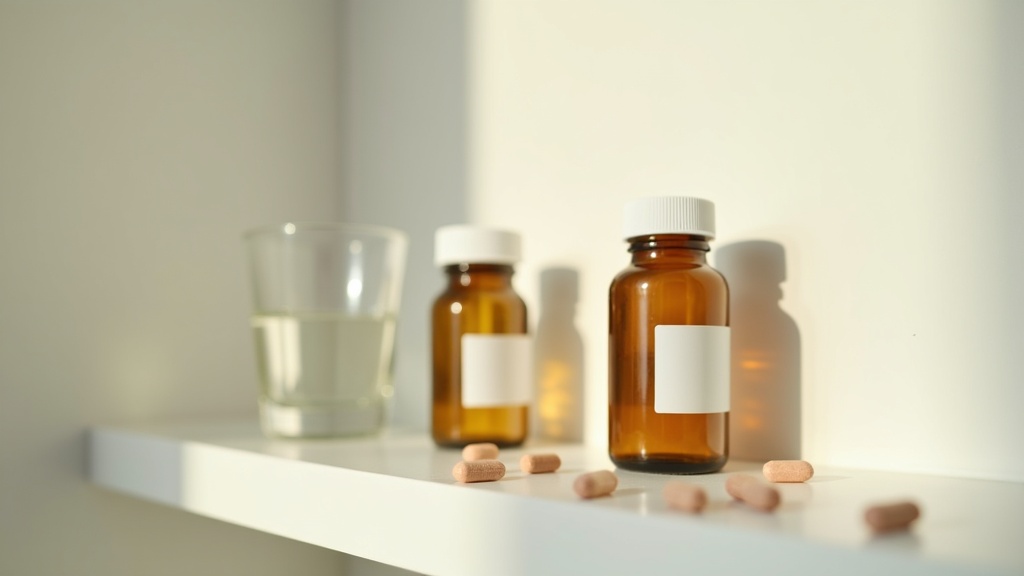
Hitting 55 mcg a day from food is easy for most people. The mineral is concentrated in protein foods and one famous nut.
| Food | Typical selenium | Notes |
|---|---|---|
| Brazil nuts | ~68 to 90 mcg per nut | Highly variable; one nut can exceed the RDA |
| Tuna, cooked | ~90 mcg per 3 oz | Among the richest seafood sources |
| Sardines / shrimp | ~40 to 60 mcg per 3 oz | Reliable, less variable than nuts |
| Beef, chicken, turkey | ~20 to 40 mcg per 3 oz | Everyday staple coverage |
| Eggs | ~15 mcg per large egg | Easy daily contributor |
A couple of eggs, a piece of fish a few times a week, and ordinary meat will put most adults comfortably at the target. For the vast majority of people, the RDA is a problem that solves itself at dinner.
The food-first framing is not just a platitude here. Because the safe range is narrow, food gives you selenium at a pace your body can handle, packaged with other nutrients, instead of a single concentrated dose.
The Brazil-nut problem: best source, unpredictable dose
Brazil nuts deserve their own section because they are simultaneously the easiest food source and the strongest argument against casual supplementation.
The selenium content of a Brazil nut depends entirely on the soil where the tree grew, and that soil varies wildly. A detailed analysis of commercial batches by Lima and colleagues found up to 8-fold differences in selenium between individual nuts from the same bag. Average content ranged from 28 to 49 mg per kilogram across batches, with regional highs near 68 mg/kg.
Translate that to your kitchen. One nut might give you 50 mcg; the next nut from the same handful might give you 200 mcg or more. The authors noted that a standard 30-gram serving could already exceed the 400 mcg upper limit. The nut you cannot measure is exactly why a measured pill sounds appealing, and exactly why the pill is rarely necessary.
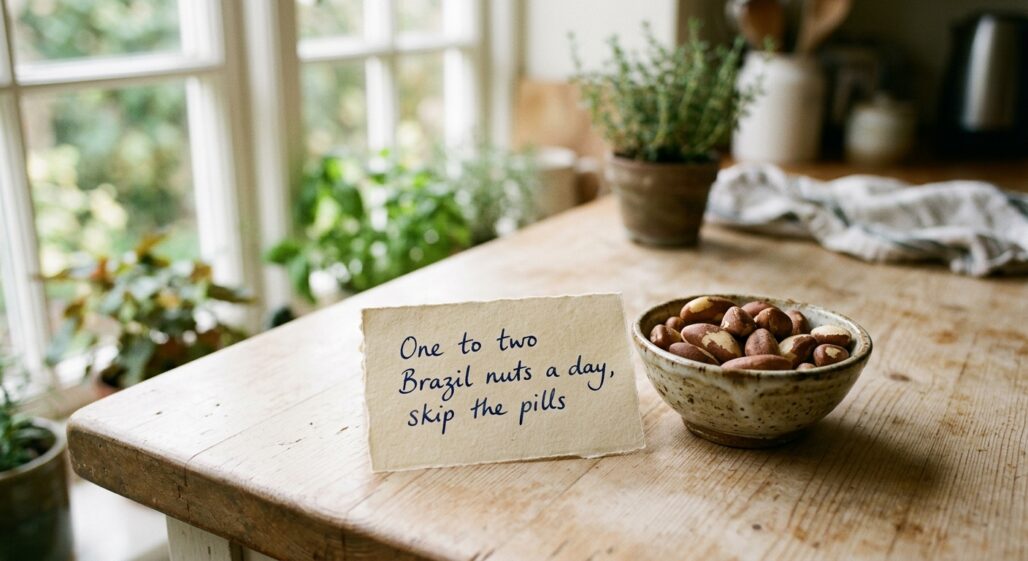
The practical move is moderation: one to two Brazil nuts a day, not a handful. That gives you the RDA most days with a comfortable buffer, even on a high-selenium nut. If you eat a few every day as a snack, you can drift toward the upper limit without realizing it.
The thyroid evidence, honestly
This is where selenium gets oversold. The thyroid connection is real biology, but the clinical payoff is modest and easy to misread.
In Hashimoto's thyroiditis, selenium supplementation does reliably lower thyroid antibodies. A 2025 systematic review and meta-analysis by Zhang and colleagues, pooling 21 randomized trials and 1,610 patients, found significant reductions in TPO antibodies and a drop in TSH after three to six months of selenium. That is a consistent, measurable effect.
Here is the honest part. Lower antibodies on a lab printout are not the same as feeling better, needing less levothyroxine, or avoiding hypothyroidism. The trials are short, the antibody change does not clearly translate into hard clinical endpoints, and major endocrine bodies do not recommend selenium as routine therapy for Hashimoto's. A falling antibody number is a surrogate marker, not a guarantee of a better outcome.
The standard-of-care line holds firm. If your thyroid is underactive, levothyroxine dosed to target your TSH is the treatment. Selenium is a reasonable conversation to have with your endocrinologist for antibody reduction in early or antibody-positive disease, typically as selenomethionine around 100 to 200 mcg under supervision, but it does not replace the prescription and it is not for everyone with a thyroid complaint.
The SELECT trial and why more is not better
The strongest evidence that high-dose selenium does not earn its keep in healthy people comes from a trial that was not even designed to test that question.
The Selenium and Vitamin E Cancer Prevention Trial, SELECT, randomized more than 35,000 men to 200 mcg of selenomethionine, vitamin E, both, or placebo. Selenium did not prevent prostate cancer; the hazard ratio was a flat 1.04. There was no benefit for the cancer it was built to study.
What it did surface was a caution. Among men taking selenium, there was a small, statistically nonsignificant increase in type 2 diabetes (relative risk 1.07). A later Cochrane review of selenium trials, summarized by the Harvard Nutrition Source, echoed a higher incidence of type 2 diabetes with long-term supplementation in people who already had normal selenium levels at baseline.
The takeaway is not "selenium causes diabetes." It is that in well-nourished people, supplementing a nutrient you are not short on carries downside risk and no demonstrated upside. That is the core decision logic of this entire guide.
Selenosis: what the narrow range actually looks like
Selenium toxicity, or selenosis, is not theoretical. It has a recognizable picture and a sobering recent case.
Early signs are distinctive: a garlic-like odor on the breath and a metallic taste in the mouth. As it progresses, the hallmark is hair loss and brittle, deformed nails, sometimes with nausea, diarrhea, rashes, fatigue, and irritability. According to the ATSDR toxicology profile, these are the classic chronic-exposure findings.
The real-world warning came in 2008. A misformulated liquid supplement triggered a US outbreak documented by Morris and Crane: the product was labeled 200 mcg per dose but actually contained over 40,000 mcg, more than 100 times the label. About 201 people developed selenosis, and many still had symptoms years later. The supplement industry's quality control is the variable you cannot see on the label, which is another reason to favor food.
This is why the 400 mcg ceiling deserves real respect. You should not exceed it from food and supplements combined, and you should treat any selenium product above the RDA as something to clear with a clinician.
Forms compared: selenomethionine vs selenite
If you and a clinician decide a supplement makes sense, form matters less than dose, but there are real differences.
| Form | What it is | Notes |
|---|---|---|
| Selenomethionine | Organic, the form in food and Brazil nuts | Well absorbed, used in most trials including SELECT and thyroid studies |
| Selenium-enriched yeast | Mostly selenomethionine plus other species | Common in older cancer-prevention research |
| Sodium selenite / selenate | Inorganic salts | Cheaper, absorbed differently, less stored in tissue |
The forms differ in how the body stores and uses them, and we go deeper into absorption in our comparison of methylselenocysteine versus selenomethionine. The Zhang meta-analysis suggested selenomethionine outperformed inorganic forms for the thyroid endpoint, which is why it dominates the trial literature. For the rare person who genuinely needs a supplement, selenomethionine at a modest dose is the evidence-backed default, not because the form is magic but because it is what was actually studied.
If you want help comparing finished products, our review of selenium supplements screens for third-party testing, which the 2008 outbreak shows is non-negotiable for this particular mineral.
FAQ
Can I just eat Brazil nuts instead of taking a supplement?
For most people, yes. One to two nuts a day usually covers the RDA. The catch is the 8-fold variability between nuts, so keep it to one or two and do not eat a daily handful.
Does selenium help my thyroid if my labs are normal?
There is no good evidence it does. The antibody-lowering effect was studied in Hashimoto's patients, not in people with normal thyroid function. If your thyroid is healthy, supplementing is closing a gap that is not there.
Is 200 mcg a day safe?
It is under the 400 mcg ceiling, so it is unlikely to cause acute harm on its own. But it is well above the 55 mcg RDA, the SELECT trial used exactly that dose and found a diabetes signal, and you are also getting selenium from food. For most people it is more than needed.
What are the first signs I have taken too much?
A garlic or metallic taste and breath, then hair loss and brittle nails. If you notice these on a selenium supplement, stop and talk to a clinician.
Who should not supplement selenium without a doctor?
Anyone with type 2 diabetes risk, anyone already eating Brazil nuts daily, and anyone unsure of their baseline. When in doubt, get diet reviewed before adding a pill.
The bottom line on selenium
Selenium is essential, but it is the textbook case of a nutrient where the goal is "enough," not "more." The window between the 55 mcg RDA and the 400 mcg upper limit is narrow, Brazil nuts are wonderfully rich but wildly inconsistent, the thyroid benefit is a real antibody change without proven hard outcomes, and the SELECT diabetes signal is a reminder that supplementing past sufficiency is a one-way bet against yourself.
Here is what most articles get wrong: they treat Brazil nuts and selenium pills as interchangeable "good sources," when the nut's 8-fold variability plus a misformulation-prone supplement market is exactly why the narrow safe range makes food the safer default.
Next steps:
- Audit your diet first; fish, eggs, and meat plus one or two Brazil nuts a day usually settles the question, and our food-first review standards explain how we weigh this.
- If you have Hashimoto's or another thyroid concern, raise selenium with your clinician rather than self-dosing, and never use it in place of prescribed treatment.
- For broader stack decisions, see our complete guide to longevity supplements, and if iron or B12 is also on your radar, our supplements for anemia guide covers those minerals with the same food-first lens.
This guide was written and reviewed by Michael Ward, MD MPH, Preventive Medicine, focused on guideline-based chronic disease management.
As an Amazon Associate, I earn from qualifying purchases. Product recommendations are based on real reviews and independent research.
This article is for informational purposes and not medical advice. Selenium has a narrow safe range and can interact with medications and health conditions. Consult a licensed physician before starting any supplement, particularly if you are pregnant, nursing, taking prescription medications, or managing a chronic condition such as thyroid disease or diabetes.
