
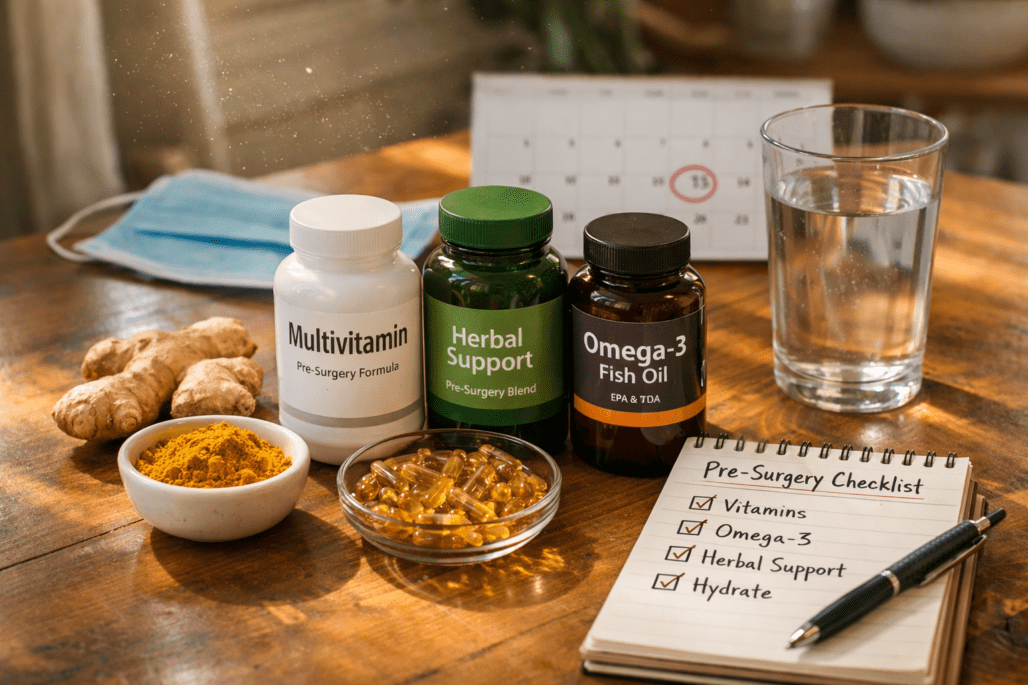
Surgery has enough unknowns – your supplement routine should not be one of them. If you’re searching for pre-surgery supplements, the safest evidence-based move is to tell your surgical team everything you take and stop the specific products that can raise bleeding risk or interfere with anesthesia, usually 1-2 weeks before an elective procedure. This guide breaks down what to pause, what’s often fine to continue, and how to plan nutrition so your body is ready to heal. You’ll also get a simple checklist to bring to your pre-op visit.
Summary / Quick Answer: What to do with pre-surgery supplements
Direct answer: For most elective procedures, clinicians commonly recommend stopping higher-risk pre-surgery supplements 1-2 weeks before surgery, while continuing only what your surgeon or anesthesiologist okays based on your health history and procedure.
Here’s the quick, practical framework:
- Do this first: Bring a complete list (names + doses) of all vitamins, herbs, sports products, teas, gummies, and oils to pre-op.
- Common “stop 1-2 weeks before” group: vitamin E, fish oil/omega-3, ginkgo, garlic, ginseng, St. John’s wort, and many multi-ingredient botanicals.
- Often “ok to continue” (case-by-case): vitamin D, calcium, magnesium, iron, and probiotics – but confirm with your team.
- Do not self-restart post-op: Wait until you’re eating normally and your surgeon says bleeding risk is low.
Quick tool: run your list through the UsefulVitamins.com Drug-Supplement Interaction Checker and bring the results to your appointment.
Pre-surgery supplements: what to stop (and why timing matters)
Many people assume supplements are “gentler” than medications. In the operating room, the body doesn’t care whether a compound came from a plant or a pharmacy – it cares about bleeding, blood pressure, blood sugar, sedation, and liver metabolism.
That’s why the American Society of Anesthesiologists has warned that some supplements can prolong anesthesia effects or increase bleeding and recommends stopping certain products well before surgery. A patient-friendly overview from the American Society of Anesthesiologists highlights why disclosure matters and why your anesthesiologist wants the full list.
The “high-risk” stop list most commonly flagged by surgical teams
The exact stop date depends on your procedure and your meds (especially anticoagulants and NSAIDs). But these are frequently on pre-op stop lists:
| Supplement | Why it’s flagged before surgery | Typical stop window* |
|---|---|---|
| Vitamin E (high dose) | May inhibit platelet aggregation and affect clotting | 1-2 weeks |
| Fish oil / omega-3 concentrates | May increase bleeding tendency in some contexts, especially with blood thinners | 1-2 weeks |
| Ginkgo biloba | Associated with increased bleeding risk | 1-2 weeks |
| Garlic (supplement doses) | Can affect platelet function and bleeding | 1-2 weeks |
| Ginseng | May affect blood sugar and clotting | 2 weeks often used |
| St. John’s wort | Can alter drug metabolism and interact with anesthesia meds | 1-2 weeks |
| CBD oils and multi-ingredient cannabinoids | Potential bleeding and sedation interactions; product variability | 1-2 weeks |
| “Herbal blends” / fat burners / pre-workouts | Stimulants or unknown botanicals can affect BP, rhythm, sedation | 1-2 weeks |
*These are common clinical ranges, not a substitute for your surgeon’s instructions.
Why “stop the day before” is often not enough
A key detail patients miss is that some compounds have lingering effects on platelets, liver enzymes, or sedation. Even if the supplement clears quickly, the physiologic effect may last longer.
Actionable takeaway:
- If your surgery is elective, assume you’ll need a planning window. Put a calendar reminder 14 days out to review your list with the surgical team.
- If you’re unsure whether a product counts, treat it as a supplement. That includes “immune gummies,” sleep blends, adaptogens, and powdered greens.
For extra label clarity, use UsefulVitamins.com’s How to Read Supplement Labels before your pre-op visit. Multi-ingredient products are where hidden risk often lives.
What you can often continue (and what “safe” really means)
Nature Made Vitamin D3 2000 IU, 220 Tablets
Vitamin D is often recommended to continue before surgery, making this product relevant for pre-surgery nutrition.
“Safe to continue” does not mean “always safe.” It usually means the supplement is less likely to affect bleeding or anesthesia for the average patient, at typical doses. Your medical history can change that fast – kidney disease, arrhythmias, bariatric surgery history, anemia, diabetes meds, and thyroid or parathyroid procedures all shift the risk-benefit.
Many hospital pre-op instructions focus less on adding new supplements and more on maintaining stable nutrition and correcting true deficiencies. For example, guidance from major surgical centers emphasizes practical diet and nutrition steps rather than last-minute megadoses. See general pre-op nutrition advice from Hospital for Special Surgery for the type of food-first approach many programs use.
Supplements that are commonly allowed (with clinician approval)
These are frequently continued, especially when they address a documented need:
- Vitamin D (common deficiency; dosing depends on labs and clinician plan)
- Calcium (often emphasized in thyroid/parathyroid contexts)
- Iron (particularly if iron deficiency anemia is present)
- Magnesium (dose and form matter; avoid high-dose laxative effects near surgery)
- Probiotics (often continued, though immunocompromised patients need individualized advice)
Here’s a simple “continue vs pause” decision aid you can use before calling your surgeon:
| If the supplement is… | More likely you’ll… | Your next step |
|---|---|---|
| Single nutrient at standard dose (ex: vitamin D) | Continue | Confirm dose and timing with pre-op team |
| Herbal, botanical, or “blend” | Pause | Ask for a stop date (often 1-2 weeks) |
| High-dose antioxidant (ex: vitamin E) | Pause | Ask if it changes bleeding risk for your case |
| Anything that makes you sleepy or wired | Pause | Flag for anesthesia review |
| Anything you started in the last 30 days | Pause | Tell your team why you started it |
Actionable takeaway:
- Do not start a brand-new supplement “for healing” in the two weeks before surgery unless your clinician tells you to.
- If you take magnesium, review form and dose with this guide: Magnesium Benefits Types Dosage.
Presurgical nutrition that supports recovery (without risky megadoses)
Garden of Life Dr. Formulated Probiotics Once Daily Women’s, 30 Capsules
Probiotics are generally safe to continue and can support gut health during surgery recovery.
NOW Supplements Calcium & Magnesium, 250 Tablets
Calcium and magnesium are often recommended for continued use before surgery, making this product suitable.
Supplements get the attention, but your baseline nutrition is what your body will use to rebuild tissue. Think of surgery like a planned injury with a controlled repair process. Your body needs raw materials – protein, energy, fluids, and micronutrients – and it needs them consistently.
The goal is not to “supercharge” healing with high doses. It’s to avoid preventable problems like low protein intake, dehydration, constipation from iron, or under-eating because of stress.
The big 4: protein, calories, hydration, and fiber
Use this as a practical pre-op checklist (confirm any restrictions for your procedure):
-
Protein at each meal
- Aim for a protein source 2-4 times per day (eggs, yogurt, fish, tofu, poultry, beans).
- If appetite is low, use smaller servings more often.
-
Enough total calories
- Extreme dieting before surgery can backfire by reducing nutrient reserves.
- If weight loss is medically required (for example, some orthopedic or bariatric pathways), follow the surgeon’s plan, not a DIY cut.
-
Hydration
- Dehydration can worsen fatigue, constipation, and dizziness.
- Follow your pre-op fasting instructions exactly, but hydrate well in the days leading up.
-
Fiber (until your team says otherwise)
- Constipation is common after surgery due to pain meds and lower activity.
- Fiber-rich foods help, but follow any low-fiber instructions right before certain GI procedures.
What about “immune” nutrients like vitamin C and zinc?
Vitamin C and zinc are involved in collagen formation and immune function, but more is not always better. If your diet is already adequate, high-dose supplementation right before surgery may add side effects (GI upset is common) without clear extra benefit.
If your clinician recommends vitamin C post-op, you’ll want dosing that’s realistic and tolerable. UsefulVitamins.com breaks down evidence and dosing considerations here: Vitamin C Science Benefits Dosage.
Practical food-first “recovery plate” (visual guide):
- Half plate: colorful produce (vitamin C, polyphenols, fiber)
- Quarter plate: protein (25-35 g if tolerated)
- Quarter plate: carbs (rice, potatoes, oats) for energy
- Add: healthy fats (olive oil, avocado) unless restricted
Actionable takeaway:
- If you do one thing this week: make protein easy. Stock 2-3 grab-and-go options you can tolerate even when stressed.
How to talk to your surgeon and anesthesiologist (so nothing gets missed)
Nature’s Way Garlic Bulb, 100 Capsules
Search results confirm Nature’s Way Garlic Bulb (580 mg, 100 vegan capsules) supports cardiovascular health, is vegan, gluten-free, and non-GMO per manufacturer’s site, but no Amazon ASIN, ratings, reviews, pricing, Reddit discussions, or third-party testing data were located in the provided results, limiting a full recommendation.
Most supplement problems before surgery are not caused by “bad” supplements. They’re caused by missing information. People forget to mention gummies, teas, powders, or occasional sleep aids. Others assume a multivitamin “doesn’t count.”
Anesthesia teams increasingly treat supplement disclosure like medication disclosure because interactions can change sedation depth, bleeding risk, and blood pressure control. A clear overview from UT Southwestern Medical Center explains why anesthesiologists ask about herbs and non-prescription products.
Bring this exact list to pre-op (copy/paste friendly)
Create a note on your phone with:
- Product name + brand
- Dose (mg or IU) and how often you take it
- When you last took it
- Why you take it (cholesterol, sleep, anxiety, cramps, constipation)
- Any blood thinners, NSAIDs, diabetes meds, or antidepressants you use
If you can, bring the bottles. Supplement labels can be confusing, and products sometimes contain extra botanicals not obvious from the front panel.
A simple “risk screen” you can do at home
Ask these five questions about every product:
- Does it claim to “thin blood,” “support circulation,” or “heart health”?
- Does it help with sleep, calm, pain, or anxiety (sedation risk)?
- Is it an herb, root, extract, or proprietary blend?
- Does it contain vitamin E, high-dose fish oil, or multiple botanicals?
- Would you be uncomfortable if your anesthesiologist saw it for the first time on surgery day?
If any answer is yes, flag it for review.
Actionable takeaway:
- Use the Supplement Timing Optimizer to map your current schedule, then ask your surgical team which items to pause and when. It’s much easier to follow instructions when your routine is written out.
When to restart supplements after surgery (and what to prioritize)
Restarting too early is a common mistake, especially with products linked to bleeding risk. Your body is also sensitive post-op – nausea, constipation, and medication changes can make “normal” supplements feel suddenly intolerable.
A practical rule many clinicians use is to resume supplements only after:
- you can tolerate oral intake reliably, and
- your surgeon confirms the bleeding risk window has passed, and
- your medication list is stable (pain meds, antibiotics, anticoagulants).
A staged restart plan (visual timeline)
Use this as a discussion tool with your surgeon:
| Post-op stage | What’s typically happening | Supplement approach |
|---|---|---|
| Days 0-3 | nausea risk, bleeding vigilance, pain meds | Avoid non-essential supplements unless prescribed |
| Days 3-14 | appetite improves, mobility increases | Consider only surgeon-approved basics (often vitamin D, iron if needed) |
| After 2+ weeks (varies) | incision healing stabilizes | Reintroduce one supplement at a time with clinician approval |
What may help recovery (when your clinician approves)
Depending on the procedure and your diet, clinicians may recommend:
- Protein support (food first, then shakes if needed)
- Vitamin C (modest doses if intake is low)
- Zinc (short-term if deficient or intake is poor)
- Probiotics (select cases, especially after antibiotics)
Be cautious with “recovery stacks” sold online. Multi-ingredient blends increase the chance of interactions and make side effects harder to trace.
If you’re unsure about interactions with your prescribed post-op meds, re-check everything using the Drug-Supplement Interaction Checker.

Conclusion: the safest pre-op plan is simple and documented
The most reliable approach to pre-surgery supplements is not guessing which products are safe. It’s documenting what you take, stopping the common high-risk items with enough lead time (often 1-2 weeks), and using food-first presurgical nutrition to support healing.
Next steps:
- Make your supplement list today and bring it to pre-op.
- If you want to strengthen your nutrition plan, review Vitamin C Science Benefits Dosage and How to Read Supplement Labels so you can spot high-risk blends quickly.
- If magnesium is part of your routine, confirm the best form and dose using Magnesium Benefits Types Dosage.
When surgery is scheduled, clarity beats complexity. Your surgical team can only protect you from what they know you’re taking.
As an Amazon Associate, I earn from qualifying purchases. Product recommendations are based on real reviews and independent research.
