
Pure Encapsulations Collagen Peptides Review: Honest Look at the Practitioner Brand
If you have spent more than ten minutes shopping for collagen powder, you have probably noticed that Pure Encapsulations sits noticeably above the crowd on price and sounds unusually serious about quality. That raises an obvious question: is the premium justified, or are you mostly paying for a white label and a practitioner-channel backstory? After working through the clinical science on hydrolyzed collagen, the brand's published quality commitments, and how this product compares to what mass-market options actually offer, here is where things land.
Affiliate disclosure: this article contains affiliate links. As an Amazon Associate, UsefulVitamins.com earns from qualifying purchases at no extra cost to you.
Verdict: Pure Encapsulations Collagen Peptides is a genuinely well-made bovine hydrolyzed collagen powder backed by meaningful quality controls, but the underlying science supports the ingredient category more than it validates this specific product over cheaper alternatives.
What Is Pure Encapsulations? A Practitioner-Brand Primer
Pure Encapsulations was founded in 1991 with a specific positioning: supplements formulated without unnecessary additives, fillers, or common allergens, sold primarily through licensed healthcare practitioners. That practitioner channel still defines the brand's identity. Practitioners order through a dedicated professional portal; consumer retail is a newer and somewhat secondary lane for the company.
The brand is currently owned by Atrium Innovations, a subsidiary of Nestle Health Science. Some shoppers find that ownership chain reassuring (large company, serious infrastructure) and others find it deflating (a wellness brand absorbed into a multinational). Neither reaction is entirely wrong. What matters practically is that manufacturing quality standards appear to have been maintained since the acquisition.
Pure Encapsulations operates under Current Good Manufacturing Practice (cGMP) regulations enforced by the FDA for dietary supplements. The brand also claims to test ingredients and finished products through independent third-party laboratories, though it does not hold a standing certification from a third-party verification body such as NSF International, USP, or Informed Sport for this collagen product specifically. That absence is worth noting, particularly for competitive athletes subject to anti-doping rules or for consumers who treat third-party certification marks as a hard requirement. The testing claims should be understood as brand-stated rather than independently verified by a named certification body.
Allergen-free formulation is a genuine differentiator. The product is free from gluten, dairy, soy, artificial colors, sweeteners, and most common fillers. For patients with multiple sensitivities, that clean formulation profile is the reason practitioners continue recommending the brand.
Product Profile: What Is Actually in the Jar
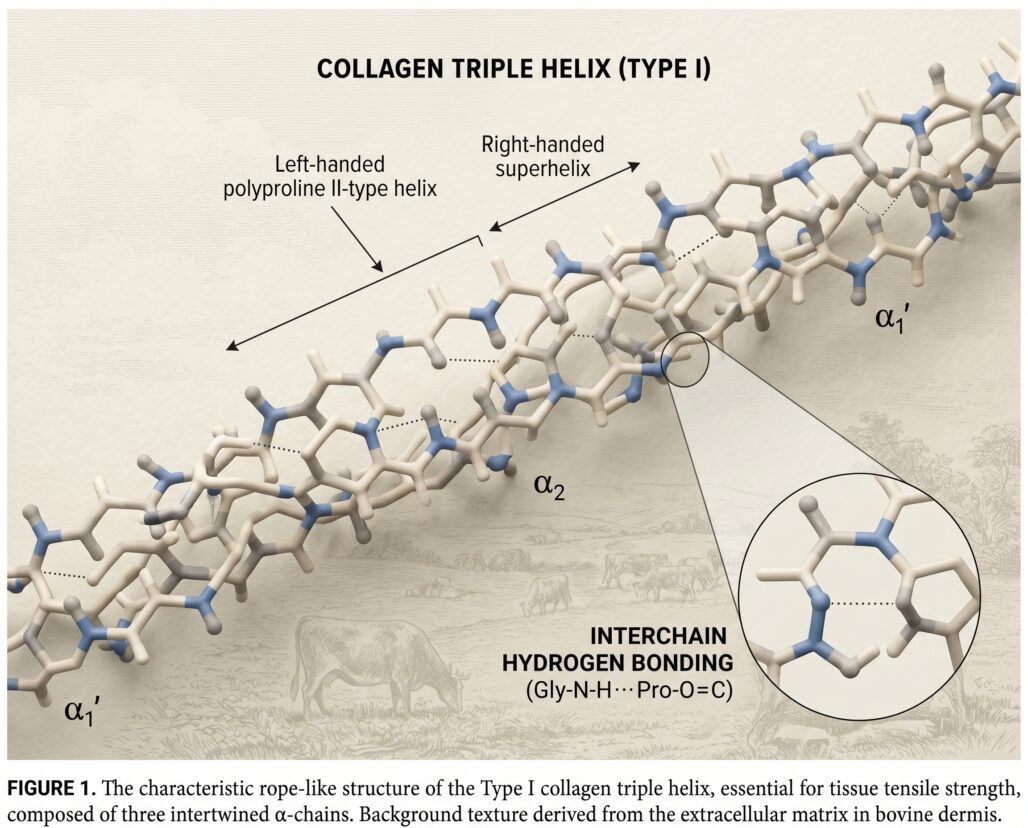
Pure Encapsulations Collagen Peptides is a hydrolyzed bovine collagen powder delivering approximately 10 grams of collagen peptides per serving. Bovine collagen is predominantly type I and type III, which are the structural collagens found in skin, tendons, ligaments, and bone. This makes it well-matched to the use cases most consumers are interested in: skin elasticity, joint support, and connective-tissue recovery.
The ingredient list is short by design: hydrolyzed bovine collagen peptides, and nothing else. No sweeteners, no flavors, no gums, no flowing agents. That minimalism is intentional and is part of what the brand charges a premium to provide. A serving dissolves readily in both hot and cold liquids, and the product is essentially flavorless and odorless at the 10-gram dose, which makes it easy to add to coffee, smoothies, or soup without altering the flavor profile.
Suggested use is one scoop (approximately 10 grams) per day, stirred into a beverage of choice. The brand does not specify an optimal time of day, and the clinical literature does not show strong evidence that timing of collagen ingestion matters meaningfully for outcomes. Consistency over weeks and months appears to matter more than the hour of consumption.
Bovine sourcing carries a historical footnote worth acknowledging. Bovine-derived supplements have been associated with concerns about bovine spongiform encephalopathy (BSE), more commonly known as mad cow disease. Pure Encapsulations sources its bovine collagen from cattle raised in regions with documented, low-risk BSE status, and the hydrolyzation process itself further reduces any theoretical risk. Regulatory agencies including the FDA and EFSA have established sourcing standards that reputable manufacturers follow. This is a managed risk, not an active one, but readers with strong concerns about bovine-derived ingredients may prefer marine collagen alternatives.
The Collagen Peptide Science: What the Evidence Actually Supports
Before evaluating whether Pure Encapsulations specifically earns its price, it helps to understand what the collagen peptide research base looks like overall, because the category's science is stronger than marketing sometimes makes it sound and more limited than some brands imply.
Hydrolyzed collagen is broken down into short-chain peptides that absorb through the gut wall and enter circulation, where they appear to stimulate fibroblasts to produce collagen in target tissues. Animal studies have confirmed systemic distribution of absorbed collagen-derived peptides, including accumulation in cartilage. Oesser et al. (1999) demonstrated that more than 90 percent of radiolabeled collagen hydrolysate was absorbed in the GI tract of mice.
The human clinical data, while not without limitations, is more robust than the data for many other popular supplements. A 2014 randomized, placebo-controlled trial published in Skin Pharmacology and Physiology (PMID 24401291) studied 114 women aged 45 to 65 who took 2.5 grams of Verisol bioactive collagen peptides daily for eight weeks. The treatment group showed a 20 percent reduction in eye wrinkle volume versus placebo, alongside a 65 percent increase in procollagen type I and an 18 percent increase in elastin. Effects persisted for four weeks after treatment ended.
A 2015 narrative review synthesizing more than 60 studies concluded that hydrolyzed collagen supplementation helps reduce joint pain, slow bone density loss, and attenuate skin aging, with a strong safety profile. A 2018 randomized, double-blind, placebo-controlled trial (PMID 29949889) using 1000 mg of low-molecular-weight collagen peptides daily for 12 weeks found statistically significant improvements in skin hydration, wrinkling, and elasticity versus placebo. A 2019 systematic review of 11 randomized controlled trials covering 805 patients (PMID 30681787) concluded that oral collagen supplementation increases skin elasticity, hydration, and dermal collagen density, with no reported adverse events.
Important caveats deserve honest treatment. Most of the strongest studies use proprietary peptide blends with specific molecular weights, particularly Verisol for skin endpoints and Fortigel or Bioactive Collagen Peptides for joint endpoints. Pure Encapsulations does not specify its collagen peptide molecular weight or identify which proprietary hydrolysate standard it sources. That is not a disqualifying flaw — generic hydrolyzed bovine collagen at 10 grams per day is within the dosing range used in positive studies — but it means the direct extrapolation from Verisol data to this product requires some inferential step. The category evidence is strong. The product-specific evidence is absent.
For context, see our broader overview of what peptides are and how they work and our roundup of the best collagen peptides products.
Quality and Sourcing: Where Pure Encapsulations Earns Its Reputation
Pure Encapsulations occupies a specific tier in supplement manufacturing that sits above mass-market brands in meaningful ways, even if it does not always reach the highest certification tier occupied by brands like Thorne (which holds NSF Certified for Sport on select products).
The brand's hypoallergenic formulation philosophy produces a genuinely cleaner label than most competitors. Comparable collagen powders from mass-market brands often include guar gum, silicon dioxide, natural flavors, or sweeteners that contribute nothing to efficacy and may cause issues for sensitive individuals. For practitioners working with patients who have IBD, SIBO, or multiple food sensitivities, a plain hydrolyzed collagen with no excipients is a meaningful clinical advantage.
Manufacturing under cGMP with independent ingredient and finished-product testing (brand-stated) provides a reasonable quality floor. The absence of a standing NSF or USP certification mark means consumers cannot fully verify the testing claims through an independent third party without requesting certificates of analysis directly, which some practitioners do routinely.
Bovine sourcing from low-BSE-risk cattle regions is standard practice among quality manufacturers, not a unique differentiator here, but it is documented in the brand's sourcing commitments and aligns with current regulatory standards.
Compare this to Thorne Collagen Peptides, which holds stronger third-party certification documentation, or Ancient Nutrition Multi Collagen, which takes a different approach by combining bovine, marine, chicken, and egg-shell collagen types at a mid-market price point. Pure Encapsulations sits between those poles: better documented than many mass-market options, not fully certified in the way the most rigorously audited brands are.
Where Pure Encapsulations Earns Its Premium
Several genuine use cases justify paying more for this product over cheaper alternatives.
Allergen-sensitive patients are the clearest case. If you or your patients have reactions to common supplement fillers, gums, or flavorings, the ultra-clean label here provides assurance that is hard to match at lower price points. This is the original reason practitioners recommended Pure Encapsulations products, and it still holds.
Practitioner trust matters in clinical settings. For registered dietitians, integrative MDs, and naturopathic doctors who need to recommend a collagen product they can put their professional credibility behind, Pure Encapsulations carries recognized quality signaling that patients will respect. That is a real and non-trivial benefit even if it does not appear in a lab report.
Formulation simplicity removes confounding variables. If you want to assess whether collagen specifically is driving changes in skin or joint symptoms, a product with zero additives gives a cleaner signal than blends that stack biotin, hyaluronic acid, or vitamin C alongside the collagen.
The 10-gram serving dose is within the range used in well-designed trials, which is not always true of lower-priced brands that sometimes undercut on dose to keep per-serving costs down.
Where the Premium Is Harder to Defend
Honest review requires naming the limits alongside the strengths.
No named third-party certification body. The brand states it conducts independent testing, but without an NSF, USP, or Informed Sport certification mark on this specific product, the testing claims rest on the brand's own documentation. ConsumerLab and NSF both run programs that add independent verification that Pure Encapsulations has not pursued here. If third-party certification is a requirement for you, this product requires trust in the brand rather than a verifiable audit trail.
Generic hydrolysate without molecular weight specification. The most robust clinical research links specific outcomes to specific proprietary peptide blends. Pure Encapsulations does not specify the molecular weight distribution or the hydrolysate supplier, making it harder to map its product directly onto the clinical evidence.
Price per gram of collagen protein. Depending on where you purchase, Pure Encapsulations runs notably higher per gram than competing products from Vital Proteins, Great Lakes Wellness, or Sports Research that use broadly similar bovine hydrolyzed collagen. For consumers without allergen constraints or a practitioner recommendation, the price gap requires justification that is not always easy to supply from the science alone.

Frequently Asked Questions
Is Pure Encapsulations Collagen Peptides suitable for vegetarians?
No. It is bovine-derived hydrolyzed collagen. No animal-product-free collagen alternative exists that delivers equivalent amino acid profiles.
How long before I notice any effect on skin or joints?
Clinical studies showing measurable skin improvements used supplementation periods of eight to twelve weeks minimum. Joint outcomes in longer studies emerged over twelve to twenty-four weeks. Expect to commit to consistent daily use for at least two months before evaluating results.
Can I take this while pregnant or nursing?
Hydrolyzed collagen is generally regarded as safe for dietary use, but no large-scale clinical trials have specifically studied collagen supplementation in pregnancy. Defer to your OB or midwife before adding any supplement during pregnancy or nursing. This is not FDA-approved as a drug and carries no formal pregnancy safety classification.
Does it matter when I take it?
The evidence does not support a specific optimal window. Taking it consistently, whatever time of day fits your routine, appears to be what matters. Some practitioners suggest pairing it with a small amount of vitamin C, which is a cofactor in collagen synthesis, though this is not required for the supplement to be absorbed.
Is Pure Encapsulations Collagen Peptides FDA-approved?
No. Like all dietary supplements sold in the United States, this product is not FDA-approved as a drug. It is regulated as a dietary supplement under DSHEA. The FDA does not review or approve dietary supplements for efficacy before they reach market.
How does it compare to collagen peptides from brands like Thorne?
Thorne Collagen Peptides carries NSF Certified for Sport certification on select products, which provides verified third-party documentation that Pure Encapsulations does not currently offer for this product. See our Thorne Collagen Peptides review for a side-by-side comparison.
Practical Takeaways
- Start with a consistent 10-gram daily dose and commit to at least eight to twelve weeks before evaluating any change in skin or joint markers.
- If you have multiple food sensitivities or your practitioner has specifically recommended Pure Encapsulations, the ultra-clean label is a genuine differentiator worth paying for.
- If third-party certification from a named body is a hard requirement for you, compare this against Thorne or other NSF-certified options before purchasing.
- The underlying science for hydrolyzed bovine collagen as a category is reasonably strong for skin elasticity and hydration endpoints, less conclusive for joint pain in healthy adults without existing degenerative conditions.
As an Amazon Associate, I earn from qualifying purchases. Product recommendations are based on real reviews and independent research.
Conclusion
Pure Encapsulations Collagen Peptides is a well-formulated, allergen-free bovine hydrolyzed collagen powder that earns its practitioner-channel reputation through genuine manufacturing rigor and a clean label that most mass-market competitors cannot match. The ten-gram serving dose is clinically relevant, the formulation adds nothing unnecessary, and the brand's quality commitments are credible even where formal third-party certification falls short. The honest limitation is that the product-specific evidence base is thin — the category science is solid, but no trials isolate this brand's peptides versus others.
If you are purchasing because your integrative health provider recommended it, or because you need an additive-free option that your digestion will tolerate, the premium is defensible. If you are a generally healthy adult without allergen constraints who is simply looking for cost-effective collagen support, the clinical evidence does not give you a strong reason to pay the price difference over a lower-cost bovine hydrolysate from a reputable brand. For more options evaluated against the same criteria, see our roundup of the best collagen peptides products.
This article is for informational purposes and not medical advice. Peptides, especially those marketed for therapeutic use, can interact with medications and health conditions. Consult a licensed physician before starting any supplement, particularly if you are pregnant, nursing, taking prescription medications, or managing a chronic condition.
As an Amazon Associate, I earn from qualifying purchases. Product recommendations are based on real reviews and independent research.
