
Affiliate disclosure: this article contains affiliate links. As an Amazon Associate, UsefulVitamins.com earns from qualifying purchases at no extra cost to you.
Before you buy
The real question with Seeking Health Optimal Prenatal is not whether the formula is good. It is. The question is whether you will actually take eight capsules a day, and whether you are willing to run iron and DHA as separate bottles.
This is a practitioner-style prenatal. It shows up on the shelves of naturopaths and functional-medicine clinics, and it is built for people who care about folate form and B-vitamin activation rather than convenience.
If you came here because of an MTHFR result or because someone told you to avoid folic acid, this review is aimed at you. We will cover what is inside, who the methylated folate actually helps, and where the formula leaves gaps you have to fill yourself.
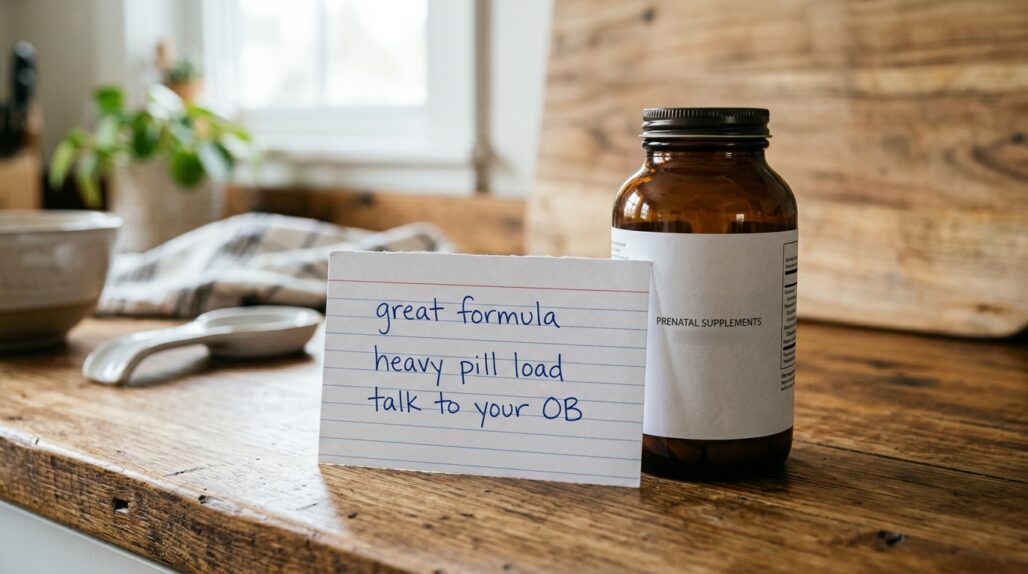
One thing up front: prenatal nutrition is a medical decision. Run any prenatal choice past your OB or midwife before you start, especially if you have a high-risk pregnancy or take other medications.
What Seeking Health Optimal Prenatal actually is
It is a full-dose, capsule-based prenatal multivitamin taken at eight capsules per day in divided doses. A bottle is 240 capsules, which works out to a 30-day supply at the full serving.
The formula leans on active, pre-converted vitamin forms instead of the cheaper synthetic versions you see in drugstore prenatals. That is the whole pitch.
- Folate comes as L-methylfolate (Quatrefolic) plus folinic acid, with no synthetic folic acid.
- B6 is the active P-5-P form (pyridoxal-5-phosphate).
- B12 uses methylcobalamin and adenosylcobalamin, again the active forms.
- Choline is included as VitaCholine, a meaningful inclusion since most prenatals skip it.
That active-forms approach is the reason a clinician might hand you this bottle. According to the brand's own Optimal Prenatal product page, the formula deliberately leaves out folic acid and iron, and the bottle carries a third-party tested badge.
The trade-off is bulk. Cramming real doses of many nutrients into one capsule is impossible, so the dose gets spread across eight pills. The quality of the formula and the size of the daily load are the same design decision.

The MTHFR and methylfolate angle
This is the reason most people search for this product, so let us be precise.
About 1 in 3 people in the United States carry at least one MTHFR variant that slows the conversion of folic acid into the active folate your body uses. Methylfolate skips that conversion step, which is why a methylated prenatal gets recommended to people with these variants.
Here is the honest part. Methylfolate clearly raises blood folate, and a proof-of-concept pregnancy study found 5-MTHF was at least as effective as folic acid at lifting red blood cell folate. So as a way to get folate into your system, it works.
What it has not done is prove it prevents neural tube defects. That outcome has only been shown for folic acid, which is why ACOG and the CDC still recommend folic acid as the evidence-based standard for everyone trying to conceive.
So who genuinely benefits from the methylated version?
- People with a known MTHFR variant who want the pre-converted form.
- People who simply prefer to avoid synthetic folic acid and want active nutrients across the board.
- People whose clinician specifically asked them to use methylfolate.
For most women without those reasons, a standard folic acid prenatal is not a worse choice for preventing birth defects. The methylated angle is a preference and a tolerance question, not a proven head-to-head win. If MTHFR is your main driver, our piece on the best prenatal vitamin without iron covers more methylated, iron-free options to compare.
Choline, iron, and DHA: what is covered and what is not
This is where the convenience gap shows up, and it matters more than the pill count for most buyers.
Choline is the standout inclusion. The NIH Office of Dietary Supplements sets the adequate intake at 450 mg a day during pregnancy, and most prenatals contain little or none. A research review on choline in pregnancy notes that under half of US prenatals include it at all. Seeking Health does include choline as VitaCholine, though the exact milligram figure was not clearly stated on the page we checked, so confirm the current label if a specific dose matters to you. Even a partial dose puts it ahead of most competitors.
Iron is deliberately left out. The brand keeps iron separate because it competes with calcium for absorption, and sells an iron chewable to pair with it. That is a defensible choice, but it means you must source iron yourself if your OB says you need it, which most pregnant women eventually do.
DHA is not in the bottle either. The brand argues that the token DHA amounts in most prenatals are too low to matter, and recommends a separate fish oil. That logic holds up, but the practical result is the same: this is not all-in-one prenatal coverage.
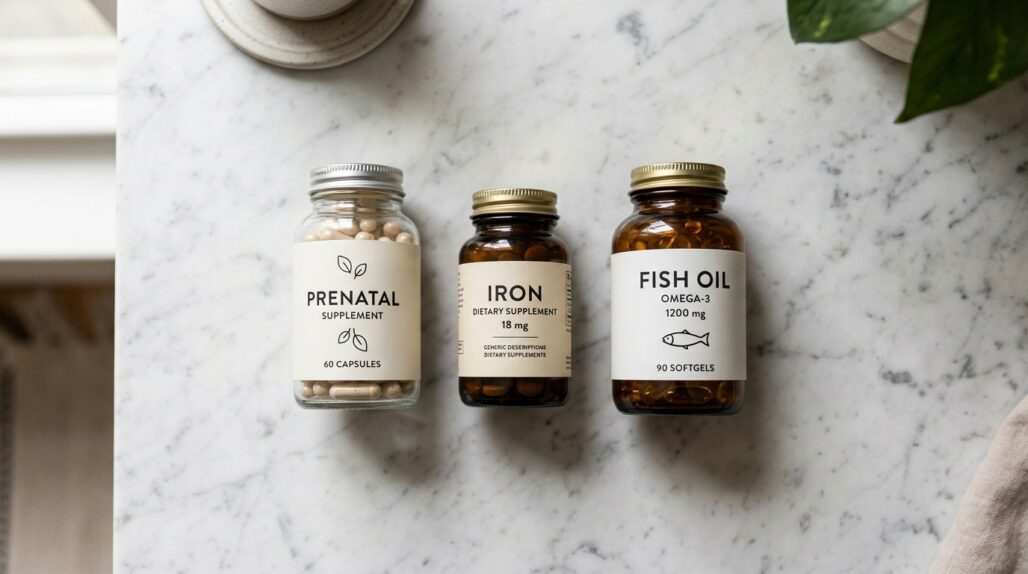
Add it up and a complete routine here is often three bottles, the prenatal, an iron supplement, and a DHA fish oil. Budget and pill count both climb. If juggling three bottles sounds like too much, a more consolidated formula like the ones in our Needed prenatal review may suit you better.
Cost per day and the capsule burden
At around $70 for a 30-day bottle as of writing, the prenatal alone runs about $2.30 a day. Add an iron supplement and a quality fish oil and your real daily cost climbs toward $3.50 to $4.00, depending on what you pair it with. Check current prices, since supplement pricing moves.
That is premium territory. You are paying for active nutrient forms, choline, and third-party testing, not for marketing gloss.
Then there is the pill count. Eight capsules a day, split into divided doses, is a real commitment. Verified-buyer reviews repeatedly praise the formula while flagging the same thing, the number of capsules is hard to keep up during nausea-heavy first trimesters.
A few practical notes from how people actually use it:
- Some women take four capsules instead of eight when tolerance is low, which halves both the dose and the cost. Ask your clinician before you cut the dose, since you may then need more folate or iron elsewhere.
- Splitting the capsules across morning and evening with food tends to reduce nausea complaints.
- If swallowing capsules is the dealbreaker, this is simply the wrong product, and a gummy or smaller-pill prenatal will serve adherence better.
The blunt truth: the best prenatal is the one you take every day. A flawless formula you abandon by week six is worse than a simpler one you finish.
How it compares
Here is how the Seeking Health formula stacks up against the two design choices most buyers weigh it against: an all-in-one premium prenatal and a simpler everyday capsule.
| Factor | Seeking Health Optimal Prenatal | All-in-one premium prenatal | Simple capsule prenatal |
|---|---|---|---|
| Folate form | Methylfolate plus folinic acid | Usually methylfolate | Often folic acid |
| Pills per day | 8 capsules | 6 to 8 capsules | 1 to 2 capsules |
| Iron included | No, sold separately | Sometimes | Usually yes |
| DHA included | No, sold separately | Sometimes bundled | Rarely |
| Choline | Yes, VitaCholine | Often yes | Often none |
| Cost per day | Around $2.30 (prenatal only) | $2.50 to $3.50 | $0.30 to $0.80 |
The pattern is clear. Seeking Health competes on formula quality, not on convenience or price. If you want fewer pills or all-in-one coverage, you are shopping in a different lane.

Where to buy and the value pick
If the formula fits your situation, here are the options worth comparing, including a couple of alternatives for people who want fewer pills or a more bundled approach.


As an Amazon Associate, UsefulVitamins.com earns from qualifying purchases at no extra cost to you.
UsefulVitamins may earn a commission from purchases made through the links above, at no extra cost to you.
For a true all-in-one feel with iron and DHA more often handled in one system, weigh the picks in our Needed versus FullWell prenatal comparison. For an iron-bundled or budget capsule, our FullWell prenatal review lays out a different set of trade-offs.
FAQ
Is Seeking Health Optimal Prenatal worth it? If you want a high-dose, methylated formula and do not mind eight capsules a day plus separate iron and DHA, yes. If you want a simple one- or two-pill routine, a different prenatal is a better fit.
Do I need a methylfolate prenatal if I have MTHFR? Methylfolate is a reasonable choice if you carry an MTHFR variant or prefer to avoid folic acid, and it raises blood folate well. But folic acid is still the only folate form proven to reduce neural tube defects, so talk to your OB before deciding.
Why does it not contain iron? The brand keeps iron separate because iron competes with calcium for absorption. You will likely need to add an iron supplement, since most pregnant women need iron at some point. Ask your clinician about your levels first.
Does it have DHA? No. Seeking Health argues that small DHA amounts in most prenatals are too low to matter and recommends a separate fish oil, so plan to buy DHA on its own.
Can I take fewer than eight capsules? Some women take four when tolerance is low, which lowers both the dose and the cost. Confirm with your clinician, because a half dose may leave gaps in folate or other nutrients you then need to cover elsewhere.
Is it third-party tested? The product page shows a third-party tested badge, and the brand has shared heavy-metal test reports on request. Ask the brand for the current certificate of analysis if independent testing is a priority for you.
The verdict
Seeking Health Optimal Prenatal earns its practitioner reputation. The methylated folate, active B vitamins, and included choline make it one of the more complete formulas on the market, and the third-party testing is reassuring.
The honest call: buy it if you want a high-dose, active-forms prenatal and you are genuinely fine taking eight capsules plus separate iron and DHA. If that routine sounds like too much, you will get better adherence and lower cost from a simpler prenatal, and adherence is what actually protects your pregnancy.
Your next step is not to add this to a cart on a stranger's say-so. Take the label to your OB or midwife, confirm whether you need iron, and decide together whether the formula and the pill count fit your pregnancy.
This article is for general information only and is not medical advice. Supplement needs during pregnancy vary, and prenatal choices should be made with your OB-GYN, midwife, or pharmacist. Do not start, stop, or change any supplement or medication during pregnancy without professional guidance.
Reviewed by the UsefulVitamins Editorial Team.
