

Why a few common supplements get paused before surgery
Most people picture supplements as harmless extras, so it surprises them when a nurse says to stop the fish oil two weeks out. The reason is plain. Some popular products change how your blood clots or how your body handles anesthesia, and an operating room is the one place where those small effects matter a lot.
There are three buckets to keep in mind. The first is bleeding: several supplements thin the blood or slow clotting, which can mean more oozing during and after a procedure. The second is anesthesia: a handful of herbs can lengthen sedation or interact with the drugs the anesthesiologist uses. The third is blood sugar and blood pressure, which a few products can nudge in ways that complicate the day.
You do not need to memorize the biology. Your job is simpler and more useful: make a complete list, hand it over early, and let the people running the operation tell you what to do. The checklist below is built so you can do exactly that, on paper, with nothing to download.
The print-and-bring checklist (write this out by hand)
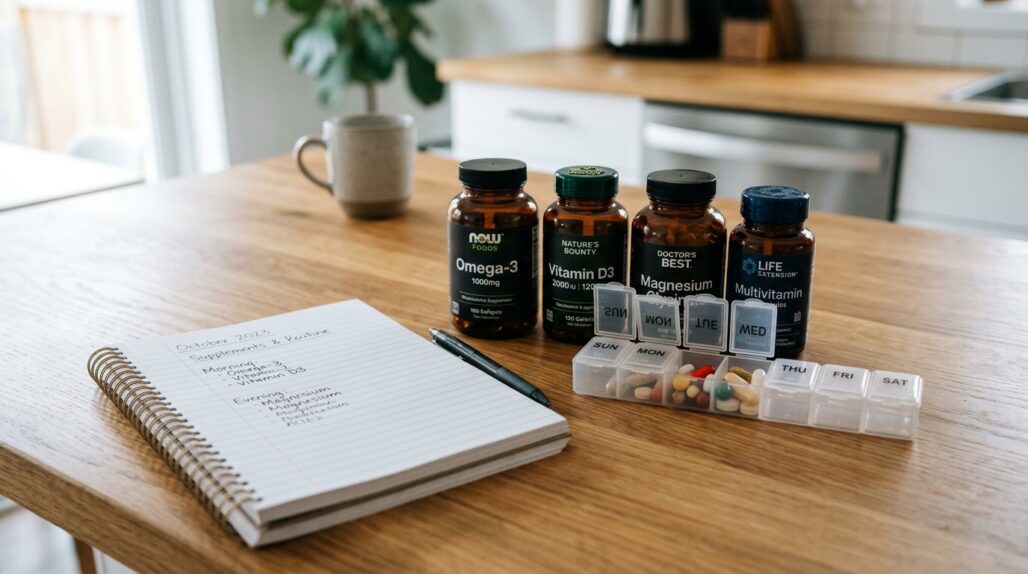
Grab a sheet of paper or open a phone note. You are building one page that a surgeon or anesthesiologist can read in thirty seconds. For each item you take, write five things across the row.
| Column | What to write |
|---|---|
| Product name | Exact name on the bottle, brand and form |
| Dose | Amount per serving, like 1000 mg fish oil |
| How often | Once a day, twice a day, as needed |
| Why you take it | Joints, sleep, energy, a doctor told me to |
| Last dose before surgery | Leave blank for the team to fill in |
List everything, not just the things you think are risky. That means prescription drugs, over-the-counter painkillers, vitamins, minerals, protein powders, greens blends, gummies, and anything herbal. Combination products are the easy ones to miss, since a single "sleep" or "immune" capsule can hide three or four active ingredients. Bring the actual bottles to the appointment if you can, because the label settles arguments that memory cannot.
Title the page with your name, the surgery date, and a line that says "please review and tell me what to pause." That framing does two jobs. It hands the decision to the experts, and it makes clear you are not asking them to rubber-stamp a plan you already made.
The usual suspects to flag
The list below is not a stop order. It is a heads-up sheet of products that surgical teams commonly ask about, so you can star them on your page and make sure they get discussed. The exact decision is theirs.
The biggest group raises bleeding risk by slowing how platelets stick together. A review in the National Library of Medicine's PMC archive describes how fish oil and omega-3s, vitamin E, ginkgo, garlic, ginger, and ginseng can each inhibit platelet activity, with case reports tying some of them to heavier surgical or postoperative bleeding. None of these is dramatic on its own for most people, but stacked together, or added to a prescription blood thinner, they can add up.
A second group affects anesthesia and sedation. Guidance summarized by the Institute for Safe Medication Practices notes that St. John's wort can change how other drugs are processed, while kava and valerian can deepen or lengthen sedation. A UT Southwestern Medical Center patient guide lists ten items it commonly asks patients to pause at least seven days out, including echinacea, ephedra, garlic, ginkgo, ginseng, kava, St. John's wort, valerian, vitamin E, and CBD oil.
Here is a quick reference you can copy onto the back of your page.
| Supplement | Main concern raised in the literature |
|---|---|
| Fish oil / omega-3 | May reduce platelet stickiness, bleeding |
| Vitamin E (higher doses) | May inhibit platelet aggregation, bleeding |
| Ginkgo biloba | Bleeding, including case reports of serious bleeds |
| Garlic (concentrated) | Bleeding, platelet effects |
| Ginger / ginseng | Possible platelet effects, bleeding |
| St. John’s wort | Changes how anesthesia and other drugs are processed |
| Kava / valerian | May prolong or deepen sedation |
| Ephedra | Heart rate and blood pressure changes |
If you want to sanity-check a combination before your visit, our drug and supplement interaction checker can surface the common flags to raise, and our ultimate guide to drug and supplement interactions explains the mechanisms in more depth. Use them to prepare questions, not to make the call.
Timing: who decides, and when
The number you will hear most often is two weeks. The Mayo Clinic Proceedings review on preoperative supplement management points to roughly a two-week window for many products, because that is long enough for short-lived effects to wash out. The FDA's tips for supplement users say you may be asked to stop certain products two to three weeks ahead of a procedure. ISMP frames the general herbal guidance as one to two weeks before surgery.
Notice the range. Different products clear at different speeds, and different procedures carry different bleeding risk, so there is no single date that fits everyone. That is the whole point of handing your list over early. The surgeon and anesthesiologist set your exact stop date, and they may keep something going that a generic article would tell you to drop.
So build a small buffer. Aim to have your list in their hands at least two weeks before the date, ideally at the pre-op appointment, so there is room to act on whatever they decide.
Once you have a date in hand, the only thing left is to actually pause on time. A paper calendar with the stop dates circled works, and so does a sticky note on the bottle. If you would rather not track it by hand, StackMyMed (our own free app) can export a clean list of everything you take to share at the pre-op visit, so an item like fish oil or vitamin E does not get left off, and you can note each product's stop date next to it; the app organizes and shares the list, while your surgical team decides what actually pauses and when.

The one rule that overrides all of this
Do not stop a prescription medication on your own. This is the single most important line on the page. Some prescriptions, including certain blood thinners, heart medicines, and diabetes drugs, are risky to pause without a plan, and the timing is a clinical decision. UT Southwestern makes the same point: a current, complete list lets your team advise you on what to stop and, just as importantly, what not to stop.
The same caution applies in a softer way to supplements you take for a real medical reason. If a doctor put you on something, flag it and ask, rather than guessing.
Two more practical notes. Keep the list current right up to the day, since people start and stop products in the weeks before surgery. And if you fill prescriptions in more than one place, or see several specialists, pull it all together first; our guide on building a brown bag medication review walks through gathering every bottle so nothing is invisible to the people deciding.
A quick self-check before you go
If you have lost track of how many products you are on, that is worth noticing on its own. A long stack is harder to pause cleanly and easier to forget pieces of. Our short supplement self-audit can help you trim and tidy before the appointment, which also makes your list shorter and clearer for the surgical team to read.
Then run this final pass: every product written down, doses included, combination capsules opened up and listed by ingredient, the page titled with your name and surgery date, and the bottles packed if you can carry them. That is a complete handoff, and it is all the page needs to do.

FAQ
How far before surgery should I stop my supplements? Often around two weeks, and the FDA notes you may be asked to stop two to three weeks ahead, but the exact timing depends on the product and the procedure. Your surgical team sets your stop dates, so get your list to them early.
Do I really have to list vitamins and “natural” products? Yes. Natural does not mean inert before surgery. Items like vitamin E, fish oil, and several common herbs can affect bleeding or anesthesia, so the team needs the full picture, not just prescriptions.
What about a daily multivitamin or basic vitamin D? Many routine, low-dose vitamins are fine to continue, but some teams prefer you pause everything non-essential to keep things simple. List them anyway and let the team tell you which to keep.
Can I just stop my blood thinner since it raises bleeding risk too? No. Prescription blood thinners and other prescription medicines should only be paused on your surgical team’s instruction. Stopping one on your own can be dangerous; flag it and ask.
When can I restart my supplements after surgery? Ask your surgeon, since it depends on healing, bleeding risk, and any new medications. Resuming too early can interfere with recovery, so wait for the go-ahead rather than guessing.
What if I already took something this morning and surgery is soon? Tell the team rather than hiding it. They would much rather know what is on board than be surprised, and honesty lets them adjust safely.
The bottom line
Some everyday supplements can raise bleeding or change how anesthesia behaves, which is why surgical teams ask about them. The most useful thing you can do is the simplest: write one complete page of everything you take, doses included, and hand it over at least two weeks before your date. Star the common flags so they get discussed, but let your surgeon, anesthesiologist, and pharmacist decide what pauses, when, and what stays. And never stop a prescription on your own; that decision belongs to your care team.
This article is general information, not medical advice. It does not replace guidance from your surgeon, anesthesiologist, pharmacist, or doctor, who know your history and your procedure. Always confirm what to pause, and when, with your surgical team before making any change.
StackMyMed is made by UsefulVitamins. It helps you organize your list and flag things to discuss with a pharmacist or doctor; it is not a diagnosis or treatment tool and does not replace professional medical advice.
Reviewed by the UsefulVitamins Editorial Team.
