
Affiliate disclosure: this article contains affiliate links. As an Amazon Associate, UsefulVitamins.com earns from qualifying purchases at no extra cost to you.
Hair shedding is frightening in a way that a number on a lab report is not. The drain looks alarming, the brush fills up, and the easiest thing in the world is to buy a bottle that promises thicker hair. Most of those bottles are biotin. Biotin is almost never the problem, and it can make your blood tests lie.
So before you spend another month guessing, it helps to know which tests actually map to thinning hair, which you can do at home, and which belong in a doctor's order. This page is educational. It is meant to help you walk into an appointment knowing what to ask for – not to diagnose you.
Which tests are worth asking for
Diffuse thinning – the kind where hair comes out evenly all over, rather than in patches – is usually a type of shedding called telogen effluvium. A standard workup for it is fairly settled. A widely cited review of telogen effluvium lists a baseline of complete blood count, serum ferritin, and thyroid testing (TSH, with T3 and T4 as needed), plus a few extras when the history points there.
Here is how those break down, and what each one is actually telling you.
Ferritin (iron stores). This is the single most actionable test for most people who are shedding. Ferritin measures stored iron, and it can be low long before a standard "iron" result or hemoglobin looks abnormal. The telogen effluvium review notes that iron deficiency without anemia shows up in roughly 20% of cases. If you are going to get one test, this is the one.
TSH (thyroid). Both an underactive and an overactive thyroid can trigger diffuse shedding. A review of thyroid dysfunction and hair disorders reports hair loss in roughly half of people with hyperthyroidism and about a third with hypothyroidism. TSH is the screening number; your doctor decides whether to add T3, T4, or thyroid antibodies.
Vitamin D. The link here is softer than for iron and thyroid, but it is real enough to check. A systematic review and meta-analysis found lower vitamin D levels across several non-scarring hair-loss types, including telogen effluvium. Low vitamin D is so common and so easy to correct that testing it is reasonable even if the evidence for cause is not airtight.
A full blood count and, sometimes, hormones. A complete blood count rounds out the iron picture and flags anemia. If your shedding comes with irregular periods, acne, or unwanted facial hair, your doctor may add hormone tests (for example, markers tied to polycystic ovary syndrome) – that is firmly a doctor-ordered situation, not a home kit.
| Test | What it tells you | At-home or ask your doctor |
|---|---|---|
| Ferritin (iron stores) | Whether low iron stores are starving your follicles, even with normal hemoglobin | At-home finger-prick is reasonable for screening; confirm a low result with a clinic draw |
| TSH (thyroid) | Whether an under- or overactive thyroid is driving the shedding | At-home panels exist; an abnormal result should go to your doctor for the full thyroid picture |
| Vitamin D (25-OH-D) | Whether a common, easily fixed deficiency is in play | At-home is fine for a first look; very low results warrant a doctor’s input |
| Full blood count + hormones | Anemia, and (if symptoms fit) a hormonal cause like PCOS or menopause-related change | Ask your doctor – these belong in a clinical workup, not a kit |
Why ferritin is the number to chase first
Ferritin is worth singling out because the lab "normal" range is wide, and a result sitting at the bottom of it can still leave you shedding.
This is the part people miss. A ferritin of, say, 18 ng/mL may be flagged as normal by the lab, yet some clinicians treat low ferritin as a contributor to hair loss well above that floor. The same telogen effluvium review describes a long-running debate: some recommend keeping ferritin above 40 ng/mL in people who are shedding, while others argue for a higher target near 70 ng/mL.
Here is the honest framing. Those higher numbers are a clinical opinion about a treatment threshold, not the standard reference range your lab uses, and not settled consensus. A systematic review and meta-analysis on iron deficiency and nonscarring hair loss in women found an association but stopped short of proving that correcting borderline ferritin reliably regrows hair. So a low-normal ferritin is a reasonable thing to discuss and to fix if you are deficient – it is not a diagnosis on its own. Our companion page, how to read your ferritin result (optimal vs normal), walks through that gap in more detail.
One more catch: ferritin is also an inflammation marker. An infection, a recent illness, or chronic inflammation can push it up and hide a real iron shortfall. That is one reason a single home number is a screen, not the last word.
The biotin trap (stop it before you test)
If you take a hair, skin, and nails supplement, there is a good chance it is loaded with biotin, often at megadoses far above what anyone needs from food.
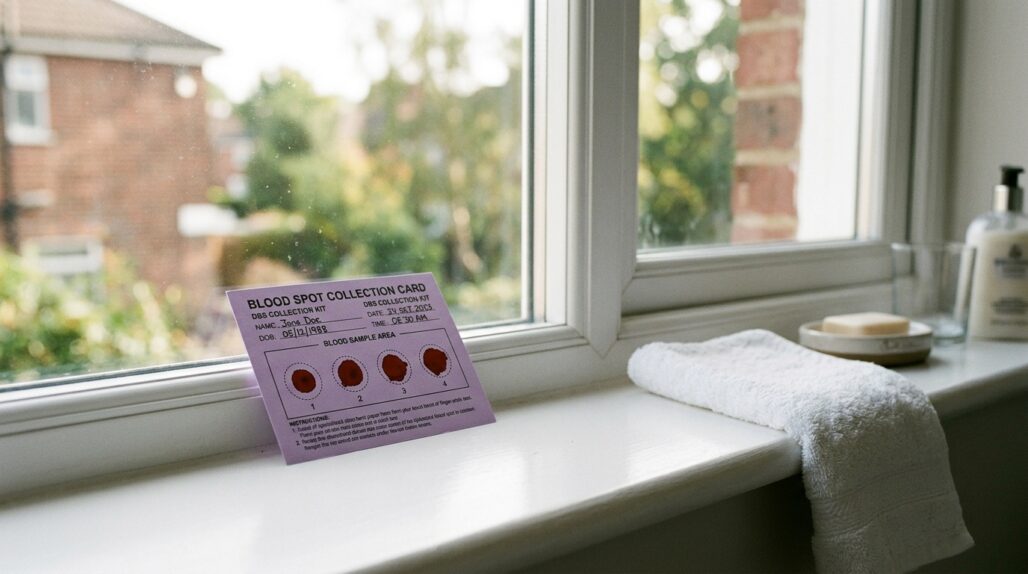
Two problems. First, biotin has little evidence behind it for hair loss unless you have a genuine biotin deficiency, which is rare. Second, and more important for this page, high-dose biotin distorts a lot of common blood tests. The FDA has warned that biotin can cause falsely high or falsely low results on assays including thyroid tests, hormones, ferritin, and troponin – it even documented one death tied to a missed heart attack from a falsely low troponin.
The practical move: stop biotin at least 48 hours before any blood draw, and tell whoever orders the test that you have been taking it. Skip this step and your thyroid or ferritin result could send you down the wrong path entirely. We cover the mechanics in how biotin and other supplements skew lab results.
The free first step before any pill
Before you treat a single number, rule out the most common, self-resolving cause: stress- or illness-related shedding.
Telogen effluvium famously shows up two to three months after a trigger – a high fever, COVID, surgery, a crash diet, childbirth, a stressful stretch. The shedding can feel dramatic, then settle. The NHS notes that hair loss after an illness or stressful event usually grows back once you recover. The telogen effluvium review puts cosmetically meaningful regrowth at 12 to 18 months, which is slow and maddening but normal.
So the free step is to ask: did something happen about three months ago? If yes, eating enough (especially iron-rich food and adequate protein), sleeping, and waiting may matter more than any supplement. Test to rule out the fixable deficiencies, but do not assume a pill is what turns it around. For the supplement side once you have your numbers, see our guides to supplements for thinning hair in women and supplements for hair growth – read them as context, not as a substitute for treating an actual deficiency.

At-home vs ask-your-doctor, and how to test smart
The picks below are kits we may earn a small commission on, at no cost to you.



As an Amazon Associate, UsefulVitamins.com earns from qualifying purchases at no extra cost to you.
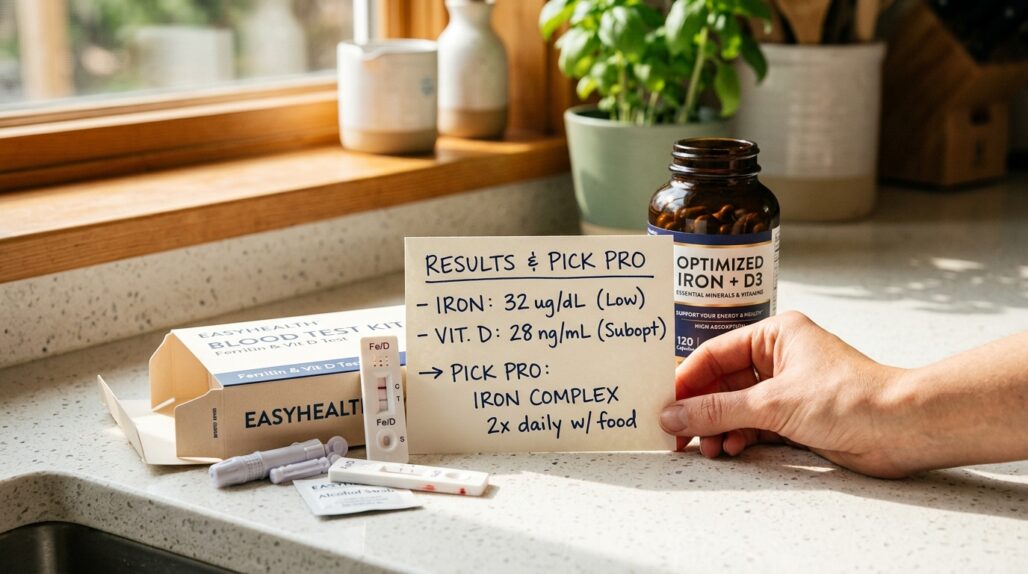
At-home finger-prick kits for ferritin, thyroid, and vitamin D are a sensible screening step – useful for getting a number without a doctor's order. They are screening aids, not clinical diagnosis. The lab side is usually solid when the kit ships your sample to a CLIA-certified lab, but the weak link is collection: a skimpy finger-prick sample or poor technique can skew a result. Treat any low or abnormal home result as a reason to confirm with a standard clinic blood draw, not as a verdict.
A simple way to make the test actually mean something: write the number down and set a re-test reminder, so that if you do treat a low result you can see whether it moved. You can log it in StackMyMed (our own free app) alongside any supplement and set a re-test reminder for a few months out, or just keep a note in your phone or a calendar reminder – the tool matters less than the habit of closing the loop. Any decision about starting iron or thyroid treatment is one for your doctor, not the app.
If you would rather skip the kits, asking your doctor is the better route when the shedding is heavy, persistent, or paired with other symptoms – they can order ferritin, a full thyroid panel, a complete blood count, and hormones in one draw and interpret them together.
When to see a doctor
This page is screening guidance, not a diagnosis. Some hair loss needs a clinician from the start.
See a doctor, ideally a dermatologist, if any of these fit:
- The loss is patchy or leaves smooth, coin-shaped bald spots (a sign of alopecia areata, not simple shedding).
- The scalp shows scaling, redness, scarring, or shiny smooth skin where hair used to be – scarring hair loss can be permanent if left untreated.
- The shedding comes with other symptoms: weight change, fatigue, palpitations, irregular periods, or new facial hair.
- It is not improving after several months despite normal blood tests.
For these patterns, no home test kit will give you the answer, and waiting can cost you regrowth that a doctor could have preserved.

FAQ
Should I get one test or all of them? If you start with one, make it ferritin, since iron deficiency without anemia is a common and fixable driver of shedding. TSH is a close second. Vitamin D is easy to add and cheap to correct.
Will biotin make my hair grow? Only if you are genuinely biotin-deficient, which is rare. Its bigger effect for most people is distorting blood tests, so stop it 48 hours before any draw and tell whoever orders the test.
My ferritin is “normal” but I’m still shedding – what gives? A normal-range ferritin can sit low enough that some clinicians still treat it. That higher target is an opinion about a treatment threshold, not the standard range, so discuss your specific number with your doctor rather than acting on it alone.
Are at-home blood tests reliable for this? They are reasonable screening tools when the kit uses a CLIA-certified lab, but collection technique can skew them. Confirm any low or abnormal result with a clinic draw before making decisions.
How long until I know if treatment worked? Re-test the blood marker in 8 to 12 weeks to see if the number moved. Visible regrowth lags far behind that – often 3 to 6 months to slow the shedding and longer for noticeable density.
Could a medication be causing it? Yes – several common drugs can trigger shedding. Bring your full medication and supplement list to your doctor rather than stopping anything yourself.
The bottom line
Thinning hair is worth investigating, not panicking over. Start with the two numbers that explain most cases – ferritin and TSH – and add vitamin D and a full blood count if it fits. Stop biotin before you test so the results are trustworthy. Treat what is actually low, then re-test in 8 to 12 weeks to confirm the number moved, knowing that regrowth itself takes months.
And keep the limits in view: at-home kits screen, they do not diagnose, and patchy or scarring loss belongs with a dermatologist now, not after another bottle of gummies.
This article is educational and is not medical advice or a diagnosis. It does not replace care from your doctor, dermatologist, or pharmacist. Talk to a clinician before starting, stopping, or changing any supplement or medication, and confirm any abnormal test result with a clinical lab.
Reviewed by the UsefulVitamins Editorial Team.
