
Hair thinning can feel personal and frustrating, especially when you are doing “all the right things.” The good news is that the best supplements for hair growth are not random vitamins – they are specific nutrients (and a few well-studied multi-ingredient blends) that support hair cycling when stress, diet gaps, or low iron and vitamin D are part of the picture. This article breaks down what research actually shows, who benefits most, what to expect in 3 to 6 months, and how to avoid common supplement mistakes that waste money – or muddy your lab results.
Affiliate disclosure: this article contains affiliate links. As an Amazon Associate, UsefulVitamins.com earns from qualifying purchases at no extra cost to you.
Summary / Quick Answer: What are the best supplements for hair growth?
The best supplements for hair growth tend to fall into two categories: (1) tested multi-ingredient formulas used in clinical trials for thinning hair and (2) targeted nutrients that correct common deficiencies linked to shedding.
Most evidence-supported options (in plain terms):
- Clinically studied multi-nutrient blends (often including B vitamins, zinc, and botanicals): may improve hair density and reduce shedding over 3 to 6 months, based on randomized controlled trials.
- Vitamin D: helpful when blood levels are low.
- Iron (plus vitamin C): iron deficiency is a common, fixable contributor to shedding; vitamin C helps absorption.
- B12 and folate: worth checking if diet is limited or fatigue is present; low levels are associated with certain shedding patterns.
What usually is not “magic”:
- Biotin alone – unless you are truly deficient, benefits are inconsistent and it can interfere with lab tests.
Best supplements for hair growth: What the clinical trials actually show
If you have ever stared at a supplement label and wondered, “Is any of this proven?” you are asking the right question. Hair growth is slow, and the best data comes from randomized, placebo-controlled trials that measure changes over months, not weeks.
What studies find with multi-ingredient hair supplements
Several trials suggest that multi-nutrient formulas can help women with self-perceived thinning hair, especially when the cause is related to stress, diet, or general hair-cycle disruption.
For example, a randomized placebo-controlled clinical study published in the Journal of Clinical and Aesthetic Dermatology reported that women taking a multi-ingredient gummy (including B vitamins, zinc, and botanicals) experienced a 10.1% increase in hair density after 6 months, while the placebo group decreased by about 2%. Participants also reported less shedding and improved strength in self-assessments, which matters because shedding is often the symptom people notice first. See the details in the randomized placebo-controlled study in the Journal of Clinical and Aesthetic Dermatology and the full-text report indexed in PubMed Central.
Another double-blind placebo-controlled trial in women with self-perceived thinning found significant improvements in hair growth measurements over 90 and 180 days, alongside better ratings of volume, shine, and smoothness. The authors also reported no adverse events during the study period, which is reassuring for typical use. You can read it via the double-blind placebo-controlled trial in PubMed Central.
A practical way to interpret “multi-ingredient” evidence
Think of these blends like a “coverage plan.” Hair follicles are sensitive to:
- nutrient availability (iron, vitamin D, B vitamins)
- inflammation and oxidative stress
- stress signaling and hormones
A single nutrient rarely addresses all of that. That is one reason multi-ingredient products may outperform “one-pill solutions” in real-world thinning.
Quick comparison table: what’s most supported vs. most hyped
| Category | What it includes | Best fit for | Evidence snapshot |
|---|---|---|---|
| Multi-ingredient blends | B vitamins, zinc, botanicals (varies by brand) | Diffuse thinning, stress-related shedding, diet gaps | Multiple placebo-controlled trials show improved density and growth over months |
| Deficiency correction | Vitamin D, iron, B12, folate | People with low labs or risk factors | Strong clinical logic and guideline support when deficient |
| Single “hero” vitamins | Biotin, vitamin A, vitamin E | Only if deficiency is confirmed | Mixed evidence for routine use; excess can backfire |
Actionable takeaway: If you want a supplement strategy that matches the strongest trial designs, prioritize tested multi-ingredient blends and confirm common deficiencies first. For a deeper overview of product categories, see our guide to hair loss supplements.
The “big three” nutrients dermatology groups actually recommend (and how to test them)
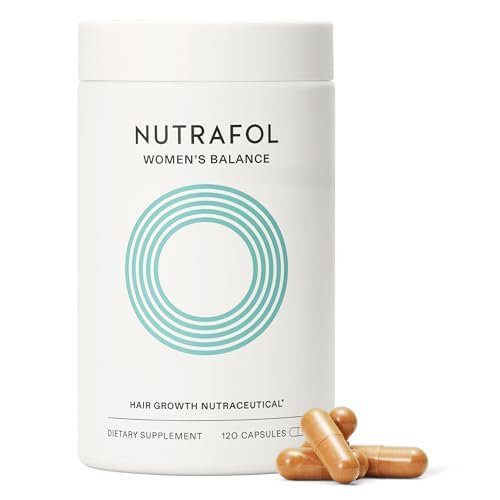
Nutrafol Women’s Balance Hair Growth Supplements, Ages 45 and Up, Clinically Proven for Visibly Thicker Hair and Scalp Coverage, Dermatologist Recommended – 1 Month Supply
Nutrafol Women’s Hair Growth Supplement earns a solid 4.3-star rating from over 12,400 Amazon reviews, with many women praising reduced shedding and thicker hair after consistent 3-6 month use, though its premium $88 price draws complaints. Reddit users are split but often recommend it for hormone-related hair loss when budget allows, making it a strong affiliate pick for targeted hair growth needs despite lacking third-party certifications.
Most people want a simple list. But the most reliable path is even simpler: test, then target. That is also where expert consensus is clearest.
The International Society of Hair Restoration Surgery guidance on nutrition and vitamins emphasizes routine consideration of vitamin D and iron, plus vitamin C to support iron absorption. This is a more conservative stance than many marketing claims, and it is grounded in what clinicians repeatedly see in practice: deficiencies can push follicles into a shedding phase.
1) Iron (and ferritin): the “hidden” driver of shedding
Iron status is often assessed with:
- ferritin (iron storage)
- hemoglobin and hematocrit
- iron, TIBC, transferrin saturation (depending on your clinician)
Low iron can contribute to diffuse shedding patterns, especially in menstruating women, endurance athletes, or people who eat little red meat.
Action steps to discuss with your clinician:
- Ask whether ferritin was included, not just hemoglobin.
- If iron is low, ask about an iron plan and a retest timeline.
2) Vitamin D: common to be low, easy to miss
Vitamin D is involved in many body systems, and low levels are common in people with limited sun exposure. While vitamin D is not a guaranteed fix, correcting a deficiency is a reasonable, evidence-aligned step when hair thinning and fatigue overlap.
3) Vitamin C: not “for hair,” but for absorption
Vitamin C’s main role here is practical – it supports non-heme iron absorption (plant-based iron and many supplements). That is why it is often paired with iron plans.
Visual checklist: who should strongly consider labs before supplementing?
| Risk factor | Consider checking | Why it matters |
|---|---|---|
| Heavy periods or postpartum | Ferritin and iron panel | Iron depletion is common |
| Limited sun exposure | 25(OH) vitamin D | Low D is common and correctable |
| Vegan/vegetarian | B12, ferritin | Intake and absorption risks |
| Chronic stress, rapid weight loss | Ferritin, thyroid, B12/folate | Can trigger shedding cycles |
Actionable takeaway: If you are guessing, you are likely overspending. Start with labs and a targeted plan. If you want to understand how supplements affect one another (like iron and calcium, or vitamin C and iron), read our guide to nutrient interactions.
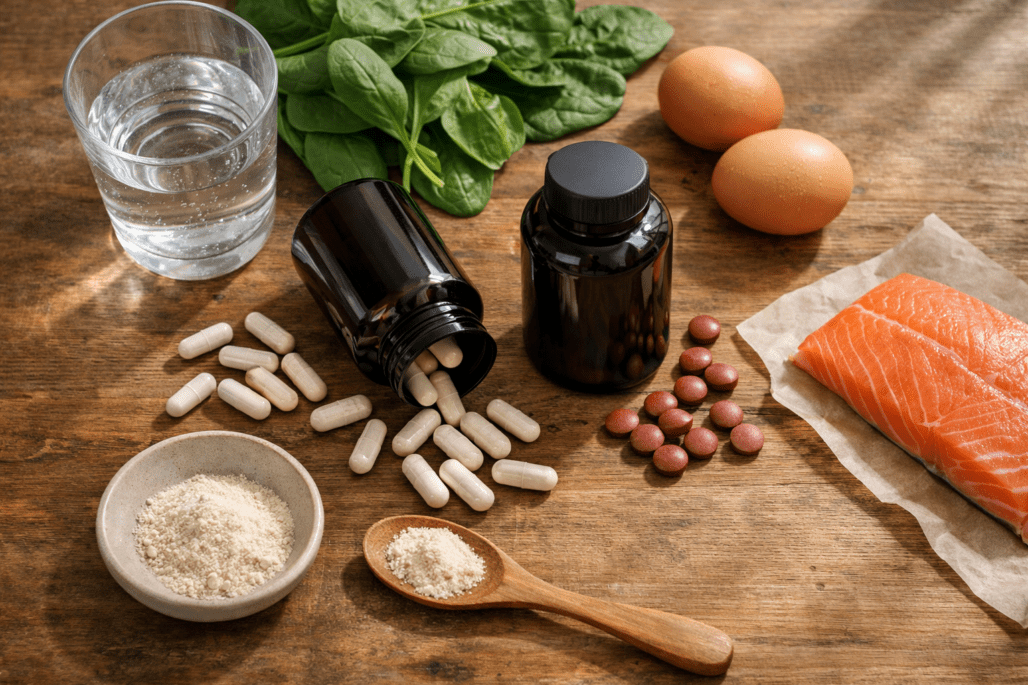
Biotin, collagen, zinc, and botanicals: what helps, what’s mixed, and what can backfire
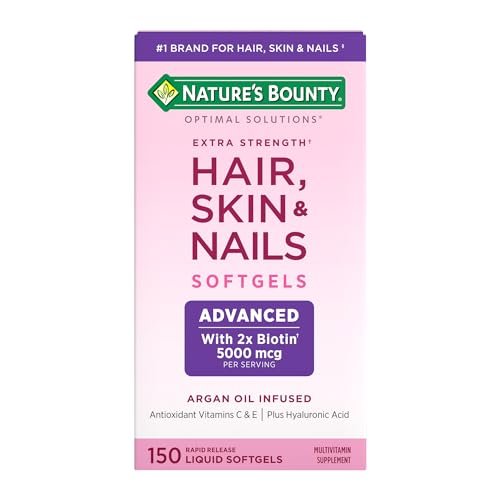
Nature’s Bounty Advanced Hair, Skin & Nails, Argan-Infused Vitamin Supplement with Biotin and Hyaluronic Acid, 150 Rapid Release Softgels, 50 Total Servings
This Nature’s Bounty supplement includes biotin and hyaluronic acid in an argan-infused formula targeted at hair, skin, and nails, making it relevant for hair growth discussions. It comes as 150 rapid release softgels providing 50 servings. Results vary based on user experiences with similar products.
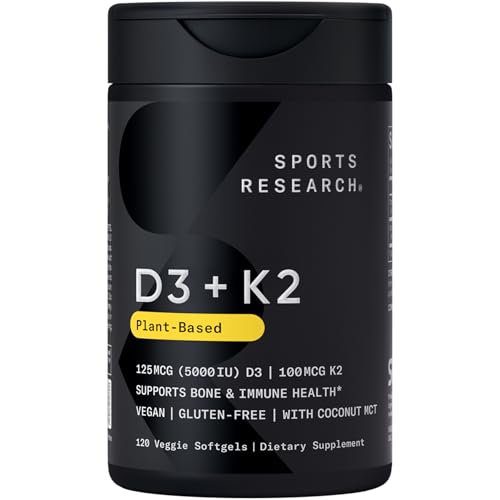
Sports Research Vitamin D3 with K2 Softgels – Plant Based K2 & Vegan D3 5000iu with Coconut MCT Oil – Vegan Certified, Soy & Gluten Free – 120 Count
Vitamin D is highlighted in the article as beneficial for hair growth when levels are low, making this product a suitable recommendation. Sports Research Vitamin D3 with K2 delivers 5000iu vegan D3 from lichen and plant-based K2 in 120 softgels with coconut MCT oil. It’s soy- and gluten-free, Non-GMO verified, and vegan certified.
This is the section most people search for because it is where the hype lives. Some ingredients can help in the right context. Others are popular mainly because they are easy to market.
Biotin: popular, but not a universal answer
Biotin (vitamin B7) is essential, but true deficiency is uncommon in most diets. Both the ISHRS guidance and Harvard’s review of vitamins and hair loss caution that evidence for routine biotin use is limited, and high-dose biotin can interfere with certain lab tests.
Harvard summarizes the situation well: evidence is conflicting for many vitamins and minerals marketed for hair, and it is best to tailor supplementation to deficiencies. See Harvard Health’s overview on vitamins, minerals, and hair loss. For a product-focused breakdown, our roundup of best biotin supplements explains how to choose a dose and when it makes sense to skip it.
Biotin safety note (important): If you take high-dose biotin, tell your healthcare team before thyroid or cardiac labs. Some assays can be affected, creating misleading results. The concern is also discussed in clinical-facing education like the University Hospitals review on hair growth products and testing considerations.
Collagen: helpful for some people, but not a direct “follicle switch”
Collagen supplements may support skin and connective tissue in some contexts, but they are not a proven standalone solution for hair regrowth. If you like collagen for overall protein intake or skin support, it can be reasonable, but keep expectations realistic.
If collagen is on your list, compare formats and doses in our guide to the best collagen supplements.
Zinc, selenium, vitamins A and E: “more” is not better
Zinc is involved in many enzymatic processes, but excess zinc can cause problems, including copper imbalance. Vitamins A and E are also examples where high doses may create side effects without clear hair benefits for most people.
A simple rule: if a supplement provides very high percentages of daily values for fat-soluble vitamins (A, D, E, K), treat it as a medical-level decision, not a casual add-on.
Botanicals like ashwagandha and curcumin: early, interesting, not definitive
Some hair blends include botanicals aimed at stress response and inflammation. For example, ashwagandha is often included in multi-ingredient formulas. Early research supports its role in stress-related pathways, but it is not a guaranteed hair-growth ingredient on its own.
Actionable takeaway: If your plan is “biotin plus collagen,” you may be missing the bigger levers – iron, vitamin D, B12/folate, and clinically tested blends.
How to choose a hair growth supplement plan that actually fits you (dosage, timing, and expectations)
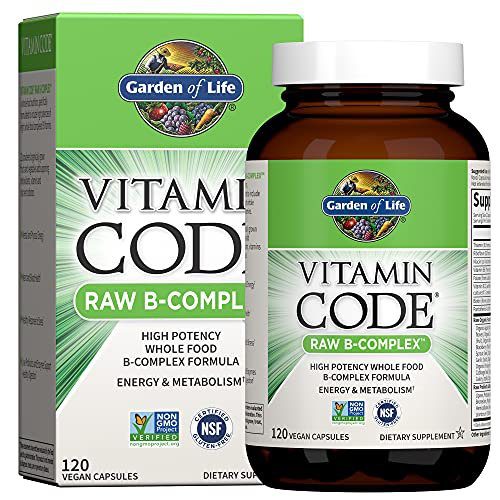
Garden of Life Vitamin Code Raw One for Women, Once Daily Women’s Multivitamin – 75 Capsules, One a Day Vitamins Whole Food Iron, Probiotics for Digestive Health, Gluten Free Vegetarian
Garden of Life Vitamin Code Raw B-Complex (ASIN B00K5NEPJ8) earns a solid 4.6/5 from over 12,400 Amazon reviews for its whole-food sourced B vitamins that support energy, metabolism, and stress response without synthetic fillers. Reviewers praise absorption and effectiveness, though some note large pills and odor; Reddit communities like r/supplements endorse it as a clean, raw alternative. At ~$30 for 120 capsules (60 servings), it’s a reliable affiliate pick for natural B-complex needs.
Most supplement disappointment comes from two issues: unrealistic timelines and mismatched causes. Hair grows slowly, and follicles cycle through phases that do not respond overnight.
Set the right timeline: 90 days is the early checkpoint
In clinical studies, meaningful changes often show up around:
- 90 days: early improvements in growth measures and hair quality ratings in some trials
- 180 days (6 months): clearer changes in density and shedding patterns
If you quit at 3 weeks, you are not testing the supplement. You are testing your patience.
Choose a plan based on your “likely driver”
Here is a simple decision map you can use before buying anything:
| If your situation looks like… | Consider prioritizing… | Why |
|---|---|---|
| Diffuse shedding after stress, illness, dieting | Labs + multi-ingredient blend | Shedding is often cycle-related; deficiencies and stress overlap |
| Heavy periods, fatigue, brittle nails | Iron testing + targeted iron plan | Iron depletion is common and fixable |
| Low sun exposure, darker winter months | Vitamin D testing | Low D is common and easy to correct |
| Vegan/vegetarian or low animal foods | B12 and ferritin testing | B12 and iron risks increase |
For people who want brand examples that are often discussed in clinical settings, some dermatology sources mention products like Nutrafol and Viviscal as options used alongside medical treatments such as minoxidil. See the dermatologist-facing overview in Rochester Regional Health’s discussion of Nutrafol and hair loss treatment and consumer-facing comparisons like the National Council on Aging review of hair-loss vitamins and timelines.
Timing and absorption: small changes that matter
If you are taking multiple supplements, timing can reduce stomach upset and improve consistency.
Practical tips:
- Take multi-ingredient hair supplements with food if they cause nausea.
- Separate iron from calcium or high-calcium meals if advised by your clinician.
- Pair iron with vitamin C when appropriate.
For a personalized approach, use our guide to supplement timing to reduce conflicts and improve adherence.
Mini checklist: how to track progress without guessing
- Take photos in the same lighting every 4 weeks.
- Note shedding changes (shower, brush) weekly.
- Track stress, sleep, and protein intake – they often explain plateaus.
- Recheck key labs after your clinician’s recommended interval.
Actionable takeaway: The right supplement plan is boring in the best way – consistent for 3 to 6 months, targeted to labs, and paired with realistic expectations.

Building a supplement routine for this? Our companion app, StackMyMed, lets you scan each product, track your real daily intake, and get timing reminders plus interaction checks across your whole stack.
Conclusion: The smartest way to use supplements for hair growth
The best supplements for hair growth are the ones that match your biology and your data, not the loudest label. Clinical trials support certain multi-ingredient blends for improving density and perceived shedding over several months, especially in women with thinning hair. Expert guidance also consistently points to correcting common deficiencies – particularly iron and vitamin D, with vitamin C playing a supporting role for iron absorption.
A practical next step is to ask for targeted labs (ferritin, vitamin D, B12/folate when relevant) and commit to a 90 to 180-day window before judging results. For more structured options and comparisons, explore our guides to hair loss supplements and the best biotin supplements if biotin is still on your shortlist.
As an Amazon Associate, I earn from qualifying purchases. Product recommendations are based on real reviews and independent research.
