
Affiliate disclosure: this article contains affiliate links. As an Amazon Associate, UsefulVitamins.com earns from qualifying purchases at no extra cost to you.
Mastic gum is the dried resin of Pistacia lentiscus, a shrub grown on the Greek island of Chios, and it is sold in 500 mg capsules to people searching for help with H. pylori, gastritis and reflux. We opened every human trial behind those claims, pulled the capsule labels from the NIH supplement label database and ran the price math on a 60 count bottle. The evidence splits cleanly: mastic beat placebo for functional dyspepsia in one trial, and it failed to clear H. pylori in every human trial that measured it. We have no relationship with any brand named here, and the capsules at the bottom are the kind we would keep in our own family's drawer for a bad week of indigestion, not for an infection.
Before you decide
Some people should not take mastic gum without a conversation first. The European Medicines Agency monograph on mastic states that safety in pregnancy and breastfeeding has not been established and that use is not recommended, and it does not recommend oral use under 18 because there is no adequate data. If you have tested positive for H. pylori, you need a doctor before you need a supplement. Untreated infection is linked to ulcers and stomach cancer, and the trials below show that mastic alone did not clear it.
Alarm symptoms change the picture. Unexplained weight loss, black or bloody stools, persistent vomiting or difficulty swallowing are reasons to see a clinician this week, not to try a resin capsule for a month. People with a known allergy to tree resins or surgical skin adhesives should also stay away, for reasons covered below.
This is general information, not medical advice; your doctor or pharmacist outranks any website, including this one. If you take prescription medication, our drug and supplement interaction checker is a starting point, and the EMA lists no reported interactions for mastic, which is not the same as proof of none.
This page is for adults with bloating, upper stomach discomfort or heartburn that a doctor has already looked at, who want to know whether the capsule is a reasonable two week experiment or a waste of $35. We built it around what the trials on PubMed actually measured.
What mastic gum actually is
Mastic is the resin that weeps from cuts in the bark of Pistacia lentiscus var. chia and hardens into pale yellow tears. It has been chewed around the eastern Mediterranean for centuries, which is why it carries the word gum, and it is the same substance you will find in our companion piece on whether chewing mastic does anything for the jaw. The capsule versions contain the ground resin itself, not an extract, unless the label says extract.
The best known capsule is Jarrow Formulas Mastic Gum. Its NIH DSLD label entry lists 1000 mg of mastic gum per serving, and the serving is two capsules, which makes each capsule 500 mg. The bottle holds 60 veggie capsules and the label says to take two before breakfast. The only other ingredients are the capsule, cellulose, magnesium stearate and silicon dioxide.
Here is the thing most product pages blur. Every mastic capsule label we opened in the DSLD, from Jarrow to Solaray to Double Wood, printed 1000 mg per serving, and every one of those servings was two capsules. "Mastic gum 1000 mg" on a bottle means 500 mg per capsule, so a 60 count bottle is 30 days at the label dose, not 60. That single fact changes the cost math below.
One chemistry detail matters for the trials. Raw resin contains an insoluble polymer. A 2007 University of Athens study removed it to make an extract that worked in mice, while the 2016 cholesterol trial from Chios found crude resin lowered cholesterol and glucose in humans and the polymer free version did not. Nobody has settled which form is better for the stomach.
What you get per piece
All figures below are from the NIH Dietary Supplement Label Database and the Jarrow Formulas product page, checked in September 2026. We print the brand's own list price; the Amazon listings for the same two bottles were about $26.99 for 60 capsules and $53.98 for 120 as of September 2026, so the per day figures below are the high end of what you would pay.
| Product | Mastic per capsule | Label serving | Other actives | Capsules per bottle | Price per capsule | Price per 1 g mastic |
|---|---|---|---|---|---|---|
| Jarrow Formulas Mastic Gum | 500 mg | 2 capsules (1000 mg) | none | 60 | about $0.58 ($34.99 a bottle) | about $1.17 |
| Jarrow Formulas Mastic Gum, 120 count | 500 mg | 2 capsules (1000 mg) | none | 120 | about $0.50 ($59.99 a bottle) | about $1.00 |
| Solaray Mastic Gum 1000 mg | 500 mg (extract) | 2 capsules (1000 mg) | none | 45 | not checked | not checked |
| Double Wood Mastic Gum 1000 mg | 500 mg | 2 capsules (1000 mg) | none | 180 | not checked | not checked |
| Klaire Labs Mastic Gum/DGL chewable | 75 mg per tablet (150 mg per 2 tablets) | 2 tablets | 300 mg DGL licorice per 2 tablets | 60 tablets | not checked | not checked |
The DGL combination gets a row because "mastic gum with DGL" is a common search. At 75 mg of mastic per tablet, you would need 14 tablets a day to reach the lowest EMA dose, so that product is a licorice chewable with a pinch of resin. If reflux is your main complaint, our guide to supplements for GERD covers DGL on its own terms.
The cost, stated honestly
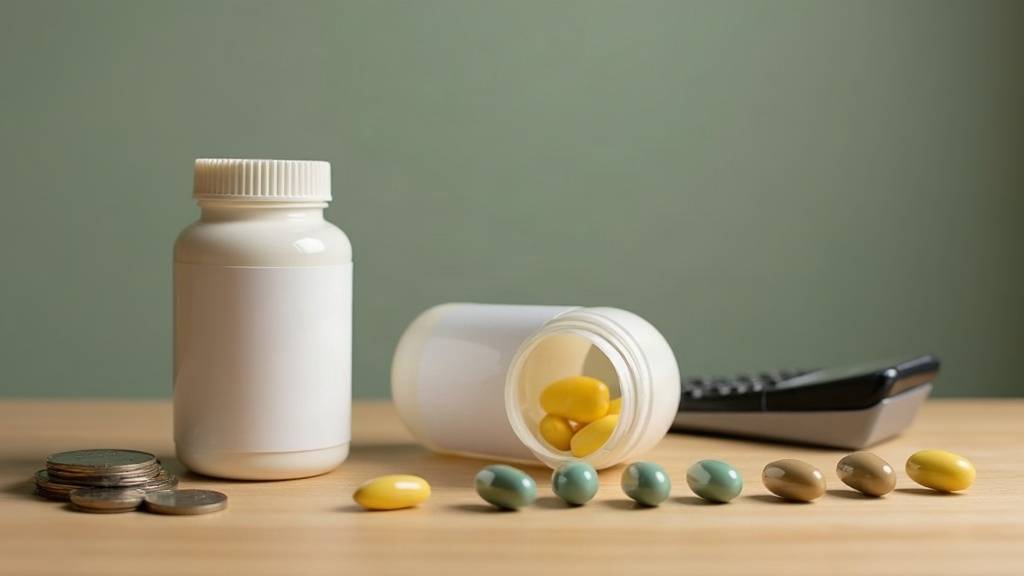
Start from the Jarrow 60 count at $34.99, which is $0.58 per capsule. The EMA's traditional dose is 0.5 to 1 g twice a day, so 1 g a day costs about $1.17 and the 2 g ceiling costs about $2.33. A two week trial at 1 g a day uses 28 capsules and about $16; a two week trial at 2 g a day uses 56 capsules, nearly the whole bottle, for about $33.
Now match that to what the trials used. The dyspepsia trial gave 350 mg three times a day for three weeks, a dose you cannot copy with 500 mg capsules; the nearest option is one capsule three times a day, which is 1.5 g and about $1.75 a day, or 63 capsules for the three week course. The H. pylori trials went much higher: 1.05 g three times a day in the Chios pilot and 1 g four times a day in the Nottingham study. Copying the Nottingham dose means eight capsules a day, $4.67 a day and 112 capsules for two weeks, almost two bottles, for a regimen that cleared nobody.
For scale, a month at the label dose of two capsules a day is one bottle, $35. That is a fair price for a supplement that beat placebo for indigestion. It buys nothing against an infection that will still be there when the bottle is empty.
What the trials actually measured
This is the section the ranking pages skip. All of the human H. pylori data on mastic fits in one table, and the endpoints matter more than the headlines. Figures are taken from the published abstracts, opened in September 2026.
| Trial | Design | Dose | What was measured | Result | Who ran it |
|---|---|---|---|---|---|
| 1998 NEJM letter | laboratory report | not applicable | bacterial killing in culture | mastic killed H. pylori in the lab; no patients | Nottingham, UK |
| 2003 human study | open, single arm, 9 enrolled, 8 completed | 1 g four times daily, 14 days | urea breath test before, day 15, week 5 | 0 of 8 cleared; breath test values unchanged (19.1 to 18.7, p 0.8) | Nottingham, UK |
| 2003 mouse study | infected mice, mastic vs triple therapy | mouse equivalent of 2 g twice daily, 7 days | stomach culture after treatment | 0 of 18 mice cleared on mastic vs 19 of 20 on triple therapy | Nottingham, UK |
| 2007 mouse study | infected mice, polymer free extract | 0.75 mg per day, 3 months | bacterial load and gastritis on tissue | about 30 fold lower colonization, no reduction in gastritis | Athens, Greece |
| 2010 randomized pilot | 52 patients, 4 arms of 13 | 350 mg or 1.05 g three times daily, 14 days | urea breath test 5 weeks after treatment | 4 of 13 and 5 of 13 cleared vs 10 of 13 on triple therapy; change in mean breath test values not significant in the mastic arms (p 0.08 and 0.064) | Chios, Greece |
| 2010 placebo controlled trial | 148 functional dyspepsia patients, double blind | 350 mg three times daily, 3 weeks | Hong Kong dyspepsia index | marked improvement in 77% vs 40% on placebo (p under 0.02) | Chios, Greece |
| 2026 adjunct pilot | 64 patients, single blind, mastic added to bismuth quadruple therapy | not reported in the abstract | urea breath test 6 weeks after therapy; dyspepsia score | 85% vs 67% cleared, not significant (p 0.19); dyspepsia score improved more (p 0.001) | Rishikesh, India |
Read the H. pylori rows together and the pattern is hard to miss. The 2003 Nottingham human study gave 4 g a day for two weeks and every completed patient stayed positive on the breath test. The Nottingham mouse study that year cleared zero of 18 infected mice on mastic against 19 of 20 on triple therapy. The only human trial that cleared anyone, the 2010 Chios pilot, managed 4 of 13 and 5 of 13 in its two mastic arms, against 10 of 13 on standard antibiotics, and the authors reported the mastic arms as trends that did not reach significance. Adding a proton pump inhibitor to mastic in that trial cleared nobody.
The newest data does not rescue the claim. A 2026 pilot from a teaching hospital in India added mastic to a bismuth quadruple antibiotic course in 32 patients and compared them with 32 on antibiotics alone. Eradication was 85% versus 67%, a gap the trial was too small to confirm (p equals 0.19), and the abstract does not report the mastic dose. What did reach significance was symptom relief: the dyspepsia score fell further in the mastic group. That is the same signal as the placebo controlled trial: mastic changes how the stomach feels, not whether the bacterium survives.
The dyspepsia trial is the strongest card mastic holds. The 2010 placebo controlled trial enrolled 148 people with functional dyspepsia, gave 350 mg three times a day for three weeks, and scored symptoms with the Hong Kong index. The mastic group finished at 14.78 versus 19.96 on placebo, and 77% reported marked improvement versus 40%. Heartburn was among the individual symptoms that improved, the closest thing in the literature to an answer on reflux.
Two caveats. Both positive trials came from Chios, the island that grows and sells the resin, while both negative studies came from Nottingham, and no independent group has replicated the dyspepsia result at that size. A 2023 systematic review of mastic in inflammatory bowel disease found eight studies, seven of them Greek, and called for more high quality trials. One good trial is a reason to try something for indigestion; it is not a reason to skip antibiotics.
Who it is worth it for
The best fit is the person with functional dyspepsia: recurring fullness, bloating or upper stomach ache with a normal endoscopy and a negative H. pylori test. For that person, three weeks at 1 to 1.5 g a day costs $25 to $37 and has a trial of 148 people behind it. If nothing changes after two weeks, the EMA monograph's own advice applies: see a doctor.
If you are about to start antibiotic eradication therapy and want to add it, that is a fair question for your gastroenterologist. The 2026 pilot found no extra side effects and better symptom scores, so the downside is mostly $16 for two weeks of capsules. Ask first; it does not replace the prescribed course. Our piece on probiotic timing around antibiotics covers the other add on people ask about during eradication.
Mild heartburn without a diagnosis sits in a gray zone. The dyspepsia trial saw heartburn improve, but nobody has run a reflux specific trial, and the supplements for acid reflux with more evidence are cheaper. If low stomach acid is your theory, an older Jarrow label mentioned "healthy levels of stomach acid production" without a trial behind it; our review of supplements for low stomach acid explains why that claim is hard to test at home.
Who should skip it
Anyone H. pylori positive who is using mastic instead of prescribed therapy. Every human trial says the infection will still be there. The cost of a failed self treatment is not $35, it is months of an infection that raises ulcer risk while you wait.
Pregnant or breastfeeding readers and anyone under 18, per the EMA monograph; the Jarrow label itself tells those groups to consult a professional first. There is no safety data, and mild indigestion in pregnancy has better studied answers.
People with a history of contact dermatitis from surgical skin adhesives. A 2021 patch test series from a university dermatology clinic found 13 of 18 patients allergic to a mastic containing liquid adhesive were allergic to gum mastic itself, against 1 of 250 without that history. A known mastic allergy is the one contraindication the EMA lists. Pistacia lentiscus is also in the same plant family as pistachio and cashew; whether nut allergic people react to the resin has not been studied, so treat that as an unknown.
Anyone watching cholesterol or glucose numbers closely should tell their doctor. The 2016 Chios trial found 1 g a day of crude resin lowered total cholesterol by 11.5 mg/dl and fasting glucose by 4.5 mg/dl over eight weeks. Small changes in a helpful direction, but changes, and a reason to mention the capsule if you take diabetes medication.
Safety at ordinary doses looks unremarkable in the animal work. A 2025 rat study found no genotoxic effect at 2000 mg per kg, and a 13 week rat feeding study set the no effect level at 0.67% of the diet, with lower body weight and heavier livers only at 2%. The openFDA enforcement database held no recall records for mastic products in September 2026.
What to look for when buying
Read the serving size before the milligrams. Every capsule label in our table prints 1000 mg per two capsules, so count capsules per bottle, divide by two and that is your supply in days at the label dose. A 60 count is a month; a 45 count is three weeks.
Plain resin is the default unless you have a reason to want an extract. The human trials that reported benefit used crude Chios mastic, and the one head to head in humans found the polymer free extract did nothing for cholesterol where crude resin worked. Labels that say Chios or Pistacia lentiscus var. chia match the trials; none of the labels we opened in the DSLD stated a resin source.
If mastic is the ingredient you are testing, leave the combination chewables on the shelf. At 75 mg a tablet, the licorice is doing the work and you cannot tell which one helped. Buy a single ingredient capsule, run two weeks at the EMA dose, and judge it on its own; our page on how we review supplements explains why we insist on a one variable test.
Buy from the brand's own store or its official marketplace storefront. When the Jarrow listing on Amazon goes out of stock, third party sellers fill the gap with repackaged or aged resin, so check the seller name before you buy.


As an Amazon Associate, UsefulVitamins.com earns from qualifying purchases at no extra cost to you. We only recommend products supported by published research or third-party testing.
FAQ
What is the mastic gum dosage for H. pylori?
There is no proven dose, because no dose has cleared the infection in a human trial. The 2010 Chios pilot tested 350 mg and 1.05 g three times daily for 14 days and cleared 4 of 13 and 5 of 13; a UK study at 1 g four times daily cleared 0 of 8. Prescribed antibiotics remain the treatment.
Does mastic gum help with gastritis?
Not on tissue. The 2007 mouse study cut bacterial counts about 30 fold but saw no reduction in the gastritis itself, and no human trial has measured inflammation on biopsy. What improved in humans was symptom scores, which is a different claim from healing the stomach lining.
Does mastic gum help with acid reflux or GERD?
Indirectly, and only from one trial. In the 148 person dyspepsia trial, heartburn was one of the individual symptoms that improved significantly on 350 mg three times daily. Nobody has run a reflux specific trial, so treat it as a plausible two week experiment, not an alternative to a diagnosed GERD plan.
How should I take mastic gum, and how much is 1000 mg?
The EMA monograph gives 0.5 to 1 g twice daily, 1 to 2 g a day, for adults, and says to see a doctor if symptoms last beyond two weeks. Labels print 1000 mg per two 500 mg capsules, usually before breakfast with water, so the label dose sits at the bottom of that range.
Does mastic gum kill good bacteria or help with SIBO?
Nobody has measured either. The antibacterial data is against H. pylori in culture and in mice; no trial has profiled the wider gut microbiome after mastic, and there is no SIBO trial at all. If your interest is the gut microbiome broadly, our guide to gut brain axis supplements covers what has been tested.
Can I take mastic gum with medication or during antibiotic therapy?
The EMA monograph lists no reported interactions, and the 2026 adjunct trial found no extra side effects when mastic was added to bismuth quadruple therapy. Because the resin lowered cholesterol and glucose in one trial, tell your prescriber if you take diabetes or lipid medication, and check any regimen with a pharmacist first.
The verdict
Mastic gum is worth about $35 for the person with functional dyspepsia who wants a three week trial with a real placebo controlled study behind it: 77% improved versus 40% in 148 people, at a dose of roughly 1 g a day that costs about $1.17 daily. Stop at two weeks if nothing changes, and skip it entirely if you are pregnant, under 18 or have reacted to resin adhesives.
It is not worth anything as an H. pylori treatment. Across every human trial, the best mastic could do was clear 5 of 13 people while antibiotics cleared 10 of 13, and the highest dose tested, 4 g a day, cleared no one. If you are positive, take the prescribed course; if you want to ask your doctor about adding two capsules a day to it, the one pilot that tried it saw better symptoms and no harm. That is as far as this resin has been shown to go.
