
More people are taking supplements than ever, but supplement claims can still feel like a different language. One bottle promises “immune support,” another says “metabolic health,” and a third hints at results that sound suspiciously like treating a condition. This article breaks down what those words legally mean, how to spot the difference between marketing and evidence, and what to check on the label before you buy. You will also learn which trust signals matter most in 2026, plus simple steps to reduce safety risks.
Affiliate disclosure: this article contains affiliate links. As an Amazon Associate, UsefulVitamins.com earns from qualifying purchases at no extra cost to you.
Summary / Quick Answer
To decode supplement claims, focus on what the claim type allows, then verify the dose, testing, and evidence. Here is the fastest way to judge supplement claims without getting lost in fine print:
- Identify the claim type: “Supports” statements are usually structure/function claims, not disease treatment.
- Match the claim to the label: Confirm the exact ingredient and dose in the Supplement Facts panel.
- Look for verification: Prefer products with third-party testing (USP, NSF) and clear quality controls.
- Check the evidence: Strongest support usually comes from well-designed human trials, not testimonials.
- Watch for red flags: “Cures,” “treats,” or “reverses” a condition is a major warning sign.
Quick label checklist:
| What you see | What it usually means | What to do next |
|---|---|---|
| “Supports immune health” | Structure/function claim | Verify ingredient + dose + testing |
| “Clinically proven” | Marketing unless specified | Look for human trial details |
| “Proprietary blend” | Doses may be hidden | Prefer fully disclosed amounts |
Why supplement claims look convincing (even when evidence is thin)
If you have ever thought, “This label sounds scientific, so it must be proven,” you are not alone. Supplement use is now a mainstream health behavior. National survey data show that more than half of U.S. adults used dietary supplements in the past 30 days, and supplement use increases with age, while also raising nutrient intakes and lowering the prevalence of inadequacy for some nutrients, according to public comments and summaries from the NIH Office of Dietary Supplements strategic planning materials. Consumer surveys in 2026 also suggest daily use is at record highs, driven by proactive wellness goals.
So why does it still feel hard to separate solid products from hype?
A big reason is that supplements sit in a middle zone: they are widely used for wellness, but they are not regulated like drugs for proving disease treatment. Reporting often highlights how hard it is to run high-quality nutraceutical trials at scale, including issues like ingredient standardization, funding, and choosing outcomes that fit “wellness” rather than disease treatment, as described in industry and clinical research coverage such as the STAT analysis of barriers to nutraceutical clinical trials.
The key idea: legality is not the same as proof
A claim can be legal and still be weakly supported. That is why your best defense is a repeatable method for reading labels and evaluating evidence.
Use this simple “3-part reality check” before you believe any front-of-bottle promise:
- Is the claim about supporting normal function, or treating a condition?
- Is the ingredient and dose clearly listed, and does it match the claim?
- Is there independent quality verification and relevant human evidence?
Visual: common reasons claims feel persuasive
- Science-y language (“clinically studied,” “bioavailable,” “cellular”) without details
- Borrowed credibility (white coats, medical imagery, “doctor formulated”)
- Cherry-picked outcomes (one small study, unclear endpoints)
- Before/after stories that do not control for placebo effects
Actionable takeaway: When you see a strong promise, pause and check the claim type first. It tells you what the brand is allowed to imply.
Supplement claims vs. drug claims: what the rules actually allow
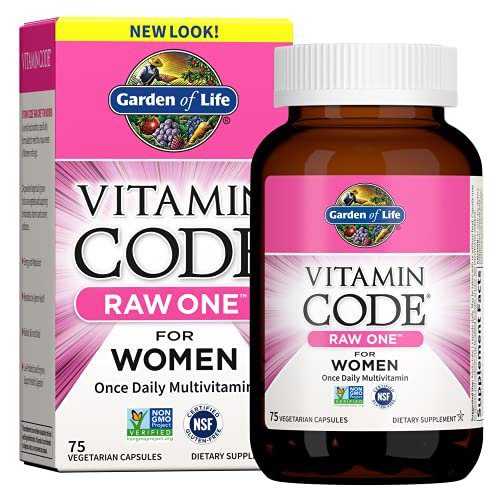
Garden of Life Vitamin Code Raw One for Women, Once Daily Women’s Multivitamin – 75 Capsules, One a Day Vitamins Whole Food Iron, Probiotics for Digestive Health, Gluten Free Vegetarian
Garden of Life Vitamin Code Raw One for Women delivers whole food nutrition from 24 organically grown fruits and vegetables in a single daily capsule, with live probiotics and enzymes for digestive support. The formula includes targeted nutrients for women’s energy, metabolism, reproductive health, and skin and nail appearance, produced without high heat, synthetic binders, or fillers.
Most shoppers do not need to memorize regulations, but understanding one distinction changes everything: supplements cannot legally claim to diagnose, treat, cure, or prevent diseases. When a product crosses that line, it risks being treated as an unapproved drug.
Under the U.S. framework created by DSHEA, supplements are regulated more like foods than pharmaceuticals. Oversight focuses heavily on labeling and post-market enforcement, not pre-market proof of efficacy. If you want a clearer overview of how this works in practice, see Supplement Regulation Explained: FDA Rules & Safety.
The three claim buckets you will see most often
Here is a practical way to interpret the language on bottles and ads:
| Claim style | Example wording | What it implies | What it does NOT mean |
|---|---|---|---|
| Structure/function | “Supports mood,” “promotes regularity” | Helps normal body function | Not a promise to treat depression or constipation disorders |
| Nutrient content | “High in vitamin D,” “good source of zinc” | Amount of a nutrient | Not proof of a health outcome |
| Disease claim (not allowed for supplements) | “Treats anxiety,” “prevents flu,” “reverses diabetes” | A drug-like promise | Often a major red flag |
A helpful rule of thumb:
If the claim sounds like it belongs in a clinic, be skeptical.
Why brands use softer language
Even when a nutrient or botanical has promising research, companies usually avoid disease language to reduce regulatory risk. That is why you see phrases like:
- “supports daily energy”
- “promotes a healthy inflammatory response”
- “helps maintain healthy cholesterol already within the normal range”
Those phrases can be truthful, but they are also broad. Your job as a reader is to ask: What ingredient? What dose? What evidence?
Visual: “translation” of common label phrases
- “Supports” = may help normal function in some people
- “Helps maintain” = often intended for people already in a normal range
- “Clinically studied” = could mean the ingredient was studied, not the exact product
- “Doctor recommended” = ask: which doctors, and based on what data?
Actionable takeaway: Treat structure/function language as a starting point, not a conclusion. The label must still earn your trust with transparency and verification.
How to decode Supplement Facts and marketing language (step-by-step)
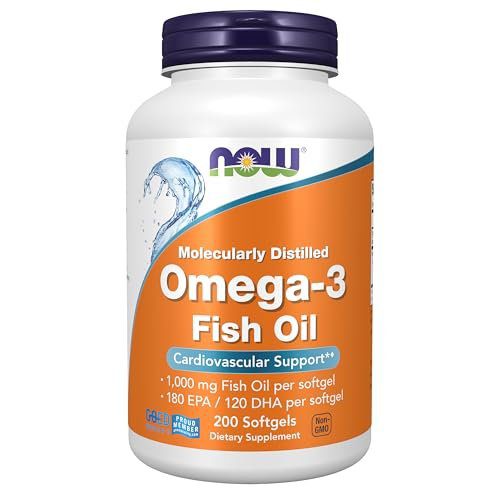
NOW Foods Supplements, Omega-3 180 EPA / 120 DHA, Molecularly Distilled, Cardiovascular Support*, 200 Softgels
NOW Foods’ Omega-3 contains 180 mg EPA and 120 mg DHA per softgel in a 200-count bottle. The label claims cardiovascular support, which aligns with research showing EPA and DHA may help maintain normal cardiac function and blood pressure, though the FDA notes this evidence is supportive but not conclusive.
Most misleading impressions come from the front label. Most of the useful truth is on the back.
If you want a deeper walkthrough, keep this page bookmarked: How to Read Supplement Labels: A Complete Guide. For now, use the step-by-step method below to evaluate a product in under two minutes.
Step 1: Start with the Supplement Facts panel, not the claims
Focus on:
- Serving size (How many capsules, scoops, gummies?)
- Amount per serving (The actual dose)
- % Daily Value for vitamins and minerals (when established)
- Other ingredients (sweeteners, colorants, allergens)
If a product uses a proprietary blend without amounts, you cannot confirm whether the dose matches research. That is not automatically unsafe, but it makes the claim harder to trust.
Step 2: Check whether the dose matches what studies typically use
Many ingredients have dose-dependent effects. A “clinically studied” ingredient at a token dose may do little.
Use this mini-checklist:
- Does the label list exact milligrams or CFU (for probiotics)?
- Is the ingredient standardized (for botanicals), so potency is consistent?
- Does the product specify the strain (for probiotics) or form (for minerals)?
Practical example:
“Magnesium” can mean magnesium oxide, citrate, glycinate, and more. The form affects tolerance and absorption for many people.
Step 3: Separate ingredient evidence from product evidence
A common marketing move is to cite research on an ingredient generally, even if the exact formula was never tested as a finished product.
What to look for on a brand website or sell sheet:
- A named study design (randomized, placebo-controlled)
- The tested dose and duration
- The population studied (age, sex, health status)
- The exact product name or formula match
For context on why high-quality supplement trials are relatively rare and difficult to execute, see the discussion in Nutritional Outlook’s analysis of the “paradox” in supplement research and the reporting in the STAT overview of nutraceutical trial barriers.
Visual: a 2-minute label scan (save this)
- Front claim: What is it promising, in plain language?
- Claim type: Support/maintain vs. treat/cure language
- Dose: Is it fully disclosed and realistic?
- Quality: Any USP/NSF or robust COA practices?
- Fit: Does it match your needs, meds, and labs?
Actionable takeaway: If you cannot identify the exact ingredient dose, you cannot judge whether the claim is plausible.
Trust signals that matter in 2026 (and the red flags that still trap people)
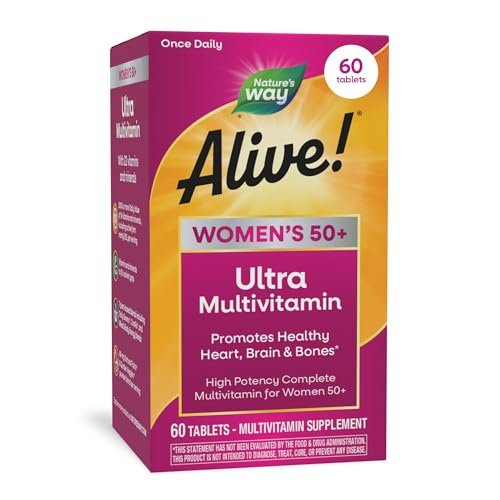
Nature’s Way Alive! Ultra Potency Multivitamin for Women 50 Plus, Complete High Potency Formula with Vitamin D3, C, E, Methylated B12, Supports, Heart, Brain, and Bone Health*, 60 Tablets
This Nature’s Way Alive! Ultra Potency Multivitamin for Women 50 Plus is a high potency formula in 60 tablets, targeted at women over 50 with claims to support heart, brain, and bone health via vitamin D3, C, E, and methylated B12. It includes seven plant-based blends like ginkgo and hawthorn berry, making it a clear case study for decoding supplement label claims and marketing terms like ‘ultra potency’ and ‘complete.’
The supplement aisle is bigger, louder, and more trend-driven than ever. Categories like nootropics and gut health are expanding quickly, and market forecasts reflect that growth. Trend roundups from manufacturers and trade outlets highlight rising interest in cognitive support, metabolic health, and next-generation probiotics, including discussions like the Vitaquest supplement trends overview and consumer pattern reporting such as the 2026 wellness priorities survey coverage.
More products can be a good thing, but it raises the cost of confusion. That is why trust signals matter more than buzzwords.
The best “trust stack” for everyday shoppers
Use this order of operations:
Transparent labeling
Full ingredient amounts, clear forms, no mystery blends for key actives.Independent quality testing
Look for reputable third-party programs (USP, NSF) or robust batch testing practices.Manufacturing standards
GMP compliance alone is not a magic shield, but it is a baseline.Human evidence that matches the claim
Ideally randomized, placebo-controlled trials with clear outcomes and realistic dosing.
For a deeper checklist, see Supplement Quality Indicators: How to Choose Safe Products.
Red flags that should stop you mid-scroll
Some issues are subtle. Others are glaring. Watch for:
- Disease language (“treats,” “cures,” “prevents”)
- Miracle timelines (“results in 24 hours,” “permanent fix”)
- No dose disclosure for the main actives
- Influencer-only proof with no testing documentation
- Mega-dosing as a default without a clear reason
If you want a quick safety-focused list, read Supplement Safety Red Flags: What to Watch For.
Visual: “green flags” vs “red flags”
| Green flags | Red flags |
|---|---|
| Full doses listed | Proprietary blend hides key doses |
| Third-party verification | No testing info, only testimonials |
| Claims match normal function | Claims imply treating a condition |
| Clear cautions and contraindications | “Safe for everyone” messaging |
Actionable takeaway: Choose products that make it easy to verify what you are taking. If you have to guess, skip it.

Common supplement claim myths (and what to do instead)
Even careful shoppers fall for a few persistent myths. Clearing these up will make you faster and more confident when you read labels.
Myth 1: “Supplements are tested like drugs”
Reality: Drugs generally require pre-market evidence for safety and efficacy. Supplements do not go through the same pre-approval pathway for proving they treat conditions. That is why structure/function language is common, and why the NIH cautions consumers not to assume supplements can reverse diseases, reflected in public-facing NIH materials such as the NIH Office of Dietary Supplements strategic planning documents.
What to do instead:
- Prefer brands that publish batch testing and clear dosing
- Look for human trials on the finished product when possible
Myth 2: “If a study exists, the claim is proven”
Reality: One small trial can be a signal, not a verdict. Supplement research often struggles with underpowered designs, inconsistent ingredient quality, and outcomes that are hard to measure in healthy people. Industry analysis like the Nutritional Outlook discussion of research design challenges explains why evidence can be messy.
What to do instead:
- Look for multiple studies that point in the same direction
- Check whether the study population resembles you (age, baseline status)
Myth 3: “Higher dose means better results”
Reality: More is not always better. Some nutrients accumulate (like fat-soluble vitamins), and higher doses can raise risk without improving outcomes.
What to do instead:
- Use the lowest effective dose
- Reassess after 4 to 8 weeks, especially for wellness goals
Myth 4: “Natural means safe”
Reality: Botanicals can interact with medications and vary in potency if not standardized.
What to do instead:
- Check interactions and contraindications before starting
- Use a reliable tool like the Drug-Supplement Interaction Checker: Safe Health Combinations
Visual: a simple decision tree for “Should I believe this claim?”
- Is it a support claim (not disease treatment)?
- Is the dose disclosed and realistic?
- Is there third-party testing or strong QC?
- Is there human evidence that matches the claim?
- Does it fit your meds, conditions, labs, and goals?
Actionable takeaway: The safest path is boring but effective: verify dose, verify quality, verify relevance to you.
Prefer this done automatically? Our companion app, StackMyMed, scans your actual supplements, tracks your real intake, and schedules the best time to take each one.
Conclusion: a smarter way to read supplement claims
Supplement claims are easiest to judge when you stop focusing on persuasive wording and start checking what can be verified. The most reliable products make three things clear: what is in the bottle, how much you are taking, and why that dose makes sense based on human evidence and quality testing.
Next steps:
- If you want to get faster at label reading, use How to Read Supplement Labels: A Complete Guide.
- If safety is your main concern, review Supplement Safety Red Flags: What to Watch For before your next purchase.
When in doubt, treat supplements as targeted tools for specific gaps, not shortcuts. A careful label scan can save you money and reduce risk while keeping your wellness plan realistic.
As an Amazon Associate, I earn from qualifying purchases. Product recommendations are based on real reviews and independent research.
