
If you're asking whether AG1 is worth $99 a month, the short answer is: it can be, but only for a narrow group of people. For most buyers, the ingredient label is more impressive in marketing copy than in daily practice. This article breaks down exactly what you get per scoop, how the price compares to a comparable greens powder on Amazon, what 200+ Reddit and Trustpilot users say after months of use, and — critically — who should skip this one entirely. You'll also learn what the subscription actually commits you to before your credit card is charged again.
Affiliate disclosure: this article contains affiliate links. As an Amazon Associate, UsefulVitamins.com earns from qualifying purchases at no extra cost to you.
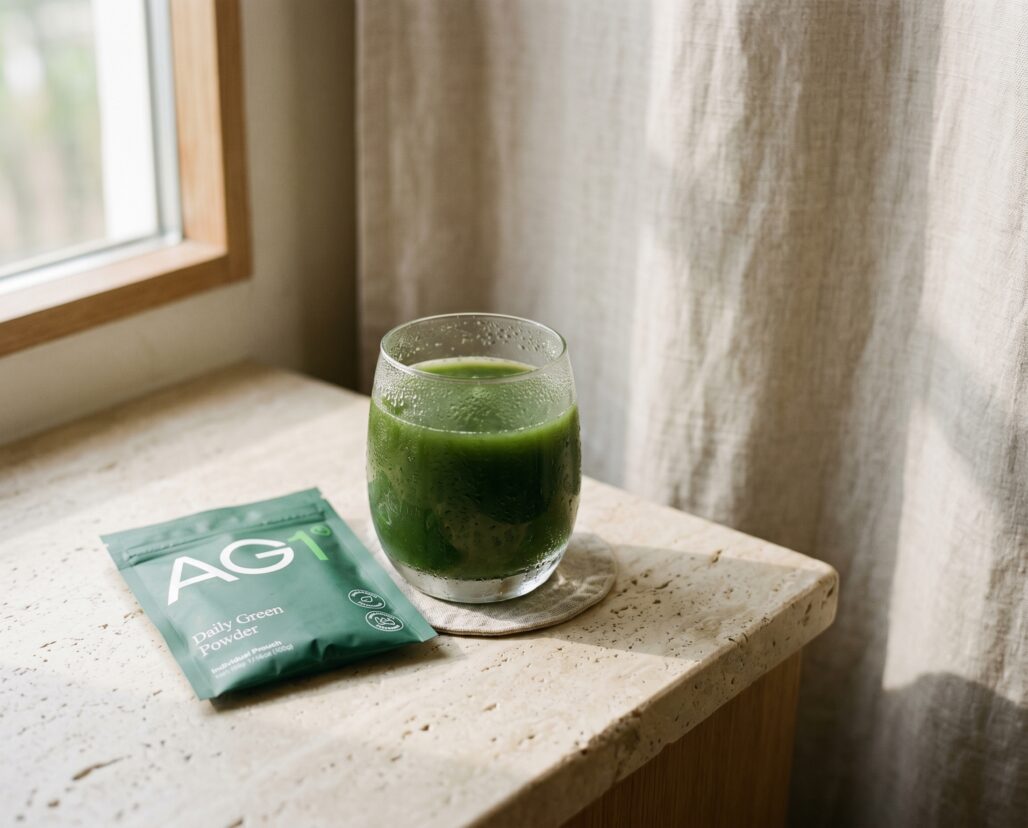
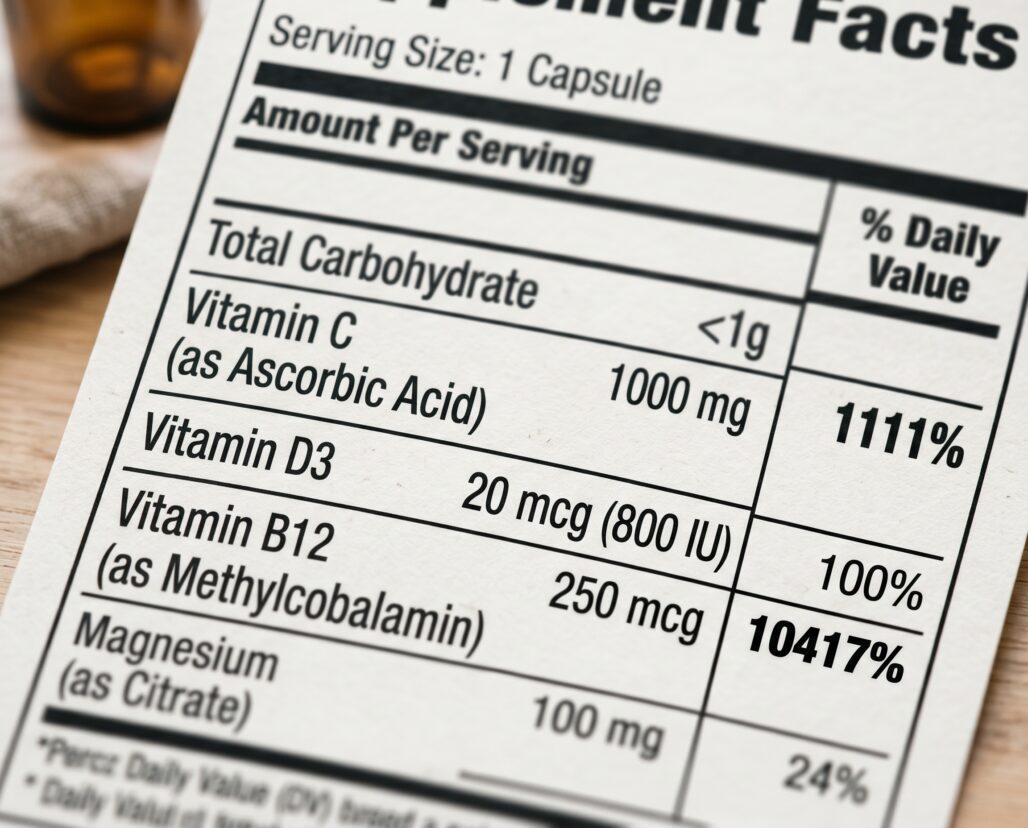
Quick answer: who benefits and who should pass
Best for: Athletes in drug-tested sports who need NSF Certified for Sport verification; people who genuinely cannot maintain a consistent multi-vitamin + probiotic habit and value the single-scoop simplicity; those with a household income where $99/month is genuinely low friction.
Not ideal for: Anyone comparing cost to nutrition outcome — a comparable single-ingredient greens powder on Amazon lands at roughly $22-30/month, a ~3× premium for AG1's NSF cert and convenience. Also not ideal for people with MTHFR variants who need specifically methylated B vitamins confirmed on the label, or anyone hoping the formula replaces vitamin D (AG1 does not include it).
What to look at before buying: The B12 dose (16,667% of Daily Value as cyanocobalamin — not methylcobalamin), the cancellation process, and whether you can actually absorb iron and calcium from the same serving.
Decision shortcut: If you're a competitive athlete who gets tested for banned substances, the NSF certification alone may justify the price. Everyone else should read the cost math section first.
What's in the bottle
AG1's Next Gen formula (released spring 2026) contains 83 ingredients organized into six categories.
Greens and plant compounds: Spirulina (667 mg), chlorella (400 mg), wheat grass juice powder, alfalfa, broccoli flower, and a proprietary "Raw Superfood Complex" covering dandelion, spinach, barley grass, and others. These are real whole-food ingredients, not synthetic isolates.
Vitamins: A complete B-complex, vitamins A, C, and E. The mega-doses here are significant: vitamin B7 at 1,100% Daily Value, vitamin B12 at 16,667% Daily Value, and vitamin C at 556% Daily Value. Water-soluble vitamins at these levels are largely excreted — you're paying for expensive urine on most of those doses.
Minerals: Calcium, magnesium, zinc, selenium, and chromium are all present. The doses are more moderate here, typically 20-50% Daily Value, which is reasonable. The issue is absorption conflict between calcium and iron sharing one serving — more on that below.
Probiotics: Five clinically studied strains including Lactobacillus acidophilus and Bifidobacterium bifidum. Total CFU count is not prominently disclosed on the label, which is a transparency gap.
Adaptogens and mushrooms: Reishi, shiitake, and ashwagandha root extract are present, though the proprietary blend structure means individual doses aren't disclosed.
Digestive enzymes: Bromelain, papain, and a blend for general digestive support.
Marketing claims vs reality
AG1 makes four core marketing claims. Here is what the evidence actually supports.
Claim 1: "Clinically studied formula." AG1 funded an internal clinical study on the Next Gen formula released in 2025. One industry-funded study with no independent replication is a data point, not a verdict. The real question isn't whether the study shows a result — it's who funded it and whether it's been replicated by independent researchers. It hasn't yet.
Claim 2: "Supports energy and immunity." B vitamins support energy metabolism, and vitamin C supports immune function — both are true at adequate doses. At 16,667% DV of B12, the additional energy benefit over a standard 100% DV dose is essentially zero; the body's absorption ceiling for oral B12 caps out well below what AG1 delivers per scoop.
Claim 3: "75+ high-quality ingredients." More ingredients in one scoop isn't more effective. Think of it like loading 75 apps on a phone with 2GB of RAM — everything slows down and some never run at all. Many of these ingredients appear in quantities too small to produce the effects they're associated with in published research.
Claim 4: "NSF Certified for Sport." This one is legitimately valuable. NSF Certified for Sport means each batch is tested for over 280 banned substances and label claims are independently verified. For drug-tested athletes, this is the strongest argument for AG1 over cheaper alternatives.
Actionable takeaway: The NSF certification is real and worth something. The mega-dose vitamin claims are marketing math. The proprietary blends hide individual adaptogen doses.
Real-user reports
User sentiment pulls in both directions. The common thread is that energy and digestion reports are real, but the $99/month question divides users sharply.
"I've been on AG1 for four months. Honestly, my gut feels better — less bloating. But I started comparing the label to a single greens powder on Amazon for a third the price. Hard to justify the renewal." — u/greens_skeptic on r/supplements, February 2026
"The taste is the thing. It's actually tolerable, unlike a lot of greens powders. I've stuck with it longer than any other supplement. That counts for something when you think about compliance." — u/morninghabit42 on r/AG1, January 2026
"Cancelled after three months. Not because it didn't work — I genuinely felt better. Because the annual math hit me: $1,188 a year for something I could approximate with a single greens powder for $300-360. And the cancel process was annoying." — u/budgetbro_health on r/supplements, March 2026
"The 16,667% B12 thing bothers me. I asked their support if it's methylcobalamin or cyanocobalamin. It's cyanocobalamin. That's the cheap form. At that dose it mostly doesn't matter — but for people with MTHFR variants it might." — u/methylation_matters on r/nutrition, November 2025
"I'm a competitive triathlete. The NSF cert was the deciding factor for me. Worth every dollar to not have a false positive at a race." — Trustpilot review, January 2026
Cost math
DTC pricing (2026):
- Monthly subscription: $99/month for 30 servings
- One-time purchase: $99 for 30 servings
- Annualized subscription cost: $1,188/year
- Cost per serving: $3.30
Amazon equivalent monthly cost:
The most direct single-product comparison to AG1 is another all-in-one greens powder. You do not need to build a stack, just a greens powder that covers a similar superfood-plus-nutrient premise.

Garden of Life Raw Organic Perfect Food Raw Greens (30 servings): approximately $25-$30/month on Amazon. Amazing Grass Greens Blend runs approximately $22-$25/month. Both are legitimate all-in-one greens powders without NSF Certified for Sport verification.
AG1 $99/month vs Amazon single greens powder ~$30/month = ~3.3× premium.
That premium is real and concentrated in two things AG1 delivers that Amazon alternatives do not: NSF Certified for Sport batch testing (critical for drug-tested athletes) and five clinically studied probiotic strains included in the same scoop. If you want to recreate AG1's full ingredient breadth on Amazon, you can — a greens powder + probiotic + basic multivitamin stack runs roughly $50-$66/month — but you lose the NSF cert and the single-scoop habit convenience. The honest case for AG1 is not that it's cheap — it's that the single-scoop compliance is easier to maintain and the NSF cert comes with it.


Cancellation friction
AG1 does not have a one-click cancel button in the member portal. Cancellation requires contacting customer support via the portal's chat function or email (support@drinkag1.com). The company states you should cancel at least 24-48 hours before your next scheduled shipment to avoid being charged for that cycle — there is no grace period after a charge processes.
If you subscribed through Apple's App Store or Google Play, Athletic Greens cannot cancel your subscription for you. You must cancel through your device's subscription settings directly.
The 90-day money-back guarantee applies to initial orders. After that window closes, once a shipment ships, you cannot return it for a refund.
AG1 ships every 30 days unless you cancel via email or live chat at least 48 hours before the next charge. There is no in-portal cancel button as of April 2026. Budget at least one billing cycle of lead time before you intend to stop.
How your body actually handles this stack
Putting 83 ingredients in one scoop creates real absorption chemistry to understand before buying.
Saturation kinetics — the B12 and vitamin C problem: AG1 delivers B12 at 16,667% Daily Value and vitamin C at 556% Daily Value. Both are water-soluble, meaning the body excretes what it cannot absorb or use. The intestinal absorption mechanism for B12 (intrinsic factor-mediated transport) saturates at approximately 1.5-2 mcg per dose. Any B12 beyond that threshold relies on passive diffusion at roughly 1% efficiency. At 500 mcg per scoop, the majority of AG1's B12 never makes it to circulation. You are paying for the label number, not the dose your body actually uses.
Competitive absorption — calcium blocks iron: AG1 includes both calcium and iron in the same serving. Calcium inhibits iron absorption at the intestinal DMT1 transporter — a well-documented interaction. Taking both simultaneously, which is exactly what "one scoop in the morning" produces, reduces the bioavailability of whichever you need more. If iron status matters to you (menstruating people, endurance athletes), this is a real limitation.
Form bioavailability — cyanocobalamin vs methylcobalamin: AG1's B12 is cyanocobalamin, the synthetic, cheaper form. For the roughly 40% of people carrying MTHFR gene variants, cyanocobalamin is less efficiently converted to the active form the body uses. The formula does not use methylcobalamin. At a $99/month price point, this is a notable omission.
Co-factor gaps — vitamin D is absent: AG1 explicitly does not include vitamin D, directing customers to their separate vitamin D supplement. Vitamin D is the single most common deficiency in the populations most likely to buy AG1. A greens powder positioned as a nutritional foundation that omits the most common deficiency nutrient requires you to buy a second product anyway.
Timing considerations — probiotics vs fat-soluble vitamins: AG1's five probiotic strains work best on an empty stomach, while fat-soluble vitamins (A and E in the formula) require dietary fat for absorption. One morning scoop, likely mixed with water before breakfast, optimizes for neither. Splitting the formula is not practical.
Actionable takeaway: The stack bomb here is real. 83 ingredients create documented absorption conflicts. The formula is not dangerous — it's just less efficient than the label implies.

Who it's for and who should skip
Buy AG1 if: You are a drug-tested competitive athlete who needs NSF Certified for Sport verification on every batch. The NSF cert is genuine, batch-tested, and hard to replicate at this price point. Also buy it if you have a consistent track record of failing to maintain multi-supplement habits — the single-scoop compliance advantage is real and worth a price premium for some people.
Skip AG1 if: You are price-sensitive and can find a single greens powder on Amazon for $22-30/month that covers your core superfood goals without the NSF cert. If you also want probiotics and a multi, a three-product Amazon stack runs $50-66/month — still cheaper than AG1, with full dose transparency on each label. Also skip it if you need methylcobalamin B12 (MTHFR variants), if iron absorption matters to you, or if you were expecting vitamin D to be covered.
The real question isn't whether AG1 is a quality product — it is. The question is whether you are paying for outcomes the formula actually delivers, or paying for label complexity and a brand that sponsors every major health podcast.
Amazon Top Pick

For readers who want greens powder coverage without the subscription commitment, Bulk Supplements Greens Powder gives you a clean, minimal ingredient list with full dose disclosure at under $1 per serving. No probiotic stack included — but you can add one separately and still come in under $50/month total.
Get AG1 direct from the brand
AG1.com — $99/mo subscription or $99 one-time direct from brand. We'll add our affiliate link once approved.
Explore more in this cluster
For the broader greens powder category, DTC Greens Powder Cost & Ingredient Comparator helps you compare AG1 against leading alternatives on a per-serving cost basis.
If you're tracking the month-to-month price history or looking for promo windows, DTC Supplement Subscription Pricing Reference 2026 has current subscription pricing across all major DTC greens brands.
For appetite support specifically — one claim some AG1 users make — our cluster on this category covers which greens powders have actual evidence for reduced appetite vs which ones are using fiber as a marketing hook.
You can also read our side-by-side comparison of AG1 vs IM8 for a head-to-head on the two most-discussed all-in-one DTC greens powders right now, or see AG1 alternatives on Amazon if you've already decided the DTC price isn't for you.
As an Amazon Associate, I earn from qualifying purchases. Product recommendations are based on real reviews and independent research.
Conclusion: the bottom line on AG1
AG1 is a legitimately well-formulated, NSF-certified greens powder with real absorption conflicts baked into its all-in-one premise. The $99/month price is defensible for drug-tested athletes and people who genuinely cannot maintain a multi-supplement habit. For everyone else, a single greens powder on Amazon covers comparable superfood ground for ~$30/month — a ~3.3× savings — with no subscription lock-in. If you want probiotics and a multi on top of that, the full Amazon stack still lands at $50-66/month, well below AG1's price.
The subscription is a commitment, not a convenience feature. Cancel at least 48 hours before your next billing cycle or you'll be charged for another month.
Next steps:
- Compare AG1 head-to-head with IM8: is-im8-worth-it
- See what AG1 users buy when they cancel: ag1-alternatives-on-amazon
- Check the broader greens category for appetite support: best-greens-powder-for-reduced-appetite
This article is for informational purposes and not medical advice. Supplements — especially formulas containing adaptogens, high-dose vitamins, and probiotics — can interact with medications and health conditions. Consult a licensed physician before starting any supplement, particularly if you are pregnant, nursing, taking prescription medications, or managing a chronic condition.
As an Amazon Associate, I earn from qualifying purchases. Product recommendations are based on real reviews and independent research.
Editorial independence note: UV earns affiliate commissions from Amazon and (selectively) from DTC brand affiliate programs. Commissions never determine our recommendations — top picks are chosen first; affiliate links are added second. Read our full methodology and editorial independence policy →
