
Every peptide article eventually circles back to the same molecule. When researchers argue that peptide drugs can be both precise and safe, they point to a century of clinical data. When skeptics ask whether synthetic chains of amino acids can actually replace a biological function, the answer is yes — and it has been yes since 1922. Insulin is the original FDA-approved peptide drug, the proof-of-concept for an entire pharmacological class, and still the most widely used peptide therapy on earth. If you are curious about how peptide drugs work, how they are made, or why the analog evolution of the last 30 years matters, insulin is where that story starts. Verdict: insulin is a 51-amino-acid peptide hormone that has saved millions of lives since its discovery in 1921, and its commercial and regulatory history defines the blueprint that every subsequent peptide drug has followed.
Summary
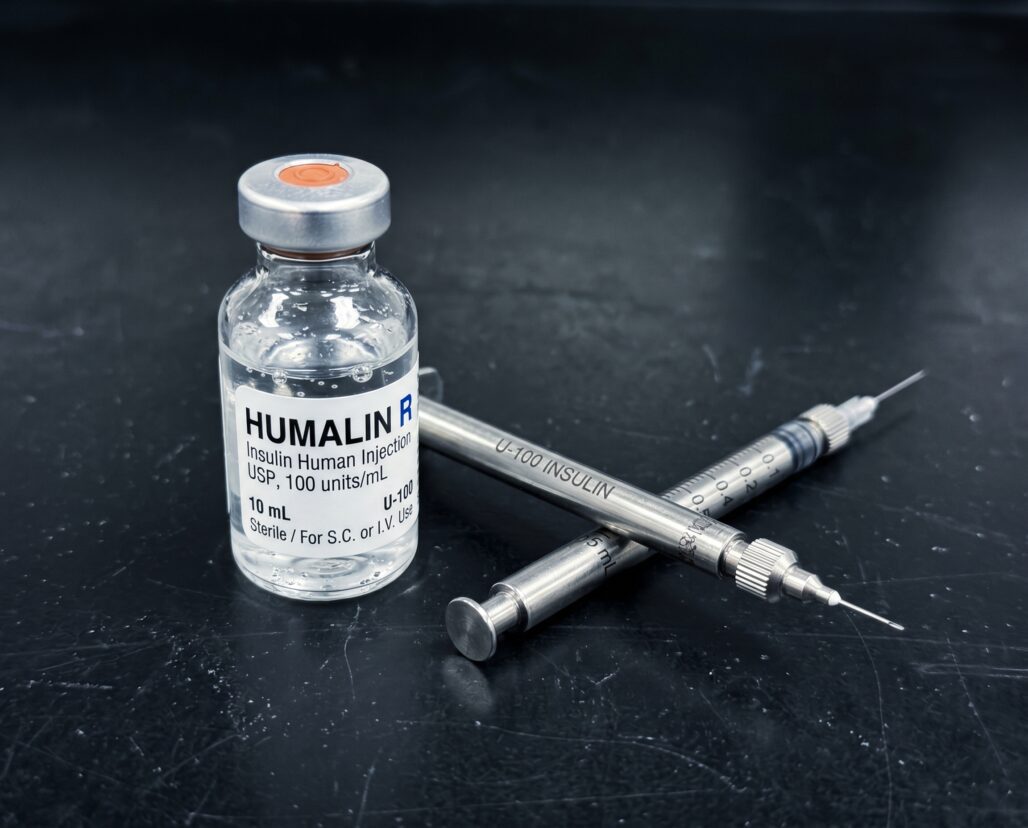
Insulin is the first commercially marketed peptide drug, approved for clinical use in 1923, reformulated as recombinant human insulin in 1982, and continuously refined through analog engineering that has produced faster, longer, and more predictable versions ever since. It is a prescription-only medicine for diabetes management.
- Best for: People with type 1 diabetes (required, not optional) and people with type 2 diabetes whose blood sugar cannot be managed with oral agents or other injectable therapies alone.
- Not ideal for: Anyone without a confirmed diabetes diagnosis or explicit prescriber guidance — insulin lowers blood glucose whether or not blood glucose needs lowering, and a dose error in a healthy person can cause dangerous hypoglycemia.
- What to look for: The specific brand and formulation matter. Rapid-acting, long-acting, and biosimilar insulins are not interchangeable without prescriber input. The NDA or BLA number on a product's FDA label confirms its regulatory status.
- Decision shortcut: If you manage diabetes and pay out of pocket, check whether you qualify for the Inflation Reduction Act $35-per-month cap for Medicare enrollees, or ask your prescriber about FDA-approved biosimilar options that launched at roughly one-third the price of reference brands.
Why Insulin Matters as the Prototype Peptide Drug
Calling insulin "the first peptide drug" is not hyperbole. It is a structural fact. Insulin consists of 51 amino acids arranged in two chains — a 21-residue A-chain and a 30-residue B-chain — held together by two disulfide bonds, with a third intramolecular disulfide bond stabilizing the A-chain internally. Its molecular weight is approximately 5,808 daltons. By every definition used in modern pharmacology, it is a peptide: too large to be a small molecule, too small to be a conventional protein biologic, synthesized and processed inside living cells before being secreted into the bloodstream. That structure is described in foundational biochemistry literature including the work that underpins NCBI Bookshelf NBK279029.
Before 1922, a type 1 diabetes diagnosis was a slow death sentence. Physicians had nothing beyond near-starvation diets that extended life by weeks or months. The isolation of a functional pancreatic extract changed that within a year, and the commercialization that followed set the regulatory pattern — purified biological extract, dispensed by prescription with defined dosing — that the FDA still applies to subsequent peptide therapies.
For a broader look at how insulin fits the peptide definition and why regulatory status distinguishes it from supplement-marketed peptides, see what are peptides and the FDA-approved peptides overview.
How Insulin Works: Pancreatic Biology and the Glucose Lock-and-Key
The pancreas contains clusters of endocrine cells called the islets of Langerhans. Beta cells within those islets monitor blood glucose continuously. When glucose rises after a meal, beta cells respond by releasing pre-stored insulin and synthesizing more. That insulin enters the bloodstream and binds to insulin receptors expressed on the surface of muscle, fat, and liver cells. Binding triggers a cascade: glucose transporter proteins (primarily GLUT4) migrate to the cell surface, glucose moves from the blood into the cell, and blood sugar levels fall. The liver simultaneously receives a signal to stop producing new glucose and to store glucose as glycogen instead.
Think of insulin as a key and the cell's insulin receptor as the lock. Without the key, the door stays shut and glucose accumulates in the blood rather than entering cells where it can be converted to energy. In type 1 diabetes, the immune system destroys virtually all beta cells, so the body produces no key at all. In type 2 diabetes, the locks become stiff — insulin resistance means that cells respond poorly to the key, and the beta cells compensate by producing more insulin until they eventually exhaust their capacity.
Insulin also has anabolic effects beyond glucose disposal. It promotes protein synthesis, stimulates fat storage, and inhibits fat breakdown — which explains both its broader metabolic research interest and why misuse by people without diabetes carries serious risks.
The Analog Evolution: From Pig Pancreas to Engineered Molecules
The insulin available in 1923 came from the ground-up pancreases of cattle and pigs. It worked, but it was immunogenic (animal insulin differs from human insulin at one to three amino acid positions), variable in potency, and required two to three injections per day to provide partial coverage. The history of insulin at PMC (PMC3714061) documents that early batch-to-batch potency variation reached 25% before improved purification cut that to roughly 10%.
The first transformative leap came in 1982 when Genentech and Eli Lilly produced Humulin — recombinant human insulin manufactured in bacteria. It was identical in amino acid sequence to endogenous human insulin, eliminated most immunogenicity, and enabled industrial-scale production independent of animal slaughterhouses. Humulin was the first recombinant DNA drug approved for commercial use, a landmark for both diabetes and biotechnology.
The second leap came in the 1990s and 2000s, when manufacturers learned that small amino acid substitutions could reshape pharmacokinetics without losing efficacy. The resulting analogs are described in detail in PMC11676328:
Rapid-acting analogs solved a timing problem: regular human insulin peaks two to four hours after injection, far too late for the typical one-hour post-meal glucose spike. Patients either injected 30 minutes before eating — often skipped — or accepted elevated post-meal readings.
- Insulin lispro (Humalog, 1996): Reverses the proline and lysine at positions B28-B29. The modified molecule forms very weak hexamers that dissociate quickly after subcutaneous injection, producing an onset of 10-15 minutes and a peak around 60 minutes. Patients can inject immediately before eating.
- Insulin aspart (NovoLog/Novolog, 1999): Replaces proline at B28 with aspartic acid. Similar rapid pharmacokinetics, with the added option of injection up to 20 minutes after meal start in some patients.
- Insulin glulisine (Apidra, 2004): Substitutes glutamic acid at B29 and lysine at B23. Preferred for continuous subcutaneous insulin infusion via pump due to stability in tubing.
Long-acting analogs addressed the unpredictability of intermediate-acting insulin (NPH), which peaks at four to twelve hours and causes nocturnal hypoglycemia when patients inject before sleep.
- Insulin glargine (Lantus, 2000): Precipitates at neutral subcutaneous pH, then dissolves slowly into the bloodstream. The result is a flat, peakless profile lasting up to 24 hours with significantly lower nocturnal hypoglycemia risk compared to NPH. Glargine cannot be mixed with other insulins because of its acidic formulation pH.
- Insulin detemir (Levemir, 2005): Attaches a fatty acid chain to lysine at B29. The modified molecule binds to albumin in the bloodstream, with free detemir becoming gradually available. Some patients require twice-daily dosing.
- Insulin degludec (Tresiba, 2015): An ultra-long-acting analog with a flat glucose-lowering effect lasting approximately 40 hours, lower day-to-day variability than glargine, and a clinically meaningful reduction in nocturnal hypoglycemia compared to glargine in head-to-head trials (PMC11676328).
Biosimilars represent the most recent chapter. Semglee (insulin glargine-yfgn), developed by Biocon Biologics, was approved as a biosimilar to Lantus in June 2020 and received FDA interchangeable designation in July 2021 — the first insulin to achieve that status. PMC10012380 describes what interchangeable status means: a pharmacist can substitute an interchangeable biosimilar for the reference product without a new prescription, much like a generic substitution. At launch, Semglee was priced at approximately one-third the cost of reference Lantus.
A once-weekly basal analog, insulin icodec, is in late-stage development and may further reduce injection frequency for long-acting insulin users.
Type 1 vs. Type 2: Different Conditions, Different Roles
This is a distinction that matters enormously, and it is worth being direct about it.
In type 1 diabetes, insulin is required, not optional, for survival. Missing doses can be fatal within hours through diabetic ketoacidosis (DKA). When the body has no insulin, cells cannot use glucose and begin breaking down fat as an energy source. That fat metabolism produces ketone bodies. High ketone concentrations make the blood dangerously acidic. DKA is a medical emergency that can progress to coma and death within hours to days. The NIDDK type 1 diabetes resource states explicitly: "If you have type 1 diabetes, you need to take insulin to stay alive." There is no oral medication, no lifestyle intervention, and no supplement that substitutes for exogenous insulin in T1D.
In type 2 diabetes, insulin is one option among several, typically introduced when blood sugar cannot be managed adequately with lifestyle changes, oral agents (metformin, SGLT2 inhibitors, sulfonylureas), or other injectables like GLP-1 receptor agonists. Insulin may be added to an existing regimen, started as a basal-only single injection, or used as full basal-bolus therapy in patients with more advanced disease. The NIDDK treatment overview notes that some people with type 2 diabetes manage on a single daily dose while others require two to four injections per day alongside oral medications.
In gestational diabetes, insulin is the FDA-preferred pharmacological therapy when diet and exercise alone cannot reach blood glucose targets. It does not cross the placenta and carries the longest pregnancy safety record of any glucose-lowering agent. Neither metformin nor glyburide holds FDA approval specifically for gestational diabetes; insulin is standard of care in most obstetric guidelines.
Dosing Reality and the Affordability Crisis
Insulin dosing is not a fixed number. It is a calculation that shifts daily based on food intake, physical activity, stress, illness, and for pump users, the time of day. The core framework for most insulin users is basal-bolus therapy:
- Basal insulin (long-acting analog, typically once or twice daily) suppresses overnight and between-meal glucose production by the liver. A common starting point is 0.1 to 0.2 units per kilogram of body weight for basal-naive patients, but this is always adjusted with prescriber guidance.
- Bolus insulin (rapid-acting analog, given with each meal) covers the glucose rise from carbohydrate intake. Carbohydrate counting is the primary method: patients calculate an insulin-to-carb ratio (for example, 1 unit per 15 grams of carbohydrate) and inject a corresponding bolus before eating.
- Correction doses address blood glucose that is already above target independent of meals.
This article does not recommend specific doses. Any insulin dose change should be made only in consultation with a prescriber or certified diabetes care specialist. Small errors matter: an extra five units of rapid-acting insulin in a person who is not about to eat can produce hypoglycemia within 30 minutes.
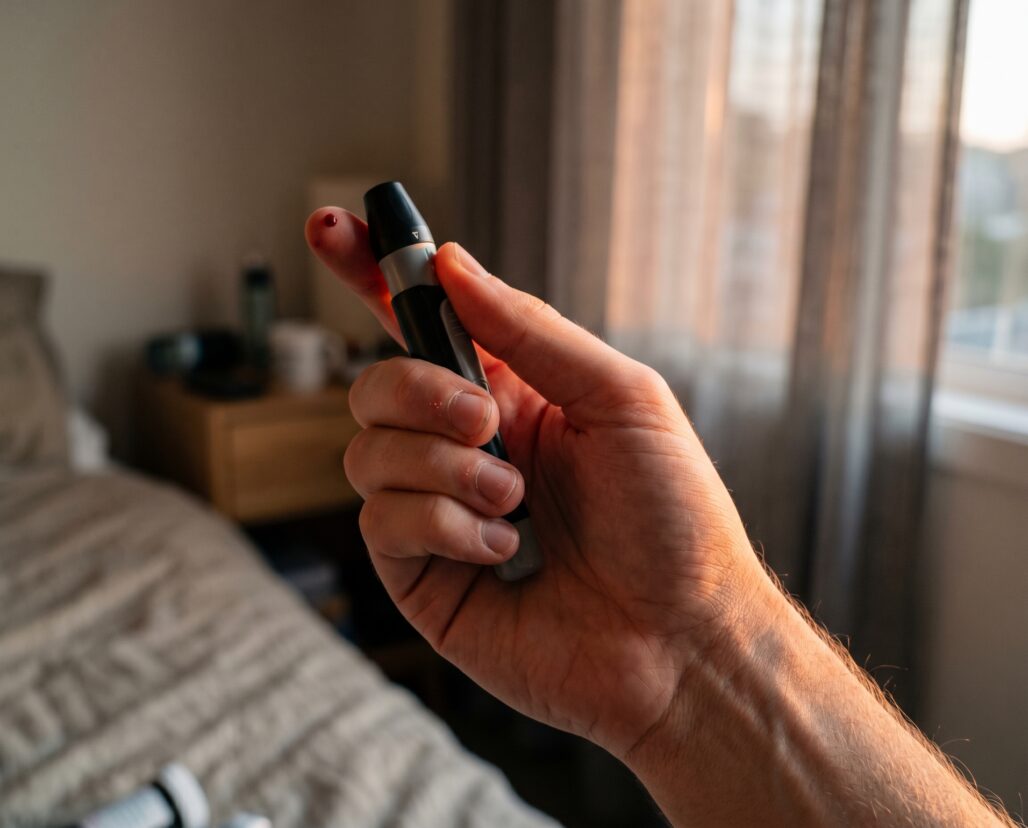
Recognizing and treating hypoglycemia is a safety-critical skill for anyone taking insulin. Symptoms include shakiness, sweating, fast heartbeat, dizziness, confusion, and blurred vision. The standard first-line response is the 15-15 rule, from the American Diabetes Association Standards of Care PMC11635034: consume 15 grams of fast-acting carbohydrate (glucose tablets, 4 ounces of juice, regular soda), wait 15 minutes, then recheck blood glucose. If the glucose is still below 70 mg/dL, repeat. Severe hypoglycemia — defined as blood glucose below 54 mg/dL or any episode requiring assistance from another person — requires glucagon and emergency care. Glucagon prescriptions should be available to anyone on insulin before an emergency occurs.
Delivery options vary by patient preference, clinical need, and insurance coverage. The three primary formats are:
| Method | Description | Best suited for |
|---|---|---|
| Vial and syringe | Draw insulin from a glass vial into a disposable syringe | Lower unit cost per dose; flexible dosing |
| Insulin pen | Prefilled or cartridge-based pen with a dial-a-dose mechanism | Convenience; portability; dose accuracy |
| Insulin pump (CSII) | Small wearable device delivering continuous subcutaneous infusion | Tight control; flexible eating schedules; T1D who prefer pump over multiple daily injections |
Inhaled insulin (Afrezza) is approved for meal-time dosing in adults, though its uptake has been limited by coverage restrictions and the requirement for pulmonary function testing.
Affordability is a genuine access barrier. List prices for insulin reached levels in the United States that have no parallel in other high-income countries. The Inflation Reduction Act of 2022 capped Medicare Part D cost-sharing for covered insulin products at $35 per month per product, effective January 1, 2023, with Part B coverage extended July 1, 2023. According to CMS and KFF analysis, an estimated 3.3 million Medicare beneficiaries used insulin in 2020 and are eligible for this cap. The cap applies to Medicare enrollees only; commercially insured and uninsured patients are not covered by the same federal ceiling, though several states have enacted their own caps and manufacturer patient assistance programs exist.
Frequently Asked Questions
Is insulin a peptide or a protein?
Both terms are technically defensible. Insulin at 51 amino acids sits at the upper boundary of what pharmacologists call a peptide (generally defined as under 50-100 amino acids depending on the source) and the lower boundary of what biochemists call a protein. Regulatory agencies treat it as a biologic. For the purposes of this series, it qualifies as a peptide drug — the original one.
Can someone without diabetes use insulin to build muscle?
Insulin is anabolic, but using exogenous insulin without a prescriber's oversight in a non-diabetic person is dangerous. Without diabetes, your pancreas already produces appropriate insulin; adding more drives blood glucose dangerously low. Severe hypoglycemia causes seizures, loss of consciousness, and cardiac arrest — not a theoretical risk.
What is the difference between insulin and semaglutide or tirzepatide?
Insulin directly replaces or supplements the hormone the body is not producing or not responding to normally. Semaglutide and tirzepatide (covered in semaglutide-complete-guide and tirzepatide-complete-guide) stimulate the body's own hormone pathways to increase insulin secretion, suppress glucagon, and reduce appetite. They do not replace insulin — they modulate the system upstream of it. In advanced type 2 diabetes, many patients use GLP-1 receptor agonists alongside insulin, not instead of it.
Are biosimilar insulins as effective as branded originals?
The FDA requires biosimilars to demonstrate no clinically meaningful difference from the reference product in pharmacokinetics, pharmacodynamics, and clinical outcomes. Interchangeable biosimilars must additionally demonstrate equivalence in a switching study. The INSTRIDE 1 and INSTRIDE 2 trials for Semglee (PMC10012380) showed noninferior glucose control in both type 1 and type 2 diabetes. An interchangeable biosimilar can be substituted at the pharmacy without a new prescription.
Conclusion: The Bottom Line on Insulin
Insulin is not a legacy drug waiting to be replaced. It is a continually refined therapeutic that has expanded from crude pancreatic extract to precisely engineered analogs with predictable pharmacokinetics, and most recently to interchangeable biosimilars that offer the same clinical performance at lower cost. Its discovery in 1922 established that a peptide — a short chain of amino acids — could substitute for a biological function the body had lost. Every peptide drug that followed, from growth hormone to semaglutide to the newer GLP-1/GIP dual agonists, built on that proof.
For anyone living with diabetes, the practical takeaways are straightforward: know which formulation you use and why, understand the 15-15 rule for hypoglycemia, never skip basal doses if you have type 1 diabetes, and ask your prescriber or pharmacist whether an interchangeable biosimilar or a patient assistance program applies to your situation. For anyone reading about peptide drugs more broadly, insulin is the foundation — the molecule that answered the question "can a peptide be a drug?" before most of the pharmaceutical industry had thought to ask it.
Next steps:
- Read what are peptides for a structural explanation of how peptides differ from proteins and small-molecule drugs.
- See FDA-approved peptides for the full landscape of peptide drugs that followed insulin's template.
- Compare insulin's mechanism to more recent peptide drugs in semaglutide-complete-guide and tirzepatide-complete-guide.
This article is for informational purposes and not medical advice. Peptides, especially those marketed for therapeutic use, can interact with medications and health conditions. Consult a licensed physician before starting any supplement, particularly if you are pregnant, nursing, taking prescription medications, or managing a chronic condition.
