
Turmeric can be a smart add-on for joint comfort, exercise recovery, and overall inflammation support – but only if the formula is absorbable and properly dosed. If you are searching for the best turmeric supplements, the main thing to know is that “turmeric” on a label does not automatically mean you are getting an effective amount of curcumin (the best-studied active compounds). This guide compares top-rated options, explains what actually matters on the Supplement Facts panel, and helps you choose the right format and dose for your goal and budget.
Summary / Quick Answer: Best Turmeric Supplements (Top Picks)
The best turmeric supplements are typically curcumin extracts with an absorption booster (like a phytosome or piperine), third-party testing, and clear standardization.
Quick picks by need (most evidence-based formats first):
- Best overall (absorption-focused): Thorne Curcumin Phytosome (Meriva)
- Best “classic” curcumin extract: Sports Research Turmeric Curcumin C3 Complex
- Best for athletes (training-friendly): Momentous Turmeric
- Best gummy: Nordic Naturals Zero Sugar Curcumin Gummies
- Best vegan-friendly pick: NOW Foods Turmeric Curcumin Phytosome
- Best extra strength tablet: Doctor’s Best High Absorption Curcumin
What to look for fast:
- Standardized curcuminoids (not just “turmeric powder”)
- A delivery system (phytosome) or piperine (black pepper extract)
- Third-party testing and transparent labeling
Best Turmeric Supplements: What “Best” Really Means (Absorption, Dose, Testing)
Most people assume the “best” product is the one with the highest milligrams. With turmeric, that shortcut often fails.
Curcumin is notoriously hard for the body to absorb. It is poorly soluble in water and rapidly metabolized, which means a basic turmeric powder capsule can look impressive on the label but deliver relatively little to the bloodstream. That is why many top products focus on bioavailability rather than sheer dose. Consumer testing and editorial reviews consistently rank phytosome and other optimized forms higher than plain turmeric powder, as summarized in roundups like the Healthline review of turmeric supplements.
Think of it like this: turmeric powder is like eating whole flaxseed without grinding it. You still get something, but not nearly as much as you think.
A simple “best” checklist (use this while shopping)
Here is a quick scorecard you can apply to any turmeric or curcumin product:
- Formulation
- Best-studied: curcumin extract + absorption tech (phytosome/Meriva)
- Common: curcumin extract + piperine (black pepper extract)
- Least reliable for curcumin dose: plain turmeric root powder only
- Standardization
- Look for “standardized to X% curcuminoids” or named extracts (Meriva, Curcumin C3 Complex)
- Third-party testing
- Prefer NSF, USP, Informed Choice, or reputable independent lab verification
- Label clarity
- Exact mg per serving, serving size, and other actives disclosed
Visual: What matters most (priority ladder)
- Absorption system (phytosome or piperine)
- Standardized curcuminoids (clear potency)
- Third-party testing (quality and safety)
- Dose that matches your goal (not just “more”)
- Format you will actually take (capsule, gummy, powder)
Practical takeaway: before you compare brands, compare delivery systems and standardization. For a deeper framework, see these quality indicators for supplements to spot red flags fast.
Top Picks Explained: Which Formula Fits Your Goal and Routine
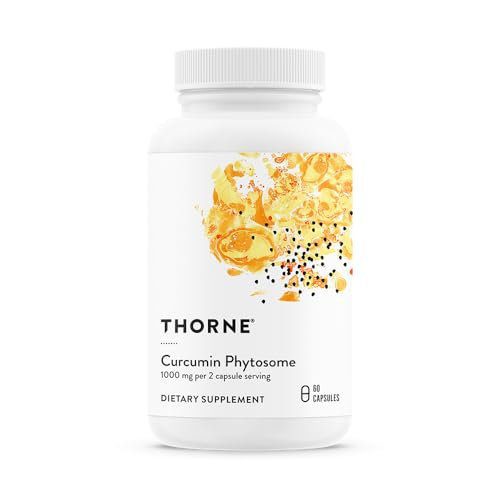
THORNE – Curcumin Phytosome 1000 mg (Meriva) – Clinically Studied, High Absorption – Supports Healthy Inflammatory Response in Joints, Muscles, GI Tract, Liver, Brain & Nerves* – 30 Servings
Thorne’s Curcumin Phytosome uses a patented phytosome complex that delivers 29 times greater absorption than standard curcumin, making it the most clinically studied curcumin formulation available. Each serving provides 1000 mg of curcumin across 30 servings, formulated to support joint, muscle, GI, liver, brain, and nerve health.
A “best” list is only helpful if it matches how you will use it. Some people want joint support, others want workout recovery, and some just need a non-pill option. Below is a goal-based way to think about the leading products and formats mentioned in major reviews.
Best overall: Thorne Curcumin Phytosome (Meriva)
Meriva is a patented curcumin phytosome. In plain terms, curcumin is bound to phospholipids to help it mix better with fats and cross biological membranes. Thorne’s serving commonly provides 1,000 mg of Meriva per 2 capsules, standardized to a curcuminoid range, as described in the Healthline product roundup. This is a strong pick for people who want an absorption-first option without adding black pepper.
Best for:
- People who have tried basic turmeric and felt nothing
- Anyone prioritizing absorption and consistent dosing
Best “classic extract”: Sports Research Turmeric Curcumin C3 Complex
Curcumin C3 Complex is a well-known standardized extract used across many brands. Sports Research pairs it with absorption support (often piperine). It is frequently highlighted in “best of” lists, including the Fortune guide to turmeric supplements.
Best for:
- People who want a concentrated curcumin extract with a familiar, widely used ingredient profile
Best for athletes: Momentous Turmeric
Athletes often care about repeatability: same dose, same timing, minimal extras. Momentous is often positioned for performance-minded routines, where supplement timing and consistency matter.
Best for:
- Training blocks and recovery routines where adherence matters
Best gummy: Nordic Naturals Zero Sugar Curcumin Gummies
Gummies can be a good compliance tool, especially if capsules trigger reflux or you simply will not take pills. The tradeoff is that gummies often deliver a lower curcumin dose per serving than capsules.
Best for:
- People who struggle with pills and still want a reputable brand
Visual: Quick comparison table (how to choose)
| If you want… | Choose a… | Why it helps |
|---|---|---|
| Strongest absorption focus | Phytosome (Meriva-style) | Better uptake than plain powder |
| High-curcumin potency | Standardized curcumin extract | More curcuminoids per mg |
| Easy daily habit | Gummy | Better consistency for some people |
| Vegan-friendly option | Vegan capsules | Fits dietary preferences |
Practical takeaway: match the format to your routine first, then optimize potency. If you are combining turmeric with other supplements (like omega-3s, magnesium, or joint blends), use the supplement stacking guide to avoid doubling ingredients or creating an overly complicated routine.
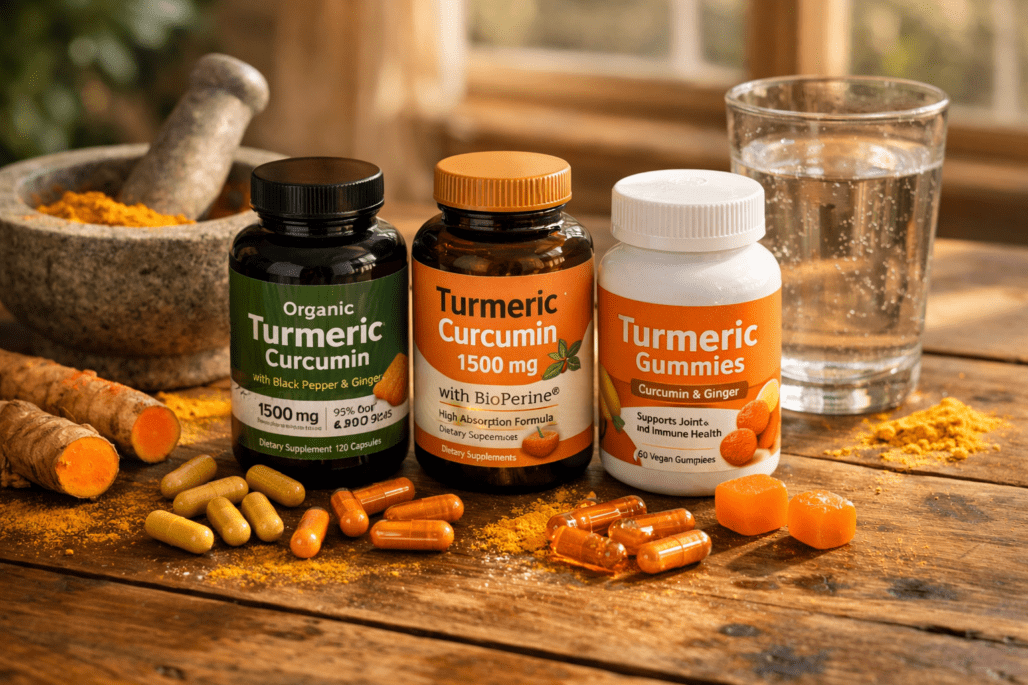
Turmeric vs. Curcumin: What You’re Actually Buying (and Why Dose Math Matters)
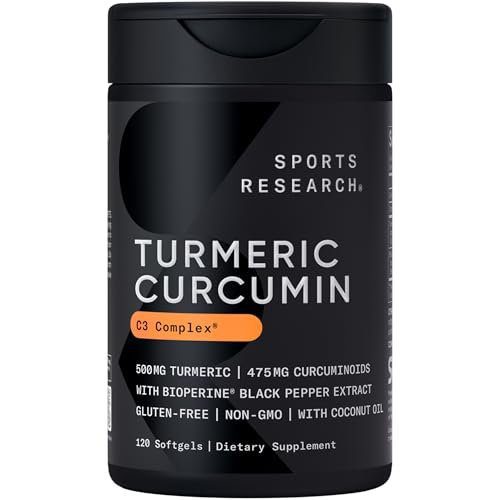
Sports Research® Turmeric Curcumin C3 Complex® w/BioPerine Black Pepper Extract & Organic Coconut Oil – Standardized 95% Curcuminoids · Non-GMO · Gluten Free – 120 Count Softgels
Sports Research Turmeric Curcumin C3 Complex delivers 500 mg per softgel of the patented C3 extract standardized to 95% curcuminoids (475 mg), with BioPerine black pepper extract and organic coconut oil for better absorption. It’s Non-GMO, gluten free, and comes in 120 softgels. This fits as a solid classic curcumin option with proven formulation details.
Many labels blur the line between turmeric root and curcumin extract. That confusion leads to two common problems: underdosing and unrealistic expectations.
Turmeric (the spice) contains curcuminoids, but only a small percentage by weight. Curcumin supplements typically use concentrated extracts standardized to a specific curcuminoid percentage. In practice, that means you may need grams of turmeric powder to approximate the curcuminoids you can get from a smaller amount of extract. Buying guides often highlight this dose gap, including the Darwin Nutrition overview of turmeric extracts and pricing.
The two main product types
1) Whole turmeric powder capsules
- Pros: closer to the whole-food profile, often cheaper
- Cons: lower curcuminoid density, more capsules needed, absorption still limited
2) Curcumin extract (standardized)
- Pros: more consistent potency, easier to hit studied doses
- Cons: quality varies, absorption still needs help
Visual: Label reading cheat sheet
When you look at Supplement Facts, scan for these lines:
- “Turmeric root powder”
- This is not the same as curcumin. It may be fine, but expect lower potency.
- “Turmeric extract (standardized to 95% curcuminoids)”
- This signals a concentrated curcumin product.
- “Curcumin phytosome (Meriva)”
- Indicates a delivery system designed for absorption.
- “Black pepper extract (piperine/BioPerine)”
- Common absorption booster.
Why absorption boosters change the “effective dose”
Curcumin’s low bioavailability is the reason brands add:
- Piperine (black pepper extract): reduces curcumin breakdown and can increase absorption
- Phytosomes: bind curcumin to phospholipids for better uptake
- Other delivery systems: micelles, nanoparticles, liposomal forms (quality varies by brand)
Practical takeaway: do not compare products by milligrams alone. Compare (1) standardized curcuminoids and (2) the absorption strategy. Then confirm the product is tested and clearly labeled using our quality indicators for supplements checklist.
How to Take Turmeric Supplements Safely: Dose, Timing, and Interactions
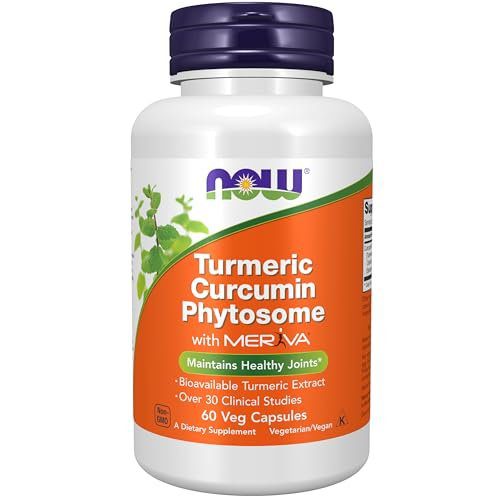
NOW Foods Supplements, Curcumin Phytosome, Bio-Enhanced Turmeric Extract, 60 Veg Capsules
NOW Foods Curcumin Phytosome delivers bio-enhanced turmeric extract in 60 veg capsules, using Meriva for better absorption than standard turmeric. It’s vegan, non-GMO, and kosher, with a 500 mg dose per capsule taken 1 to 4 times daily with food. This makes it a straightforward pick for those wanting an effective, plant-based curcumin supplement.
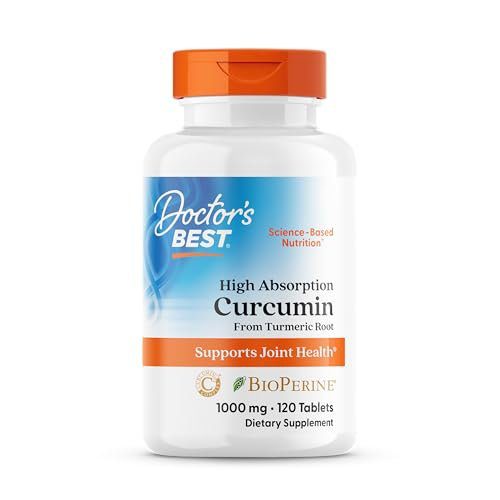
Doctor’s Best Curcumin From Turmeric Root with C3 Complex & BioPerine, Benefit the Joints by Helping to Neutralize Free Radicals, Non-GMO, Gluten Free, Soy Free, Joint Support, 1000 mg, 120 Tablets
Doctor’s Best offers this turmeric supplement as 120 tablets delivering 1000 mg Curcumin C3 Complex per serving with BioPerine for better absorption. It targets joint support by helping neutralize free radicals and is non-GMO, gluten free, and soy free. The tablet form provides a higher-dose option in a convenient count for daily use.
The most useful turmeric supplement is the one you take consistently and safely. Curcumin research uses a wide range of doses depending on the formulation and the outcome studied. That is why the best approach is to follow the brand’s serving guidance and match it to your tolerance.
Many phytosome products suggest split dosing (for example, 1-2 capsules taken one to two times daily), as reflected in brand directions summarized in the Healthline roundup. For concentrated extracts, you often need fewer capsules than you would with turmeric powder.
Timing: with food, with fat, or split doses?
Curcumin is fat-soluble, so taking it with a meal that contains some fat may improve tolerance and absorption. If a product includes piperine, some people notice more stomach warmth or irritation, so food can help.
A simple routine:
- Take with breakfast or lunch that includes fat (eggs, yogurt, olive oil, nuts)
- If using a higher dose, split it into two servings
For personalized timing, use this supplement timing resource to reduce side effects and improve consistency.
Visual: Safety checklist (quick screen before you start)
Consider extra caution and get clinician guidance if you:
- Take blood thinners or have a bleeding disorder
- Have gallbladder disease or frequent bile-related pain
- Are pregnant or breastfeeding (supplement-level doses are not the same as culinary turmeric)
- Have upcoming surgery (many clinicians recommend stopping certain supplements ahead of time)
Drug and condition interactions to take seriously
Curcumin can interact with medications and treatments through effects on clotting, liver enzymes, and other pathways. If you are on prescriptions, do not guess.
Use the check for interactions tool as a first pass, then confirm with your pharmacist or clinician.
If you are undergoing cancer treatment, be especially careful. Start here: turmeric and chemotherapy interactions. The goal is not fear – it is avoiding a supplement choice that could complicate treatment decisions.
Practical takeaway: take turmeric with food, consider split dosing, and always screen for interactions if you take medications or are in active treatment.
Price, Formats, and Value: Getting Results Without Overpaying
Turmeric supplements range from budget capsules to premium liquids and sachets. The tricky part is that price does not always track with effectiveness. What you are often paying for is the delivery system, testing, and brand quality controls.
Editorial comparisons show daily costs can vary widely, from low-cost basics to premium formats, as summarized in reviews like the BBC Good Food turmeric supplement guide and other consumer roundups. European buyers may also see innovative extracts positioned around bioavailability and safety, discussed in resources like the Darwin Nutrition buying guide.
What usually drives cost
- Patented delivery systems (example: phytosomes)
- Higher-grade raw materials and standardized extracts
- Third-party testing and certifications
- Convenience formats (gummies, liquids, sachets)
Visual: Format decision guide (pros and tradeoffs)
Capsules/Tablets
- Pros: best potency-per-dollar, stable dosing
- Tradeoffs: swallowing required
Softgels
- Pros: often include oils that may support absorption
- Tradeoffs: may contain gelatin (not vegan)
Gummies
- Pros: easiest adherence for many people
- Tradeoffs: typically lower strength, added ingredients (even “zero sugar” uses sweeteners)
Powders
- Pros: flexible dosing, can be added to smoothies
- Tradeoffs: you may need larger amounts; taste can be strong
Liquids/Sachets/Sprays
- Pros: convenient, sometimes positioned for absorption
- Tradeoffs: often the most expensive per serving
How to judge “value” in 30 seconds
Instead of focusing on bottle price, calculate:
- Cost per day at the suggested serving
- Curcuminoid potency (if standardized)
- Absorption feature (piperine or phytosome)
- Testing transparency (is there proof, not just claims?)
Practical takeaway: most people get the best value from a tested curcumin extract with an absorption strategy in capsule form. Gummies and liquids can be worth it if they improve consistency, but compare the actual daily dose.
Conclusion: Choosing the Best Turmeric Supplement for You
The best results usually come from a simple formula: a standardized curcumin product, a proven absorption strategy (phytosome or piperine), and a routine you can maintain. The best turmeric supplements are not automatically the highest-dose options – they are the ones that deliver curcumin in a form your body can use, with quality controls you can trust.
Next step:
- If you take medications or have a health condition, start by using check for interactions.
- If you are building a broader routine, keep it streamlined with the supplement stacking guide and optimize consistency using supplement timing.
As an Amazon Associate, I earn from qualifying purchases. Product recommendations are based on real reviews and independent research.
