
If you're searching for LMNT alternatives, the short answer is: you can get a comparable high-sodium, zero-sugar electrolyte profile for $0.50–$1.20 per stick on Amazon. Whether each product makes the same trade-offs as LMNT is a different question, and this guide breaks it down. LMNT's formula is simple and extreme by design, 1,000 mg sodium, 200 mg potassium, 60 mg magnesium, zero sugar, zero carbs. It was built for keto adherents and endurance athletes losing significant sodium through sweat. That specificity is also its limitation. Most people don't need 1,000 mg sodium in a single drink. Some do. This guide tells you which Amazon alternatives match LMNT's sodium logic, which cut cost by cutting electrolyte depth, and which approach hydration from an entirely different physiological angle.

Affiliate disclosure: this article contains affiliate links. As an Amazon Associate, UsefulVitamins.com earns from qualifying purchases at no extra cost to you.
Why people seek alternatives to LMNT
LMNT costs $45 for 30 sticks, which is $1.50 per serving. On Amazon Subscribe & Save, that drops modestly, but not enough to change the category it's in. At $1.50/stick used twice daily, you're at $90/month in electrolyte powder. That is not a small line item.
Cost is the most visible friction. But it is not the only one.
LMNT's 1,000 mg sodium-per-stick figure is deliberately aggressive. It was designed around the research of Dr. James DiNicolantonio and the sodium-replacement needs of people in ketosis, who excrete more sodium than people on standard-carbohydrate diets. If you are not in ketosis, not training in heat for extended periods, and not a heavy sweater, 1,000 mg sodium in a single drink overshoots your actual needs, and you're paying for electrolyte density you're not using.
There is also no Subscribe & Save cancel button. Amazon's S&S requires you to manage your subscription through the Subscribe & Save portal, cancel before the next shipment processes, and confirm the cancellation. It is manageable but it is not frictionless. Subscriptions are commitments. LMNT's packaging encourages the habit loop; the math assumes you will keep buying.
Finally, some users genuinely need a different hydration protocol. Keto-optimized sodium replacement and oral rehydration therapy (ORS) are not the same thing. If you're managing GI illness, altitude adjustment, or heavy endurance work, the carbohydrate-sodium co-transport mechanism in ORS products like DripDrop serves a different biological function than zero-carb electrolyte salts. The right product depends on what your body is actually doing.

How we picked
We evaluated five Amazon electrolyte alternatives against four criteria:
- Sodium profile match, Does the product come within reasonable range of LMNT's 1,000 mg sodium per serving, or does it serve a different use case explicitly?
- Sugar content, LMNT is zero sugar. Products with added sugar are flagged and explained, not penalized, because sugar-sodium co-transport is physiologically valid in specific contexts.
- Cost per serving, Calculated from the most common Amazon single-purchase and S&S price at the standard stick-pack size.
- Use-case fit, Who is this product actually built for, and does it serve that person better than LMNT at the price difference?
No product on this list is a perfect drop-in replacement for LMNT. Each makes a different trade-off. We say what the trade-off is.
Comparison at a glance
| Product | $/stick | Sodium | Sugar | Best for |
|---|---|---|---|---|
| LMNT (reference) | $1.50 | 1,000 mg | 0 g | Keto / heavy sweaters |
| Re-Lyte (Redmond) | $1.20 | 810 mg | 0 g | Top overall alternative |
| KEY Nutrients | $0.50 | ~600 mg | 0 g | Budget keto / daily use |
| Ultima Replenisher | $0.60 | 55 mg | 0 g | Light training / low-sodium needs |
| DripDrop ORS | $0.80 | 330 mg | ~7 g | Endurance / rehydration protocol |
| Liquid IV | ~$1.00 S&S | 510 mg | 11 g | Moderate sodium + ORS transport |
Prices reflect May 2026 Amazon single-purchase and Subscribe & Save rates. Prices fluctuate.
The picks
Top Pick: Re-Lyte Electrolyte Powder (Redmond)

Re-Lyte is the most direct LMNT alternative on Amazon, and the math is simple: 810 mg sodium versus LMNT's 1,000 mg, zero sugar, $1.20 per serving versus $1.50. That is a 20% price reduction for a sodium level that, for most people outside of deep ketosis or extended heat training, is physiologically sufficient. Redmond is best known for Real Salt, a natural mineral salt brand with a 50-year production history, and Re-Lyte uses that mineral salt base as its sodium source rather than sodium chloride isolate.
Electrolyte profile: 810 mg sodium, 400 mg potassium (2x LMNT's 200 mg), 65 mg magnesium (similar to LMNT's 60 mg), plus trace minerals from the Real Salt base. The elevated potassium-to-sodium ratio is meaningful: potassium is the intracellular electrolyte that works in opposition to sodium, and Re-Lyte's ratio is closer to the 4:1 potassium-to-sodium ratio of whole-food diets than LMNT's 1:5 sodium-dominant formula.
The trade-off: If your specific reason for using LMNT is maximum sodium replacement, you are in ketosis, you sweat heavily, you have been recommended high sodium by a clinician, Re-Lyte's 810 mg may underperform for your use case. For everyone else, including athletes doing sessions under 90 minutes in moderate heat, Re-Lyte covers the requirement.
Subscription note: Re-Lyte is available on Amazon Subscribe & Save. As with any S&S, that is a recurring commitment managed through the Amazon S&S portal. Set a calendar reminder before the next shipment date if you want to pause.
Actionable takeaway: Re-Lyte is the right first call if you want LMNT's sodium logic at a lower price without switching hydration philosophy.
Budget Pick: KEY Nutrients Electrolyte Powder No Sugar

At $0.50 per serving, KEY Nutrients is the lowest cost-per-stick option on this list, and it is zero sugar, which puts it in the same formulation category as LMNT rather than the carbohydrate-aided hydration products. The sodium profile runs approximately 600 mg per serving, meaningfully lower than LMNT's 1,000 mg but still in the range that covers daily electrolyte baseline for most non-keto adults.
Electrolyte profile: Approximately 600 mg sodium, 300 mg potassium, 100 mg magnesium per serving. The magnesium dose is notably higher than LMNT's 60 mg, a feature if magnesium is a gap in your diet, which it is for an estimated 50% of American adults based on NHANES data.
The trade-off: The lower sodium ceiling is the central limitation. If you are running a sodium-replacement protocol for keto or heat acclimation, KEY Nutrients' 600 mg will not match LMNT's function. If you are using electrolyte powder for general daily hydration and workout recovery, the use case that applies to most people who discover LMNT through social media, KEY Nutrients does the job at one-third the cost.
Cost comparison: LMNT at $1.50/stick twice daily is $90/month. KEY Nutrients at $0.50/stick twice daily is $30/month. That is a $60/month difference, or $720/year. The question is whether the additional 400 mg sodium and brand premium in LMNT is worth $720 annually for your actual use case.
Skip if: You are in ketosis or training in sustained heat and specifically using electrolytes to offset elevated sodium excretion. The lower sodium ceiling will leave a gap.
Best for Athletes: Ultima Replenisher Electrolyte Powder Variety
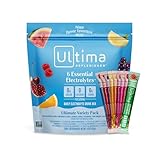
Ultima Replenisher positions itself squarely in the zero-sugar, plant-based electrolyte category and is one of the most commonly recommended alternatives in endurance running communities. The sodium content, 55 mg per serving, is dramatically lower than LMNT's 1,000 mg. That is not an oversight. Ultima targets athletes who lose moderate electrolyte volume across long training sessions but are not specifically replacing keto-driven sodium excretion or managing severe sweat loss.
Electrolyte profile: 55 mg sodium, 250 mg potassium, 100 mg magnesium, 65 mg calcium, trace chloride and phosphorus. The potassium-dominant, low-sodium formula is inverted relative to LMNT and reflects a different physiological philosophy, replacing what whole-food diets provide (potassium-rich, sodium-moderate) rather than correcting for what a ketogenic diet depletes.
Who this is built for: Ultima is the right product if you train regularly at moderate intensity, are not in ketosis, and want a zero-sugar electrolyte drink that supports workout hydration without spiking your sodium load. At $0.60/stick, it is the best cost-per-serving option for that use case.
Who should skip it: Anyone using LMNT specifically for its sodium density. If the 1,000 mg sodium figure is why you're buying LMNT, for keto electrolyte replacement or high-sweat-rate sport, Ultima's 55 mg sodium is a fundamentally different product doing a different job. The r/Ultramarathon community notes Ultima works well for training days and should be paired with sodium tabs for races in heat.
Variety pack note: The variety pack is a practical first purchase if you are uncertain which flavor works for you. Ultima's flavor range is one of its consistent strengths in verified purchaser reviews.
Best for Endurance: DripDrop ORS Electrolyte Powder Variety Pack
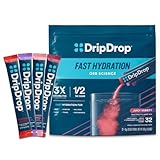
DripDrop is a different category of product from the others on this list, and it is worth being explicit about that. It contains sugar, approximately 7 g per stick, because it is formulated on oral rehydration salt (ORS) science, specifically the glucose-sodium co-transport mechanism that drives water absorption in the small intestine. SGLT1 (sodium-glucose linked transporter 1) requires both glucose and sodium to be present simultaneously to accelerate sodium and water uptake across the gut wall. No glucose, no enhanced transport. That is the physiological logic that sugar earns in this context.
Electrolyte profile: 330 mg sodium, 185 mg potassium, 34 mg magnesium per serving. Lower absolute sodium than LMNT, but with the co-transport mechanism, net absorption efficiency per mg of sodium delivered is higher than passive dissolution.
When this is the right pick: DripDrop is the strongest alternative when the goal is rapid rehydration, post-race, post-illness GI depletion, significant sweat debt from extended endurance work, altitude adjustment. The r/Ultramarathon community specifically recommends ORS protocols for the final hours of long events and post-race recovery when gut absorption speed matters. DripDrop is the most accessible ORS-grade product on Amazon at this price point.
The trade-off: Zero-carb and keto users should pass. The sugar is a feature of the mechanism, not an oversight, but it is incompatible with strict carbohydrate restriction.
Cost: $0.80/stick is a reasonable rate for an ORS-protocol product. Clinical ORS sachets from hospital suppliers run higher per-unit when sourced retail. DripDrop is effectively ORS-grade hydration at consumer price.
Best Sodium-Profile Match: Liquid IV Hydration Multiplier 16 Stick Pack

Liquid IV is the highest-profile electrolyte brand on Amazon and holds a meaningful position in this comparison: 510 mg sodium, 11 g sugar, with a cellular transport technology (CTT) formulation built on the same glucose-sodium co-transport principle as DripDrop. The sodium level is the closest on this list to bridging the gap between a pure ORS product and LMNT's sodium-prioritized formula, not 1,000 mg, but not 55 mg either.
Electrolyte profile: 510 mg sodium, 380 mg potassium, 60 mg magnesium per serving. At Subscribe & Save pricing on the 16-stick pack, the effective per-stick cost lands around $1.00–$1.10, meaningfully lower than LMNT's $1.50 at S&S rates, though not budget-tier.
Who this is built for: Liquid IV's middle-ground position works well for athletes who want sodium density above what Ultima provides but do not need or want LMNT's full 1,000 mg ceiling. It also works for people whose primary complaint with LMNT is cost, not formulation, if the brand experience matters and you want a well-known product with widespread availability, Liquid IV's S&S price is a functional step down.
The trade-off: 11 g of sugar per stick is the core limitation for low-carb and keto users. That glucose load is non-negotiable, it is what powers the absorption mechanism. If zero sugar is a requirement, Liquid IV is not the product.
Subscription note: Liquid IV on Amazon S&S is a recurring commitment. The 16-stick pack is a reasonable trial format before committing to the 64-stick S&S box. If you want to evaluate before subscribing, buy one 16-stick pack at standard pricing first.
How your body actually handles 1,000 mg sodium servings
LMNT's 1,000 mg sodium-per-serving claim reads as extreme to most people unfamiliar with the ketogenic physiology context. Here is what is actually happening.
Ketosis and sodium excretion. In ketosis, insulin levels drop significantly. Insulin normally signals the kidney to reabsorb sodium; lower insulin means the kidney excretes more sodium in urine. This is well-documented, it is why the "keto flu" (headaches, fatigue, muscle cramps) in the first two to four weeks of a ketogenic diet is primarily a sodium and water deficit, not a carbohydrate withdrawal symptom. For people in active ketosis, sodium requirements can run 3,000–5,000 mg/day above baseline. One LMNT stick at 1,000 mg is a meaningful replacement dose in that context.
Sweat sodium concentration varies significantly. Average sweat sodium concentration runs approximately 900 mg per liter (range: 200–2,000 mg/L across individuals). An athlete losing two liters per hour in summer heat for a 90-minute session loses approximately 1,800 mg sodium. LMNT's 1,000 mg covers about half that loss per stick, you would typically drink two. Most recreational exercisers in a climate-controlled gym losing 0.5 liters per hour lose around 450 mg sodium per session. LMNT's 1,000 mg overshoots that need by 2x.
Potassium-sodium balance matters more than either number alone. The sodium-potassium ATPase pump drives cellular membrane potential. The ratio between the two electrolytes, not just the absolute numbers, determines how efficiently that pump operates. LMNT's 1,000:200 sodium-to-potassium ratio is sodium-dominant by design, appropriate for keto electrolyte replacement where sodium is the primary gap. Re-Lyte's 810:400 ratio is more balanced. Ultima's 55:250 ratio is potassium-dominant, suited for people with standard dietary sodium intake who are not replacing keto-induced deficits.
High-sodium formulas and blood pressure. Sodium-sensitive hypertension affects approximately 25–30% of the general population, rising to 50%+ in people with diagnosed hypertension. For sodium-sensitive individuals, 1,000 mg of sodium in a single drink is a meaningful acute load. If you have a blood pressure condition or family history of hypertension and are not in active ketosis or heavy sweat conditions, talk to a clinician before committing to LMNT or Re-Lyte at full-dose, twice-daily use.
Who should stick with LMNT anyway
This guide exists because $1.50/stick adds up. But LMNT is not overpriced for everyone.
Stay with LMNT if you are in active ketosis and symptomatic. If you experience keto flu, muscle cramps, brain fog, or fatigue that resolves with sodium intake, LMNT's 1,000 mg dose is working correctly. The alternatives with lower sodium ceilings will underperform for your specific deficit.
Stay with LMNT if you are a heavy sweater by measurement. If your training kit is visibly salt-crusted after sessions, or if you have had a sports medicine consult that identified you as a high-sodium sweater, the 1,000 mg ceiling is physiologically justified. Re-Lyte at 810 mg is a reasonable alternative; Ultima at 55 mg is not.
Stay with LMNT if flavor compliance is your limiting factor. LMNT's flavor range is consistently rated highly in verified reviews, particularly the chocolate medley for cold mixing and the citrus salt for plain-water use. Electrolytes you don't drink because you dislike the taste are not doing their job at any price point.
Reconsider LMNT if you are using it as a daily hydration habit without a specific sodium need. Marketing around LMNT reaches far beyond its keto-and-athletes core use case. If you are a moderately active person drinking one stick per day because you saw it on a podcast, KEY Nutrients at $0.50/stick or Ultima at $0.60/stick will hydrate you for the same purpose at a third of the cost.
Related reading
- Is LMNT worth it? A full cost and formula breakdown
- Liquid IV vs LMNT: sodium math, sugar trade-offs, and who wins
- How we review supplements: our methodology and conflict of interest policy
For 2026 pricing across DTC supplement subscriptions and their Amazon equivalents, see our DTC supplement pricing reference.
As an Amazon Associate, I earn from qualifying purchases. Product recommendations are based on real reviews and independent research.
Once you have picked a product, our companion app, StackMyMed, scans its label and tracks it alongside everything else you take, with timing and interaction checks built in.
The bottom line on LMNT alternatives
LMNT at $1.50/stick versus Re-Lyte at $1.20/stick is a 20% reduction for 81% of the sodium content, the right trade for most people who are not in deep ketosis. LMNT at $1.50/stick versus KEY Nutrients at $0.50/stick is a 67% reduction, the right trade for daily-use electrolyte habits that don't require high-sodium replacement protocols.
The honest version of this comparison: LMNT built a product for a specific physiological context (keto electrolyte replacement and high-sweat-rate athletics) and marketed it to everyone. Most people buying LMNT at $1.50/stick are not in that context. Re-Lyte, Ultima, and KEY Nutrients cover the actual hydration need of most buyers at a fraction of the cost.
If you are in the specific context LMNT was built for, ketosis, heavy sweating, documented sodium loss, the 1,000 mg sodium ceiling is not a marketing claim. It is the product doing its job. Stay with it or switch to Re-Lyte at $1.20/stick and see whether the 190 mg sodium difference matters for your symptoms.
Every other buyer should run the math: $1.50/stick multiplied by your actual usage frequency, compared against the alternatives above. That number tells you whether you're buying a formula or paying a brand premium.
This article is for informational purposes and not medical advice. Electrolyte supplements can interact with medications and health conditions, particularly for individuals managing hypertension, kidney disease, or heart conditions. Consult a licensed physician before significantly increasing sodium intake, particularly if you are pregnant, nursing, taking prescription medications, or managing a chronic condition.
As an Amazon Associate, I earn from qualifying purchases. Product recommendations are based on real reviews and independent research.
Editorial independence note: UV earns affiliate commissions from Amazon and (selectively) from DTC brand affiliate programs. Commissions never determine our recommendations — top picks are chosen first; affiliate links are added second. Read our full methodology and editorial independence policy →
Frequently asked questions
What is the closest alternative to LMNT on Amazon?
Re-Lyte (Redmond) at about $1.20 per stick is the closest match, delivering 810mg sodium with zero sugar. That is roughly 81% of LMNT’s sodium at about a 20% lower price, which suits most buyers who are not in deep ketosis.
Is there a cheaper zero-sugar electrolyte than LMNT?
Yes. KEY Nutrients runs about $0.50 per stick and Ultima Replenisher about $0.60 per stick, both zero sugar. They carry less sodium than LMNT, which makes them better for everyday hydration than for keto or heavy-sweat sodium replacement.
Do I actually need 1,000mg of sodium like LMNT provides?
Most people do not. LMNT’s 1,000mg is built for ketosis and heavy sweating. If you are not in that context, a lower-sodium alternative such as Re-Lyte or Ultima covers normal daily hydration needs at a lower cost.
