
If you're searching for whether lion's mane mushroom improves focus, the honest answer is: it may support cognitive function in older adults with mild cognitive decline, but the evidence for healthy adults trying to sharpen a workday is nearly absent. The single most-cited human RCT tested lion's mane in Japanese adults aged 50-80 with mild cognitive impairment — a very different population from a 30-year-old looking for a nootropic edge. This article walks through what that trial actually measured, what the NGF mechanism means in plain language, and what a more recent trial in healthier older adults found. You'll also get realistic timeline expectations, dosing from the clinical studies, and drug interactions to check before adding lion's mane to your stack.
Affiliate disclosure: this article contains affiliate links. As an Amazon Associate, UsefulVitamins.com earns from qualifying purchases at no extra cost to you.

Summary / Quick Answer: does lion's mane help with focus?
Lion's mane has modest RCT evidence for cognitive function in older adults with mild cognitive impairment and in some healthier older populations, but no good RCT evidence for focus improvement in healthy adults.
- Best for: Adults aged 50+ with early memory concerns or mild cognitive impairment; those looking for a slow-acting, foundational supplement to support cognitive health alongside sleep and exercise.
- Not ideal for: Healthy adults expecting acute focus improvement (think caffeine-style alertness); anyone on anticoagulant medications without physician clearance.
- What to check before buying: Fruiting body extract (not mycelium-on-grain), polysaccharide or beta-glucan content disclosed, third-party verified for potency.
- Decision shortcut: If the label says "lion's mane" but doesn't specify fruiting body or disclose beta-glucan content, the active-compound dose is unknown. Marketing claims about "brain fog" and "flow state" fill that uncertainty gap.
What you'll find in this article
- The Mori 2009 RCT: what it actually tested
- Saitsu 2019: the closest trial to healthy-adult cognition
- The NGF mechanism: what hericenones and erinacines do
- Why the biohacker focus narrative is an extrapolation
- Who actually fits the evidence profile
- Dosing from clinical trials
- Side effects and drug interactions
- Frequently asked questions
- Related reading
The Mori 2009 RCT: what it actually tested {#mori-2009-rct}
The 2009 trial by Mori et al. (PMID 18844328) is the study most supplement brands invoke when claiming lion's mane improves cognitive function. The actual trial deserves a closer reading than most marketing copy gives it.
The study enrolled 30 Japanese adults, aged 50-80, who had been diagnosed with mild cognitive impairment (MCI). It was a double-blind, placebo-controlled, parallel-group RCT — solid design. Participants in the active group took four 250mg tablets of Yamabushitake (Hericium erinaceus) fruiting body dry powder three times daily, for a total of 3g per day, over 16 weeks. Cognitive function was assessed using the Revised Hasegawa Dementia Scale (HDS-R), a Japanese screening tool validated for dementia and MCI populations.
The result: at weeks 8, 12, and 16, the lion's mane group showed significantly higher scores on the HDS-R compared with placebo. That is a real finding, from a real RCT, with a plausible mechanism behind it.
The limitation is baked into the design. The Hasegawa scale is a clinical dementia screening instrument. The study population had diagnosed mild cognitive impairment — a condition that sits between normal age-related memory changes and early dementia. And the improvement did not persist: after participants stopped taking lion's mane, scores declined significantly by week 4 of the observation period.
None of this translates directly to a healthy adult wanting to stay focused during a deadline-driven afternoon. Traditional use is context, not clinical evidence. And an RCT in MCI patients is evidence for MCI, not for healthy cognitive enhancement.
Actionable takeaway: The Mori 2009 trial is the best human RCT for lion's mane and cognition. It is a small, single-centre, elderly MCI trial — not a healthy-adult focus trial. Citing it as proof that lion's mane sharpens normal cognitive performance is an extrapolation of at least two steps.
Saitsu 2019: the closest trial to healthy-adult cognition {#saitsu-2019}
A 2019 trial by Saitsu et al. (PMID 31413233) moved the evidence one step closer to healthier populations. The double-blind, placebo-controlled study enrolled middle-aged and older adults and followed them over 12 weeks of oral Hericium erinaceus fruiting body supplementation.
The primary cognitive measure was the Mini Mental State Examination (MMSE), supplemented by the Benton visual retention test and a verbal paired-associate learning task. The result: oral H. erinaceus intake significantly improved MMSE scores and appeared to slow cognitive deterioration versus placebo.
"Prevented deterioration" is doing important work in that sentence. This is not the same as "improved performance above a healthy baseline." These were middle-aged and older participants in whom cognitive aging was already measurable. The authors cited NGF pathway involvement via hericenones as the likely mechanism.
This study is more encouraging than Mori 2009 because the population is closer to healthy adults. But sample size details are limited in the public abstract, the dose is not fully specified, and MMSE improvement does not map onto what most focus-seekers want: sustained attention during analytical or creative work.
Actionable takeaway: Saitsu 2019 suggests lion's mane may slow cognitive aging in middle-aged and older adults. That's a clinically meaningful finding. It is not the same as demonstrating that lion's mane improves a 35-year-old's working memory or concentration during a busy workday.
The NGF mechanism: what hericenones and erinacines actually do {#ngf-mechanism}
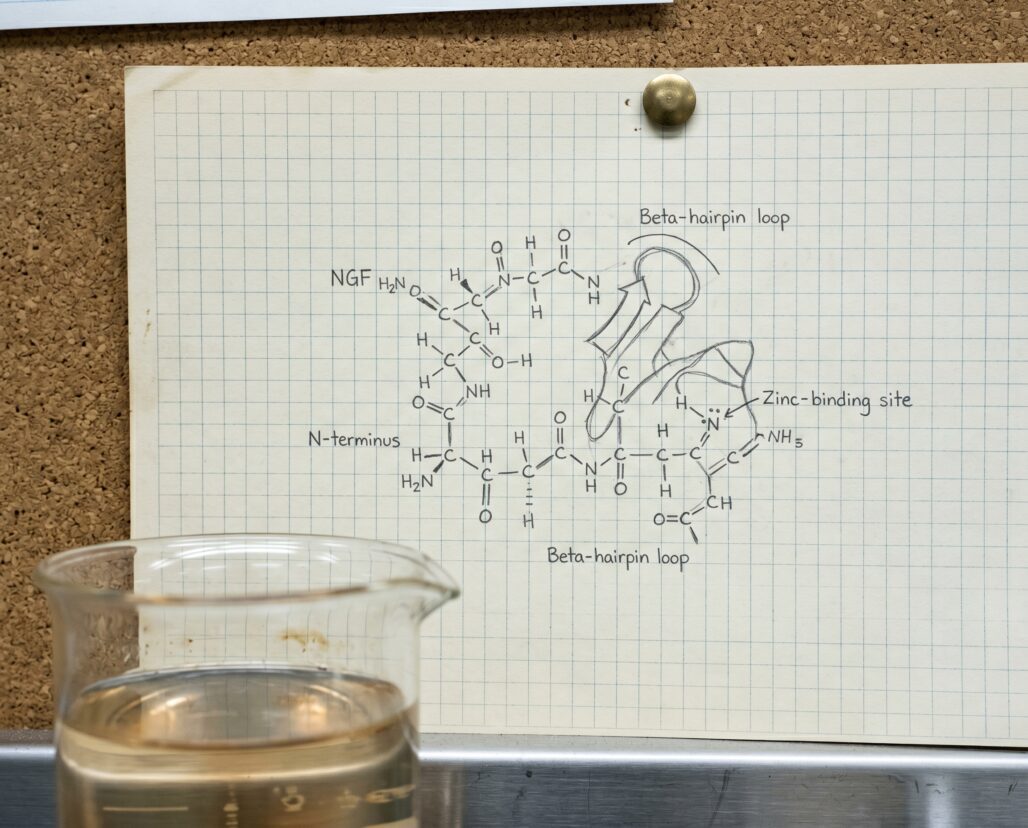
The mechanistic story behind lion's mane is legitimate and interesting. The fruiting body contains hericenones; the mycelium contains erinacines. Both compound families have shown the ability to stimulate nerve growth factor (NGF) synthesis in laboratory models.
NGF is a neurotrophic protein that supports the survival and maintenance of neurons, including cholinergic neurons involved in memory and learning. Reduced NGF signaling is implicated in Alzheimer's disease pathology. This is the real biological rationale for studying lion's mane in dementia-adjacent conditions, and Memorial Sloan Kettering's integrative herbs database confirms that erinacines can cross the blood-brain barrier, a prerequisite for any central effect.
A 2013 in vitro study (Lai et al., PMID 24266378) found that H. erinaceus extract combined with exogenous NGF produced a 60.6% increase in neurite outgrowth in neuroblastoma-glioma cell cultures, and that the extract alone prompted cells to secrete extracellular NGF. A 2011 animal study (Mori et al., PMID 21383512) confirmed hericenones C, D, and E drove NGF secretion in cell cultures and in living mice.
Think of lion's mane's NGF effect like fertilizer for an existing plant rather than transplanting a new one. Your brain already has NGF; these compounds may increase its local availability. The real question is whether the oral dose that reaches systemic circulation in humans — passes the blood-brain barrier in adequate concentration and persists long enough to drive neuroplasticity in a neurologically healthy adult — produces measurable change. That question has not been adequately answered by human RCTs as of 2026.
Why the biohacker focus narrative is an extrapolation {#the-extrapolation-problem}
Online nootropic communities have built a confident-sounding focus story around lion's mane: take it daily, stimulate NGF, get clearer thinking. The chain of logic has real links, but two steps remain unsupported by human clinical data.
The leap from "in vitro NGF stimulation" to "improved human cognition" requires that the oral dose produces meaningful circulating hericenone concentrations, that those concentrations cross the blood-brain barrier at sufficient levels, and that the resulting NGF increase is large enough to produce neurotrophic change. Each step is plausible in principle. None has been directly demonstrated in healthy-adult humans.
"Focus" — sustained directed attention for analytical work — is also not what either clinical trial measured. Mori 2009 used a dementia screening instrument. Saitsu 2019 used the MMSE and visual retention tasks. These tools are not designed to detect changes in working memory under load or cognitive flexibility in healthy people.
Traditional use is not the same as RCT evidence. An RCT in an MCI cohort is not evidence for nootropic benefit in healthy adults. The gap between those endpoints is where most supplement marketing lives. The same extrapolation problem runs through the whole category, as our review of whether nootropic supplements actually work shows ingredient by ingredient.
Lion's mane works on a weeks-to-months timeline, not session-by-session. The mood signals in the Nagano 2010 trial (PMID 20834180) — a 4-week RCT in 30 menopausal women showing reduced depression and anxiety scores — emerged over a full month of daily use. Mori 2009's cognitive improvements required 8 weeks to reach statistical significance. This is not caffeine.
Who actually fits the evidence profile {#who-fits-the-evidence}
Strong fit:
- Adults aged 50+ with documented MCI or early memory complaints, looking for a supportive supplement alongside lifestyle interventions.
- Middle-aged adults addressing age-related cognitive aging over a 3-6 month horizon.
- Women experiencing midlife anxiety and low mood — the population that matched Nagano 2010.
Skip it — or get physician clearance first:
- Healthy adults under 40 seeking an immediate focus boost. The evidence profile does not support this expectation.
- Anyone on anticoagulant therapy (warfarin, apixaban, rivaroxaban, clopidogrel). Preclinical data suggests mild antiplatelet activity; clinical significance is not established, but the interaction signal exists.
- Anyone on immunosuppressants (tacrolimus, cyclosporine, biologics). Medicinal mushrooms have shown immune-modulating activity in animal models, creating a theoretical interaction risk.
- Anyone with a mushroom allergy or hypersensitivity. Skin rash and abdominal discomfort are the most-reported adverse effects.
If focus problems stem from poor sleep or high stress, lion's mane is not the right starting point. No NGF-stimulating supplement compensates for chronic sleep deficit.
Dosing from clinical trials {#dosing}
The only dosing data from human RCTs covers a narrow range:
In Mori 2009 (PMID 18844328), participants took 3g/day of Hericium erinaceus fruiting body dry powder (four 250mg tablets, three times daily) for 16 weeks. This was the dose at which cognitive improvements on the Hasegawa scale became statistically significant at week 8.
In Saitsu 2019 (PMID 31413233), the form was fruiting body over 12 weeks. The full dose was not disclosed in the public abstract.
In Nagano 2010 (PMID 20834180), the intervention used Hericium erinaceus cookies over 4 weeks — not directly comparable to capsule dosing.
All three trials share: fruiting body source, multi-week duration, and daily dosing. None tested acute or as-needed protocols. There is no clinical precedent for lion's mane taken situationally, the way caffeine or L-theanine are used.
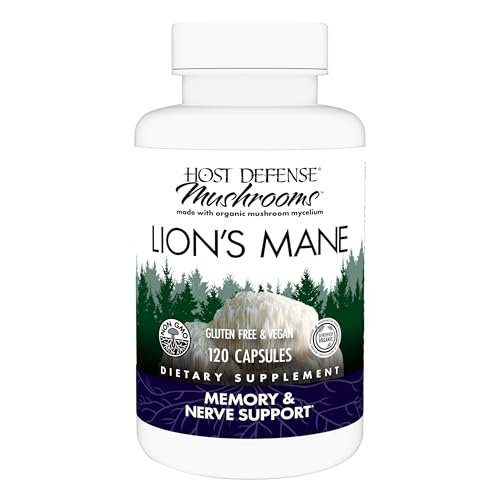
For product selection: fruiting body extracts with disclosed beta-glucan content (ideally greater than 25%) are closest to the trial formulations. Mycelium-on-grain products — common on the consumer market — contain starchy grain substrate and have not been tested in any cognitive RCT. Some products labeled "lion's mane" are predominantly grain starch with minimal active compound.
For two products that use verified fruiting body sourcing, see the product picks in Best Lion's Mane Supplement in 2026: 6 Real-Mushroom Picks (and 4 Mycelium-on-Grain Skips).
Side effects and drug interactions {#side-effects-interactions}
Lion's mane is generally well-tolerated. Clinical trials reported minimal adverse effects, with the most common being mild abdominal discomfort and — less frequently — skin rash. MSKCC's integrative herbs database notes the same adverse-effect profile and characterizes lion's mane as "generally safe" in culinary amounts.
Drug interactions to know:
Anticoagulants and antiplatelet agents: Preclinical evidence suggests lion's mane has mild antiplatelet activity — an ability to inhibit platelet aggregation. For most healthy people, this signal is unlikely to be clinically significant. For anyone taking warfarin, apixaban, rivaroxaban, clopidogrel, or similar agents, the interaction has not been formally studied in humans but the theoretical risk warrants a conversation with the prescribing physician before starting supplementation.
Immunosuppressants: Medicinal mushrooms, including Hericium erinaceus, have demonstrated immune-modulating properties in laboratory and animal models. Whether this translates to clinically relevant modulation in humans is not established, but anyone on tacrolimus, cyclosporine, mycophenolate, or biologic immunosuppressants for transplant or autoimmune conditions should get clearance before adding any medicinal mushroom supplement.
Diabetes medications: Some animal data suggests lion's mane may have mild hypoglycemic effects. No human RCT has tested this interaction. The theoretical concern is additive blood-sugar-lowering if combined with insulin or sulfonylureas.
Pregnancy and breastfeeding: No clinical safety data exists for lion's mane supplementation in pregnancy or while breastfeeding. The default position is to avoid supplemental doses during pregnancy until evidence is available.
The NCCIH mushroom health topic page and MSKCC's integrative herbs database are the appropriate sources for updated interaction guidance.
Frequently asked questions {#faq}
Does lion's mane work for focus in healthy adults?
No high-quality human RCT has tested lion's mane for focus in cognitively healthy adults as of 2026. The two most-cited trials enrolled adults with mild cognitive impairment and middle-aged adults showing signs of cognitive aging. The "focus" claims in nootropic communities are extrapolations from MCI trial data and in vitro NGF stimulation — not direct evidence for healthy-adult enhancement.
How long does lion's mane take to work?
Clinical trial timelines: Mori 2009 saw statistically significant improvements at 8 weeks of daily use; Saitsu 2019 ran 12 weeks. There is no evidence of acute or same-day cognitive effects. If you expect results in the first week, this is not the right supplement.
Is fruiting body better than mycelium for cognitive effects?
Both trials that showed cognitive effects (Mori 2009, Saitsu 2019) used fruiting body. The hericenones linked to NGF stimulation are concentrated in the fruiting body. Mycelium-on-grain products are cheaper and dominate the mass market. If beta-glucan content is not disclosed and fruiting body is not specified, the active-compound dose is unknown.
Can I take lion's mane with coffee?
No interaction between lion's mane and caffeine has been identified in research. They work through entirely different mechanisms: caffeine inhibits adenosine receptors for acute alertness; lion's mane theoretically supports NGF-driven neuroplasticity over weeks. No known reason to avoid combining them, but any cognitive effects are not additive in any studied sense.
What about lion's mane and ADHD?
No clinical trial has tested lion's mane for ADHD. Anecdotal reports in online communities are not controlled observations. For a fuller look at the evidence, see Lion's Mane and ADHD: What the Research Actually Shows.
Are there safety concerns with long-term use?
Mori 2009 ran 16 weeks with no reported laboratory abnormalities. No human safety studies longer than that have been published. Skin rash and abdominal discomfort are the most commonly reported adverse effects. Anyone with a mushroom allergy should avoid lion's mane supplementation.
As an Amazon Associate, I earn from qualifying purchases. Product recommendations are based on real reviews and independent research.
Related reading {#related-reading}
- Lion's Mane Mushroom: The Honest Guide to Hericium erinaceus and Cognitive Effects
- Best Lion's Mane Supplement in 2026: 6 Real-Mushroom Picks (and 4 Mycelium-on-Grain Skips)
- Lion's Mane and ADHD: What the Research Actually Shows
Conclusion: the bottom line on lion's mane for focus
Lion's mane has a plausible mechanism (NGF stimulation via hericenones and erinacines), a credible RCT in MCI patients (Mori 2009), and a more recent trial suggesting slower cognitive aging in middle-aged adults (Saitsu 2019). That evidence stack is meaningful — for the populations it actually tested.
What it is not: evidence that a cognitively healthy person looking for sharper focus at work will experience measurable benefit. The biohacker narrative has outrun the human data by a wide margin. The mechanism is real; the human-focus evidence is not.
If you are in the populations the trials actually enrolled — adults over 50 with early memory concerns, or women managing anxiety and low mood in midlife — lion's mane is a reasonable, low-risk supplement to consider at fruiting body doses consistent with what the trials used (3g/day for 16 weeks in Mori 2009). Use it alongside sleep, exercise, and stress management, not instead of them.
If you are a healthy adult under 40 hoping for a nootropic edge, the honest recommendation is to sort out sleep and caffeine intake first. Those have far more evidence for focus than any single-mushroom supplement does.
Next steps:
- Read the full mechanism and fruiting-body vs mycelium breakdown in Lion's Mane Mushroom: The Honest Guide to Hericium erinaceus and Cognitive Effects
- If you've already decided to try it, see the product quality criteria in Best Lion's Mane Supplement in 2026 before buying
This article is for informational purposes and not medical advice. Herbal adaptogens — even traditional ones — can interact with thyroid medication, antidepressants, anticoagulants, immunosuppressants, blood-pressure drugs, and more. Consult a licensed physician before starting any adaptogen, particularly if you are pregnant, nursing, taking prescription medications, or managing a chronic condition.
As an Amazon Associate, I earn from qualifying purchases. Product recommendations are based on real reviews and independent research.
