
If you're searching for whether ashwagandha genuinely raises testosterone, the short answer is: it can modestly, but mainly in men who are already training hard or running below their natural baseline — the effect in men with fully normal testosterone is small enough that you might not notice it. This article breaks down the specific clinical trials driving the claim, starting with the Wankhede 2015 RCT that put ashwagandha's testosterone reputation on the map. You will also get an honest look at who benefits most, who probably wastes their money, what the data says about women and PCOS risk, the drug interactions that matter, and how to evaluate an ashwagandha product so the label actually tells you something.
Affiliate disclosure: this article contains affiliate links. As an Amazon Associate, UsefulVitamins.com earns from qualifying purchases at no extra cost to you.
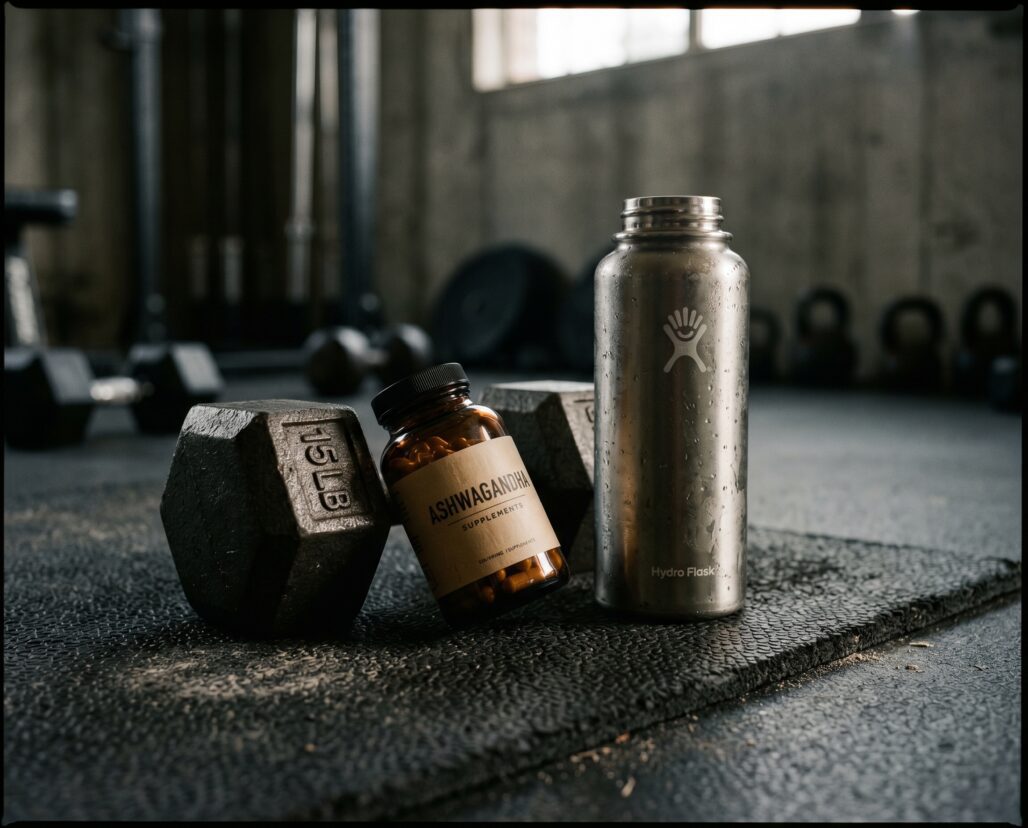
Summary: quick answer on ashwagandha and testosterone
Ashwagandha produced a statistically significant testosterone increase in two placebo-controlled trials, but the effect size is moderate, not dramatic, and the populations studied were specific.
Best for: Resistance-trained men aged 18-50 with testosterone running at the low end of the normal range or below it, who also want the muscle-strength and recovery benefits documented in the same trials.
Not ideal for: Men with already-normal or high-normal testosterone; women with PCOS or androgen-sensitive conditions; anyone on thyroid medication, immunosuppressants, sedatives, or testosterone-modifying therapies.
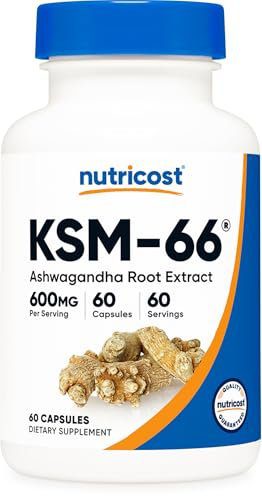
What to look at before buying: The standardization label. "Ashwagandha root powder 600mg" and "KSM-66 ashwagandha 600mg standardized to 5% withanolides" are not the same product. The trials that found testosterone effects used standardized extracts, not raw root powder.
Decision shortcut: If your testosterone is confirmed low-normal by a blood test, you lift weights regularly, and you have no thyroid or immune conditions, ashwagandha is a reasonable addition. If you're healthy with normal testosterone and just want "more," the evidence for a meaningful boost is thin.
What ashwagandha actually does to testosterone {#what-ashwagandha-does-to-testosterone}
Ashwagandha (Withania somnifera) is an Ayurvedic shrub root classified as a rasayana (rejuvenative tonic) in traditional medicine. The modern pharmacological interest centers on its withanolides, a class of steroidal lactones concentrated in the root extract. In Ayurveda, the herb was used for centuries as a general vitality tonic; that traditional use is historical context, not clinical evidence for any specific outcome.
The mechanism runs through the HPA axis. Withanolides appear to blunt cortisol signaling; chronically elevated cortisol suppresses luteinizing hormone (LH) release, reducing testicular testosterone production. If ashwagandha reliably lowers cortisol, removing that suppressive signal could allow the HPG axis to normalize output.
Think of it like a thermostat with a stuck relay. Chronic stress holds the "cooling" switch closed so the furnace (testosterone production) never fully fires. Ashwagandha, if it resets the relay, lets the furnace reach its setpoint. If the furnace is already running at full capacity, the relay fix changes nothing — which is exactly what the human data suggest.
Actionable takeaway: The testosterone mechanism is plausible and backed by HPG-axis pharmacology, but it depends on cortisol being the suppressive signal in the first place. Men with low stress and normal cortisol have little relay to reset.
What the Wankhede 2015 RCT actually showed {#wankhede-2015-rct}
The study most commonly cited for ashwagandha and testosterone is the 2015 randomized controlled trial by Wankhede et al. (PMID 26609282), published in the Journal of the International Society of Sports Nutrition. It enrolled 57 healthy young men (ages 18-50) with minimal prior resistance training experience. The intervention was 300 mg of ashwagandha root extract twice daily (600 mg total per day) versus a starch placebo for 8 weeks, alongside a standardized resistance-training program.
The primary outcome was muscle strength via 1-rep-max testing. The testosterone result was a secondary outcome.
What the numbers said:
- Bench press 1-RM gain: ashwagandha +46.0 kg vs. placebo +26.4 kg (p = 0.001)
- Leg extension 1-RM gain: ashwagandha +14.5 kg vs. placebo +9.8 kg (p = 0.04)
- Arm muscle cross-sectional area: +8.6 cm² vs. +5.3 cm² (p = 0.01)
- Serum testosterone increase: +96.2 ng/dL with ashwagandha vs. +18.0 ng/dL with placebo (p = 0.004)
- Body fat reduction: 3.5% vs. 1.5% (p = 0.03)
The testosterone delta of roughly +96 ng/dL sounds large until you anchor it. A typical adult male baseline runs 300-1,000 ng/dL; finishing 96 ng/dL higher is a meaningful lift but still within the normal range, not above it. The placebo group also gained nearly 20 ng/dL from the training program alone, which is expected.
Two caveats: the population had minimal training experience, so testosterone response to novel stimulus was already in play, making it hard to isolate the adaptogen effect. And the study does not specify which extract or withanolide content was used. "300 mg ashwagandha root extract" without standardization disclosure is a gap.
The overall picture: ashwagandha plus resistance training produced significantly more strength, muscle growth, and testosterone increase than training plus placebo. That is a real finding. It is not evidence that ashwagandha alone raises testosterone in sedentary men with normal cortisol.
The Lopresti 2019 crossover and what it adds {#lopresti-2019}
The second important human RCT is the Lopresti, Drummond, and Smith 2019 crossover trial (PMID 30854916), published in American Journal of Men's Health. Design: 57 overweight men aged 40-70 with mild fatigue, two 8-week crossover periods. The extract was Shoden (21 mg withanolide glycosides per day), not KSM-66.
Key outcomes vs. placebo:
- DHEA-S: 18% greater increase (p = 0.005)
- Testosterone: 14.7% greater increase (p = 0.010)
- Cortisol, estradiol, fatigue, vigor, sexual well-being: no significant between-group differences
The testosterone finding is statistically solid. The population was overweight and older, a demographic with already-blunted testosterone due to adipose tissue converting testosterone to estradiol and mild chronic HPA dysregulation. That is a different starting point from a healthy man in his 20s with normal labs. The DHEA-S finding suggests the effect is upstream, at the adrenal level, consistent with the HPA-axis hypothesis.
The study was supported by Arjuna Natural Ltd. (Shoden's manufacturer); the authors state the funder was uninvolved in design, analysis, and reporting. The crossover design is a methodological strength: each participant serves as his own control.
A 2021 systematic review by Smith et al. (PMID 33150931) examining 32 studies across 13 herbs confirmed ashwagandha as one of only two herbs with positive testosterone evidence in men. The authors flagged meaningful weaknesses: small sample sizes, heterogeneous extracts, and only 6 of 32 studies with low risk of bias. Their conclusion: modest positive evidence, but "further research is required before definitive conclusions."
Actionable takeaway: The "+15% testosterone" headline is real but comes from specific populations: resistance-trained young men (Wankhede) and overweight, fatigued older men (Lopresti). If you fit neither profile, the data does not speak directly to you.
Who benefits and who does not {#who-benefits}
Who the evidence actually supports
The clearest candidates based on the two trials:
- Resistance-training men who want simultaneous strength, muscle-mass, and recovery support alongside a modest testosterone signal
- Men 40-70 with overweight and mild chronic fatigue, particularly if DHEA-S has been confirmed low on a blood panel
- Men with low-normal testosterone (confirmed 250-400 ng/dL range) experiencing training plateaus or slow recovery
An adaptogen that normalizes HPA-axis output benefits someone with dysregulated cortisol, not someone whose cortisol is already well-regulated.
Who should not expect much
Men with mid-to-high-normal testosterone (600-900 ng/dL confirmed on labs) are unlikely to see a meaningful lift. Spending money on a well-standardized ashwagandha supplement for "more testosterone" when already at a healthy baseline is a common trap the evidence does not support. That trap is not unique to ashwagandha; our ingredient-by-ingredient review of testosterone booster efficacy finds the same pattern across most of the category.
Women: a more nuanced picture
For women, a 2026 narrative review by Namysł et al. (PMID 41694897) found ashwagandha's androgen effect appears sex-specific: it did not elevate testosterone in women the way it did in male study groups. Women without PCOS and without hormonal medication can generally access the cortisol and stress benefits without meaningful androgen concern. Women with PCOS have pre-existing androgen sensitivity; until adequately powered RCTs in PCOS cohorts are published, the cautious position is to consult a treating physician first. Traditional use is not the same as RCT evidence for safety in androgen-sensitive conditions.
How to read an ashwagandha label for testosterone use {#reading-labels}
An ashwagandha brand can have impressive marketing and still miss third-party testing for the active marker compound. The specific withanolide content is the only label claim that tells you whether the product resembles what was studied.
What to look for:
| Label claim | What it means |
|---|---|
| "KSM-66 ashwagandha, standardized to 5% withanolides" | Root-only extract with established withanolide floor; used in several stress and strength RCTs |
| "Sensoril ashwagandha, standardized to 10% withanolides + 32% oligosaccharides" | Root and leaf blend; different phytochemical profile; studied primarily for stress/sleep |
| "Shoden ashwagandha, 21mg withanolide glycosides" | High-potency concentration; used in Lopresti 2019 |
| "Ashwagandha root powder 600mg" | No standardization disclosed; withanolide content unknown; could be 0.5% or 2% or anything |
| "Ashwagandha root extract 300mg" | Extract, but without standardization disclosure, still tells you nothing about withanolide content |
Standardized to 5%+ withanolides is the minimum meaningful label for testosterone-adjacent claims. "Ashwagandha root powder" alone tells you nothing.
Dosing: what the clinical trials used {#dosing}
The key trials used different doses and extracts.
In Wankhede 2015, participants took 300 mg ashwagandha root extract twice daily (600 mg/day) alongside resistance training for 8 weeks. In Lopresti 2019, the dose was Shoden beads delivering 21 mg withanolide glycosides per day for 8 weeks. In Chandrasekhar 2012 (PMID 23439798), the cortisol-reduction benchmark used 300 mg KSM-66 twice daily for 60 days, providing the mechanistic basis for downstream testosterone effects.
General patterns:
- Most trials ran 8-12 weeks; effects in shorter windows are not well-documented
- Doses cluster around 300-600 mg/day of standardized extract for strength and hormone outcomes
- KSM-66 (root-only) and Shoden/Sensoril (root-plus-leaf blends) have different withanolide profiles; doses are not interchangeable across extract types
Taking ashwagandha with food reduces GI side effects in most trials.
Side effects and drug interactions {#side-effects-interactions}
Reported adverse effects from clinical trials
In the Wankhede 2015 RCT, no serious adverse events were reported. Common side effects across ashwagandha trials: drowsiness, mild GI upset (nausea, diarrhea), and headache.
More serious signals come from post-market case reports: the Memorial Sloan Kettering integrative herbs database documents multiple liver injury cases requiring discontinuation. If you develop jaundice, dark urine, or abdominal pain while on ashwagandha, stop and consult a physician.
Drug interactions (REQUIRED reading if you take any of the following)
Testosterone-modifying medications. Men on exogenous testosterone (TRT), SARMs, or anti-androgens (finasteride, dutasteride, bicalutamide) should note that ashwagandha has androgen-pathway activity. The interaction is not well-characterized in human trials; discuss with the prescribing physician before adding.
Thyroid medications. This is the most clinically documented interaction. Per NCCIH's ashwagandha fact sheet, ashwagandha may increase thyroxine levels. The MSK database has documented cases of thyrotoxicosis. If you take levothyroxine, liothyronine, or any thyroid hormone replacement, ashwagandha can push thyroid output unpredictably higher. This is a hard stop for unsupervised use.
Immunosuppressants. Withanolides can modulate immune function. Per both NCCIH and MSK, documented cases include kidney transplant rejection in a patient taking ashwagandha concurrently with immunosuppressant therapy. Anyone on tacrolimus, cyclosporine, mycophenolate, or biologic immunosuppressants (for autoimmune conditions) must avoid ashwagandha unsupervised.
Sedatives and CNS depressants. Ashwagandha has documented GABAergic (sedative) properties. Additive sedation is plausible with benzodiazepines (clonazepam, lorazepam, alprazolam), anticonvulsants, barbiturates, and alcohol. The clinical significance is uncertain but the interaction is pharmacologically coherent.
Diabetes medications. NCCIH flags potential blood-sugar effects. Additive hypoglycemia risk with insulin or oral hypoglycemics (metformin, sulfonylureas) is theoretically possible; monitor blood glucose if combining.
Antihypertensives and anticoagulants. NCCIH flags possible additive blood-pressure reduction. Ashwagandha's CYP3A4-inducing activity (documented in MSK database) may also reduce plasma concentrations of warfarin and other CYP3A4-metabolized drugs. If you are on blood thinners or blood-pressure medication, discuss with your prescriber before starting.
Pregnancy and breastfeeding
Ashwagandha should be avoided during pregnancy; the MSK database notes it may induce abortion at higher doses. Breastfeeding safety data are absent.
| Risk group | Position |
|---|---|
| On levothyroxine / thyroid hormone | Avoid without prescriber supervision |
| On tacrolimus, cyclosporine, biologics | Avoid |
| On benzodiazepines or sedatives | Discuss with prescriber |
| Pregnant or nursing | Avoid |
| PCOS without clinical supervision | Use caution; consult prescriber |
| Hormone-sensitive prostate cancer | Contraindicated |
| Pre-surgery (within 2 weeks) | Discontinue |
Actionable takeaway: The NCCIH and MSK interaction lists are not hypothetical. Thyroid toxicosis, kidney transplant rejection, and liver injury are documented case outcomes, not theoretical risks. If you are on any prescription medication, the five minutes spent reviewing this with your pharmacist or physician are worth it.
Frequently asked questions {#faq}
Does ashwagandha actually raise testosterone, or is this just supplement marketing?
It raises testosterone in specific populations, confirmed by two placebo-controlled trials. Wankhede 2015 (PMID 26609282) found a +96.2 ng/dL difference versus placebo in resistance-trained young men (p = 0.004). Lopresti 2019 (PMID 30854916) found a 14.7% greater increase in overweight, fatigued men aged 40-70 (p = 0.010). Whether either finding applies to a healthy man with normal testosterone and no resistance training regimen is genuinely unclear. The mechanism requires a cortisol-suppressed HPG axis to unwind.
How much testosterone increase should I realistically expect?
The Wankhede 2015 data showed roughly +96 ng/dL over placebo in 8 weeks. Starting from a low-normal baseline of 380 ng/dL, that would put you near 476 ng/dL — still in the normal range, not supraphysiological. Lopresti 2019 showed a 14.7% proportional increase. Both are moderate effects. Expecting a dramatic transformation in energy, libido, or muscle mass from a testosterone increase of this magnitude is setting up for disappointment.
Can women take ashwagandha safely given the testosterone findings?
Current evidence suggests ashwagandha does not elevate testosterone in women the way it does in men, per the 2026 Namysł review (PMID 41694897). For women without PCOS and without hormonal medication, ashwagandha's stress and cortisol benefits appear accessible without meaningful androgen risk. Women with PCOS or on hormonal therapy should discuss with their physician first; the human trial data for those populations is insufficient to generalize.
Do I need to cycle ashwagandha?
No human RCT has tested on/off cycling protocols for hormonal outcomes. Most trials ran 8-16 weeks of continuous daily dosing. Some practitioners suggest cycling (5 days on, 2 days off), but this is not evidence-based for ashwagandha's testosterone effects. The 8-12 week continuous dosing used in the trials is the defensible framework.
As an Amazon Associate, I earn from qualifying purchases. Product recommendations are based on real reviews and independent research.
Related reading
- The Complete Guide to Adaptogens: What the Evidence Actually Shows
- Best Ashwagandha Supplement: How to Avoid the Label Traps
- Ashwagandha Side Effects: The Full Interaction and Safety Profile
Conclusion: the bottom line on ashwagandha and testosterone
Ashwagandha produced a statistically significant testosterone increase in two placebo-controlled trials — Wankhede 2015 (resistance-trained young men, p = 0.004) and Lopresti 2019 (overweight, fatigued men 40-70, p = 0.010). A 2021 systematic review confirmed it as one of only two herbs with reproducible positive testosterone evidence. The effect is moderate: a +96 ng/dL absolute gain puts most men further into the normal range, not above it.
The interaction profile warrants a physician conversation if you take thyroid medication, immunosuppressants, sedatives, or hormone-modifying therapy. Thyroid toxicosis and transplant-rejection case reports in the MSK database are documented harms.
For a resistance-training man with confirmed low-normal testosterone and no contraindicated medications, ashwagandha standardized to 5%+ withanolides at 300-600 mg/day for 8-12 weeks is a reasonable, evidence-backed intervention. For everyone else, the case is weaker than the marketing implies.
Next steps:
- For context on how ashwagandha compares across all its studied benefits, see The Complete Guide to Adaptogens
- If you are evaluating specific products, read Best Ashwagandha Supplement for a label-reading framework
- Before starting, review the interaction profile in Ashwagandha Side Effects if you take any prescription medication
This article is for informational purposes and not medical advice. Herbal adaptogens — even traditional ones — can interact with thyroid medication, antidepressants, anticoagulants, immunosuppressants, blood-pressure drugs, and more. Consult a licensed physician before starting any adaptogen, particularly if you are pregnant, nursing, taking prescription medications, or managing a chronic condition.
As an Amazon Associate, I earn from qualifying purchases. Product recommendations are based on real reviews and independent research.
