
If you're searching "rhodiola side effects," you may already sense that the adaptogen's reputation for being risk-free is a bit too clean. The honest answer is: rhodiola is better tolerated than most adaptogens at clinical doses, but it has a dose-dependent side-effect profile that the herbal-supplement market underreports — including insomnia, jitteriness, mild cardiovascular signals, and meaningful interactions with antidepressants, anticoagulants, and stimulants. This reference covers what controlled trials actually reported, the counter-intuitive biphasic dosing picture (higher doses produce stimulant-like side effects that lower doses usually avoid), and which drug combinations require a prescriber's sign-off before you open the bottle. You will also find a specific interaction table covering SSRIs, MAOIs, warfarin, CYP enzyme substrates, and caffeine, plus a clear pregnancy contraindication.

Summary: the quick answer on rhodiola side effects
Short answer: In RCTs using 200–576 mg of standardized SHR-5 or WS 1375 extract daily, rhodiola produced minimal adverse events — mostly mild dizziness, dry mouth, and occasional headache. The stimulant-like side effects (insomnia, jitteriness, elevated blood pressure) appear more reliably at doses above 500 mg and in people who are also using caffeine or stimulant medications.
Best for (from a safety standpoint): Healthy adults not on prescription antidepressants, anticoagulants, stimulant ADHD medications, or blood-pressure drugs, who use 200–400 mg of a standardized extract for no more than 12 weeks.
Not ideal for:
- Anyone taking SSRIs, SNRIs, MAOIs, or tricyclic antidepressants
- People on warfarin or other anticoagulants (CYP2C9 inhibition)
- Anyone with stimulant sensitivity or currently using ADHD medications (additive jitter risk)
- People who already experience insomnia or anxiety at baseline
- Anyone who is pregnant or breastfeeding
What to check before starting: Your current medication list (particularly antidepressants and anticoagulants), your blood-pressure baseline if you have any cardiovascular history, and your caffeine intake — it compounds rhodiola's stimulant burden.
Decision shortcut: If you take any prescription medication that affects mood, heart rhythm, or blood clotting, bring the interaction table in Section 5 of this article to your pharmacist or prescriber before starting.
What you'll find in this guide
- How rhodiola works: the mechanism behind the side-effect profile
- Side effects in clinical trials: what RCTs actually reported
- The biphasic dose problem: why more rhodiola can mean worse tolerance
- Cardiovascular signals: blood pressure and heart-rhythm case reports
- Drug interactions: the 2026 reference table
- Who should skip rhodiola
- Frequently asked questions
How rhodiola works: the mechanism behind the side-effect profile {#how-rhodiola-works}
Rhodiola rosea is a flowering plant native to cold mountain climates in Europe and Asia. Its roots are standardized to two marker compounds: rosavins (a family of glycosides) and salidroside (also called tyrosol glycoside). Most clinical research uses extracts standardized to 3% rosavins and 1% salidroside — check those numbers on any label before buying.
The mechanism most relevant to the side-effect profile is rhodiola's influence on monoamine neurotransmitters. Preclinical data, summarized by Memorial Sloan Kettering's integrative herb database, suggest that salidroside and rosavins inhibit monoamine oxidase (MAO) — the enzyme that breaks down serotonin, dopamine, and norepinephrine. That MAO-inhibiting activity is almost certainly responsible for both the herb's anti-fatigue benefit and its most clinically significant interaction risks: when combined with drugs that also raise serotonin or norepinephrine levels, the result can be additive and occasionally dangerous.
Think of rhodiola's mechanism like a dial that turns up neurotransmitter availability. At the lower settings (100–200 mg), the effect is subtle and tends to feel energizing without being disruptive. Turn the dial past 500 mg, and the same mechanism starts producing the stimulant side-effect cluster that caffeine-sensitive users will recognize immediately.
Side effects in clinical trials: what RCTs actually reported {#side-effects-in-clinical-trials}
The best-quality safety data come from placebo-controlled trials, not wellness forums. The landmark study is a 2009 double-blind, placebo-controlled Phase III RCT (Olsson et al., n=60), in which participants with stress-related fatigue took SHR-5 extract at 576 mg daily for 28 days. The authors reported no serious adverse events attributable to the extract.
A 2012 open-label multicentre trial (Edwards et al., n=101) used WS 1375 extract at 200 mg twice daily for four weeks. Adverse events were described as "mostly of mild intensity," and no serious adverse events were reported. The NCCIH fact sheet on rhodiola notes that the herb is "possibly safe for up to 12 weeks," with the most commonly documented adverse effects being: dizziness, headache, insomnia, and either dry mouth or excessive saliva production.
A 2015 Phase II RCT (Mao et al., n=57) compared rhodiola, sertraline, and placebo over 12 weeks for mild-to-moderate depression. Adverse events were reported by 30% of the rhodiola group, 63% of the sertraline group, and 17% of the placebo group — a statistically significant difference (p=0.012). Rhodiola was better tolerated than sertraline in this trial, though also less effective for HAM-D reduction.
Across these trials, the side-effect profile at standard doses is dominated by:
- Insomnia: Most consistently reported in trials using afternoon or evening dosing, or doses at or above 400 mg. Taking rhodiola after noon substantially increases the insomnia risk.
- Jitteriness and agitation: Primarily at doses above 400–500 mg, particularly in stimulant-sensitive individuals.
- Dry mouth: Reported consistently but typically mild.
- Dizziness and headache: Reported across multiple cohorts; usually transient, resolving within the first week.
But RCT populations are carefully screened. Participants on prescription antidepressants, anticoagulants, or with cardiovascular conditions were excluded before these trials began. The controlled-trial safety profile is real — and incomplete.
Actionable takeaway: At the doses used in controlled trials (200–576 mg standardized SHR-5 or WS 1375 daily), rhodiola's side-effect burden is modest. Insomnia from afternoon dosing is the most avoidable risk: morning dosing only.
The biphasic dose problem: why more rhodiola can mean worse tolerance {#the-biphasic-dose-problem}
Here is where rhodiola's pharmacology becomes counter-intuitive. Multiple clinicians and researchers who have worked with the extract have noted a biphasic dose-response: at 100–200 mg, many users report calm, sustained energy without stimulant side effects. At 600–1,000 mg, the same person often experiences the full stimulant-side-effect cluster — jitteriness, insomnia, elevated heart rate — that made them turn to a stress herb in the first place.
This is not unique to rhodiola, but it is more pronounced here than in most adaptogens. The NCCIH rhodiola overview notes that at higher doses, adverse effects including dizziness and agitation are more frequently reported. The Olsson 2009 trial used 576 mg daily and still found no serious events, but that dose in a screened, monitored population is not the same as 600–1,000 mg in a person self-dosing based on a vendor's "mega-dose" protocol.
The real-world pattern is this: someone starts with 200 mg and feels good, decides more is better, escalates to 600 mg or more, and develops insomnia, jitters, and anxiety symptoms that look exactly like the chronic stress they were trying to address. The supplement marketing rarely mentions this.
An early 2003 RCT (Shevtsov et al., n=161) testing two different SHR-5 doses in military cadets found no significant difference in anti-fatigue benefit between the two dose levels — a result consistent with a ceiling effect rather than a linear dose-response. More rhodiola did not produce more benefit; but anecdotally and in post-market reports, more rhodiola does produce more side effects.
Actionable takeaway: If you are sensitive to caffeine, anxious at baseline, or already taking any stimulant medication, start at the lower end of the clinical range (100–200 mg daily) and assess tolerance before increasing. A higher dose of rhodiola is not a stronger version of the lower dose — it's a different pharmacological experience.
Cardiovascular signals: blood pressure and heart-rhythm case reports {#cardiovascular-signals}
Beyond the trial data, a cardiovascular signal exists in the case-report literature. Memorial Sloan Kettering's integrative herb database cites a case report of tachyarrhythmia in a 26-year-old woman who combined rhodiola with prescription antidepressants for three days. The irregular heartbeat resolved after both were stopped. This is a single case report, not an established frequency, but it is clinically meaningful for two reasons: first, it involves a drug combination (rhodiola plus serotonergic medications); second, it is the type of signal that would never appear in a short-term RCT that excluded medicated participants.
NCCIH also notes that "interactions between rhodiola and losartan (a drug used for high blood pressure) have been reported," flagging the herb as potentially relevant to blood-pressure management. Whether rhodiola raises or lowers blood pressure depends on dose and individual baseline, but the interaction with antihypertensive medications is a concern for anyone whose prescriber has calibrated a BP medication regimen.
These signals are not reasons to avoid rhodiola categorically. They are reasons to take the drug-interaction question seriously rather than treating the herb as consequence-free.
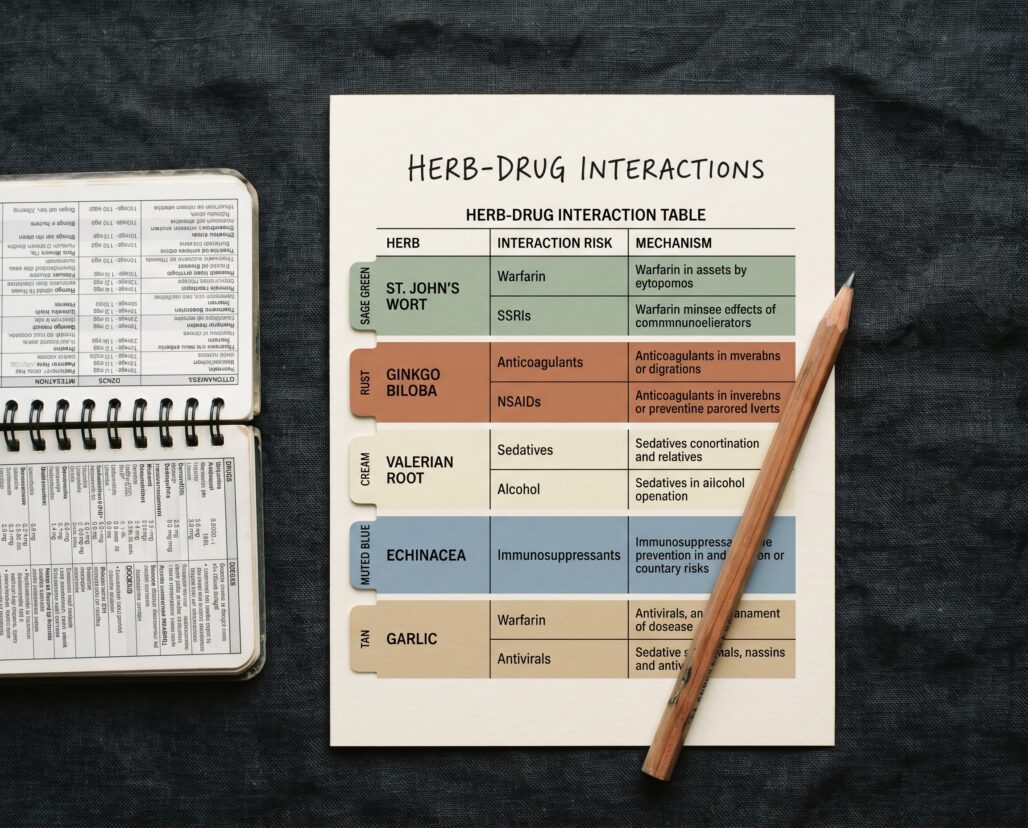
Drug interactions: the 2026 reference table {#drug-interactions}
Per Memorial Sloan Kettering's integrative herb database and the NCCIH rhodiola fact sheet, the following drug-interaction categories carry the most documented risk.
| Drug / Drug Class | Interaction Mechanism | Risk Level | Recommendation |
|---|---|---|---|
| SSRIs (fluoxetine, sertraline, escitalopram) | MAO inhibition; additive serotonergic load | Moderate | Avoid combination without prescriber guidance; case report of tachyarrhythmia |
| SNRIs (venlafaxine, duloxetine) | Same mechanism as SSRIs | Moderate | Same precaution as SSRIs |
| MAOIs (phenelzine, tranylcypromine) | Additive MAO inhibition; risk of hypertensive crisis | High | Avoid combination |
| Warfarin (Coumadin) | CYP2C9 inhibition; may alter warfarin metabolism and INR | Moderate | Monitor INR closely; consult prescriber |
| Phenytoin (Dilantin) | CYP2C9 inhibition; may increase phenytoin levels | Moderate | Consult prescriber |
| CYP3A4 substrates (cyclosporine, midazolam, many statins) | Preclinical CYP3A4 inhibition; clinical significance uncertain | Low-Moderate | Use caution with narrow-therapeutic-index CYP3A4 drugs |
| P-glycoprotein substrates (digoxin, certain chemotherapy agents) | Preclinical P-gp inhibition; clinical significance uncertain | Low-Moderate | Flag to prescriber; especially relevant for cardiac or oncology medications |
| Stimulants (amphetamines, methylphenidate, ADHD medications) | Additive stimulant effect; compounds jitteriness and insomnia risk | Moderate | Avoid combination; if required, use lowest rhodiola dose and monitor |
| Caffeine | Additive CNS stimulant effect at higher rhodiola doses | Low-Moderate | Reduce caffeine intake when taking rhodiola above 200 mg |
| Antihypertensives (losartan, others) | Documented interactions with losartan; mechanism not fully characterized | Moderate | Monitor blood pressure; flag to prescriber |
A plain-language note: the CYP3A4 and P-glycoprotein interactions are based on preclinical (non-human) data. The clinical significance in humans remains unestablished. But the real question isn't whether the RCT has been done — it's whether you want to find out in real time when you're on a medication with a narrow therapeutic index.
The real question isn't whether rhodiola works in isolation — it's whether the human dose proves out alongside the prescription medications millions of adults already take.
Who should skip rhodiola {#who-should-skip-rhodiola}
Several populations have a clear rationale to avoid or delay starting rhodiola.
Strong skip: anyone on prescription antidepressants. The MAO-inhibiting activity and serotonergic case-report data make the SSRIs/SNRIs/MAOI combination the highest-priority concern. This is not about theoretical biochemistry; there is a published case of tachyarrhythmia in a young healthy woman who combined rhodiola and antidepressants for three days. An adaptogen brand can have impressive marketing and still be genuinely risky in this combination.
Strong skip: anyone on warfarin or narrow-therapeutic-index anticoagulants. CYP2C9 inhibition is enough of a documented risk to warrant a conversation with a prescriber before starting. Warfarin's INR window is narrow; even modest metabolic interference can push someone out of the therapeutic range.
Strong skip: pregnancy and breastfeeding. Per the NCCIH fact sheet, "little is known about whether it's safe to use rhodiola during pregnancy or while breastfeeding." No adequately sized safety study exists. With an adaptogen, the burden of proof runs toward safety, and that evidence does not exist here.
Conditional skip: people with anxiety disorders or stimulant sensitivity. At lower doses (100–200 mg), rhodiola may be manageable for anxious individuals. At doses above 400 mg or combined with caffeine, the stimulant-like side effects can amplify rather than reduce anxiety symptoms.
Conditional skip: anyone with cardiovascular medication. The losartan interaction flag and the tachyarrhythmia case report are enough to warrant a prescriber sign-off, particularly for anyone on anti-arrhythmics or multiple blood-pressure medications.
| Population | Recommended action |
|---|---|
| On SSRIs, SNRIs, or MAOIs | Avoid without prescriber guidance |
| On warfarin or phenytoin | Discuss with prescriber; monitor INR |
| Pregnant or breastfeeding | Avoid |
| On ADHD stimulant medications | Avoid without prescriber guidance |
| Caffeine-sensitive, anxious at baseline | Start at 100 mg, morning only; assess tolerance |
| On cardiovascular medications | Flag to prescriber before starting |
Frequently asked questions {#frequently-asked-questions}
Can rhodiola cause insomnia?
Yes, and it is the most commonly reported side effect in people who take rhodiola in the afternoon or evening. Rhodiola has stimulating properties at clinical doses, and taking it after noon can shift sleep onset by 30 minutes to over an hour in sensitive individuals. Morning-only dosing eliminates most of this risk.
Can you take rhodiola with an SSRI?
This combination should not be attempted without explicit prescriber sign-off. The case-report literature includes a documented tachyarrhythmia in a young woman who combined rhodiola and antidepressants, and rhodiola's MAO-inhibiting activity creates a theoretical additive serotonergic burden. The risk is not large-population epidemiology, but it is real enough to require a prescriber's judgment, not a self-service decision.
Does rhodiola raise blood pressure?
NCCIH notes documented interactions between rhodiola and losartan, an antihypertensive. Whether rhodiola raises or lowers individual blood pressure is context-dependent; at higher doses, the stimulant-like effects can include transient blood-pressure elevation in sensitive individuals. Anyone on antihypertensive medication should discuss rhodiola use with their prescriber before starting.
What is the safest dose of rhodiola?
Clinical trials have used 200–576 mg of standardized extract (3% rosavins, 1% salidroside) daily without serious adverse events in screened participants. Most clinicians familiar with rhodiola suggest beginning at 100–200 mg daily, taken in the morning, and reassessing at four weeks. Higher doses (600–1,000 mg) increase the likelihood of stimulant side effects without a proven additional benefit in the published trial literature.
Can I take rhodiola and coffee together?
At low doses (100–200 mg), the combination is generally tolerable for people who are not caffeine-sensitive. At higher rhodiola doses (400 mg or above), the additive stimulant burden from caffeine can produce jitteriness, elevated heart rate, and insomnia. Reducing or eliminating caffeine is a practical first step if you experience these effects on rhodiola.
Is rhodiola safe long-term?
Most clinical evidence covers 4–12 weeks of use. Long-term safety data beyond that window are sparse. The NCCIH describes rhodiola as "possibly safe for up to 12 weeks," which is the extent of current trial evidence. Some practitioners suggest cycling (e.g., taking a 2–4 week break after 8–12 weeks of use), though no human RCT has tested whether cycling changes the risk-benefit profile.
Who should definitely not take rhodiola?
The clearest contraindications are: pregnancy or breastfeeding (insufficient safety data), current use of MAOIs (additive inhibition risk), active warfarin therapy without prescriber monitoring, and use alongside stimulant ADHD medications without medical supervision.
Conclusion: the bottom line on rhodiola side effects
Rhodiola rosea has a better tolerability profile than most adaptogens at clinical doses of 200–576 mg daily. In controlled trials, adverse events were mostly mild and transient, and the 2015 Mao et al. trial found rhodiola produced significantly fewer adverse events than sertraline in a head-to-head comparison. That is genuinely reassuring.
But the honest picture has two parts. First, the biphasic dose problem: doses above 500 mg shift rhodiola from an adaptogen into a stimulant for many users, producing insomnia, jitteriness, and elevated blood pressure — exactly the cluster of symptoms people use adaptogens to escape. More is not better. Second, the drug-interaction profile is more substantive than most herbal supplement labels communicate. The CYP2C9 and MAO-inhibiting activity create real risks for people on warfarin, antidepressants, stimulant ADHD medications, and certain cardiovascular drugs.
That may be appropriate for an otherwise-healthy adult with no prescription medications — but unnecessary risk for anyone with a complex medication profile.
Next steps:
- For the full evidence base on what rhodiola actually does (not just what to avoid), read the Rhodiola rosea Complete Guide: Evidence, Dosing, and What the Research Shows
- For how rhodiola compares to other adaptogens across the full safety and side-effect spectrum, see the Adaptogen Side Effects Master List: What Every Common Herb Actually Does
- If you are actively comparing products, the Best Rhodiola Supplement: How to Read the Label and Choose a Verified Extract covers what standardization markers actually matter
This article is for informational purposes and not medical advice. Herbal adaptogens — even traditional ones — can interact with thyroid medication, antidepressants, anticoagulants, immunosuppressants, blood-pressure drugs, and more. Consult a licensed physician before starting any adaptogen, particularly if you are pregnant, nursing, taking prescription medications, or managing a chronic condition.
