
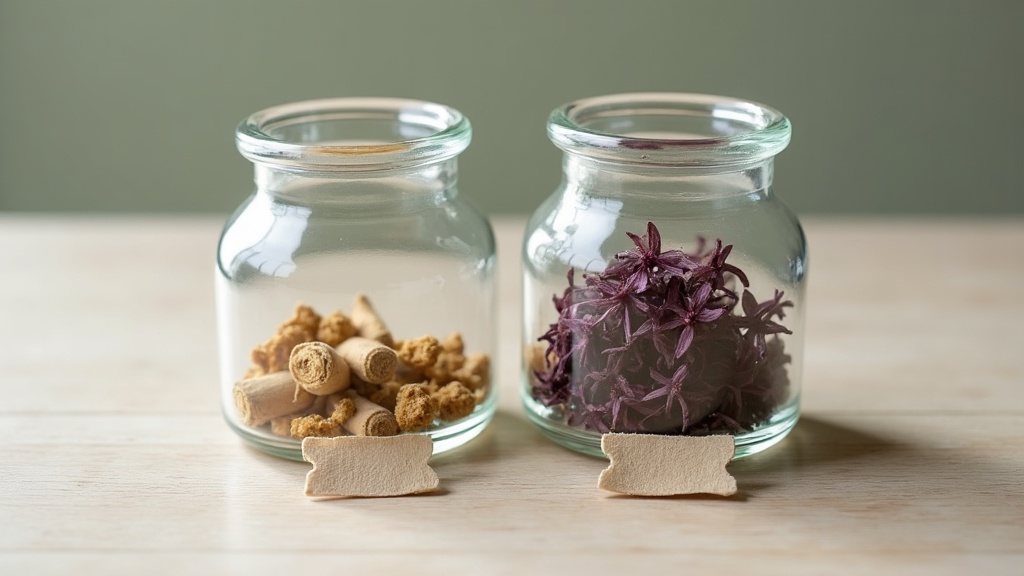
If you're trying to choose between valerian vs passionflower for sleep, you've noticed both show up in nearly every "natural sleep aid" stack, both claim to act on GABA, and almost no one tells you which to try first.
Quick Answer: which herb to actually try first
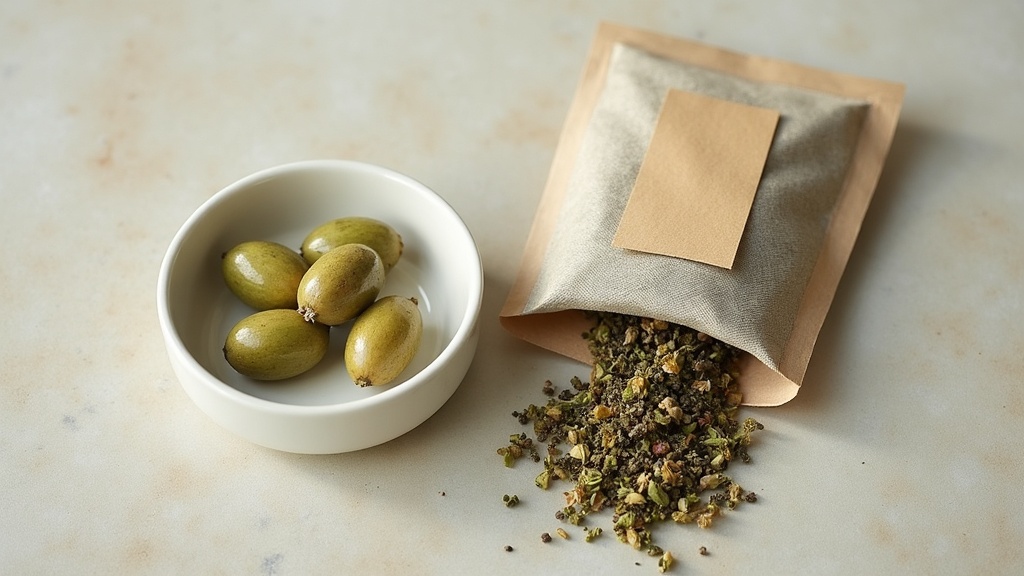
The honest bottom line: valerian is the better fit if your sleep complaint is mainly long sleep-onset latency or middle-of-the-night waking and you're willing to dose nightly for 2 to 4 weeks before judging; passionflower is the better fit if your sleeplessness is clearly anxiety-driven, if you want something palatable as a tea, or if you cannot tolerate valerian's smell.
- Best for sleep-onset latency and maintenance, willing to build up over weeks: valerian root, standardized extract at 300 to 600 mg of root equivalent (look for 0.8% valerenic acid), taken 30 to 90 minutes before bed
- Best for anxiety-driven sleeplessness or acute use: passionflower (Passiflora incarnata), standardized extract at 250 to 500 mg, or a tea brewed from about 2 g of dried herb
- Reasonable to combine at modest doses: both bind at GABA-A sites; many traditional sleep stacks pair them, and the mechanistic logic is real even if direct head-to-head RCT data are limited
- Not ideal for: anyone taking benzodiazepines, Z-drugs, opioids, or other CNS depressants without clinician sign-off; anyone driving or operating heavy equipment that evening; pregnancy or breastfeeding (limited safety data on both)
- Do this FIRST: rule out a clinical insomnia disorder. Chronic insomnia, per the AASM 2021 clinical practice guideline, should be treated with cognitive behavioral therapy for insomnia (CBT-I) before a botanical adjunct. Herbs are support, not standard of care.
What these two herbs actually are, briefly
Valerian (Valeriana officinalis) is the dried root of a flowering plant Western herbalism has used for restless sleep and "nervous tension" since the Middle Ages. Modern phytochemistry attributes its activity to valerenic acid, valepotriates, and a handful of volatile constituents. The mechanism most cited is GABAergic: valerenic acid binds at the beta-3 subunit of the GABA-A receptor and modulates GABA reuptake, producing a mild sedative tone. There is also evidence of adenosine receptor activity. The smell, often compared to old gym socks, is why most modern users prefer capsules to tincture.
Passionflower (Passiflora incarnata) is the aerial parts of a climbing vine native to the southeastern United States and parts of Central and South America. Traditional Indigenous and later Western herbal use centered on anxiety and "nervous restlessness" more than sleep per se. The active constituents are flavonoids including chrysin and vitexin, with proposed activity at GABA-A receptors including the benzodiazepine binding site. Brewed as a tea from dried herb, the taste is mild and grassy.
Neither herb is treatment for clinical insomnia disorder. The AASM 2021 chronic insomnia guideline places CBT-I as first-line and reserves pharmacologic options (Z-drugs, dual orexin receptor antagonists, low-dose doxepin) for select cases. Botanicals like valerian and passionflower are best framed as adjuncts for low-grade, stress-driven sleep complaints in adults who do not meet criteria for diagnosed insomnia.
Mechanism: where these herbs actually act

Both herbs converge on the GABA system, which is the same neurotransmitter system that benzodiazepines and Z-drugs amplify. That convergence is the source of both the plausible benefit and the most important safety caution.
Mechanistically, valerenic acid binds at the beta-3 subunit of the GABA-A receptor and modulates GABA reuptake, producing a mild positive allosteric effect at the channel level. Valerian constituents also act at adenosine A1 receptors, one of the pathways caffeine antagonizes. Passionflower's flavonoids (chrysin, vitexin) show binding at the benzodiazepine site of the GABA-A receptor in preclinical work, which is mechanistically closer to how diazepam acts than to how alcohol acts. Whether either herb translates that receptor activity into a clinically meaningful sleep effect at the doses people actually take is a separate question, and the evidence is hedged.
The traditional dose context matters. Traditional Western herbalism used valerian as a whole-root decoction or tincture, often at doses higher than modern capsule protocols, taken consistently for weeks. Modern RCTs typically use 300 to 600 mg of a standardized dried extract. Passionflower in tradition was brewed as a tea from several grams of dried aerial parts; modern trials use a 250 to 500 mg standardized extract or a tea from about 2 g of dried herb. These are not the same intervention as the traditional protocol, which is one reason a single capsule on a stressful night sometimes underwhelms compared to a 2- to 4-week course.
Actionable takeaway: if you only take one dose on one stressful night, do not draw conclusions. Both herbs were validated in trials and traditions that ran several days to weeks.
Valerian on the trial evidence
The most cited modern review on valerian for sleep is the Bent 2006 systematic review and meta-analysis in the American Journal of Medicine, which pooled 16 trials and concluded valerian "might improve sleep quality without producing side effects," but flagged the included trials as small, heterogeneous, and at moderate-to-high risk of bias. Effect sizes on subjective sleep quality were modest; objective polysomnography signals were inconsistent.
The Taibi 2009 trial is the honest counterweight. Investigators randomized 16 older women with insomnia to 300 mg of valerian extract or placebo, 30 minutes before bed for 2 weeks, with polysomnography and actigraphy. Valerian did not outperform placebo on any objective sleep measure. Small trial, clean design.
The Fernandez-San-Martin 2010 meta-analysis pooled available evidence and concluded subjective improvement was modest and objective polysomnography support was weak. Together the body of evidence reads: valerian probably helps some people a little, particularly with subjective sleep quality, and the effect most often shows up after 2 to 4 weeks of nightly use rather than on a single dose.
Dose used in trials. 300 to 600 mg of standardized valerian extract, typically standardized to 0.8% valerenic acid, taken 30 to 90 minutes before bed. Some protocols dose twice daily for the first 2 weeks then taper to bedtime only.
Form to look for. Standardized extract in capsules, with the percent valerenic acid disclosed. Tinctures work, but the smell makes them hard to use consistently.
Skip if. You are taking a benzodiazepine, a Z-drug, an opioid, or another sedating medication; you are pregnant or breastfeeding (data are limited and the NCCIH valerian fact sheet advises caution); you have hepatic impairment (rare hepatotoxicity reports exist in case series); or you need to drive that evening.
Passionflower on the trial evidence
Passionflower has a smaller body of sleep-specific RCTs but a more interesting body of anxiety RCTs that bear on sleep indirectly.
The cleanest direct sleep trial is the Ngan and Conduit 2011 double-blind placebo-controlled crossover, which gave 41 adults a daily cup of passionflower tea (2 g of dried herb) versus a placebo tea for 7 nights each, with sleep diary outcomes. The passionflower week produced a small but statistically significant improvement in subjective sleep quality. Modest effect size, 1-week duration, tea rather than extract.
On the anxiety side, the Movafegh 2008 RCT gave 60 patients 500 mg of Passiflora incarnata 90 minutes before surgery and found significant reductions in preoperative anxiety versus placebo, without delaying anesthesia recovery. The Akhondzadeh 2001 trial compared passionflower extract to oxazepam in 36 adults with GAD over 4 weeks and found comparable anxiolytic effect with less daytime cognitive impairment in the passionflower arm. The anxiety data are why this herb is the better default when sleeplessness is racing-mind in character.
Dose used in trials. 250 to 500 mg of standardized extract, or tea brewed from approximately 2 g of dried herb steeped 10 minutes. The Movafegh anxiety dose was 500 mg, single dose 90 minutes preoperatively.
Form to look for. A standardized Passiflora incarnata extract with the flavonoid (vitexin) content disclosed, or dried loose herb or tea bags from a reputable supplier. Many drug-store sleep teas already include passionflower.
Skip if. You are taking benzodiazepines, Z-drugs, or other CNS depressants; you are pregnant or breastfeeding (limited safety data, traditional cautions exist about uterine stimulant activity at high doses); you are taking warfarin (case reports of altered INR exist, mechanism unclear); or you are driving that evening.
Direct head-to-head: where they actually differ
Direct head-to-head RCTs of valerian vs passionflower are not abundant. The choice is usually made on symptom profile, tolerability, and format preference rather than on a clean trial comparison. The differences worth knowing:
| Question | Valerian | Passionflower |
|---|---|---|
| Best primary indication | Long sleep-onset latency, restless sleep | Anxiety-driven sleeplessness, racing mind |
| Onset of effect | Often 2 to 4 weeks of nightly use | Faster perceived effect, sometimes same night |
| Trial dose range | 300 to 600 mg standardized extract | 250 to 500 mg extract, or 2 g tea |
| Common format | Capsules (tincture exists but smells) | Tea or capsule, palatable |
| Smell and taste | Notorious foul odor (old socks) | Mild, grassy, drinkable as tea |
| Primary mechanism | GABA-A beta-3 binding, adenosine A1 | GABA-A benzodiazepine site, flavonoids |
| Strongest evidence | Bent 2006 meta (modest), Fernandez 2010 | Ngan 2011 (sleep), Akhondzadeh 2001 (anxiety) |
| Daytime carryover risk | Possible at higher doses | Generally lower, but not zero |
A reasonable starting framework: if your sleep problem reads as "I lie there 45 minutes before I can fall asleep, and once I do I sleep alright," start with valerian and commit to 2 to 4 weeks. If it reads as "my mind will not stop and I'm tense at bedtime," start with passionflower, either 500 mg of extract or a strong cup of tea 30 to 60 minutes before bed. Both can be combined at modest doses; commercial sleep stacks (e.g., Nature's Way Valerian-Passionflower) pair them on this exact mechanistic logic.
Actionable takeaway: pick one for the first 2 weeks, single-variable. If you stack from the start, you will not know what is working.
Safety: the GABA additive issue is not theoretical
Both herbs act on GABA. So do benzodiazepines (alprazolam, diazepam, lorazepam), Z-drugs (zolpidem, eszopiclone), barbiturates, alcohol, and gabapentinoids. Stacking GABAergic agents is the most common path to oversedation, falls in older adults, and impaired driving. Per Drugs.com interaction monographs, valerian and passionflower both carry additive sedation warnings with these classes. If you are already on a sedating medication, bring the herb up with your prescriber before adding it.
Alcohol deserves the same caution. A glass of wine plus a passionflower tea plus a 500 mg valerian capsule is three GABAergic exposures stacked, and the next-morning carryover will reflect that.
Driving caution is real. Both can produce next-day grogginess at higher doses, particularly in older adults. Do not dose for the first time before an early drive.
Pregnancy and breastfeeding: skip both. Human safety data are limited; the NCCIH passionflower fact sheet flags this directly, and valerian guidance is similar. If pregnancy-safe sleep support is the question, magnesium glycinate at the RDA and CBT-I-style sleep hygiene are the safer starting points.
When to stop self-treating and see a clinician
A botanical sleep adjunct is appropriate for low-grade, stress-driven sleep complaints in otherwise healthy adults. Signs the conversation should move to a clinician:
- Sleep difficulty over 3 months meeting criteria for chronic insomnia disorder (CBT-I is first-line per AASM)
- New or worsening daytime fatigue with witnessed snoring, gasping, or apnea episodes (rule out obstructive sleep apnea, not with an herb)
- Anxiety severe enough to impair work, relationships, or daytime function (mental-health referral)
- You are on a sedating prescription medication and want to add an herb on top
- Pregnancy, breastfeeding, or perimenopausal sleep complaints that warrant clinical evaluation
If anxiety symptoms include any thoughts of self-harm, contact the 988 Suicide & Crisis Lifeline (US) or your local crisis line immediately. A botanical is not the right tool for that conversation.
FAQ
Can I take valerian and passionflower together?
Yes, at modest doses. Many traditional sleep blends combine them and they hit overlapping but slightly different GABA-A sites. The caveat: if you start both at full dose at once, you cannot tell which one is helping or which is causing morning grogginess. Pick one for 2 weeks, then layer.
How long until valerian works?
Often 2 to 4 weeks of nightly use, especially for the sleep-quality signal. A single dose on a stressful night often underwhelms. If after 4 weeks at 600 mg standardized extract you see nothing, it probably isn't your herb.
Is passionflower tea as effective as a capsule?
The Ngan 2011 trial used tea from 2 g of dried herb and showed a modest signal. The Movafegh anxiety trial used a 500 mg standardized extract. Both formats have evidence; pick the one you'll use consistently.
Can I drive after taking valerian?
Not the first time you use it, and not on an early-morning day. Daytime carryover is real, especially at the higher end of the dose range and in older adults.
Are these herbs safe in pregnancy?
Safety data are limited for both. Standard guidance: avoid during pregnancy and breastfeeding and ask an OBGYN about non-pharmacologic sleep strategies first.
Conclusion: the bottom line on valerian vs passionflower
Valerian and passionflower are two traditional, GABAergic sleep herbs with modest, hedged RCT signals. Neither is a cure for insomnia, and neither replaces CBT-I or appropriate psychiatric care when those are indicated. The realistic effect size is small but real for the right person. Valerian is the better default for long sleep-onset latency or restless sleep when you'll commit to 2 to 4 weeks of nightly use. Passionflower is the better default for anxiety-driven sleeplessness, for tea drinkers, and for people who cannot tolerate valerian's smell. Stacked at modest doses, the mechanistic logic holds, but introduce them one at a time so you can tell which is doing what.
Next steps
- Audit your sleep first: caffeine timing, evening light, screen-off cutoff, and a wind-down routine. Herbs work better in a sleep environment that isn't fighting them.
- Start with one herb at the trial dose for at least 2 weeks before judging. For background on related botanicals, see Chamomile for Sleep: What 1,500-mg Standardized Extract RCTs Actually Show.
- If anxiety is the dominant driver, read Best Supplements for Anxiety (Natural Options) before stacking, and consider a clinical evaluation if symptoms are impairing daily function.
- For more on how we vet evidence and brand quality, see How We Review Supplements and the Jonathan Reynolds author page.
This article is for informational purposes and not medical advice. Botanical supplements can interact with prescription medications and existing health conditions. Consult a licensed clinician before starting valerian, passionflower, or any sleep supplement, particularly if you are pregnant, breastfeeding, taking sedating medications, or managing a chronic condition.
Reviewed by Jonathan Reynolds, ND, focused on botanical and naturopathic protocols.
