
If you're searching "adaptogens during pregnancy," you're likely weighing the stress of pregnancy against what feels like a low-risk herbal option. The honest answer is: for the vast majority of adaptogens, the safety data during pregnancy is either absent, insufficient, or carries specific contraindications that make the default position clear — do not use without explicit prescriber approval. This article maps what the evidence actually says herb by herb: which adaptogens carry specific documented risks, which have insufficient data but no clearance, what happens to risk across the three trimesters, and what the postpartum and breastfeeding picture looks like. You will also find the underlying reasoning for each AVOID call, rather than a blanket disclaimer with no substance behind it.
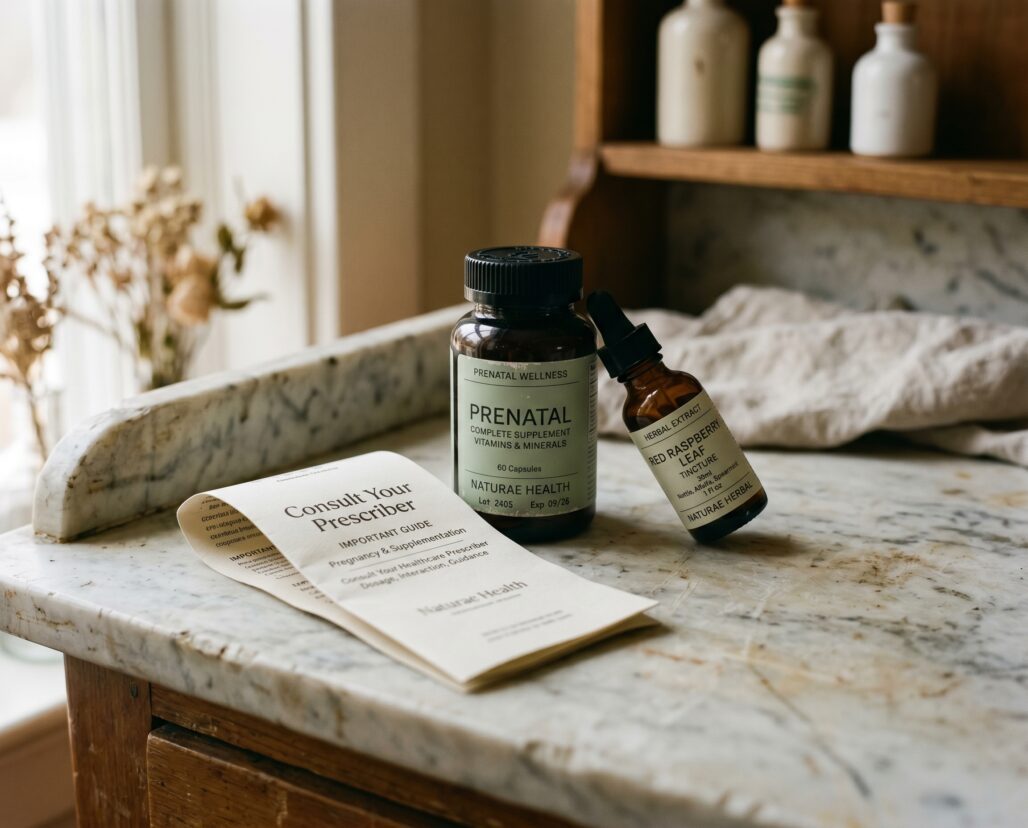
Summary: the quick answer on adaptogens during pregnancy
Short answer: Most adaptogens have not been studied in pregnant humans. Several carry animal-model signals or traditional anti-fertility histories that warrant genuine caution. A few have documented human evidence of harm. None have received formal pregnancy safety clearance equivalent to FDA Category A.
Best for (in pregnancy context): No adaptogen earns a "best for" designation here. The safest path during pregnancy is to pause all non-prescribed supplements and discuss reinstatement of specific herbs with your OB-GYN or midwife after delivery.
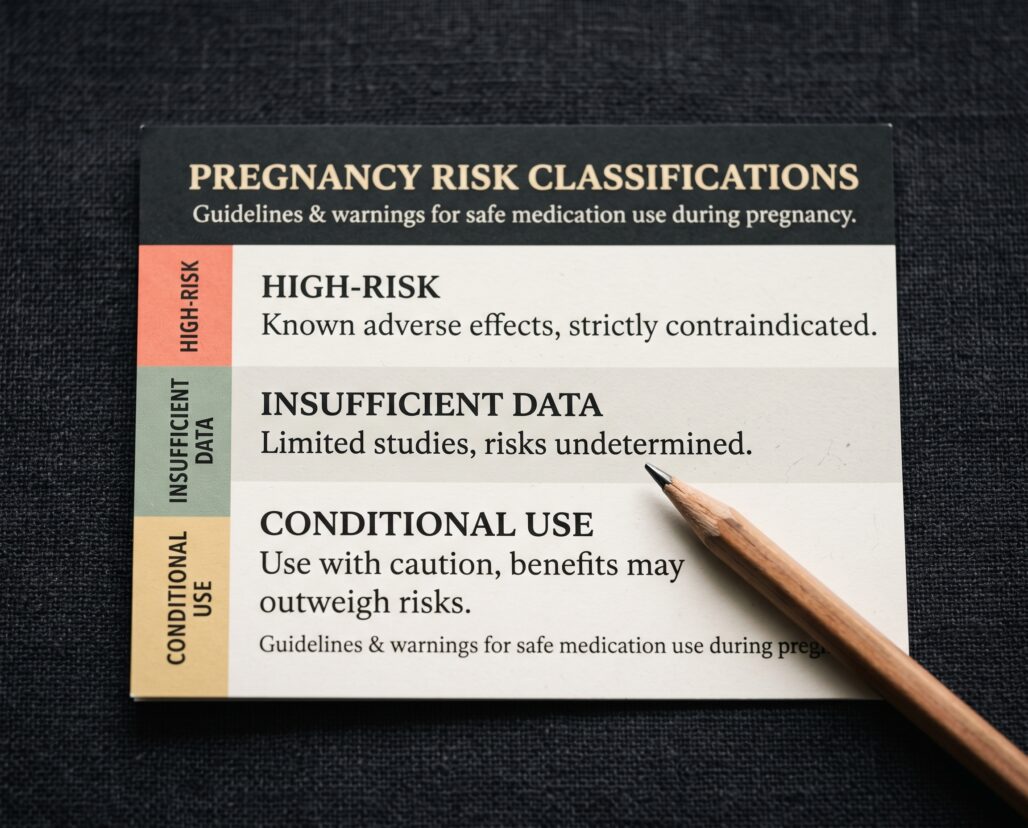
Not ideal for — the high-risk list:
- Ashwagandha — documented oxytocic potential and abortifacient history; NCCIH and MSK both advise against use during pregnancy
- Holy basil (tulsi) — traditional anti-fertility use supported by animal anti-fertility data; insufficient human safety clearance
- Licorice root — human epidemiological evidence of preterm birth and cognitive harm in offspring at moderate-to-heavy consumption
- Eleuthero (Siberian ginseng) — insufficient pregnancy data; MSK advises against breastfeeding use; immune modulation concerns
- Rhodiola — "little is known" per NCCIH; mixed animal signals in closely related species; no pregnancy clearance
- St John's Wort — not a classic adaptogen, but often grouped with adaptogens in supplement stacks; neonatal effects observed in some studies
Caution zone (still default-avoid, consult prescriber):
- Lion's mane — no human pregnancy data; food-mushroom history is reassuring but not evidence
- Reishi and cordyceps — limited data; immune modulation concerns
- Schisandra — traditional TCM use exists but modern guidance is inconsistent; drug metabolism interactions add uncertainty
Decision shortcut: If you are pregnant or breastfeeding and taking or considering any adaptogen: stop, and discuss reinstatement with your prescriber. Absence of confirmed harm is not confirmed safety.
What you'll find in this guide
- Why the default position is AVOID
- High-risk adaptogens: specific contraindications
- Caution-zone adaptogens: insufficient data
- Pregnancy phase risk: trimester by trimester
- Postpartum and breastfeeding considerations
- What to tell your prescriber
- Frequently asked questions
Why the default position is AVOID {#why-default-is-avoid}
Pregnancy inverts the usual herbal supplement calculus. The question during pregnancy is not "is there evidence of harm?" but "is there evidence of safety at the doses a person would actually use?"
For nearly every adaptogen, the honest answer is no. No large placebo-controlled RCT of any adaptogen in pregnant humans exists. The FDA's DSHEA framework classifies most adaptogens as dietary supplements, not drugs — meaning pre-market reproductive safety testing is not required. Per a 2022 review (Sarecka-Hujar and Szulc-Musioł, PMID 35057067) in Pharmaceutics, "all herbal products should be used with special caution in pregnancy" because they "contain active substances that can affect fetal development."
Traditional use is not a safety proxy. The fact that a population used an herb during pregnancy for centuries tells you about cultural history. It tells you nothing about teratogenicity, dose-dependent effects, or interactions with the endocrine system of a pregnant person who may also be taking progesterone or antidepressants.
Actionable takeaway: Absence of evidence of harm is not evidence of absence. With any supplement during pregnancy, the burden of proof is on safety, not danger.
High-risk adaptogens: specific contraindications {#high-risk-adaptogens}
These adaptogens have either documented human evidence of harm, animal-model signals of reproductive concern, or traditional histories of anti-fertility use that warrant a firm AVOID position during pregnancy.
Ashwagandha (Withania somnifera)
Ashwagandha is the most widely consumed adaptogen in the US market, and it carries the most documented pregnancy concern. The NCCIH ashwagandha fact sheet states: "Ashwagandha should be avoided during pregnancy." Memorial Sloan Kettering's integrative herb database goes further: "Don't use ashwagandha if you're pregnant because it may cause abortion."
The traditional Ayurvedic record includes references to ashwagandha preparations being used to induce uterine contractions — an oxytocic effect. A 2025 systematic review (Tallon et al., PMID 40887707) found "evidence supporting significant teratogenic or abortifacient activity remains inconclusive," noting that some historical claims suffered from citation distortion. Newer rat toxicology studies showed no significant reproductive toxicity at human-equivalent doses. That reassurance matters — but "inconclusive and data-limited" is not a safety clearance, and neither NCCIH nor MSK has updated its guidance. AVOID during pregnancy and while trying to conceive.
Licorice root (Glycyrrhiza glabra and uralensis)
Licorice is the only adaptogen-adjacent herb on this list with robust human epidemiological evidence of fetal harm. The mechanism is documented: glycyrrhizin (the active compound) inhibits placental 11-beta-hydroxysteroid dehydrogenase type 2, the enzyme that protects the fetus from high maternal cortisol levels. When this barrier is disrupted, the fetal HPA axis is chronically exposed to elevated cortisol.
Two landmark studies quantify the risk. A 2001 Finnish cohort (Strandberg et al., n=1,049, PMID 11390327) found that heavy glycyrrhizin consumption (more than 500 mg/week) was associated with an odds ratio of 2.5 for birth before 38 weeks. A 2002 case-control study (Strandberg et al., n=202, PMID 12396997) found that association with early preterm birth (before 34 weeks) carried an odds ratio of 3.07. A 2017 prospective follow-up study (Räikkönen et al., n=378 children, PMID 28158597) linked heavy maternal glycyrrhizin consumption to a 7-point IQ reduction and a 3.3-fold increase in ADHD risk in children examined at 8 to 12 years of age.
The MSK licorice database entry summarizes: "Heavy licorice use can cause early pre-term births." The NCCIH licorice fact sheet concurs, adding that deglycyrrhizinated licorice (DGL) may be safer, but even DGL carries insufficient pregnancy safety data for confident clearance. AVOID.
Holy basil / tulsi (Ocimum sanctum)
Holy basil has a documented traditional anti-fertility history. Animal models have confirmed anti-spermatogenic and anti-fertility effects (PubMed 4344433): extracts reduced sperm count and motility in rodent studies, and the effects were reversible after withdrawal. No human pregnancy RCT exists. Traditional anti-fertility use combined with animal reproductive data is a compound warning signal. The absence of a documented human fetal harm case does not mean the herb is safe — it more likely reflects that no one has studied it in pregnant humans at all. AVOID during pregnancy and while trying to conceive.
Eleuthero (Eleutherococcus senticosus)
Also called Siberian ginseng, eleuthero has limited human clinical data overall and essentially no pregnancy-specific data. MSK's Siberian ginseng entry advises against breastfeeding use: "We do not know if this herb is safe to take while breastfeeding." The immune modulation properties of eleutherosides are a concern during pregnancy, where immune regulation is already complex. AVOID.
Rhodiola rosea
NCCIH's rhodiola fact sheet is unusually direct in its brevity: "Little is known about whether it's safe to use rhodiola during pregnancy or while breastfeeding." Animal studies on closely related species (Rhodiola kirilowii) found that one extract variant increased the number of mated females without offspring, and another showed elevated neonatal deaths in early postnatal days (PubMed 26155165). These are animal signals in a related species, not direct human data. But in the context of no human safety data, they reinforce AVOID. MSK also does not clear rhodiola for pregnancy use.
St John's Wort (Hypericum perforatum)
St John's Wort frequently appears in adaptogen-labeled stress stacks, though it is technically not a classic adaptogen. Its mechanism — primarily serotonin reuptake inhibition and CYP3A4 induction — creates compound risks during pregnancy: potential effects on the fetal serotonin system and drug interactions with medications commonly used in pregnancy, including progesterone supplements and antiretrovirals. European regulatory guidance recommends avoiding use during pregnancy. AVOID.
Caution-zone adaptogens: insufficient data {#caution-zone-adaptogens}
These adaptogens do not have the same specific contraindication signals as the high-risk group. But insufficient safety data in pregnancy is itself a reason for the default-AVOID position.
Lion's mane (Hericium erinaceus)
Lion's mane occupies a slightly different position. Its long culinary mushroom history across East Asian food traditions offers more historical reassurance than a purified extract. General toxicology data in animals is reassuring: a 13-week oral toxicity study (PubMed 31002635) found no significant toxicological effects. But "no general toxicology harm" is a lower bar than "demonstrated safe for fetal development." Lion's mane's nerve-growth-factor-stimulating compounds (hericenones and erinacines) cross the blood-brain barrier in animal models — their effect on the developing fetal brain is unstudied. Concentrated supplement use during pregnancy: consult prescriber. Default: AVOID extract supplementation.
Reishi (Ganoderma lucidum) and cordyceps
Both reishi and cordyceps lack "clinical studies regarding safety, efficacy, chronic use, teratogenicity, mutagenicity, and genotoxicity," per MSK's reishi database entry. Reishi's beta-glucan immunomodulatory effects are the primary concern: immune modulation during pregnancy can affect placental function and fetal immune programming in ways not studied. AVOID without prescriber guidance.
Schisandra (Schisandra chinensis / Wu Wei Zi)
Schisandra has a longer TCM pregnancy use history than most adaptogens in this group. Modern guidance is inconsistent: no clear human teratogenicity data exists, but schisandra's potent CYP3A4 and P-glycoprotein inhibition significantly affects drug metabolism — a real concern in pregnancy when many women take prescription medications. The interaction with tacrolimus is documented in humans: schisandra substantially increased blood levels per MSK. AVOID during pregnancy unless a prescriber has reviewed the full medication list.
Pregnancy phase risk: trimester by trimester {#pregnancy-phase-risk}
The risk profile of adaptogens is not uniform across pregnancy. Organogenesis — the formation of fetal organs — occurs primarily during the first trimester (weeks 3-10), the window of maximum teratogenic vulnerability.
First trimester (weeks 1-12): Oxytocic herbs (ashwagandha, potentially holy basil) are most dangerous here. Glycyrrhizin from licorice disrupts placental cortisol barriers from early in gestation. AVOID all adaptogens.
Second trimester (weeks 13-26): Organ formation is largely complete, but the fetal brain, lungs, and endocrine system continue rapid development. Licorice's cognitive harm data (Räikkönen 2017) spans the full pregnancy. Immune-modulating adaptogens may influence placental immune dynamics in this trimester. AVOID all adaptogens.
Third trimester (weeks 27-40): Uterotonic herbs carry particular risk here — premature contractions can trigger early labor. The Strandberg 2001 cohort documented preterm birth associations in this final gestational window. AVOID all adaptogens.
Actionable takeaway: There is no trimester where adaptogens are cleared for unsupervised use. The AVOID position applies throughout.
Postpartum and breastfeeding considerations {#postpartum-breastfeeding}
The postpartum period is not a green light for adaptogen resumption.
Most adaptogens have not been studied in breastfeeding women. Lipophilic compounds — including withanolides in ashwagandha, glycyrrhizin in licorice, and lignans in schisandra — can concentrate in breast milk at levels that differ from maternal serum. The nursing infant has an immature liver and developing endocrine system with no characterized threshold for these compounds.
NCCIH advises against ashwagandha during breastfeeding. MSK concurs, and separately advises against eleuthero during breastfeeding. For licorice, the same glycyrrhizin that disrupts fetal cortisol exposure can enter breast milk. For holy basil, rhodiola, reishi, cordyceps, schisandra, and lion's mane: no breast milk transfer data exists. The absence of data is not clearance.
Breast milk transfer works like a one-way valve with an unknown flow rate: you cannot know how much of a compound is reaching your infant, because the studies have not been done. AVOID supplement-form adaptogens while breastfeeding; discuss resumption with your prescriber once breastfeeding ends.
What to tell your prescriber {#what-to-tell-your-prescriber}
The most useful conversation with your prescriber is specific, not vague. Bring the brand name, dose in mg, frequency, extract type (standardized vs. bulk root powder), your full supplement list, and all prescription medications — especially thyroid drugs, anticoagulants, progesterone, and antidepressants.
Your prescriber may be unfamiliar with specific adaptogens. The NCCIH herb fact sheets and MSK's integrative herbs database are evidence-based references appropriate to share.
Actionable takeaway: "I'm taking an adaptogen" is not enough for a prescriber to assess risk. Bring the specific product, dose, and full supplement list.
Frequently asked questions {#frequently-asked-questions}
Are any adaptogens safe during pregnancy?
No adaptogen has received a formal pregnancy safety clearance equivalent to FDA Category A. Most lack any human pregnancy safety data. The default recommendation from NCCIH, MSK, and most integrative medicine guidelines is to avoid all adaptogens during pregnancy unless a prescriber has specifically reviewed and approved use for that individual.
What if I took ashwagandha before I knew I was pregnant?
A brief early exposure at standard supplement doses is unlikely to cause severe harm based on available data, but you should inform your OB-GYN or midwife at your next appointment. Do not continue use. The 2025 systematic review (Tallon et al., PMID 40887707) found no definitive evidence of teratogenicity in animal studies at human-equivalent doses, but the concern is not zero, and ongoing exposure should stop.
Is licorice root tea dangerous in pregnancy?
It depends on the form. The Strandberg 2001 cohort (PMID 11390327) found preterm birth associations at heavy glycyrrhizin consumption (more than 500 mg/week) — levels that licorice root tea steeped strongly or consumed daily can reach. The NCCIH advises against "large amounts" of licorice during pregnancy. Avoid licorice root tea; occasional culinary licorice flavoring (usually anise oil, not actual licorice root) is a different exposure and is generally considered low risk.
Can I use adaptogens while breastfeeding?
Most adaptogens lack breast milk transfer data. Lipophilic active compounds can concentrate in breast milk at unpredictable levels. MSK explicitly advises against eleuthero during breastfeeding; NCCIH advises against ashwagandha. For all others, "no data" is not the same as "safe." When in doubt, do not take it.
What can I use for stress during pregnancy if not adaptogens?
This is a clinical question best answered by your OB-GYN or midwife. Non-pharmacological approaches with better human pregnancy safety records include cognitive behavioral therapy, mindfulness-based stress reduction, and regular physical activity cleared by your provider. Some prescribers may clear specific magnesium supplements for stress-related symptoms. The goal is not to leave a stress management gap — it is to fill it with options that have actual pregnancy safety data.
What about lion's mane mushroom in food, not supplements?
Consuming lion's mane as a cooked food ingredient is different from taking a concentrated extract. The traditional food use history is more reassuring because doses and bioavailability differ substantially from supplement form. That said, no human pregnancy data exists for any form of lion's mane. If you use it occasionally as a culinary mushroom, discuss it with your midwife at your next visit. Avoid concentrated extract capsules or tinctures during pregnancy without prescriber clearance.
Related reading
- The Complete Guide to Adaptogens: What They Are, How They Work, and What the Evidence Actually Shows
- Adaptogens and Medications: The Complete Interaction Reference
- Adaptogens Side Effects: The Master Reference List for 2026
This article is for informational purposes and not medical advice. Herbal adaptogens — even traditional ones — can interact with thyroid medication, antidepressants, anticoagulants, immunosuppressants, blood-pressure drugs, and more. Consult a licensed physician before starting any adaptogen, particularly if you are pregnant, nursing, taking prescription medications, or managing a chronic condition.
Conclusion: the bottom line on adaptogens during pregnancy
Most adaptogens lack adequate human pregnancy safety data. Licorice has the strongest human evidence of fetal harm — spanning preterm birth risk and cognitive outcomes in children. Ashwagandha, holy basil, and eleuthero have documented concerns from traditional anti-fertility use, animal models, or regulatory guidance that places them firmly in the AVOID column. Rhodiola, schisandra, reishi, cordyceps, and lion's mane share the same problem: no pregnancy safety data, no human clearance.
The default position across all three trimesters and during breastfeeding is: do not take adaptogens without prescriber review. When in doubt, do not take it.
Next steps:
- Discuss any current adaptogen use with your OB-GYN or midwife — bring the specific product name and dose
- To understand how adaptogens interact with prescription medications more broadly, read the complete drug interaction reference for adaptogens
- For adaptogen safety beyond pregnancy, the adaptogens side effects master list covers the documented adverse event profile for each major herb
