
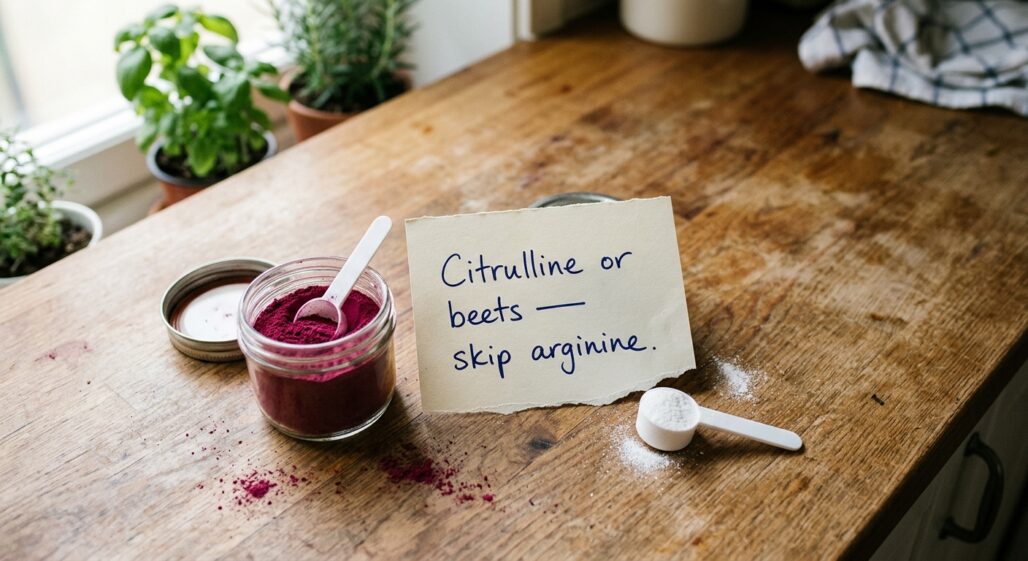
If you are shopping for the best nitric oxide supplements, you have probably noticed the aisle is split three ways: L-citrulline, beetroot nitrate, and L-arginine. The short answer: two of those three actually raise nitric oxide in your blood, and the most heavily marketed one, plain oral L-arginine, mostly does not. This article walks through how nitric oxide is made, why citrulline beats arginine on a technicality of digestion, what beetroot nitrate does that neither amino acid does, the real trial doses, and how to choose between them by goal. The two picks at the bottom are the ones I would keep in my own family's cabinet, because they are the only forms that survive contact with the gut.
Affiliate disclosure: this article contains affiliate links. As an Amazon Associate, UsefulVitamins.com earns from qualifying purchases at no extra cost to you.
Before you decide
Nitric oxide widens blood vessels, which is exactly what blood-pressure medication does, so the most important warning comes first. If you take nitrates for chest pain, PDE5 inhibitors like sildenafil, or any blood-pressure drug, talk to your prescriber before adding citrulline or beetroot, because stacking two vasodilators can drop your pressure further than you intend. This is general caution, not a diagnosis of your situation.
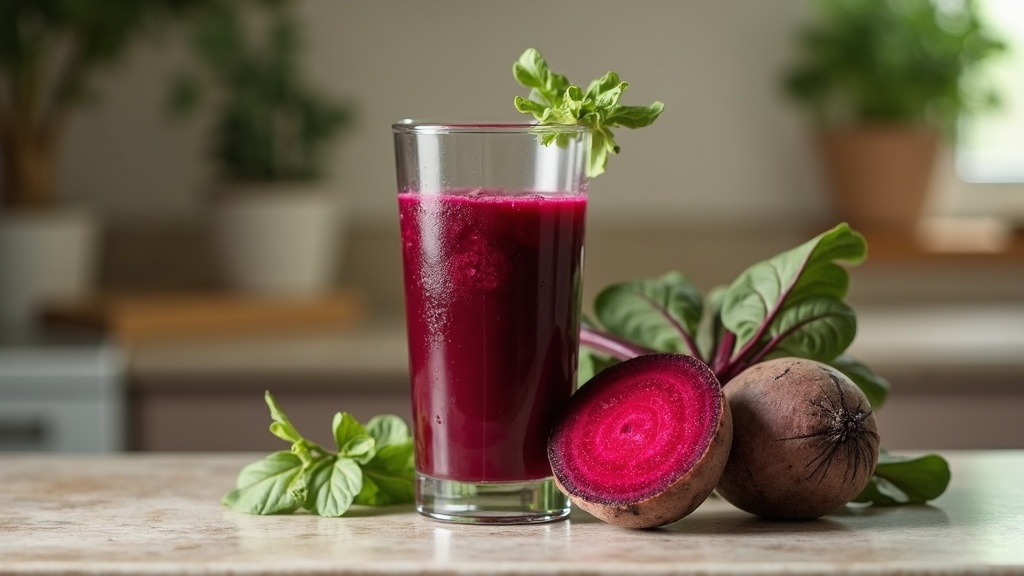
Before you buy anything, do the cheapest thing first. A daily plate that includes beets, spinach, arugula, and other leafy greens delivers dietary nitrate from food, and for many people that covers the endurance and blood-pressure benefit without a tub of powder.
One more thing that quietly wrecks the beetroot effect. Antibacterial mouthwash kills the oral bacteria that convert nitrate to nitrite, and that step is required for nitrate to lower blood pressure. In a controlled study, rinsing with antiseptic mouthwash before a nitrate load abolished both the rise in plasma nitrite and the blood-pressure drop, per Govoni and colleagues in Nitric Oxide. If you swish daily, beetroot may do nothing for you until you stop.
And some people simply will not notice much. Well-trained endurance athletes and people who already eat a vegetable-heavy diet tend to show smaller responses, because they start closer to the ceiling.
How nitric oxide actually works
Nitric oxide is a short-lived gas your blood vessels release to relax their own walls. When the vessel lining makes more nitric oxide, the artery widens, blood flow rises, and blood pressure drops a little. That single mechanism explains the muscle "pump," the better oxygen delivery during exercise, and the modest antihypertensive effect all three supplements chase.
Your body has two routes to make it. The first runs on the amino acid L-arginine, which an enzyme converts directly into nitric oxide inside the vessel wall. The second is the food route: dietary nitrate from vegetables is reduced to nitrite by mouth bacteria, then to nitric oxide in the body, completely bypassing the arginine pathway.
Here is the catch that the supplement aisle glosses over. The arginine route is oxygen-dependent and the nitrate route works even when oxygen is low, which is part of why beetroot helps most during hard exercise when working muscle is starved for oxygen. Think of it like two roads to the same town: one needs daylight, the other works at night. The supplements differ mainly in which road they actually pave.
Citrulline vs beet nitrate vs arginine
This is where the marketing and the pharmacology part ways. All three are sold as "nitric oxide boosters," but they reach the bloodstream very differently.
L-arginine, and the paradox that sinks it
Swallowing L-arginine to raise nitric oxide sounds logical and barely works. The intestine and liver pull most of an oral arginine dose apart on first pass, before it ever reaches general circulation, largely through the enzyme arginase. That is the "arginine paradox": the amino acid that feeds nitric oxide is the one your gut is best at destroying.
Plain oral L-arginine is, in plain terms, a marketing relic. A 2019 review in Nutrients estimated arginine lowers blood pressure by roughly 5.4/2.7 mmHg, but the doses needed are large, often poorly tolerated, and easily undercut by that first-pass loss. There is a better way to deliver arginine, and it is not arginine.
L-citrulline, the arginine that gets through
Citrulline is the clever workaround. Oral L-citrulline skips first-pass breakdown, travels to the kidney, and is converted into L-arginine right where the body can use it, so it raises plasma arginine more reliably than arginine itself does.
The head-to-head data are striking. In a crossover study of 20 healthy volunteers in the British Journal of Clinical Pharmacology, L-citrulline raised plasma arginine more than equivalent L-arginine, and the top dose pushed urinary nitrate from 92 to 125 and urinary cGMP from 38 to 50 (both markers of real nitric-oxide signaling). A clinical pharmacology review in Nutrients put it bluntly: citrulline is about twice as potent as arginine at raising plasma arginine, precisely because it dodges that first pass.
Beetroot nitrate, the food route
Beetroot does not touch the arginine pathway at all. It supplies inorganic nitrate, which your oral bacteria and body convert into nitric oxide through an entirely separate channel. That independence is why beetroot has the cleanest blood-pressure and endurance evidence of the three.
What the trials actually show
The evidence splits neatly by goal, which is convenient, because so does your reason for buying.
For the pump and strength endurance, citrulline has the better gym data. A 2021 systematic review and meta-analysis in the Journal of Dietetics found acute citrulline malate let trained lifters squeeze out more total repetitions before failure, with the effect strongest on multi-set, high-volume work. Results are not unanimous across every small trial, so treat it as a real but modest edge, not a transformation.
For blood pressure and endurance, beetroot nitrate leads. A meta-analysis of randomized trials in the Journal of Nutrition found inorganic nitrate and beetroot juice lowered systolic blood pressure by about 4.4 mmHg, with a dose-response relationship. On performance, an umbrella review of 20 systematic reviews in Sports Medicine found dietary nitrate reliably extended time to exhaustion, especially at 6 mmol or more daily, though it did not move maximal oxygen uptake and trained athletes respond less.
| Form | Reaches blood as NO? | Best evidence for | Trial dose |
|---|---|---|---|
| L-citrulline | Yes, raises plasma arginine | Pump, reps, recovery | 6 to 8 g (or 8 g citrulline malate) |
| Beetroot nitrate | Yes, via oral bacteria | Blood pressure, endurance | 6 to 13 mmol nitrate |
| L-arginine | Mostly no, first-pass loss | Little, at tolerable doses | Large, poorly tolerated |
Actionable takeaway: match the form to the job. Citrulline for the gym, beetroot for the ride and the cuff, arginine for the bin.
Real doses that match the studies
Underdosing is the single most common reason a "nitric oxide" product does nothing, so anchor to the trial numbers.
For L-citrulline, the studied range is about 6 to 8 g of pure L-citrulline, or roughly 8 g of citrulline malate (which is part malic acid, so it is not interchangeable gram-for-gram). Take it 30 to 60 minutes before training.
For beetroot nitrate, target the nitrate dose, not the scoop size. Most positive trials used roughly 6 to 13 mmol of nitrate, which is about 300 to 600 mg, taken 2 to 3 hours before exercise. The label should state nitrate content; if it does not, you cannot dose it.
For context on food, a typical Western diet runs low on vegetable nitrate compared with these trial doses, which is why a concentrated shot or powder closes the gap rather than overshooting. If you already eat several servings of leafy greens and beets daily, you may need far less.
What to look for when buying
A clean label here is mostly about honesty around the active dose. The good products make it easy to hit the numbers above; the bad ones hide behind a blend.
Avoid any product labeled "N.O. blend" or "nitric oxide matrix" that does not list the milligrams of each ingredient, because these almost always bury a token amount of citrulline under a wall of arginine and stimulants. A proprietary blend is a way to underdose you legally.
Prefer single-ingredient L-citrulline or citrulline malate so you can dose to the gram, and pick a beetroot product that prints its nitrate content in mg or mmol. Third-party testing (NSF Certified for Sport, Informed Sport, or USP) matters most if you compete in a tested sport. Watch the sodium and sugar load on flavored beetroot shots, and skip anything leaning on "arginine alpha-ketoglutarate" as its headline active.
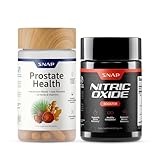

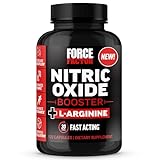
As an Amazon Associate, UsefulVitamins.com earns from qualifying purchases at no extra cost to you. We only recommend products supported by published research or third-party testing.
Who should skip these
These are well tolerated for most healthy adults, but a few groups should pause. If you take blood-pressure medication, organic nitrates for angina, or PDE5 inhibitors, do not stack a vasodilating supplement without your prescriber's sign-off, as discussed in the trial on oral nitrate reduction and blood pressure in treated hypertensive adults, where disrupting the nitrate pathway measurably moved blood pressure.
If you are pregnant or nursing, the safety data on concentrated beetroot and high-dose citrulline are thin, so treat food sources as the default and ask your OBGYN before supplementing.
And if you use antibacterial mouthwash daily, beetroot may simply not work for you until you change that habit, because you are removing the bacteria that activate the nitrate. People with kidney disease should also clear high-dose citrulline with their clinician, since it is processed renally.
FAQ
Is citrulline or arginine better for nitric oxide?
Citrulline, clearly. It raises plasma arginine more than swallowing arginine does, because it escapes the first-pass breakdown that destroys most oral arginine. The pharmacology review in Nutrients rates it about twice as potent.
How long does it take to work?
Citrulline is best taken 30 to 60 minutes before training; beetroot nitrate peaks in plasma roughly 2 to 3 hours after intake. Blood-pressure benefits from beetroot build over days to weeks of consistent use, not from one dose.
Can I just eat beets instead of buying powder?
Often, yes. Beets, spinach, arugula, and other leafy greens supply dietary nitrate directly. The supplement earns its place when you want a precise pre-exercise dose or do not eat enough vegetables to reach the trial range.
Does beetroot really lower blood pressure?
Modestly. A meta-analysis of randomized trials found about a 4.4 mmHg drop in systolic pressure, comparable to a meaningful lifestyle change, but it depends on the oral-bacteria step that mouthwash can block.
Are "nitric oxide" pre-workout blends worth it?
Usually not at the listed price. Most hide an underdosed scoop of citrulline behind arginine and proprietary-blend labeling. Buy single-ingredient citrulline and dose it yourself if the pump is your goal.
The bottom line on nitric oxide supplements
Two of the three options on the shelf do the job, and they do different jobs. L-citrulline is the form that actually delivers arginine to your bloodstream, so it owns the pump and rep-endurance use case; beetroot nitrate runs a separate pathway and owns blood pressure and endurance. Plain oral L-arginine is a marketing relic that your gut dismantles before it can help, which is the one-sentence correction most roundups miss: the cheapest amino acid on the shelf is also the one to ignore. Either real pick beats it, and the decision between them is just a question of what you are training for.
Next steps:
- For the gym, start with single-ingredient L-citrulline at the trial dose and dose it 30 to 60 minutes pre-workout.
- For blood pressure or endurance, choose a beetroot nitrate product that prints its nitrate content and consider pairing it with a vegetable-rich plate.
- If you are building a full stack, see how these fit into a smart pre-workout setup, and read how we review supplements and more from Sarah Thompson, RD.
As an Amazon Associate, I earn from qualifying purchases. Product recommendations are based on real reviews and independent research.
Reviewed by Sarah Thompson, Registered Dietitian, focused on vitamin and mineral nutrition.
This article is for informational purposes and not medical advice. Supplements that affect nitric oxide can interact with blood-pressure medications, nitrates, and PDE5 inhibitors. Consult a licensed physician before starting any supplement, particularly if you are pregnant, nursing, taking prescription medications, or managing a chronic condition.
