
Affiliate disclosure: this article contains affiliate links. As an Amazon Associate, UsefulVitamins.com earns from qualifying purchases at no extra cost to you.
What the niacin flush actually is
That hot, prickly, red wave across your face, neck, and chest is the niacin flush, and it scares a lot of first-time users. It is not an allergic reaction. It is a predictable vascular response, and for most people it fades on its own within an hour or two.
Here is the plain-words version. Niacin (nicotinic acid) triggers cells in your skin to release prostaglandin D2, a signaling molecule that widens the tiny blood vessels just under the surface. More blood near the skin means heat, redness, and that tingling itch. Researchers describe the flush as a PGD2-mediated cutaneous vasodilation, summarized well in an NIH-hosted review on the mechanism and mitigation of niacin-induced flushing.
The dose where this starts is low. The NIH Office of Dietary Supplements notes that flushing from nicotinic acid can begin at doses as small as 30 mg/day, which is roughly twice the adult RDA of 16 mg for men and 14 mg for women. So a "high-dose" cholesterol product at several hundred milligrams will almost always flush you at first.
One clear line worth keeping: a true allergic reaction is different. A simple warm flush is expected. Hives, lip or throat swelling, or any breathing trouble is not the flush and is a reason to stop and call a clinician.
Why the flush fades (and why that matters)
The reassuring part is that the flush is self-limiting in two ways. Each episode passes within an hour or two, and the body also down-regulates the response over repeated doses.
Most people notice the flush is strongest on day one and tapers fast if they keep the dose steady. By the end of one to two weeks of consistent daily use, many users barely feel it. The trick is not skipping days, because an on-again, off-again pattern keeps resetting your tolerance.
This is also why the most reliable "fix" is behavioral, not a fancier pill. Before you reach for a flush-free product, the cheap moves below usually do the job.
The simple routine that blunts the flush
You can stack several small habits, and together they make a real difference. None of them require a special product.
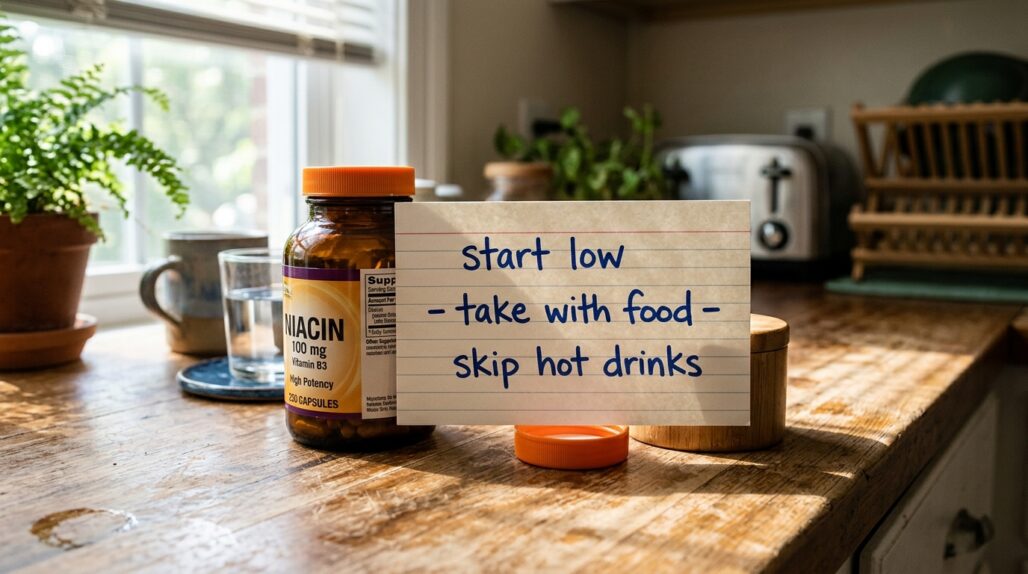
- Start low and build up. Begin with a small dose and increase slowly over days to weeks so your body adapts before you reach your target amount.
- Always take it with food. A meal slows absorption, which softens the peak that drives the flush. Taking niacin on an empty stomach is the classic rookie mistake.
- Avoid hot drinks and alcohol around your dose. Heat and alcohol both widen blood vessels on their own, so they stack with niacin and make the flush worse. Skip the coffee, tea, and wine for an hour or two on either side.
- Take it at the same time daily. Consistency is what builds tolerance. A bedtime dose also means you may sleep through the worst of it.
There is one well-studied pharmacologic option: low-dose aspirin taken about 30 minutes before niacin can reduce flushing, because it blocks the prostaglandin pathway behind it. An NIH-hosted review on aspirin pretreatment and niacin flushing supports this, reporting that 325 mg of aspirin 30 minutes before a dose lowered both the number and intensity of flushing episodes, though even aspirin does not erase the flush completely. Do not start a daily aspirin habit on your own – aspirin carries its own bleeding risks, so clear that with a pharmacist or doctor first.
How long it takes to settle: a realistic timeline
Here is what most people can expect with a steady daily immediate-release dose taken with food. Your experience will vary with the dose and your own physiology.
| Stage | What you’ll likely feel | What to do |
|---|---|---|
| Day 1 to 2 | The strongest flush – warmth, redness, prickling within 15 to 30 minutes, fading in 1 to 2 hours | Take with a full meal, stay calm, no hot drinks or alcohol nearby |
| Day 3 to 7 | Flush is noticeably milder and shorter on the same dose | Keep the dose steady and the timing consistent – do not skip days |
| Week 2 | Most people flush only mildly or not at all at their starting amount | Only now consider a small, gradual dose increase if a clinician has set a target |
| After a missed stretch | Tolerance resets, so the flush returns when you restart | Restart lower and rebuild rather than jumping back to your old dose |
The form you buy changes everything
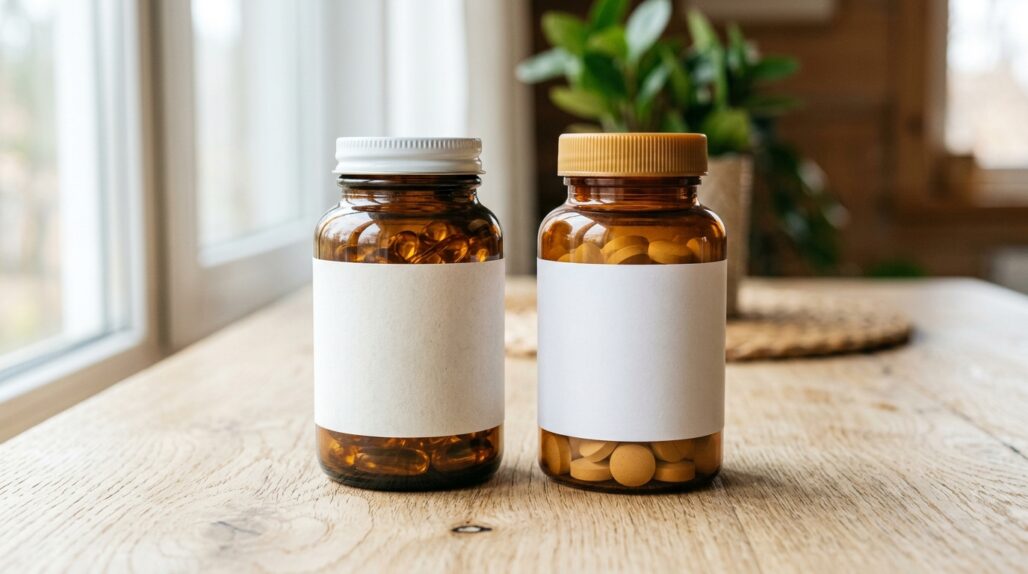
This is where most of the confusion lives, because "niacin" on a shelf can mean three very different things. The tradeoff is real: the gentler a product is on flushing, the bigger the questions about whether it does anything for cholesterol.
| Form | Flushing | The honest catch |
|---|---|---|
| Immediate-release (nicotinic acid) | Most flushing, but it fades with tolerance | The best-studied form for lipids; cheapest; the flush is the price of entry |
| Extended-release (ER) | Less flushing than immediate-release | Carries a meaningful liver-enzyme risk at gram doses; usually prescription-grade |
| Flush-free (inositol hexanicotinate) | Little to no flushing | Releases niacin so slowly that its cholesterol benefit looks weak and inconsistent |
The liver point is not a scare tactic. The NIH LiverTox monograph on niacin reports that sustained-release and some extended-release products carry a higher rate of liver-enzyme elevation than plain immediate-release niacin at the same gram-level dose – in one trial, ALT rose above three times the upper limit in roughly half of patients on 2 to 3 grams a day of a sustained-release product. That is a real reason gram-dose niacin belongs under medical supervision.
And flush-free niacin is not a free lunch. Because inositol hexanicotinate releases nicotinic acid so gradually, it rarely flushes – but the lipid evidence behind it is weak and mixed. You may be trading away both the flush and the benefit.
Which product makes sense for you
If you simply want a B-vitamin and dislike the flush, a low-dose standard niacin taken with food is the honest pick: cheap, well-studied, and the flush settles. Reach for an extended-release or flush-free product only with a clinician's input, knowing the liver and efficacy tradeoffs above.


As an Amazon Associate, UsefulVitamins.com earns from qualifying purchases at no extra cost to you.
UsefulVitamins is reader-supported. If you buy through the links above we may earn a small commission, at no extra cost to you. Prices are approximate as of writing – check the current price.
Where this stops being a supplement decision
There is a line between "I take a small B3 dose" and "I take grams of niacin to manage my cholesterol." Once you cross into gram territory, this is medication-level territory.
High-dose niacin was once a mainstay cholesterol drug, but large trials changed the picture. The AIM-HIGH and HPS2-THRIVE trials failed to show that adding niacin to a statin reduced heart attacks or strokes, and the FDA withdrew its approval of niacin-plus-statin combination products in April 2016, as covered by tctmd's report on the FDA decision. So self-prescribing gram-dose niacin for your numbers is not the slam dunk it once seemed.
If cholesterol is your goal, look at the bigger menu of evidence-based options first – our overview of supplements studied for high cholesterol puts niacin in context. And if you are on a statin, read our explainer on niacin and statins before you combine anything, because that pairing has specific risks.
Two quick guardrails before you add niacin to a stack. Run your full list through our drug and supplement interaction checker, and if your cabinet is getting crowded, our supplement self-audit helps you spot overlap and over-dosing. None of that replaces a conversation with your own pharmacist or doctor.

FAQ
Is the niacin flush dangerous? For most healthy people it is uncomfortable but harmless, since it is a temporary widening of skin blood vessels driven by prostaglandins. A flush that comes with hives, swelling, or breathing trouble is different and needs medical attention.
How long does a single niacin flush last? It usually starts within 15 to 30 minutes of an immediate-release dose and fades within one to two hours. The intensity also drops over days to weeks as your body builds tolerance.
Does taking niacin with food really help? Yes. Food slows how fast the niacin is absorbed, which lowers the peak blood level that drives the flush. Taking it on an empty stomach is one of the most common reasons people flush hard.
Is flush-free niacin just as good? It is much gentler on flushing, but its effect on cholesterol looks weak and inconsistent in the research because it releases nicotinic acid so slowly. If you want the studied lipid effect, the gentler product may not deliver it.
Can I take aspirin to stop the flush? Low-dose aspirin about 30 minutes beforehand can reduce flushing by blocking the prostaglandin pathway, but it does not eliminate it and aspirin has its own bleeding risks. Ask a pharmacist or doctor before making it a routine.
How much niacin is too much? The tolerable upper intake level for supplemental niacin in adults is 35 mg per day, set largely because of flushing. Gram-level doses used for cholesterol are well above that and should only be taken under medical supervision.
The bottom line
The niacin flush is a normal, self-limiting vascular response, not an allergy, and you can usually tame it without buying anything special. Start low, take it with food, avoid heat and alcohol around your dose, and stay consistent so tolerance builds over one to two weeks.
If you only want a modest B3 dose, plain low-dose niacin with a meal is the honest, cheap answer. Reserve extended-release and flush-free products for a clinician-guided plan, because the first carries liver risk at high doses and the second may not work for lipids at all. Gram-dose niacin for cholesterol is a medical decision – bring it to your doctor or pharmacist rather than managing it from the supplement aisle.
This article is general education, not medical advice. It does not diagnose, treat, or replace care from your own healthcare provider, and you should not start, stop, or change any medication or high-dose supplement without talking to a pharmacist or doctor.
Reviewed by the UsefulVitamins Editorial Team.
