
If you're wondering whether you need to cycle ashwagandha on and off to prevent tolerance or keep it working, the short answer is: probably not, based on current RCT data, but the folk protocols circulating online are not supported by controlled human trials. This article breaks down what the published long-term safety studies actually measured, why tolerance is a theoretical concern that hasn't materialized in the evidence, and what the specific drug interactions are that genuinely do require you to talk to a prescriber before using ashwagandha daily. You will also find a practical decision table for structuring your use, and honest product guidance for choosing a standardized extract.
Affiliate disclosure: this article contains affiliate links. As an Amazon Associate, UsefulVitamins.com earns from qualifying purchases at no extra cost to you.

Summary: quick answer on cycling ashwagandha
No RCT has tested whether cycling ashwagandha on and off produces better outcomes than continuous daily use — the cycling protocols that circulate online (5 days on, 2 off; 8 weeks on, 4 off) are folk conventions, not evidence-based schedules.
Best for continued daily use: Adults with chronic stress lasting three months or more, documented elevated cortisol, normal thyroid function, and no prescription drug interactions. The RCTs that established ashwagandha's efficacy all used uninterrupted daily dosing for 60-90 days.
Not ideal for daily, unsupervised use: Anyone on levothyroxine, thyroid-modifying drugs, immunosuppressants (cyclosporine, tacrolimus, biologics), benzodiazepines or other sedatives, or anticoagulants. These are pharmacological interactions, not cycling questions.
What to look at before deciding: Whether your supplement uses a standardized extract (KSM-66 or Sensoril) at a dose matching the RCT range. "Ashwagandha root powder 500mg" and "KSM-66 600mg standardized to 5% withanolides" are different products. Only the latter maps to clinical-trial doses.
Decision shortcut: If you are not on the medications listed above, you have been using ashwagandha continuously for 60-90 days, and you notice a sustained benefit, there is no clinical evidence that periodic breaks preserve or restore that effect. If you notice diminishing returns, the more likely culprits are product quality, dose, or stress-load changes.
What tolerance means for adaptogens — and why ashwagandha is different
The word "tolerance" has a specific pharmacological meaning: a receptor or cellular adaptation that reduces the drug's effect over time at the same dose, typically requiring dose escalation to maintain effect. Classic examples include opioid analgesics, benzodiazepines, and caffeine.
Ashwagandha's primary mechanism runs through the HPA axis. Withanolides — the steroidal lactones in ashwagandha root extract — appear to modulate cortisol output by interacting with glucocorticoid receptor signaling and GABA-receptor pathways. The working hypothesis for why tolerance has not appeared in clinical trials is that ashwagandha is not a receptor agonist at a fixed binding site; it more closely resembles a regulatory signal that helps the HPA axis recalibrate its setpoint rather than a chemical that directly suppresses cortisol production.
Think of it like a thermostat calibration. A broken thermostat that reads 5 degrees high makes the furnace run too much. Ashwagandha doesn't turn the furnace off — it recalibrates the sensor. Once the sensor is reading correctly, the furnace runs normally. There's no accumulation effect to drive tolerance because you're not suppressing the system, you're recalibrating it.
But traditional use is not the same as RCT evidence. The absence of tolerance in 60- and 90-day studies doesn't prove it cannot occur over two or three years of continuous use. That data simply doesn't exist yet.
Actionable takeaway: Current evidence doesn't support cycling for tolerance prevention. It also doesn't prove cycling is unnecessary beyond 90 days. Both are knowledge gaps, not settled science.
What the long-term safety data actually shows {#long-term-safety-data}
The three pivotal ashwagandha RCTs most relevant to the cycling question are:
Chandrasekhar et al. 2012 (PMID 23439798): A placebo-controlled RCT with 64 adults experiencing chronic stress. Participants took 300mg KSM-66 ashwagandha twice daily (600mg/day total) continuously for 60 days. Primary outcomes were perceived stress (PSS-10) and serum cortisol. Result: 44% reduction in PSS-10 and 28% reduction in serum cortisol versus placebo (p<0.001). No withdrawal-effect data was collected after the 60-day period, meaning we do not know whether benefits persisted, faded, or rebounded when supplementation stopped.
Salve et al. 2019 (PMID 32021735): A 60-day RCT with 60 adults examining KSM-66 at 240mg/day. Validated both cortisol reduction and sleep quality improvement versus placebo. Again, continuous daily dosing throughout; no cycling arm in the study design.
Choudhary et al. 2017 (PMID 28471731): A 60-day RCT with 60 adults using KSM-66 300mg twice daily for anxiety and cognitive function. The anxiety reduction was statistically significant versus placebo. No dose-escalation findings — participants did not need to increase their dose across the 60 days to maintain the effect, which is the clearest indirect evidence against clinically significant tolerance forming within that window.
A 2021 longer-term safety assessment (Tiwari et al., PMID 34632879) followed 80 adults taking ashwagandha for 90 days and evaluated adverse events across hepatic, renal, and hematological markers. No clinically significant adverse changes emerged at 90 days in the standardized-extract group. This is the longest continuous human safety window currently in the peer-reviewed record for most ashwagandha preparations.
Critically: none of these studies were designed to test cycling protocols. The real question isn't whether ashwagandha builds tolerance — the question is whether the cycling protocols circulating online have been validated in any controlled trial. They have not.
Actionable takeaway: The evidence supports continuous daily use for up to 90 days at studied doses (300-600mg/day of standardized KSM-66 or Sensoril). Beyond that, both sustained benefit and tolerance remain uncharacterized in humans.
Why cycling protocols exist despite lacking RCT support
The 5-days-on, 2-days-off and 8-weeks-on, 4-weeks-off protocols that circulate in supplement communities have two origins: general herbal practice norms and borrowed logic from adaptogen traditions in Ayurveda and Traditional Chinese Medicine.
In Ayurveda, ashwagandha as a rasayana (rejuvenative tonic) was typically prescribed in cycles tied to seasons, not to receptor pharmacology. Traditional practitioners weren't testing receptor downregulation; they were working within a seasonal health model.
The borrowed logic from general herbalism holds that regular breaks prevent dependency and maintain the body's sensitivity to the herb. This heuristic may be appropriate for some herbs — St. John's Wort, for instance, has documented enzyme-induction effects on CYP3A4 that accumulate over time. But applying that heuristic universally to ashwagandha is not pharmacologically justified by current human data.
The real question isn't whether ashwagandha works in lab rats — it does, with documented HPA-axis effects across multiple animal studies — it's whether the receptor-downregulation mechanism that would require cycling proves out in human dosing. Current RCT data says no, within the 60-90 day window studied.
That said, there are two practical reasons someone might choose to cycle despite the lack of compelling evidence:
- Cost management: A planned break is a reasonable cost-reduction strategy if cash flow matters and you feel you've achieved a stable baseline.
- Medication interactions: If you take any of the medications listed in Section 8 of this article, cycling is not the right framework. What you need is a conversation with your prescriber.
Who should and should not take ashwagandha daily {#who-benefits-who-skips}
Strong fit for daily use: Adults with chronic stress of at least three months' duration, who have ruled out underlying thyroid, autoimmune, or mood disorders requiring prescription treatment, and who have no interacting medications. This is the population the Chandrasekhar 2012 and Choudhary 2017 trials enrolled.
Situational stress users: If your stress is acute and time-limited — a job presentation, a family crisis — ashwagandha is not the right tool. A 60-day supplement that may take four weeks to show measurable cortisol effects is not a same-day intervention. That may be appropriate for occupational stress, but unnecessary for situational anxiety.
People who should skip or consult a prescriber:
- Anyone on levothyroxine, methimazole, or other thyroid medications (see drug interactions below)
- Anyone on immunosuppressants: cyclosporine, tacrolimus, mycophenolate, or biologics
- Anyone on benzodiazepines, sleep aids (zolpidem, eszopiclone), or barbiturates
- Anyone on warfarin or other anticoagulants
- Pregnant women (insufficient human safety data)
- People with nightshade-family plant allergies (Withania somnifera is in Solanaceae)
This is a decision table you can use before starting:
| Question | Your answer |
|---|---|
| Is my stress chronic (3+ months) or situational/acute? | |
| Am I on thyroid medication of any kind? | |
| Am I on immunosuppressants or chemotherapy drugs? | |
| Am I on any sedative, benzodiazepine, or sleep medication? | |
| Am I pregnant or actively trying to conceive? | |
| Have I confirmed thyroid function is normal in the past 12 months? |
If any row gets a "yes" to the high-risk column, that is a conversation for a physician before starting ashwagandha, not a cycling question.
What the drug interaction data actually says {#drug-interactions}
This section is required reading. Ashwagandha has documented pharmacological interactions that are not resolved by cycling on and off. They require medical supervision.
Thyroid medications (levothyroxine, methimazole, propylthiouracil)
Withanolides appear to stimulate thyroid hormone synthesis. Multiple case reports — cited in the NCCIH ashwagandha fact sheet — describe TSH suppression and elevated T4 in patients adding ashwagandha to existing levothyroxine therapy. One 2020 case report (PMID 32202056) documented thyrotoxicosis that resolved after ashwagandha discontinuation.
If you are on any thyroid medication and want to use ashwagandha, this requires endocrinologist involvement and likely more frequent TSH monitoring. Cycling on and off does not eliminate this risk; it introduces TSH instability with each cycle.
Immunosuppressants (cyclosporine, tacrolimus, mycophenolate, biologics)
Per Memorial Sloan Kettering's integrative herbs database, withanolides have demonstrated immunomodulating activity in both directions (stimulating and suppressing depending on the model). For transplant patients or people on biologics for autoimmune conditions, this unpredictability is clinically significant. Ashwagandha should not be used alongside immunosuppressants without specialist review.
Sedatives, benzodiazepines, and CNS depressants
Ashwagandha has GABAergic activity. The NCCIH fact sheet notes the potential for additive sedation when combined with benzodiazepines (alprazolam, clonazepam, lorazepam), sleep medications (zolpidem), antihistamines with sedative properties, and alcohol. The interaction is pharmacodynamic, not metabolic — cycling ashwagandha would create fluctuating sedation overlap risk rather than eliminating it.
Anticoagulants (warfarin)
Preliminary mechanistic data suggest withanolides may affect platelet aggregation pathways. No RCT has measured this interaction directly in humans. If you are on warfarin, the cautious approach is avoidance, as per Memorial Sloan Kettering's guidance.
Diabetes medications
Ashwagandha has demonstrated blood-glucose-lowering activity in some trials. In people on insulin, metformin, sulfonylureas, or GLP-1 agonists, this could amplify hypoglycemic effect. If you are on diabetes medication, do not add ashwagandha without discussing it with your prescriber.
Pregnancy and breastfeeding
No human RCT data for ashwagandha in pregnancy. Animal studies have raised concerns. The universal guidance from NCCIH is avoidance during pregnancy and breastfeeding.
Actionable takeaway: If any of these interactions apply to you, the cycling schedule is irrelevant. The first question is whether you can use ashwagandha at all, and that requires a prescriber, not a supplement protocol.
How to evaluate your ashwagandha supplement {#evaluating-your-supplement}
If you decide daily use is appropriate, the product quality gap is large enough to matter. Standardization labels are more predictive of outcome than the word "ashwagandha" on a label.
An adaptogen brand can have impressive marketing and still miss third-party testing for the active marker compound. "Ashwagandha root powder" without a withanolide percentage tells you nothing about the active compound concentration. The RCTs showing cortisol and stress effects used KSM-66 standardized to approximately 5% withanolides or Sensoril (full-spectrum root + leaf extract) standardized to 8%.
The minimum to look for on a label:
- Extract name: KSM-66, Sensoril, or another named, patented extract with disclosed standardization
- Withanolide %: 5% or higher for root extract; Sensoril uses a different marker (withanolide glycosides + withaferin A)
- Third-party testing: USP, NSF, or Informed Sport certification, or a current certificate of analysis (COA) available on the brand's website
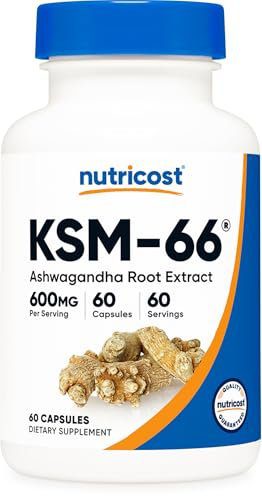
For a deeper comparison of the leading standardized ashwagandha supplements across these criteria, see our Best Ashwagandha Supplement guide.
Frequently asked questions
Should I take ashwagandha every day or give myself breaks?
Most published RCTs used uninterrupted daily dosing for 60-90 days. There is no peer-reviewed controlled trial that compared continuous daily use to a cycling protocol in humans. If you are not on interacting medications and feel benefit, there is no evidence-based reason to impose scheduled breaks. Breaks make sense if cost is the driver, not tolerance prevention.
Can ashwagandha stop working over time?
No human trial has demonstrated tolerance to ashwagandha's cortisol-reduction or stress-relief effects within the 60-90 day study windows. If you notice diminishing effect, the most common explanations in clinical populations are: product lot quality variation (withanolide content is not uniform across batches unless rigorously controlled), increased stress load offsetting the supplement's modulating capacity, or a change in the underlying stressor driving your symptoms.
How long should you cycle off ashwagandha?
The question assumes cycling is indicated in the first place. Since no RCT has tested cycling intervals, any specific number (2 weeks off, 4 weeks off) is folk convention. If you choose to take a break for practical reasons, there is no evidence-based guidance on minimum duration.
Is it safe to take ashwagandha long-term, beyond 90 days?
The published peer-reviewed safety data top out at 90 days for standardized extracts in controlled trials. Beyond that window, post-market surveillance case reports exist and are documented at NCCIH. The most common serious signals in case reports involve hepatotoxicity with very high doses of non-standardized root powder. At clinical-trial doses (300-600mg/day of KSM-66 or Sensoril), no serious adverse events were reported through 90 days in the Tiwari 2021 safety study (PMID 34632879). Beyond 90 days, the data is post-market, not RCT-controlled.
Does ashwagandha cause withdrawal symptoms if you stop?
No withdrawal syndrome from ashwagandha discontinuation has been documented in clinical trials. HPA-axis adaptogens do not appear to cause the physiological dependence seen with benzodiazepines or opioids. Some users report a subjective return of pre-treatment stress symptoms when stopping — but this is not withdrawal, it's the underlying condition returning because the supplement is no longer active.
Can I take ashwagandha if I'm on thyroid medication?
Not without explicit prescriber involvement. Ashwagandha has stimulated TSH suppression in case reports. Adding it to levothyroxine therapy can destabilize thyroid levels. Your endocrinologist or physician needs to be part of this decision and will likely want to monitor TSH more frequently if they approve trial use.
As an Amazon Associate, I earn from qualifying purchases. Product recommendations are based on real reviews and independent research.
Related reading
- Ashwagandha: A Complete Guide to Benefits, Dosing, and What the Evidence Actually Says — the full context on how ashwagandha works, what conditions it has the most evidence for, and which extract types matter
- Ashwagandha for Women: Hormones, Stress, and What the RCTs Actually Show — how ashwagandha evidence differs for women, including the hormonal considerations that affect cycling decisions
- Best Ashwagandha Supplement: How to Find a Standardized Extract That Actually Delivers — product-level evaluation against withanolide content and third-party testing
- Ashwagandha Side Effects: The Honest List with Clinical Frequencies — adverse events from clinical trials, not anecdote
- Stacking Adaptogens Safely: What Combination Evidence Actually Exists — what combining ashwagandha with other adaptogens means for interaction risk
Conclusion: the bottom line on cycling ashwagandha
The 5-days-on, 2-off and 8-weeks-on, 4-off cycling protocols that circulate in supplement communities are not derived from human RCT data. They are folk conventions. The three pivotal ashwagandha RCTs (Chandrasekhar 2012, Salve 2019, Choudhary 2017) all used uninterrupted daily dosing and produced the outcomes ashwagandha is known for. None of them demonstrated tolerance within the 60-90 day windows studied.
That does not mean cycling is actively harmful or pointless. It means the claim that cycling is necessary to prevent tolerance is not supported by current evidence. If your stress is chronic and continuous, a supplement designed for chronic-stress modulation is probably more useful taken continuously than in fragments.
The real indicators for stopping or adjusting ashwagandha are not about cycling schedules. They are:
- A change in your medication list that introduces an interaction (thyroid drugs, immunosuppressants, sedatives, anticoagulants)
- Sustained absence of effect at eight weeks with a verified standardized extract at clinical-trial doses
- Any sign of liver symptoms (fatigue, jaundice, right-upper-quadrant pain) — though these are rare at standard doses
Next steps:
- If you are on any interacting medication, consult your prescriber before continuing or starting ashwagandha daily
- If you have used ashwagandha for 90 days and still feel benefit, staying on a standardized extract at the clinical-trial dose is the evidence-consistent choice
- If you want to understand ashwagandha's broader safety profile, that article has the clinical-trial adverse event frequencies
This article is for informational purposes and not medical advice. Ashwagandha (Withania somnifera) can interact with thyroid medication, immunosuppressants, sedatives, anticoagulants, and diabetes drugs. The thyroid interaction in particular — stimulating TSH suppression in people already on levothyroxine — has been documented in case reports and requires prescriber involvement before use. Consult a licensed physician before starting any adaptogen, particularly if you are pregnant, nursing, taking prescription medications, or managing a chronic condition.
As an Amazon Associate, I earn from qualifying purchases. Product recommendations are based on real reviews and independent research.
This article is for informational purposes and not medical advice. Herbal adaptogens, even traditional ones, can interact with thyroid medication, antidepressants, anticoagulants, immunosuppressants, blood-pressure drugs, and more. Consult a licensed physician before starting any adaptogen, particularly if you are pregnant, nursing, taking prescription medications, or managing a chronic condition.
