
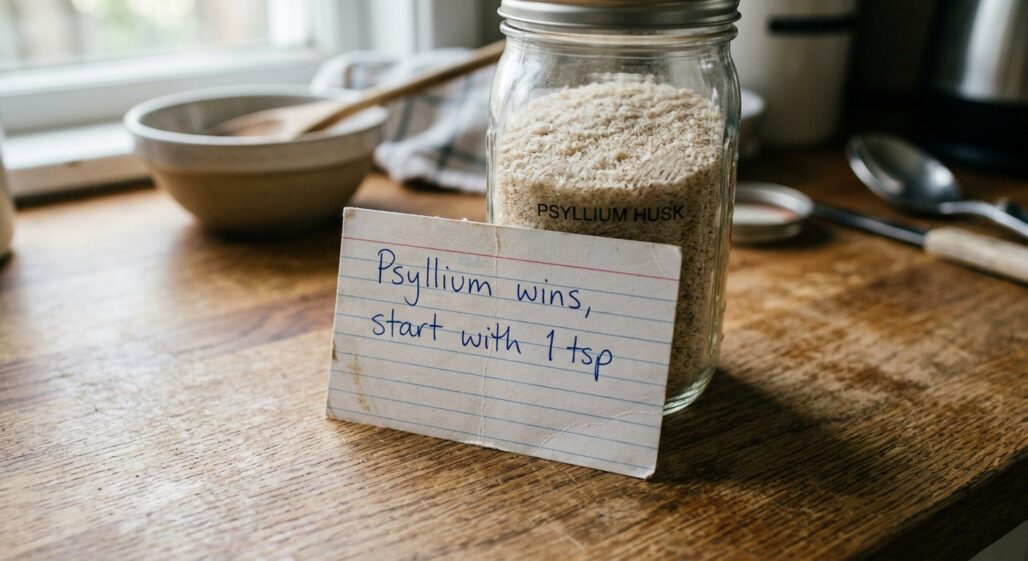
If you are shopping for the best fiber supplement, you have probably noticed the aisle is a wall of jars that all promise the same thing and cost wildly different amounts. The honest answer: for most people, plain psyllium husk is the best choice, because it is the single most studied fiber for cholesterol, blood sugar, and regularity, and it is cheap. This article ranks seven common fibers by what the trials actually show, explains how to match a fiber to your goal instead of buying on packaging, and tells you which ones are mostly marketing. The picks at the bottom are the same plain jars I keep in my own family's cabinet, not a sponsored list.
Affiliate disclosure: this article contains affiliate links. As an Amazon Associate, UsefulVitamins.com earns from qualifying purchases at no extra cost to you.
Before you decide
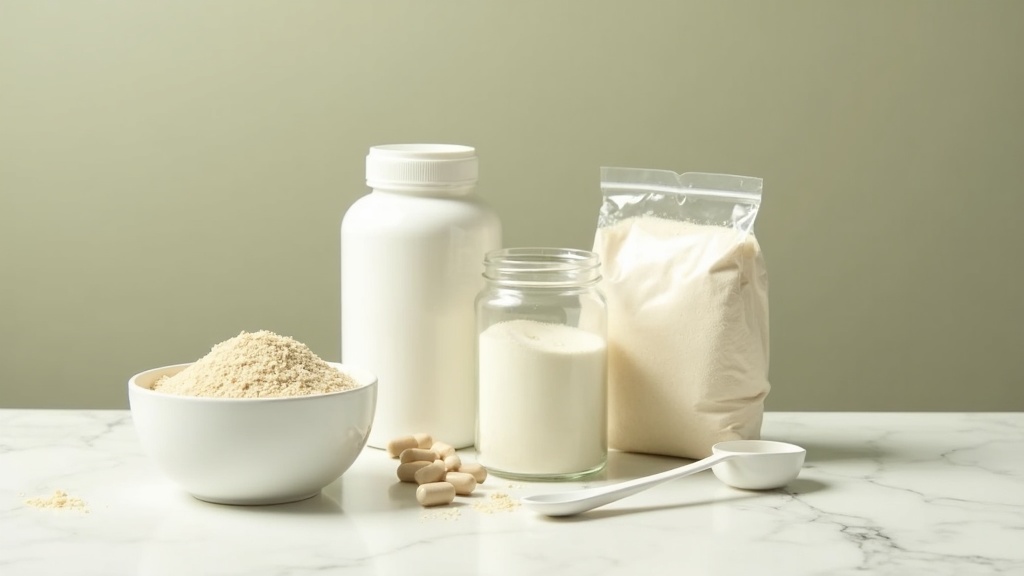
Fiber supplements are an add-on, not a substitute for food. Before you buy anything, the first move is closing the gap with whole foods, because beans, oats, fruit, and vegetables deliver fiber plus the vitamins and polyphenols a powder never will.
If you are managing high cholesterol, diabetes, or chronic constipation, talk to your clinician first, and do not stop any prescribed medication. A supplement is an adjunct to that care, not a replacement.
A few people should be cautious. If you have trouble swallowing, a history of bowel obstruction or strictures, or you are on multiple medications, get medical guidance before adding a gel-forming fiber, since it can interfere with swallowing and with drug absorption if taken at the same time. Always take fiber with a full glass of water, and separate it from medications by about 2 to 4 hours.
How much fiber you actually need

Fiber is the part of plant food your small intestine cannot digest. It splits into two broad types: soluble fiber, which dissolves into a gel and slows digestion, and insoluble fiber, which adds bulk and speeds transit. That textbook split matters less than one property the labels rarely mention: whether the fiber stays gel-forming all the way through your gut or gets fermented and broken down by bacteria.
The intake gap is the real reason most people land in the supplement aisle. The Adequate Intake is about 25 grams a day for women and 38 grams for men, but federal dietary survey data show the US population averages only around 16 grams. That is roughly half of target, and most adults fall short.
A supplement can help close that gap, but a single scoop typically adds only 3 to 6 grams. It nudges you toward the target; it does not do the whole job. Whole foods still have to carry most of the load.
Strong evidence: start here
These two earn the pick because they hold their gel structure through the gut, which is the property that drives the measurable cholesterol, glucose, and stool benefits.
Psyllium husk (Plantago ovata)
Psyllium is the most evidence-backed fiber supplement on the shelf, full stop. It forms a thick, viscous gel that resists fermentation, so it works in three directions at once.
For cholesterol, a meta-analysis of 28 randomized trials in the American Journal of Clinical Nutrition found that a median dose of about 10.2 g/day lowered LDL cholesterol by 0.33 mmol/L (roughly 13 mg/dL) and also reduced non-HDL cholesterol and apolipoprotein B. Those are the lipid targets clinicians actually track, not a surrogate.
For blood sugar, a 2024 GRADE-assessed meta-analysis of 19 trials in BMC Endocrine Disorders found psyllium lowered fasting glucose by about 6.9 mg/dL and HbA1c by 0.75 percentage points versus placebo. For regularity, it is the only fiber supplement the American College of Gastroenterology review of the evidence backed for chronic constipation, per Lambeau and McRorie's 2017 analysis.
- Dose used in trials: about 5 to 10 g/day, often split, taken with a full glass of water before meals for glucose effects.
- Form to look for: plain psyllium husk powder or capsules. Skip the brightly flavored, sugar-loaded single-serve packets unless taste is the only thing keeping you consistent.
- Skip if: you have swallowing difficulty or a history of bowel narrowing, or take it within 2 hours of medication.
Actionable takeaway: start at 1 teaspoon (about 3-4 g) in a tall glass of water once a day, and add a teaspoon every few days. Ramping slowly is how you avoid the gas and bloating that make people quit in week one.
Beta-glucan (oat and barley fiber)
Beta-glucan is the other gel-forming fiber with an FDA-authorized heart-health claim, and it earns its place for the same reason psyllium does: viscosity that survives digestion. The McRorie and McKeown physics review groups it with psyllium as a true gel-former, which is why both blunt post-meal glucose and trim LDL.
- What the evidence shows: roughly 3 g/day of oat beta-glucan is the dose tied to modest LDL reduction in the cholesterol claim literature.
- Form to look for: concentrated oat-bran or barley beta-glucan powders, or simply eating oats and barley, which is often cheaper.
- Skip if: you have celiac disease and choose barley beta-glucan, since it contains gluten. Oat beta-glucan is the safer pick for gluten avoiders if it is certified gluten-free.
Moderate evidence: useful for the right person
Methylcellulose
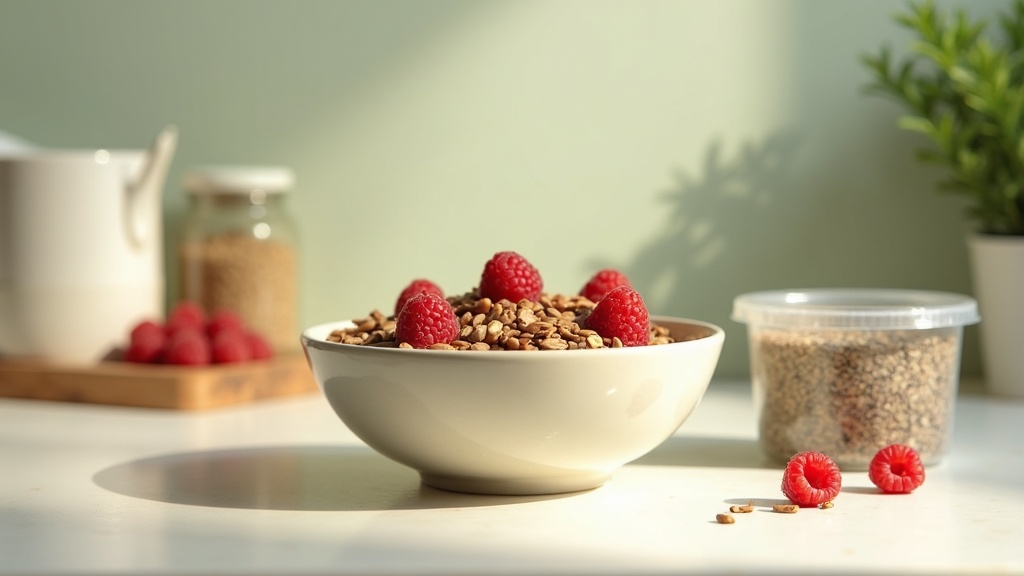
Methylcellulose is the fiber I reach for when psyllium causes gas. It is completely non-fermentable, so it produces almost no bacterial gas, which the tolerance literature flags as the gentlest profile in the category.
The tradeoff is that its evidence base for cholesterol and glucose is thin compared with psyllium. It is best understood as a clean bulking agent for regularity rather than a metabolic tool. If your only goal is comfortable, predictable stools without bloating, it is a reasonable swap.
- Dose: follow the label, usually 2 g per serving, with a full glass of water.
- Skip if: you want cholesterol or blood-sugar benefits, since the trial support there is weak.
Partially hydrolyzed guar gum (PHGG)
PHGG is a soluble, low-viscosity fiber with a niche but real use case: irritable bowel syndrome. A 2006 trial in the journal Nutrition found PHGG reduced symptoms in both constipation- and diarrhea-predominant IBS and eased abdominal pain, with a good tolerability profile.
It is gently fermentable and tends to cause less bloating than inulin at comparable doses. Worth considering if you have IBS and inulin wrecks you, but it is not a general-purpose cholesterol or weight fiber.
- Skip if: you are simply trying to lower LDL, where psyllium has far stronger data.
Popular but evidence-thin
Inulin and FOS (chicory root fiber)
Inulin and fructo-oligosaccharides are the prebiotic darlings added to bars, yogurts, and "gut health" gummies. They genuinely feed beneficial bacteria, but the catch is fermentation. Because they are rapidly fermented, they do not form a lasting gel and show little cholesterol, glucose, or laxative benefit, while reliably producing gas.
The tolerance review in Advances in Nutrition found inulin is comfortable only up to roughly 5 to 10 g/day before flatulence and bloating climb. If you want a prebiotic, fine, but keep the dose low. For the prebiotic side of gut health, our complete guide to probiotics covers the fuller picture.
Wheat dextrin (Benefiber-style)
Wheat dextrin is marketed as a taste-free fiber you can stir into anything, and that part is true. The problem is what happens after you swallow it. It is readily fermented and loses its water-holding capacity, so it does not function as a laxative, and the Lambeau and McRorie analysis notes it can even raise post-meal glucose rather than lower it. Convenient to drink, but the wrong tool if you want any of the three benefits people buy fiber for.
Glucomannan
Glucomannan (konjac) is sold hard for weight loss. The honest read: pooled trials show only a small, often non-significant difference in weight versus placebo, and the constipation data are mixed. It is also the fiber most associated with choking risk if taken dry, so it carries a real swallowing caution. If you want it for regularity, psyllium does the job with far more evidence and less risk.
What to look for when buying
A few rules cut through the marketing fast.
Pick by goal, not by packaging. For cholesterol or blood sugar, choose a gel-forming fiber (psyllium or oat beta-glucan); for gas-free regularity, choose non-fermentable methylcellulose; for IBS, consider PHGG. Match the fiber to the job.
Buy plain over flavored. The plain bulk tub is usually a fraction of the cost per effective gram versus flavored single-serve packets, which add sugar or sweeteners you do not need. Check the label for the grams of fiber per serving and divide by price to compare honestly.
Favor single-ingredient products and third-party testing where available, such as USP Verified or NSF certification. Avoid proprietary "fiber blends" that bury a little psyllium under cheap fermentable filler. For our full methodology, see how we review supplements.


As an Amazon Associate, UsefulVitamins.com earns from qualifying purchases at no extra cost to you. We only recommend products supported by published research or third-party testing.
When a supplement is not enough
Fiber is an adjunct. Some signals mean it is time to stop self-treating and see a clinician rather than add another scoop.
See your doctor promptly if you have blood in your stool, unexplained weight loss, a sudden persistent change in bowel habits after age 50, or constipation that does not respond to fiber and fluids over a couple of weeks. Those can signal something a supplement will not fix.
If your LDL or HbA1c stays above target despite diet, exercise, and fiber, that is a medication conversation, not a reason to triple your psyllium. Blood work changes the question, and without it you are guessing.
FAQ
What is the single best fiber supplement?
For most people, plain psyllium husk. It is the only common fiber supplement with strong human trial evidence across all three big goals at once: lower LDL cholesterol, better fasting glucose and HbA1c, and reliable regularity. Start at 1 teaspoon in water and build up slowly.
Why does fiber give me gas, and which one won't?
Gas comes from gut bacteria fermenting fiber. The most fermentable ones, inulin and FOS, produce the most. If gas is your problem, methylcellulose is non-fermentable and produces almost none, and psyllium is only minimally fermented, so both are gentler.
Is fiber better for constipation or for cholesterol?
Psyllium does both, which is why it is the default pick. For constipation specifically, our best fiber for constipation guide goes deeper. For cholesterol, the gel-forming property is what matters, so stick to psyllium or oat beta-glucan rather than fermentable fibers.
Can I just eat more fiber instead of supplementing?
Yes, and you should try first. Beans, oats, berries, and vegetables deliver fiber plus nutrients no powder contains. A supplement earns its place when your diet falls short or you need a specific therapeutic dose, as our complete guide to fiber explains.
How long until fiber works?
For regularity, often within a few days. For cholesterol and blood sugar, the trials ran for weeks to months, so give it at least 4 to 8 weeks of consistent daily use before judging the metabolic effect.
The bottom line on the best fiber supplements
Strip away the packaging and the picture is simple: the fibers that hold their gel through your gut do the work, and the ones that ferment away mostly make gas. Psyllium husk is the best default because it is the most studied for cholesterol, glucose, and regularity, and it is cheap. Methylcellulose is the gentle backup for gas-free regularity, and PHGG is the niche pick for IBS. Inulin, wheat dextrin, and glucomannan are easy to skip for these goals.
Next steps:
- Start plain psyllium husk at 1 teaspoon in a full glass of water, building up over a week or two.
- Keep eating whole-food fiber; the supplement closes the gap, it does not replace food.
- If you are treating a condition, see how we review supplements and bring the plan to your clinician.
As an Amazon Associate, I earn from qualifying purchases. Product recommendations are based on real reviews and independent research.
Reviewed by Sarah Thompson, Registered Dietitian, focused on vitamin and mineral nutrition.
This article is for informational purposes and not medical advice. Fiber supplements can interact with medications and health conditions, including by altering how drugs are absorbed. Consult a licensed physician before starting any supplement, particularly if you are pregnant, nursing, taking prescription medications, or managing a chronic condition.
