

Affiliate disclosure: this article contains affiliate links. As an Amazon Associate, UsefulVitamins.com earns from qualifying purchases at no extra cost to you.
If you're searching for the best supplement starter kit on Amazon, you're probably staring at a screen full of bottles and trying to figure out which five or six are the real foundations and which fifteen are noise.
Quick Answer: the starter kit, in order of priority
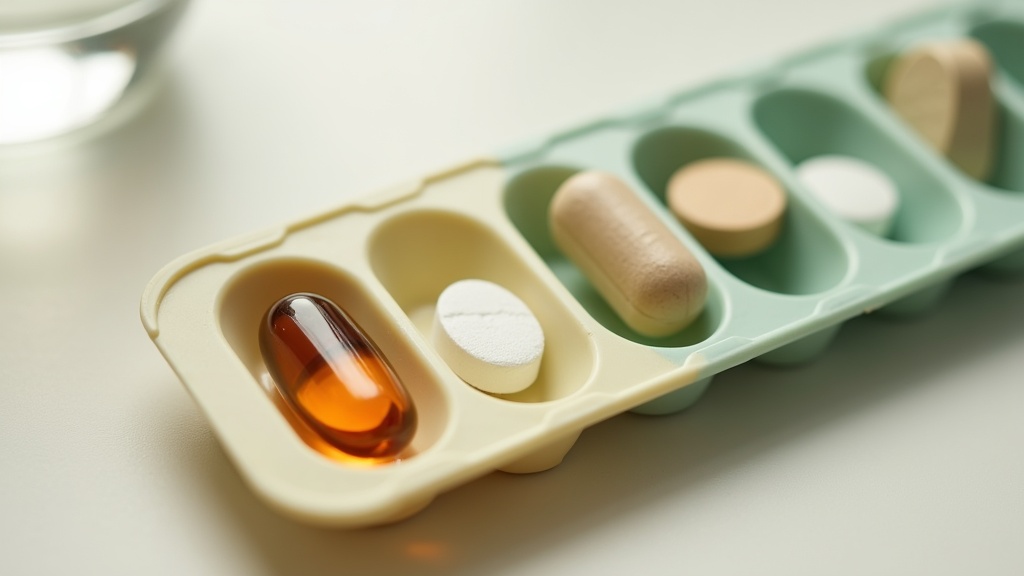
The 2 to 3 we'd start with first:
- Vitamin D3 (1,000 to 2,000 IU/day): the most common nutrient gap in adults at higher latitudes, with the strongest signal when correcting documented low 25(OH)D.
- Omega-3 EPA/DHA (1,000+ mg combined): most US adults eat fatty fish less than once a week, and supplementation has cardiovascular and anti-inflammatory data in deficient and elevated-triglyceride groups.
- Magnesium glycinate (200 to 400 mg elemental): typical US intake covers only about 60 to 70 percent of the RDA, and glycinate closes that gap without the gut side effects of oxide.
Who should NOT start with these:
- Anyone with stage 3b+ chronic kidney disease, hypercalcemia, sarcoidosis, or on warfarin, levothyroxine, or anti-arrhythmic drugs without first checking interactions with their clinician.
Do FIRST, before any bottle goes in the cart: ask your doctor for a basic blood panel that includes 25(OH)D, ferritin, and B12. Two or three lab values are worth more than ten guesses about which gap your specific chemistry actually has.
What a starter kit is actually for
A starter kit is not a treatment plan. It's a small set of nutrients chosen to close the gaps that show up most often in a typical Western diet, with low risk and decent evidence behind each one. The framing is gap-closure, not optimization.
The USPSTF 2022 statement on vitamin and multivitamin supplementation gives an "I" (insufficient evidence) rating for routine multivitamin or single-nutrient supplementation to prevent cardiovascular disease or cancer in non-deficient adults, and a Grade D against beta-carotene and vitamin E for that purpose. That is the honest screening evidence base. It does not mean nothing works. It means broad use in well-fed adults is not where the strongest signal lives. The signal lives in correcting documented deficiency, in adjuncts that close real intake gaps (omega-3 in low-fish diets, magnesium in low-greens diets), and in performance-tested aids like creatine for adults doing resistance training.
A defensible starter kit is small. Most adults do not need fifteen bottles. More bottles are not always more useful. Five or six cover the territory, and the whole thing lands under $80/month on Amazon if you stick to commodity brands with third-party testing.
The foundations, in order of evidence and gap-closure value

1. Vitamin D3 (cholecalciferol)
Why it helps: vitamin D deficiency is common at higher latitudes, in darker-skinned populations, in adults indoors most daylight hours, and in adults over 65. Correcting documented deficiency has the clearest data, with reductions in falls and fractures in older adults and supportive signals on autoimmune disease and mortality in low-baseline subgroups.
What the trials show: the VITAL trial of 25,871 adults randomized to 2,000 IU/day cholecalciferol or placebo did not significantly reduce primary cardiovascular or cancer endpoints in the unselected population, but did show favorable signals on autoimmune disease incidence and on mortality in adults with low baseline 25(OH)D. Correcting documented low status is where the signal lives, not blanket high-dose use in replete adults.
Dose used in trials: 1,000 to 2,000 IU/day for general supplementation; higher (4,000 to 5,000 IU) only when correcting documented deficiency under clinician supervision. NIH ODS lists 4,000 IU/day as the tolerable upper intake from supplements.
Form to look for: D3 (cholecalciferol) in an oil-based softgel. NOW Foods Vitamin D-3 1,000 IU and Sports Research D3 + K2 both clear the bar under $20 with published third-party testing. Skip D2 (ergocalciferol) unless prescribed.
Skip if: you have hypercalcemia, primary hyperparathyroidism, sarcoidosis, or a recent 25(OH)D already above 60 ng/mL. Ask your doctor about a 25(OH)D blood test before assuming you're low.
2. Omega-3 EPA/DHA
Why it helps: the typical US adult eats fatty fish less than once a week. The American Heart Association recommends two servings weekly, and most people miss it. Supplementation has the strongest cardiovascular data in adults with elevated triglycerides and supportive anti-inflammatory data in joint and mood conditions.
What the trials show: the REDUCE-IT trial of icosapent ethyl in 8,179 statin-treated adults with elevated triglycerides showed a 25 percent relative reduction in major adverse cardiovascular events versus placebo. That is a prescription-grade product at 4 g/day; over-the-counter fish oil delivers a smaller dose, and cardiovascular data in unselected adults is mixed. The plausible mechanism and favorable risk profile still earn this a foundational slot at 1,000+ mg combined EPA+DHA per day.
Dose used in trials: 1,000 to 2,000 mg combined EPA+DHA daily; higher (2,000 to 4,000 mg) for elevated triglycerides under clinician care.
Form to look for: triglyceride or re-esterified triglyceride form, IFOS five-star tested. Nordic Naturals Ultimate Omega, NOW Foods Ultra Omega-3, and Carlson Elite Gems all carry IFOS or ConsumerLab approval. Skip "fish body oil" with no purity assay; skip krill oil at this stage, the EPA+DHA per dollar is poor.
Skip if: you are on warfarin, dabigatran, or another anticoagulant without checking with your prescriber, or have a fish allergy severe enough to react to refined oils.
3. Magnesium glycinate
Why it helps: NHANES dietary surveys consistently put the average US adult at about 60 to 70 percent of the magnesium RDA, with older adults, women on hormonal contraceptives, people on PPIs, and people on loop diuretics running lower. The gap-closure case is real even before sleep and muscle-tension use cases.
What the trials show: a 2017 systematic review (Mah and Pitre, PMID 28178022) found small but consistent improvements in sleep onset and subjective sleep quality in older adults supplementing magnesium. Glycinate's tolerability is what makes it the right starter: a 200 to 400 mg dose runs for months without the loose stools that end most magnesium courses.
Dose used in trials: 200 to 400 mg elemental magnesium per day, with food, ideally in the evening.
Form to look for: true magnesium bisglycinate (some products list glycinate but bulk it with oxide; check the supplement facts panel). Doctor's Best High Absorption Magnesium and Pure Encapsulations Magnesium Glycinate both clear this bar. For deeper form analysis, see our best magnesium supplement overall comparison.
Skip if: you have stage 3b or worse chronic kidney disease (eGFR under 45), or take certain antibiotics or bisphosphonates without separating doses by at least two hours.
4. A broad-spectrum multivitamin (honest framing)
Why it helps, with caveats: a multivitamin is the insurance policy of a starter kit, and the honest framing matters. The USPSTF 2022 recommendation gives a Grade I (insufficient evidence) rating for routine multivitamin use to prevent cardiovascular disease or cancer in non-deficient adults. The broad disease-prevention case is not where the signal is. The case in a starter kit is different: low-level coverage of nutrients that drift low on inconsistent or restrictive diets (B12 on plant-based, folate on gluten-free, zinc on low-meat, iodine on no-dairy-no-seafood patterns).
What the trials show: the NIH ODS multivitamin/mineral fact sheet summarizes evidence as mixed but generally favorable on micronutrient adequacy, with the COSMOS trial showing a modest signal on cognitive endpoints and the Physicians' Health Study II showing a small reduction in total cancer incidence in older men. Insurance-level coverage, not transformative effects.
Dose used in trials: standard daily formulations at roughly 100 percent of the RDA for most included nutrients.
Form to look for: USP Verified or ConsumerLab-approved. Nature Made Multi for Him/Her (USP Verified, around $10 to $15), Centrum Adult, and Garden of Life mykind Organics all clear this bar. Avoid "mega-dose" multivitamins delivering 1,000 to 5,000 percent of the RDA on water-soluble nutrients without a clinical reason.
Skip if: you have hemochromatosis and the multivitamin contains iron. Men past 50 generally do better on an iron-free formulation.
Actionable takeaway: the real question for a starter-kit multivitamin is not "is it the most premium brand," it is "is it USP Verified and dosed at roughly 100 percent of the RDA." A $12 USP-Verified bottle outscores a $45 boutique brand with no testing every time.
5. Creatine monohydrate (if you do any strength training)
Why it helps: creatine is the most evidence-backed performance supplement in the category and has growing data on cognitive endpoints in older adults and sleep-deprived populations. It belongs in a starter kit only if there's resistance training in the picture.
What the trials show: the ISSN 2017 position stand summarizes hundreds of RCTs showing reliable strength gains of roughly 5 to 15 percent over placebo at 3 to 5 g/day. The safety profile across decades of use is excellent.
Dose used in trials: 3 to 5 g/day, every day. No loading phase required for steady-state benefit.
Form to look for: plain creatine monohydrate, ideally Creapure-sourced or USP/NSF verified. Bulk Supplements creatine monohydrate (Creapure) and NOW Foods Sports Creatine Monohydrate both clear the bar under $20 for a 500 g tub.
Skip if: you have stage 3+ chronic kidney disease without nephrology sign-off. Creatine raises serum creatinine slightly as a measurement artifact, not damage, which can confuse routine labs.
Optional add-ons that earn a slot in year one
Vitamin K2 (MK-7)
A small partner to D3. Vitamin K2 in the MK-7 form directs calcium toward bone matrix rather than arterial walls, and modest evidence (Knapen et al., PMID 30575901) suggests a role in slowing arterial calcification at 90 to 180 mcg/day. Many D3 products bundle K2, which is sensible for adults on more than 1,000 IU of D3 long-term. Skip if on warfarin without prescriber sign-off; vitamin K interferes with INR.
A multi-strain probiotic, with realistic expectations
Probiotic evidence is strain-specific. A multi-strain product carrying named strains (Lactobacillus rhamnosus GG, Bifidobacterium lactis BB-12, Saccharomyces boulardii CNCM I-745) at 5 to 20 billion CFU has reasonable data in antibiotic-associated diarrhea and short-course GI upset. The broad-population "gut health" claim is weaker. Look for named strains and CFU at expiry, not at manufacture. Culturelle, Florastor, and Visbiome are the most consistently tested options.
Whey or plant protein, if food intake is short
Most adults benefit from 0.8 to 1.2 g/kg protein daily, more for older adults and active lifters. If breakfast is a coffee and lunch is a salad, a single 20 to 25 g scoop of whey isolate or a pea-rice blend closes a real gap. NSF Certified for Sport options (Klean Athlete, Thorne Whey Protein Isolate, Naked Whey) avoid heavy-metal contamination flagged in older Clean Label Project reports.
What to skip in year one
This part matters as much as the picks. The starter-kit category is a magnet for products that sell hard and earn little. None of these are "never useful." They are not foundation-tier in year one, and the money is better spent on the bottles above.
- Collagen peptides for general health or sport recovery. Modest skin-elasticity data at 2.5 to 10 g/day in cosmetic endpoints. As a protein source or recovery aid, plain whey or pea-rice blends deliver more usable amino acids per dollar.
- BCAAs. If you hit your daily protein target, BCAAs are redundant. Cost-per-gram of usable leucine is poor versus a regular meal.
- "Fat burners" and thermogenic stacks. Mostly caffeine + green tea extract + yohimbine in a $40 bottle. The yohimbine carries cardiovascular risk for sensitive users.
- "Detox" cleanses, liver flushes, parasite protocols. Your liver and kidneys are the detox system. No meaningful clinical evidence for the marketed claim.
- Mega-dose B-complex without a documented need. The 5,000 to 10,000 percent RDA "energy" formulas are mostly excreted. The methylated folate and B12 review supports methylated forms for documented MTHFR variant carriers, which is a separate conversation.
- Standalone biotin at 5,000 to 10,000 mcg. Biotin deficiency in healthy adults is rare, the hair-and-nails marketing oversells the data, and high-dose biotin interferes with thyroid lab assays.
What to look for when buying
The whole kit can land under $80/month on Amazon if you stick to commodity brands with real third-party testing. The decision shortcut:
| Question | Look for |
|---|---|
| Third-party tested? | USP Verified, NSF Certified for Sport, ConsumerLab Approved, or IFOS five-star (fish oil) |
| Dose per serving close to trial dose? | Vitamin D 1,000 to 2,000 IU, omega-3 1,000+ mg EPA+DHA, magnesium 200 to 400 mg elemental, creatine 3 to 5 g |
| Correct form? | D3 not D2, magnesium glycinate not oxide, plain creatine monohydrate, methylated B12/folate only if MTHFR confirmed |
| Proprietary blends? | Avoid. Per-ingredient mg should be on the supplement facts panel |
| Cheap because the ingredient is cheap, or cheap because the dose is half? | Compare elemental mg per serving across brands at the same form |
For Amazon-specific picks under $20, see our best supplements on Amazon under $20 breakdown.
Actionable takeaway: if you stick to USP, NSF, IFOS, or ConsumerLab-marked products at trial-tested doses, you're already in the top quartile of supplement shoppers. The bottle next to yours with the holographic foil and no testing mark almost certainly cost more and proved less.
When supplements are not enough
A starter kit is built around healthy adults with normal labs. If any of the following apply, stop self-supplementing and book an appointment:
- Symptoms that point to a specific deficiency (numbness, persistent fatigue, hair loss in clumps, easy bruising, persistent cramps) without a recent workup
- Pregnancy, lactation, or trying to conceive (belongs with an OBGYN)
- Chronic disease management (kidney disease, autoimmune conditions, cardiovascular disease, diabetes)
- Prescription medications that interact with foundational nutrients (warfarin, levothyroxine, certain antibiotics, lithium, anti-seizure medications)
- A lab value outside the reference range (high or low 25(OH)D, ferritin under 30, B12 in the low range)
Supplements are adjuncts, not workups. Two or three lab values cost less than a year of guessing-wrong bottles.
FAQ: starter kit basics
Do I really need a multivitamin if I eat reasonably well?
If your diet is broad and includes leafy greens, fatty fish, dairy or fortified alternatives, and a protein source most days, a multivitamin is a coverage policy more than a fix. The USPSTF rates it Grade I for disease prevention. Low-risk optional add-on; skip it if your food coverage is genuinely good, keep it if your meals are inconsistent.
What's the most common mistake first-time supplement buyers make?
Stacking. Ten bottles in the first month, taken inconsistently, with no idea which one (if any) is doing something. Start with two or three, run daily for six to eight weeks, then add one more.
Should I take everything in the morning or split through the day?
Vitamin D, K2, omega-3, and the multivitamin with breakfast or lunch (fat-soluble, better absorbed with food). Magnesium in the evening with food. Creatine any time, as long as it's daily.
How do I know if the bottle is real and not a counterfeit?
Buy from Amazon's "ships from and sold by Amazon.com" listings or the brand's official storefront, not third-party sellers. Cross-reference the USP, NSF, or ConsumerLab verified-product list on those organizations' sites.
Is the kit different for women vs men?
The five foundations are the same. Women under 50 may need iron-containing multivitamins; men past 50 do better on iron-free formulations; pregnancy or lactation belongs with your OBGYN, not a starter-kit article.
Conclusion: the bottom line on the best supplement starter kit on Amazon
The honest read on a first-year kit: vitamin D3, omega-3 EPA/DHA, magnesium glycinate, a third-party-tested multivitamin, and creatine if you lift cover the territory for most adults on a typical Western diet, at a total cost well under $80/month if you stick to commodity brands with USP, NSF, IFOS, or ConsumerLab verification. Add vitamin K2 alongside D3 for long-term D3 use, add a probiotic or protein powder if a real gap exists, and skip the collagen, BCAA, fat-burner, detox, mega-dose B, and standalone biotin tier entirely in year one. These bottles close real gaps from typical Western intake. None of them replace food, sleep, movement, or basic medical care.
Next steps:
- Ask your doctor about a basic blood panel (25(OH)D, ferritin, B12) before assuming you're low on anything specific.
- Pick three foundations and run them daily for six to eight weeks before adding a fourth or fifth.
- For our research methodology and how we evaluate brands, see how we review supplements, and for the dietitian behind this piece, see the Sarah Thompson author page.
Reviewed by Sarah Thompson, Registered Dietitian, focused on vitamin and mineral nutrition.
This article is for informational purposes and not medical advice. Dietary supplements can interact with medications and chronic health conditions. Consult a licensed clinician before starting any supplement, particularly if you are pregnant, nursing, taking prescription medications, or managing a chronic condition.
Recommended Products

As an Amazon Associate, UsefulVitamins.com earns from qualifying purchases at no extra cost to you. We only recommend products supported by published research or third-party testing.
