
If you are searching for the best supplements for gamers, you have probably scrolled past three energy drink ads, two "esports-grade" pre-workouts in neon tubs, and one influencer promising a 30 ms reaction time gain from a $60 bottle of mystery powder.
Quick Answer: which supplements actually help gamers
The 2 to 3 we'd start with first:
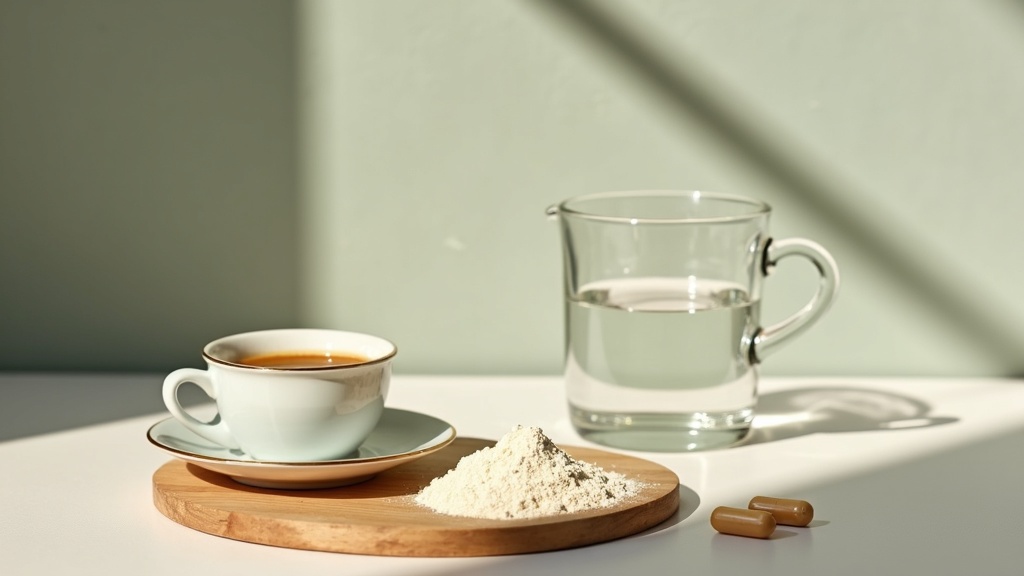
- Caffeine 100 to 200 mg paired with L-theanine 200 mg, 30 minutes pre-session: the most replicated nootropic combination for attention and reaction time.
- Creatine monohydrate 3 to 5 g daily: primarily a muscle supplement, but a small emerging body of human RCTs shows cognitive benefit under sleep deprivation and high mental load.
- Lutein and zeaxanthin 10 mg + 2 mg daily: the only macular pigment intervention with RCT signal for visual fatigue and contrast sensitivity in screen-heavy adults.
Who should NOT start with these:
- Anyone using supplements as a reason to skip sleep, hydration, posture, and the 20-20-20 rule. Those are the foundation.
- Anyone under 18, with a cardiac arrhythmia, or on a stimulant prescription (Adderall, Vyvanse, Concerta) without prescriber review of additional caffeine load.
Do FIRST, before any supplement: lock in a fixed sleep window, a chair that does not destroy your lumbar spine after four hours, and the American Optometric Association 20-20-20 rule (every 20 minutes, look 20 feet away for 20 seconds). A nootropic stack cannot out-supplement a 3 AM bedtime and zero break structure.
What "gamer performance" actually is, biologically
High-volume gaming taxes four discrete systems, and the supplement conversation makes sense only when you separate them.
Reaction time and sustained attention are dopaminergic and noradrenergic processes anchored in prefrontal cortex and the locus coeruleus. The relevant pharmacology is anything that modulates dopamine reuptake at the DAT (which is why amphetamine works, and why ESL bans it) or that tunes alpha-wave alertness without sympathetic overshoot (which is what the caffeine plus L-theanine literature actually describes).
Working memory and cognitive endurance depend on cerebral energetics. The brain at high cognitive load increases ATP turnover and creatine phosphate cycling in neurons. This is the mechanistic frame for the creatine cognitive literature: not "more muscle" but more phosphocreatine buffer when neurons are working hard.
Visual fatigue is a combination of accommodation strain, reduced blink rate, and oxidative stress on retinal photoreceptors from prolonged high-luminance exposure. Macular pigment density (lutein and zeaxanthin) is the photoprotective layer with the most direct human RCT evidence here.
Sleep displacement is the structural problem under most gamer fatigue. Late sessions push sleep onset, blue-light exposure suppresses melatonin, and post-session adrenaline keeps the autonomic system in a sympathetic-dominant state. No supplement reverses a 2 AM bedtime followed by a 7 AM alarm.
There is no medical standard of care for "gaming performance." There is a standard of care for the conditions that often hide underneath it: ADHD, anxiety, chronic insufficient sleep, and refractive error. If reaction time and attention problems are severe enough to interfere with school, work, or non-gaming life, a clinician evaluation is the more honest first step.
The supplements with the strongest evidence
Caffeine and L-theanine for attention and reaction time
Why it helps: caffeine is an adenosine A1 and A2A receptor antagonist that blocks the buildup of adenosine through a wake cycle, the primary signal of cognitive fatigue. It modestly raises dopamine release in striatum, which translates to faster simple and choice reaction times. L-theanine is a non-protein amino acid from tea leaves that modulates glutamate uptake and increases alpha-wave EEG activity. The combination keeps the caffeine attention boost while shaving off the jittery sympathetic edge.
What the trials show: the 2008 double-blind crossover by Owen and colleagues tested 50 mg caffeine plus 100 mg L-theanine and found improvements in attention-switching and accuracy on demanding cognitive tasks compared with either alone. A broader 2010 review by Einother and Giesbrecht summarized eight RCTs and concluded the attention and reaction-time signal is small but reliable, with the cleanest effects at 100 to 200 mg caffeine plus 200 mg L-theanine. The effect sizes are modest, not "30 ms reaction time gain" marketing, but they are real and replicable.
Dose used in trials: 50 to 200 mg caffeine paired with 100 to 200 mg L-theanine, taken 30 to 45 minutes pre-session. A standard 8 oz coffee delivers 80 to 120 mg caffeine. The simplest stack is one coffee plus one 200 mg L-theanine capsule.
Form to look for: Suntheanine (patented L-isomer with the cleanest trial data) or any standardized L-theanine. For caffeine, plain coffee or plain caffeine pills. Skip "gaming energy" tubs that bury 75 mg caffeine in a proprietary "focus matrix" of taurine, B6, and food coloring.
Skip if: you have an arrhythmia, you are on a stimulant prescription without prescriber review, or you are pregnant. Limit total daily caffeine to 400 mg.
Creatine monohydrate for cognitive endurance under load
Why it helps: creatine is best known for muscle, but the brain is a significant creatine consumer. Neurons buffer ATP demand through the creatine phosphate cycle, and brain creatine stores rise measurably with supplementation. The cognitive case is strongest under high mental load, sleep deprivation, or hypoxia, exactly the gamer scenario at hour four of a tournament practice block.
What the trials show: a 2018 systematic review and meta-analysis by Avgerinos and colleagues of creatine for cognitive function in healthy adults concluded that the strongest signal sits in short-term memory and reasoning under cognitively demanding conditions, with no clear effect on simple attention. A 2021 narrative review by Roschel and colleagues highlighted that effects are most pronounced in vegetarians, vegans, and sleep-deprived populations, where baseline brain creatine is lower.
Dose used in trials: 3 to 5 g/day of creatine monohydrate, taken consistently. Cognitive effects build over weeks. Skip the "loading phase" of 20 g/day for the cognitive use case; it adds GI side effects without speeding the brain saturation curve meaningfully.
Form to look for: plain creatine monohydrate, micronized if you mix it in cold water. Skip "creatine HCL," "buffered creatine," and any blend marketed as gamer-specific at a higher price.
Skip if: you have stage 3+ chronic kidney disease, or you are taking nephrotoxic medications without clinician review.
Lutein and zeaxanthin for visual fatigue and screen tolerance
Why it helps: lutein and zeaxanthin are the carotenoids that accumulate in the macular pigment of the retina. They absorb high-energy blue light and quench reactive oxygen species at the photoreceptor layer, both of which matter under sustained high-luminance screen exposure. Macular pigment optical density is reliably raised by supplementation.
What the trials show: a 2017 RCT by Stringham and colleagues tested 10 mg lutein plus 2 mg zeaxanthin daily for 6 months in healthy young adults with heavy screen exposure and found significant improvements in contrast sensitivity, glare disability, glare recovery, and self-reported visual fatigue compared with placebo. This is one of the few supplement RCTs designed specifically for screen-burdened adults.
Dose used in trials: 10 mg lutein plus 2 mg zeaxanthin daily, with a meal containing fat for absorption.
Form to look for: FloraGLO lutein and ZeaONE or OmniXan zeaxanthin (the trial-tested branded forms). Skip "eye health" blends that combine sub-trial lutein with a long list of weak adds.
Skip if: you are a heavy smoker considering high-dose beta-carotene combinations; lutein and zeaxanthin themselves are well tolerated.
Actionable takeaway: if you can only afford one supplement on this list, caffeine plus L-theanine gives the most immediate, felt benefit. Creatine and lutein and zeaxanthin both compound over weeks, which is why they are easy to dismiss after a single dose.
Supplements with moderate evidence (consider with caveats)
Citicoline (CDP-choline) for sustained attention
Citicoline is a choline donor that elevates phosphatidylcholine synthesis in neurons and supports acetylcholine production. A 2012 RCT by McGlade and colleagues of 250 to 500 mg/day citicoline in healthy adolescent females (n=75) reported improvements in sustained attention on a continuous performance task over 28 days. Most subsequent work has been in older adults with mild cognitive impairment rather than healthy gamers. Worth considering at 250 to 500 mg; Cognizin is the trial-tested branded form.
Bacopa monnieri for working memory
Bacopa has a small but consistent RCT signal for working memory and recall, with the catch that effects build over 8 to 12 weeks of daily use. The 2008 RCT by Stough and colleagues used 300 mg/day of a standardized extract (CDRI 08, 50% bacosides) for 12 weeks and found modest improvements on cognitive tests in healthy adults. Time-to-benefit is long enough that most gamers will abandon the supplement before it works. Worth it for a long-horizon stack, not for a tournament next weekend.
L-tyrosine under sleep-deprivation load
L-tyrosine is the precursor to dopamine and norepinephrine. The replicated finding is that 100 to 150 mg/kg partially reverses the cognitive decrement induced by sleep deprivation or sustained operational load, as in Mahoney and colleagues 2007. Trial doses are high (7 to 12 g for a 75 kg adult), more than most consumer capsules deliver. Useful for an unavoidable all-night session, not as a daily stack item. Skip if you have hyperthyroidism, are on an MAOI, or are on thyroid replacement.
Omega-3 EPA/DHA, magnesium glycinate, and Tongkat Ali
Three lower-priority adds worth naming. Omega-3 fatty acids have modest reliable signals for depressive symptom severity in meta-analyses; 1 to 2 g/day combined EPA+DHA from a triglyceride-form, third-party-tested fish oil is a low-risk add for gamers on a screen-and-pizza dietary profile. Magnesium glycinate 200 to 400 mg 30 to 60 minutes before sleep modestly improves sleep onset latency in adults with subclinical deficit; it will not overcome a 2 AM bedtime but it will help a 10:30 PM bedtime feel less wired (see our best supplements for shift workers guide for the sleep-displacement overlap). Tongkat Ali (Eurycoma longifolia) has an emerging cognitive and HPA-axis signal in small RCTs, with the catch that human evidence is still thin and the dose-trial-supplement gap is wide. Skip Tongkat Ali if you have hormone-sensitive conditions or are on testosterone replacement.
Popular but evidence-thin (skip, or treat as low-priority)
"Gamer supps" tubs (G FUEL, Gamer Supps, and category clones)
These products dominate the gamer search results and the influencer-sponsorship economy. Read the supplement facts panel honestly. The active ingredients are usually caffeine (150 to 300 mg), taurine, B vitamins, food coloring, and a "focus" proprietary blend that buries any actual nootropic at a sub-trial dose. There are no published RCTs on the branded blends themselves for any gaming endpoint. You are paying premium pricing for a less measured version of caffeine. If the caffeine is the active ingredient, buy it as coffee or a caffeine pill and add your own L-theanine. Any product that lists more than six ingredients under a single proprietary blend label is mathematically dosing most of them at homeopathic levels.
What to look for when buying
For gamer-relevant supplements, the buying criteria are tight:
- Form: Suntheanine for L-theanine; creatine monohydrate (micronized acceptable); FloraGLO lutein and ZeaONE or OmniXan zeaxanthin; Cognizin for citicoline; CDRI 08 (50% bacosides) for Bacopa; triglyceride-form fish oil; magnesium glycinate.
- Third-party testing: USP Verified, NSF Certified for Sport (matters if you compete under any anti-doping framework), or ConsumerLab Approved. For UV's full evaluation framework, see how we review supplements.
- Red flags: "esports" or "gaming" branding at the expense of disclosed milligrams, proprietary blends that hide per-ingredient dose, food coloring as the most visually distinctive ingredient, and any product implying a measurable reaction-time gain in milliseconds without a citation.
- Dosing strategy: caffeine plus L-theanine 30 to 45 minutes pre-session, creatine any time daily with consistent timing, lutein and zeaxanthin with a fat-containing meal, magnesium glycinate 30 to 60 minutes before sleep.
If you compete under an anti-doping framework, check it before buying. The ESL Anti-Doping Rules prohibit amphetamine, methylphenidate, modafinil, and other substances that show up in college esports culture as informal "study aids." Adderall in this context is not a supplement, and using it without a prescription is both a medical risk and a competitive integrity issue. The honest first step for severe attention symptoms is a psychiatrist evaluation. If that surfaces an ADHD diagnosis, our best supplements for ADHD guide covers what the adjunct evidence shows.
When supplements are not enough
Stop self-managing and see a clinician if any of the following apply:
- Attention and reaction-time problems severe enough to interfere with school, work, or relationships outside of gaming. A psychiatric evaluation for ADHD, anxiety, or sleep disorder comes before another nootropic.
- Persistent low mood, hopelessness, or thoughts of self-harm. Contact the 988 Suicide and Crisis Lifeline (US), your local crisis line, or a clinician promptly.
- Eye pain, persistent blurred vision, or headaches that do not resolve with breaks and the 20-20-20 rule. Uncorrected refractive error and accommodation insufficiency masquerade as "screen fatigue."
- Wrist, neck, or back pain that persists for weeks. Supplements do not fix poor ergonomics.
- Suspected substance misuse, including non-prescribed stimulants.
FAQ
Do "gamer energy" drinks like G FUEL actually improve reaction time?
Indirectly, through the caffeine. A 300 mg caffeine dose will produce measurable reaction-time improvement in most adults. So will a plain cup of coffee. There are no published RCTs on the proprietary blends themselves, and the "focus matrix" ingredients are at sub-trial doses.
Will creatine help me in a tournament next weekend?
Probably not as much as you would hope. Brain creatine stores rise over weeks of daily 3 to 5 g supplementation. If your tournament is in six weeks, start now. If it is in five days, focus on sleep and a controlled caffeine plus L-theanine dose pre-match.
Is it safe to take Adderall to study or game if a friend has a prescription?
No. Non-prescribed stimulants carry real cardiovascular and psychiatric risk, especially combined with caffeine. They are also prohibited under ESL and most professional esports anti-doping frameworks. If your attention problems are severe enough that you are considering it, a psychiatrist evaluation is the right next step.
Do blue-light blocking glasses help?
For visual comfort during long sessions, often yes. For sleep, the evidence is mixed and the larger driver is overall screen time and a hard cutoff before bed. They are a low-risk add, not a substitute for the 20-20-20 rule.
Can supplements offset bad sleep?
No. Caffeine masks the felt fatigue; creatine and tyrosine partially soften the cognitive decrement under acute sleep loss. The structural fix is a fixed bedtime that you protect from the next match.
Conclusion: the bottom line on best supplements for gamers
For gamer cognitive performance, the foundation is sleep, hydration, posture, the 20-20-20 rule, and the discipline to stop sessions at a fixed cutoff. Supplements sit on top of that structure, not instead of it. Caffeine 100 to 200 mg paired with L-theanine 200 mg is the cleanest, most replicated reaction-time and attention stack. Creatine monohydrate at 3 to 5 g daily has emerging cognitive evidence under high mental load and sleep stress. Lutein 10 mg plus zeaxanthin 2 mg is the visual-fatigue intervention with the strongest RCT signal for screen-heavy adults. Citicoline, Bacopa, L-tyrosine, omega-3, magnesium glycinate, and Tongkat Ali are reasonable second-tier adds. The "gamer supps" category is mostly repackaged caffeine at premium pricing with sub-trial nootropic adds. If reaction-time and attention problems are severe enough to interfere with non-gaming life, a clinician evaluation comes before another bottle.
Next steps:
- Lock in a fixed sleep window, a caffeine cutoff at least 6 hours before bed, and the 20-20-20 rule before adding any supplement.
- Build the stack one ingredient at a time: start with caffeine plus L-theanine, add creatine after two weeks, add lutein and zeaxanthin after that.
- For attention problems that bleed into school or work, see our best supplements for ADHD guide; for the sleep-displacement angle our best supplements for shift workers guide; for editorial methodology, Maria Rodriguez's author page.
Reviewed by Maria Rodriguez, MS Nutrition Science, focused on cognitive and mood biochemistry.
