
Affiliate disclosure: this article contains affiliate links. As an Amazon Associate, UsefulVitamins.com earns from qualifying purchases at no extra cost to you.
Why prednisone and your bones, salt, and potassium come up together
Prednisone is a corticosteroid, and it works fast. It calms an overactive immune response or a flare. The trade-off is that the same drug nudges several things in your body that nutrients touch, and the longer you take it the more those nudges matter.
This page is for someone who is already on prednisone, prescribed by their doctor. The goal is narrow and practical. What does the steroid affect, what can you safely add to support yourself, and what should you keep well away from your pill? None of it is a reason to change your dose. That is your prescriber's call, always.
A short word on honesty before we go further. Some of the claims you see online about steroids "draining" your vitamins are firmer than others. Where the evidence is strong, this page says so. Where it is thin or theoretical, it says that too.
What prednisone depletes and affects, graded by evidence
The clearest and best-supported effect is on your bones, through calcium and vitamin D.
Prednisone reduces how much calcium your gut absorbs, increases how much you lose in urine, and interferes with the vitamin-D-driven handling of calcium. The result is faster bone loss, and it starts early. Bone density drops fastest in the first three to six months, and the fracture signal shows up even at doses as low as 7.5 mg a day. This is well-documented. The 2017 American College of Rheumatology guideline on glucocorticoid-induced osteoporosis recommends optimizing calcium and vitamin D for every adult on long-term steroids, which is about as strong a steer as a guideline gives.
The second effect is on fluid and electrolytes, and it is acknowledged on the drug label. The FDA prescribing information for corticosteroids lists sodium and fluid retention, potassium loss, and hypokalemic alkalosis among the recognized fluid and electrolyte disturbances. In plain terms, prednisone can make you hold onto salt and water and lose potassium, more so at higher doses and over longer courses. Magnesium can drift down by a related route, though that link is less consistent than the potassium one.
Prednisone also raises blood sugar. For most people that is a monitoring point rather than a supplement question, but it matters for the avoid list later.
So the depletion picture, ranked: calcium and vitamin D first, well-documented and guideline-backed; potassium and fluid balance second, label-acknowledged and dose-dependent; magnesium a step behind that. There is no single dramatic "prednisone destroys nutrient X" headline. There is a steady, real bone-and-electrolyte story that is worth respecting.

The supplements worth adding, and how to take each
These three are the sensible adds for most people on prednisone. They support what the steroid affects. They do not lower the steroid's effect, and none of them is a substitute for it.
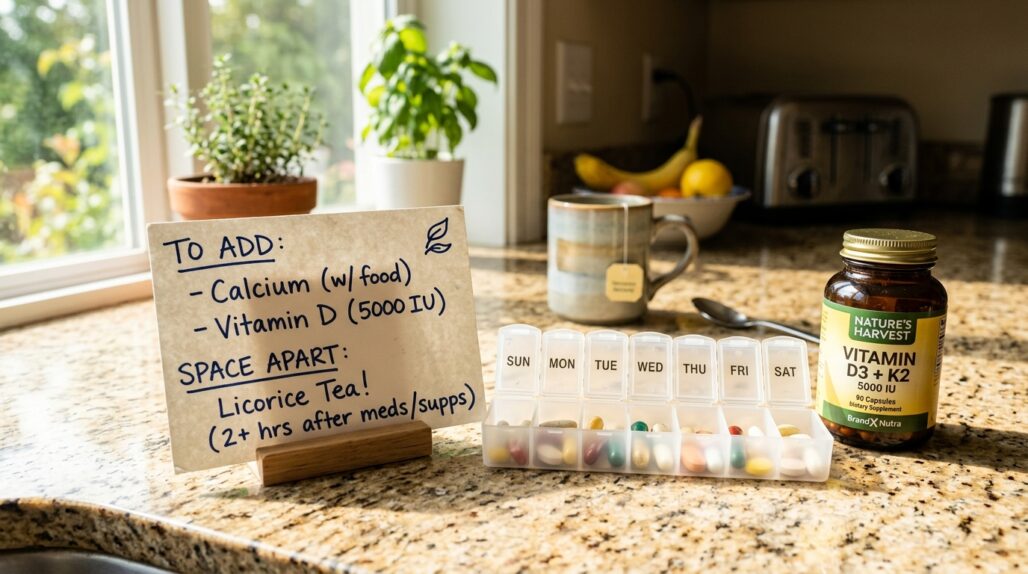
Vitamin D3 (cholecalciferol). Start here. Vitamin D lets your gut absorb calcium, and prednisone works against that step, so getting your D into a healthy range comes first. The rheumatology guideline points to roughly 600 to 800 IU a day, though your prescriber may aim higher if a blood test shows you are low. The NIH Office of Dietary Supplements vitamin D fact sheet is a good plain reference. Take it with a meal that has some fat, since D is fat-soluble. Dose it to a blood level rather than guessing.
Calcium citrate. The guideline target is about 1,000 to 1,200 mg of total calcium a day, counting food first and topping up with a supplement only for the gap. Citrate is the easy form to recommend here because it absorbs whether or not you have much stomach acid, which helps older adults and anyone on an acid reducer. Your body can only use about 500 to 600 mg at once, so split it and take it with food. Keep it away from any prescription it can bind to.
Magnesium glycinate. The gentle add, useful if your magnesium is on the low side and for the cramping that low magnesium and low potassium can bring. Glycinate is kind to the stomach and unlikely to cause the loose stools that magnesium oxide does. A modest dose at night is a reasonable starting point; confirm the amount with your pharmacist, and be more careful if you have kidney problems.


As an Amazon Associate, UsefulVitamins.com earns from qualifying purchases at no extra cost to you.
These three picks may include affiliate links. If you buy through them we may earn a small commission at no extra cost to you, and it never changes what we recommend or how we grade the evidence.
A few practical notes that sit underneath the table. Dose your vitamin D to an actual blood test rather than a fixed number. Build calcium from food before you reach for a tablet, because food calcium comes packaged with other nutrients and is easier to keep steady. And keep the timing of everything consistent day to day, which makes any dose change easier for your doctor to read.
| Supplement | What it helps with | How to take it (timing/spacing from your dose) | Caution |
|---|---|---|---|
| Vitamin D3 (cholecalciferol) | Lets your gut absorb calcium, the step prednisone works against; protects bone | With a meal that contains some fat, any time of day; dose to a blood test | Do not megadose to “catch up”; confirm the target with your prescriber if you have kidney stones or high calcium |
| Calcium citrate | Replaces calcium prednisone makes you absorb less of and lose more of; bone protection | Split into doses of 500-600 mg or less, with food; keep at least 2 hours from any drug it can bind (e.g. thyroid medicine, some antibiotics) | Aim for a total of about 1,000-1,200 mg a day counting food first; do not stack far above that |
| Magnesium glycinate | Tops up magnesium that can drift low; helps cramps that low magnesium or potassium brings | A modest dose, often at night; space a couple of hours from calcium and from any antibiotic or thyroid pill | Go gently or skip if you have reduced kidney function; confirm the dose with your pharmacist |
One easy way to keep all of this straight: log your prednisone and every supplement in one place using StackMyMed (our own free app), which flags overlaps and possible interactions so you have a specific list to ask your pharmacist about. It does not give medical advice and it does not diagnose; it just surfaces what to check. If you would rather not use an app, the low-tech version works just as well: write your full list on paper, including doses, and show it to your pharmacist at your next visit.
What to avoid or space apart
Read this part twice. The supplements below are not picks. Some are genuine hazards with prednisone, and none of them belongs in a "best of" list.
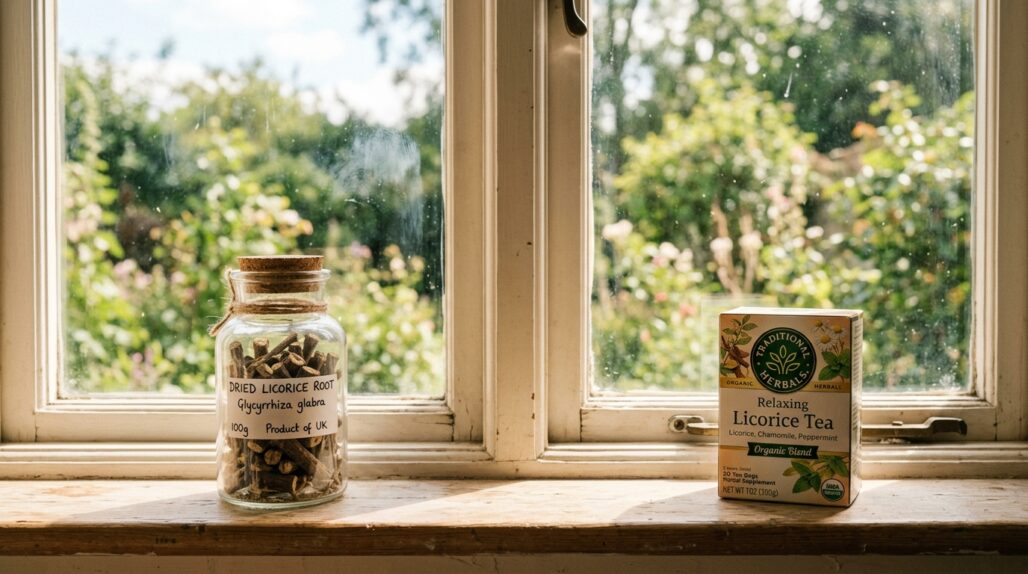
Licorice root and glycyrrhizin. Remember this one. The glycyrrhizin in real licorice extracts and licorice teas inhibits an enzyme called 11-beta-HSD2, which produces a salt-retaining, potassium-wasting state that mimics too much aldosterone, as described in this review of licorice-induced pseudoaldosteronism. Stacked on top of prednisone's own salt-and-potassium effect, licorice can deepen low potassium, push up blood pressure, and worsen swelling. It can also slow how fast you clear the steroid. Avoid licorice extracts and licorice teas. Deglycyrrhizinated licorice (DGL), the form sometimes used for the gut, has had the glycyrrhizin removed and is lower risk, but still clear it with your pharmacist.
St John's wort. This one I want to be careful about. St John's wort is a strong CYP3A4 inducer, and prednisone is broken down partly through CYP3A4, so the theoretical concern is that it speeds clearance of the steroid and leaves it underperforming. That is the mechanism people cite. In practice the human evidence is thin: a controlled pharmacokinetic study found no significant change in prednisone levels after St John's wort, though it tested only single doses. Given that St John's wort interacts with so many other drugs and the risk-benefit here is poor, the conservative call is to avoid it on prednisone and let your prescriber decide on mood support instead.
Echinacea and other immune-stimulating herbs. Prednisone is often prescribed precisely to quiet the immune system. Echinacea, and high-dose elderberry, andrographis, or astragalus, are marketed to do the opposite. The interaction is theoretical rather than proven in trials, but the logic cuts the wrong way: you would be adding something meant to rev up the very response the drug is trying to settle. Skip these, or only use them after a clear conversation with the prescriber.
Potassium supplements and potassium-based salt substitutes. Prednisone tends to lower potassium, so adding potassium can sound logical. It is not safe to do on your own. Self-dosing potassium without a measured blood level can swing you the wrong way, especially if your kidneys are not fully healthy or you take other medicines that affect potassium. Let your doctor check a level and direct any replacement. Magnesium is gentler, but if you have kidney issues, confirm that dose too.
GI-irritant and blood-thinning stacks. Prednisone already raises the risk of stomach irritation and ulcers. Layering on high-dose fish oil combined with aspirin, willow bark, or other anti-inflammatory loads adds to that risk. Do not stack these blindly; space them out and get pharmacist sign-off.
Glucose-lowering supplements. Because prednisone raises blood sugar, supplements that lower it, such as chromium or berberine, can muddy what you and your doctor are seeing on a glucose reading. If steroid-related high blood sugar is a concern, that is a conversation with the prescriber, not a self-treatment project.
If you take an ACE inhibitor or an ARB for blood pressure, or a potassium-sparing diuretic, the potassium warning above is firmer still, since those drugs raise potassium and the combination needs monitoring. The mechanics of licorice and potassium loss also show up in our guide for people on diuretics, linked below.

Can you cover this with food first?
Often, yes, at least in part. Food is the better starting point because the nutrients come together and your intake stays steadier.
For calcium, think dairy and fortified plant milks, yogurt, hard cheese, tinned fish with soft bones, and fortified foods. For vitamin D, oily fish and fortified products help, though sensible sun and a measured blood level usually decide whether you need a supplement. For magnesium and potassium, leafy greens, nuts, seeds, beans, and a varied vegetable-heavy plate do a lot of the work. Plain dietary potassium from food is not the same as a potassium pill; the warning above is about supplements and salt substitutes, not your vegetables.
The honest framing is that supplements top up a gap. On prednisone, the calcium-and-vitamin-D gap is real enough that most people on a longer course do end up topping it up, but food still comes first, and a supplement is the backstop, not the plan.
FAQ
Does prednisone actually deplete my vitamins? Its clearest effect is on calcium and bone, through reduced calcium absorption and faster bone loss, which is why the rheumatology guideline recommends calcium and vitamin D for long-term users. It can also lower potassium and shift fluid balance, per the drug label. It is not a broad “drains all your vitamins” situation, so treat sweeping claims with caution.
Should I take calcium and vitamin D at the same time as my prednisone? You can take vitamin D and calcium with food at whatever time fits your routine; there is no need to align them with your prednisone dose. Do keep calcium at least a couple of hours away from any medicine it can bind, like thyroid tablets or certain antibiotics. Confirm your own timing with your pharmacist.
Is licorice really a problem, even as a tea? Yes. The glycyrrhizin in real licorice can add to prednisone’s salt-retaining, potassium-lowering effect, so licorice extracts and licorice teas are worth avoiding. The deglycyrrhizinated (DGL) form used for the gut is lower risk, but run it past your pharmacist first.
Can a supplement let me lower my prednisone dose? No. No supplement reduces, replaces, or is a natural alternative to prednisone. The steroid is treating a real condition, and any change to the dose, including tapering off, is a medical decision. Never stop prednisone suddenly.
What about magnesium and potassium for cramps? Magnesium glycinate at a modest dose is usually fine and can help. Potassium is different: do not self-dose it, because prednisone affects potassium in ways that need a blood level to manage safely. Ask your doctor to check and direct any potassium replacement.
I have kidney disease or I am pregnant. Does this change things? Yes, both call for extra care, especially with magnesium and potassium, and with vitamin D dosing. Use this page as background only and let your own doctor or pharmacist tailor anything you add.
The bottom line
If you are on prednisone, the supplements with the strongest case are vitamin D3 and calcium, taken to protect the bone that steroids put under pressure, with magnesium glycinate as a gentle extra. The single most important thing to avoid is licorice and licorice teas, which can worsen the steroid's potassium and fluid effects. Build the nutrients from food first, and never use a supplement as a reason to change your dose.
One firm reminder. Call your doctor or pharmacist promptly for marked muscle weakness or cramping, an irregular or pounding heartbeat, new ankle or leg swelling, or sudden weight gain, since these can signal prednisone-driven potassium loss or fluid retention. Seek care for signs of infection, severe stomach pain or black or tarry stools, or new bone or back pain. And never stop prednisone abruptly; taper only under medical guidance.
For more on the bone-protection side, see our explainer on prednisone, calcium, vitamin D, and bone loss, our roundup of the best vitamin D supplements, and the best magnesium supplement overall. If you also take a water pill, the licorice and potassium mechanics carry over to our guide on the best supplements for people on diuretics.
This article is educational and is not medical advice, a diagnosis, or a prescription change. It does not replace your prescription or your prescriber. Talk to your own doctor or pharmacist before adding, stopping, or changing any supplement or medication.
Reviewed by the UsefulVitamins Editorial Team.
