
If you’re looking for vitamin B12 supplements, the “best” option usually depends on one thing: why you’re taking it. A vegan who needs reliable daily coverage has different needs than a 65-year-old with low stomach acid or someone on metformin. This article breaks down what research suggests about B12 forms (methylcobalamin vs cyanocobalamin and more), how much you actually absorb, who benefits most, and how to choose a product you can trust. You’ll also get a simple dosing framework and common mistakes to avoid.
Summary / Quick Answer: Which vitamin B12 supplements are best?
The best vitamin B12 supplements are the ones that match your risk factors (diet, age, medications) and your absorption ability.
Quick picks by situation (most people):
- Best for most adults: 1,000 mcg cyanocobalamin or methylcobalamin daily or a few times weekly (depending on diet and labs).
- Best for vegans/vegetarians: 250 to 1,000 mcg methylcobalamin daily, or a reliable high-dose cyanocobalamin.
- Best if absorption is a concern (older adults, reflux meds): sublingual lozenges or liquid B12, often 1,000 mcg/day.
- Best for confirmed deficiency: 1,000 to 2,000 mcg/day orally (many cases) or clinician-directed injections.
What to look for on the label:
- A clear B12 form (methylcobalamin, cyanocobalamin, adenosylcobalamin, hydroxocobalamin)
- Third-party testing (USP, NSF, or equivalent)
- Minimal unnecessary additives
For dosing details, see Vitamin B12 Dosage Guide: How Much Do You Really Need?.
Vitamin B12 basics: what it does, who’s at risk, and why doses look “too high”
Vitamin B12 (cobalamin) helps your body make healthy red blood cells, maintain nerve function, and build DNA. When B12 runs low, symptoms can feel vague at first – fatigue, brain fog, low mood, tingling, or weakness. The tricky part is that deficiency can simmer quietly, especially if folate intake is high.
So why do many bottles contain 500 to 1,000 mcg when the adult RDA is only 2.4 mcg? Because absorption is limited. Your gut uses a protein called intrinsic factor to absorb B12 efficiently, but that system saturates quickly. Past a small amount, only a small percentage of an oral dose gets absorbed by passive diffusion. That’s why high-dose tablets can still be effective.
According to the NIH Office of Dietary Supplements B12 fact sheet, older adults and people with certain GI conditions or medication use are at higher risk because they absorb less B12 from food. Risk also rises with long-term use of metformin and acid-lowering medications.
Who should pay closest attention to B12:
- Vegans and many vegetarians (B12 is naturally found in animal foods)
- Adults over 50 to 60 (lower stomach acid is common)
- People with pernicious anemia (intrinsic factor problem)
- People with GI disorders or surgeries affecting absorption
- Those taking metformin or long-term acid reducers
Visual checklist: common risk factors
- Diet: vegan, mostly plant-based without fortified foods
- Age: 60+
- Medications: metformin, PPIs/H2 blockers
- GI history: celiac, Crohn’s, bariatric surgery
- Symptoms: numbness/tingling, fatigue, memory issues
Actionable takeaway: If you match any two risk factors, consider testing (serum B12 plus MMA or homocysteine) before guessing. If you want a fast starting point, take the Vitamin Deficiency Quiz and bring the results to your clinician.
Vitamin B12 forms and absorption: methylcobalamin vs cyanocobalamin (and the rest)
Nature Made Vitamin B12 1000 mcg, 90 Tablets
This product provides a high dose of B12, suitable for most adults and those with absorption concerns.
Most shoppers get stuck on one question: Which form is best? The honest answer is that several forms can work, and the “best” one depends on your goals, budget, and how well you absorb B12.
Here are the main forms you’ll see:
Cyanocobalamin
Cyanocobalamin is the most common synthetic form. It’s stable, affordable, and widely studied. Your body converts it into active forms (methylcobalamin and adenosylcobalamin). For many people, it raises blood levels effectively.
Methylcobalamin
Methylcobalamin is an “active” coenzyme form. It’s popular in sublingual products and is often chosen for people who prefer a form the body can use directly. Some studies suggest it may be retained well in tissues, although overall evidence doesn’t consistently show it outperforms cyanocobalamin for the average person.
Adenosylcobalamin
Adenosylcobalamin is another active form involved in mitochondrial energy metabolism. You’ll often see it in blends with methylcobalamin.
Hydroxocobalamin
Hydroxocobalamin is commonly used in injections and tends to stay in the body longer. It’s less common in standard over-the-counter oral supplements.
A helpful reality check: a large portion of B12 outcomes comes down to dose and adherence, not just form. A review indexed in PubMed Central discusses that natural vs synthetic forms are often similarly effective in practice, with some situations where one form may be preferred.
Visual comparison table: B12 forms at a glance
| Form | What it is | Pros | Best fit |
|---|---|---|---|
| Cyanocobalamin | Stable synthetic | Affordable, widely studied | Most people, budget-friendly |
| Methylcobalamin | Active form | Popular for sublingual, direct use | Preference for active form, vegan routines |
| Adenosylcobalamin | Active form | Often paired in blends | People wanting multi-form products |
| Hydroxocobalamin | Injectable form | Longer-lasting in body | Clinician-directed deficiency care |
What about sublingual vs capsules?
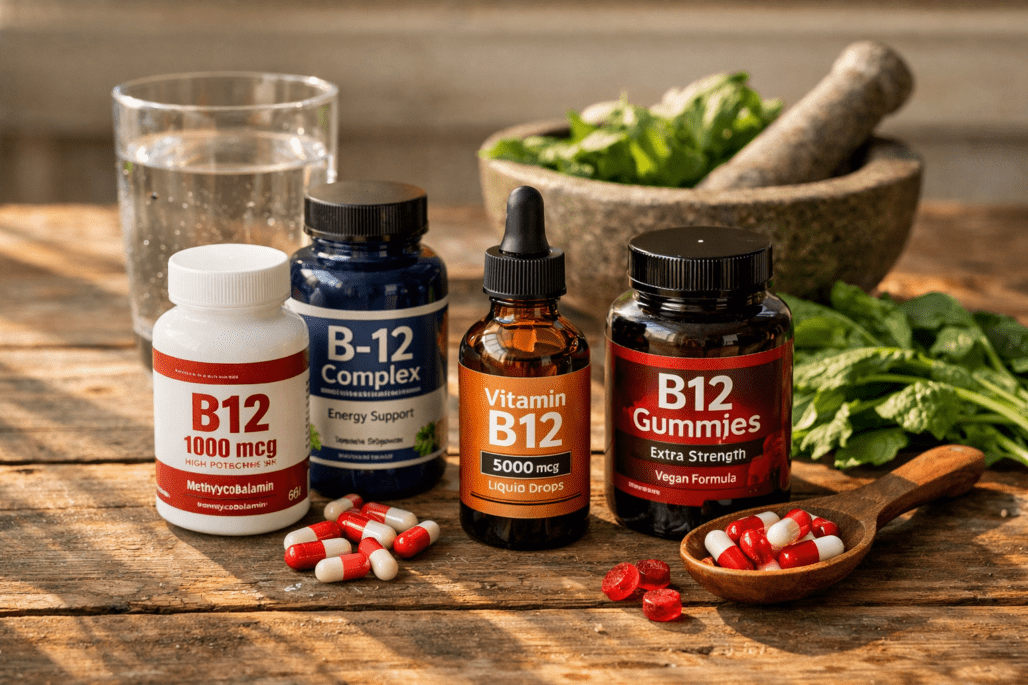
Sublingual tablets, lozenges, sprays, and liquids can be useful if you struggle with GI absorption or simply prefer them. Research generally shows that high-dose oral B12 works for many people, but alternative delivery can be a practical choice for adherence and comfort.
Actionable takeaway: If you’re healthy and just covering dietary gaps, cyanocobalamin or methylcobalamin can both be reasonable. If you’re older, on acid reducers, or have digestive issues, consider a sublingual or liquid format for consistency.
How to choose vitamin B12 supplements: a practical, label-first checklist
Garden of Life Vitamin B12 – mykind Organic Whole Food B12 Spray, 2 oz
Garden of Life mykind Organics B-12 Spray is a highly rated organic, vegan B12 supplement praised for its raspberry flavor, easy absorption, and energy support in customer reviews across retailers like Macy’s and H-E-B, making it a solid affiliate recommendation for those seeking whole-food methylcobalamin without pills[1][4][5].
Choosing a B12 product shouldn’t feel like decoding a science paper. Start with your “why,” then confirm the product is clean, tested, and dosed appropriately.
Step 1: Match the product to your goal
Think of B12 like a smoke alarm battery. If you replace it on schedule, you rarely hear the alarm. If you wait until it chirps, you need a more urgent fix.
Common goals and what tends to work:
- Diet insurance (especially plant-based): 250 to 1,000 mcg/day oral or sublingual
- Borderline labs or symptoms with risk factors: 500 to 1,000 mcg/day, then retest
- Confirmed deficiency: often 1,000 to 2,000 mcg/day orally, or clinician-directed injections
For a more detailed framework, use the Vitamin B12 Dosage Guide: How Much Do You Really Need?.
Step 2: Pick a form you’ll actually take
Consistency beats perfection. Choose the format that fits your routine:
- Tablets/capsules: simple, travel-friendly
- Sublingual lozenges: useful if you dislike swallowing pills
- Liquids/sprays: easy dosing, good for people with pill fatigue
- Gummies: convenient, but check added sugar and dose accuracy
Step 3: Look for quality signals (and avoid common label traps)
B12 is generally safe, but supplement quality varies. Prioritize brands that verify identity and purity.
Quality checklist
- Third-party testing (USP, NSF, Informed Choice, or similar)
- Clear labeling of B12 form and dose
- Minimal fillers and dyes if you’re sensitive
- Allergen-friendly claims that match your needs (vegan, gluten-free)
Visual checklist: label scan in 20 seconds
- Form listed (methylcobalamin or cyanocobalamin)
- Dose listed (mcg)
- Serving size (1 tablet? 2 sprays?)
- Testing seal or published quality standards
- Expiration date and storage instructions
Step 4: Consider nutrient interactions without overcomplicating it
B12 works closely with folate and B6 in homocysteine metabolism. High folate intake can sometimes mask anemia signs while neurological issues progress, which is one reason testing matters if symptoms are present.
If fatigue is your main concern, zoom out. Low iron, low vitamin D, poor sleep, and under-eating protein can look like “low B12.” A broader approach is covered in Best Energy Supplements to Boost Vitality Naturally.
Actionable takeaway: Choose the simplest product you can take consistently, verify quality, and base your dose on risk factors and labs – not the percent daily value on the bottle.
Dosage, timing, and testing: how to use B12 safely and know it’s working
Jarrow Formulas Methyl B12 5000 mcg, 100 Lozenges
Methylcobalamin is a preferred form of B12 for better absorption, making this product suitable for those with absorption issues.
B12 is water-soluble, and no tolerable upper intake level has been established for healthy people. That doesn’t mean “more is always better,” but it does explain why high-dose products are common and typically well tolerated. Excess is usually excreted in urine.
A simple dosing guide (general education, not medical advice)
Most people fall into one of these buckets:
Maintenance (diet insurance)
- 250 to 500 mcg/day, or
- 1,000 mcg a few times per week
Higher-need situations (common)
- 1,000 mcg/day if vegan, older, or on acid reducers/metformin
Deficiency support (often used)
- 1,000 to 2,000 mcg/day orally for a period, with follow-up labs
- Injections are typically reserved for pernicious anemia or severe malabsorption, under medical care
For a more personalized schedule, try the Supplement Timing Optimizer: When to Take Your Vitamins.
When should you take B12?
Many people prefer morning, especially if they feel it affects sleep. Taking it with food can reduce stomach upset, although B12 doesn’t require fat for absorption.
Practical timing options
- Morning with breakfast (easy habit anchor)
- Midday if mornings are hectic
- Sublingual anytime you can remember consistently
How long until you notice a difference?
If you’re deficient, you might notice improvements in energy or mental clarity within 1 to 4 weeks, but nerve-related symptoms can take longer. If you’re not deficient, you may not feel any change – and that’s normal.
Testing: don’t rely on symptoms alone
Serum B12 is common, but it’s not perfect. If results are borderline or symptoms are strong, clinicians often consider:
- Methylmalonic acid (MMA) (tends to rise when B12 is functionally low)
- Homocysteine (can rise with low B12, folate, or B6)
- Holotranscobalamin (active B12, less commonly ordered)
Visual: what to ask your clinician about
- Serum B12
- MMA (especially if serum is borderline)
- Homocysteine
- CBC (to assess anemia patterns)
Actionable takeaway: If you start B12 for a real reason (diet pattern, medication risk, symptoms), plan a recheck. Supplements should be part of a feedback loop, not a forever guess.
Common myths about vitamin B12 supplements (and what to do instead)
B12 advice online often swings between two extremes: “B12 fixes everything” and “supplements are useless.” The truth is more practical.
Myth 1: “More B12 means more energy for everyone”
B12 can support energy if low B12 is the reason you feel tired. If your levels are normal, extra B12 usually won’t create a noticeable “boost.” Fatigue has many causes, including sleep debt, iron deficiency, thyroid issues, depression, and under-fueling.
What to do instead: If fatigue is persistent, use a broader checklist like Best Energy Supplements to Boost Vitality Naturally and consider lab work.
Myth 2: “Cyanocobalamin is bad”
Cyanocobalamin is widely used because it’s stable and effective for many people. While some prefer methylcobalamin, and certain rare genetic issues may affect conversion, most users do well with either. The bigger issue is whether you take it consistently and whether the product is high quality.
What to do instead: Choose the form you’ll stick with, then verify quality testing.
Myth 3: “Injections are always superior”
Injections can be essential for pernicious anemia or severe malabsorption. But research and clinical practice show that high-dose oral B12 can be effective for many deficiency cases, because passive diffusion still absorbs a small percentage of large doses.
What to do instead: If you suspect malabsorption or have neurological symptoms, involve a clinician promptly.
Myth 4: “Plant foods provide enough B12 naturally”
Unfortified plant foods generally do not provide reliable B12. Fortified foods can help, but consistency and label-reading matter.
What to do instead: Vegans should treat B12 as non-negotiable and use a consistent supplement routine, plus periodic testing.
Myth 5: “High-dose B12 is toxic”
B12 is water-soluble, and toxicity is not commonly seen at typical supplemental intakes. That said, any supplement can cause side effects for some people (for example, acne-like breakouts in a minority of users), and unusual symptoms should be discussed with a clinician.
Visual: myth vs reality snapshot
- Energy boost for all? -> Mostly helps if deficient
- Cyanocobalamin “inferior”? -> Often effective and well studied
- Shots always best? -> Oral high-dose often works, shots for specific cases
- Plants have B12? -> Usually no, unless fortified
- High dose dangerous? -> Generally safe, but monitor individual response
Actionable takeaway: The best plan is boring and effective – match dose to need, choose a product you trust, and retest if you started for a measurable reason.
Conclusion: the smartest way to pick a B12 supplement
The best vitamin B12 plan is the one that fits your diet, age, and absorption reality. For many people, a simple 250 to 1,000 mcg routine (cyanocobalamin or methylcobalamin) is enough. If you’re vegan, older, or taking medications that reduce absorption, a consistent higher-dose or sublingual format can be a practical choice.
Next steps that keep this evidence-based:
- Use Vitamin B12 Dosage Guide: How Much Do You Really Need? to choose a starting dose.
- If fatigue is the driver, widen the lens with Best Multivitamins Comparison and Best Energy Supplements to Boost Vitality Naturally.
If symptoms are significant (especially numbness, tingling, balance issues, or memory changes), don’t self-treat for long. Testing and timely care matter, because long-term deficiency can affect nerves in ways that may not fully reverse.
Recommended Products
Solgar Vitamin B12 1000 mcg, 100 Tablets
This product offers a reliable dose of cyanocobalamin, suitable for various dietary needs.
As an Amazon Associate, I earn from qualifying purchases. Product recommendations are based on real reviews and independent research.
