

Affiliate disclosure: this article contains affiliate links. As an Amazon Associate, UsefulVitamins.com earns from qualifying purchases at no extra cost to you.
Do melatonin and blood pressure medication actually interact?
Yes, but not in one tidy direction, which is exactly why a flat "it's fine" answer would be wrong here.
Melatonin is a hormone your own body makes at night, and it has a small hand in how blood pressure dips while you sleep. When you add a supplement dose on top of a blood pressure drug, the result depends on which drug you take. With one class it works against the medication. With others it piles on. With a third the effect is on your sleep, not your numbers.
So the honest read is: this pairing has documented effects, the studies behind them are small, and the direction flips by drug class. That uncertainty is why you bring in your prescriber, not a reason to relax.
Here is the at-a-glance version before we get into the why.
| Question | Straight answer |
|---|---|
| Do they interact? | Yes. Documented with calcium channel blockers (melatonin can raise BP), plausible additive drop with ACE inhibitors, ARBs and diuretics, and a sleep effect with beta-blockers. |
| How should I take them? | Only after your prescriber agrees. Lowest dose (0.5-1 mg), 60-90 minutes before bed, with home BP checks for one to two weeks. |
| Who should be careful? | Anyone on a calcium channel blocker (nifedipine, amlodipine), and older adults prone to dizziness on standing. |
| When do I call a doctor? | Dizziness, fainting, unusual tiredness, or a home reading well outside your usual range. Report new morning BP spikes if you take a calcium channel blocker. |
The mechanism: why the answer depends on your drug
The interaction is real but class-specific, so it helps to take the three scenarios one at a time and grade what we actually know.
Calcium channel blockers (nifedipine, amlodipine): melatonin can work against the drug. The clearest single study is a 24-hour crossover trial in patients whose blood pressure was already controlled on nifedipine (Lusardi et al, British Journal of Clinical Pharmacology, 2000). Adding evening melatonin 5 mg raised systolic pressure by about 6.5 mmHg and diastolic by about 4.9 mmHg over the full day, and nudged heart rate up too. The authors concluded melatonin appeared to interfere with the calcium channel blocker's effect. Interaction databases such as GoodRx reflect this with a moderate caution and a note to monitor your pressure. This is the scenario the whole caution rests on.
ACE inhibitors, ARBs, diuretics, alpha-blockers: melatonin may add to the drop. On its own, repeated nighttime melatonin modestly lowers nocturnal blood pressure. A randomized crossover trial in men with untreated essential hypertension (Scheer et al, Hypertension, 2004) found that 2.5 mg taken nightly for three weeks lowered nighttime systolic pressure by about 6 mmHg and diastolic by about 4 mmHg. A single dose did nothing, so the effect builds with repeated use. Stack that small downward push on a drug already lowering your pressure and the two can add up, mostly a worry for older adults who get dizzy standing up.
Beta-blockers (atenolol, metoprolol): mostly a sleep story. Beta-blockers blunt the nighttime signal to your pineal gland, which cuts your own melatonin output and is one reason they can cause insomnia. A randomized trial in beta-blocker patients (Scheer et al, Sleep, 2012) found low-dose 2.5 mg melatonin improved sleep without rebound problems. So here the question is about replacing what the drug suppresses, not your numbers, and it is still a conversation for your prescriber.
There is also some metabolic overlap: melatonin is broken down largely by the liver enzyme CYP1A2, so anything that changes that enzyme can change melatonin levels. That detail mostly matters for fluvoxamine and heavy caffeine, less for routine BP drugs.
A word on the evidence grade. These are small studies, often a dozen or two dozen people, and they pull in different directions by class. The body that reviews supplement safety, the National Center for Complementary and Integrative Health (NCCIH), says outright that long-term safety data on melatonin are thin and that anyone on medication should check with their provider first. When the evidence is this limited and this mixed, a careful prescriber beats a confident guess.

The practical rule: dose, timing, and who is most at risk
There is no spacing trick here. With a calcium channel blocker the issue is a pharmacodynamic clash, and with the other classes it is an additive blood-pressure effect, so taking the two pills hours apart does not undo either one. The real levers are the prescriber's sign-off, a low dose, and watching your numbers.
If your prescriber clears it, this is the sensible approach:
- Start low. Use 0.5-1 mg, not the 5-10 mg sold on most shelves. The BP studies that showed effects used 2.5-5 mg, so a small dose is both safer and usually plenty for sleep.
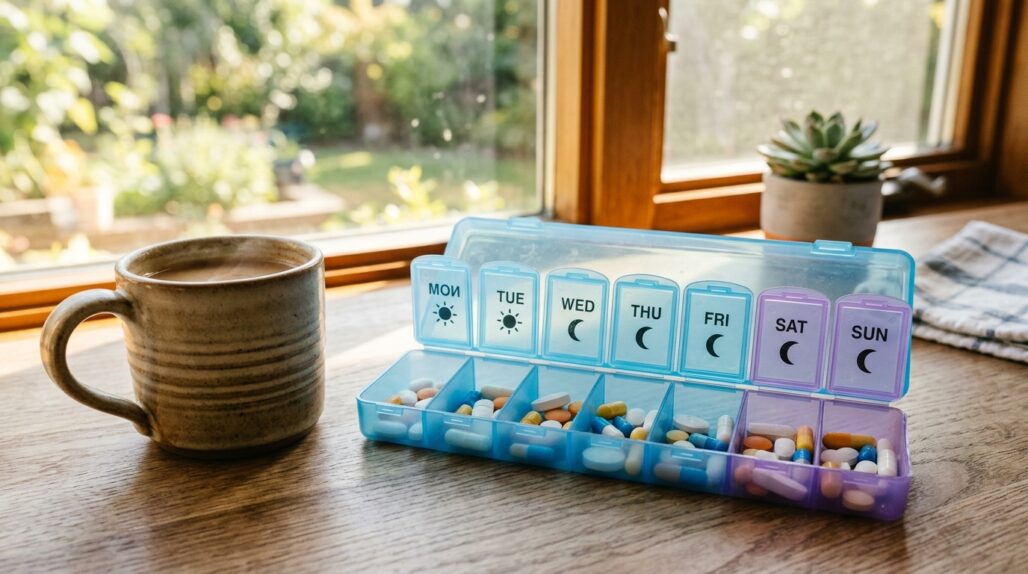
- Time it for bed. Take it 60-90 minutes before you want to sleep. Keep your blood pressure dose, which is usually in the morning, well away from the bedtime melatonin so you never confuse the two.
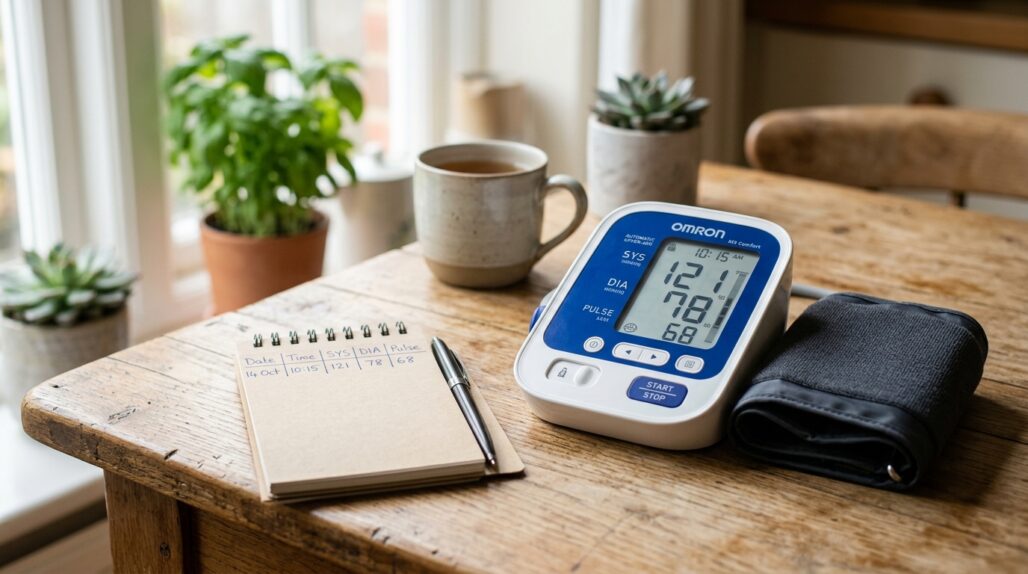
- Check your pressure. Use a home cuff once or twice a day for the first one to two weeks after starting, and again if your prescriber changes a dose.
- Do not self-adjust your medication. If your readings shift, that is information for your doctor, not a cue to skip or change a prescribed drug.
Who should be most careful? Anyone on a calcium channel blocker (nifedipine, amlodipine and relatives) is in the one class with documented loss of BP control, so that group needs explicit monitoring or a different sleep plan. Older adults come next, because the additive drop with ACE inhibitors, ARBs and diuretics can tip into orthostatic dizziness and falls. And anyone managing more than one BP drug at once has less room for an extra nudge in either direction.
This stays squarely educational. The aim is to give your prescriber a clear picture so the prescription can be managed properly, not to talk anyone into starting, stopping, or swapping a medication on their own.
What to actually do: the safe way to set this up
If you and your prescriber decide melatonin is worth a try, set it up so the safe steps happen without you having to think about them.
The cleanest version: keep the morning blood pressure pill and the bedtime melatonin in separate compartments so a tired brain at 10 p.m. cannot grab the wrong bottle, take readings on a validated home monitor, and write the numbers down to show at your next visit. A simple seven-day AM/PM organizer plus an upper-arm cuff covers almost all of that.
The one piece of technology worth using here is a single shared list of everything you take. The most reliable way to avoid a surprise interaction is to log every prescription and every supplement in one place and have the overlaps flagged before you add anything new. You can do that with StackMyMed (our own free app), which scans your bottles, keeps the prescription and the melatonin in one record, and points out a pairing like this as something to ask your pharmacist about. It does not diagnose you or make the call, it just surfaces the question. If you would rather skip an app, the low-tech version works just as well: write your full list on paper, bottle by bottle, and hand it to your pharmacist to read through.
Either way, the decision lands with the pharmacist or prescriber, not the app and not this page.



As an Amazon Associate, UsefulVitamins.com earns from qualifying purchases at no extra cost to you.
Some links below are affiliate links. If you buy through them we may earn a small commission at no extra cost to you. This does not change our picks or our advice to clear this combination with your prescriber first.
A note on the cards: these are management tools and a low starting dose, not a green light to layer melatonin on silently. A low-dose melatonin only makes sense after your prescriber agrees, and the organizer and home monitor are the parts that actually keep you safe. Prices drift, so treat any figure as roughly current and check before you buy.
Related pairs and the wider picture
Plenty of popular supplements nudge blood pressure gently downward, so it comes up constantly in interaction questions. If you are sorting out one pairing, the neighbors are worth a look. CoQ10 with blood pressure medication raises a similar additive question, and magnesium with blood pressure medication is another common one, partly because magnesium is also a go-to for sleep, which is often the reason people reach for melatonin in the first place.
If sleep is the goal, magnesium is a gentler starting point for many people, and our magnesium dose calculator can help you land on a sensible amount before you consider stacking anything. And if you do go ahead with melatonin, our roundup of the best melatonin supplements leans toward the low-dose, accurately labeled products, which matters given the NCCIH finding that many melatonin products are mislabeled.
The common point: a supplement that lowers pressure a few points is not a problem on its own, but it can be once it is added to a drug doing the same job. Disclose the supplement at every medication review, and let the person managing your prescription decide whether it still makes sense.
FAQ
Is melatonin safe with blood pressure medication? For some people, yes, but it is not automatically safe. With calcium channel blockers like nifedipine it can raise your pressure and work against the drug, and with other BP-lowering medicines it can add to the drop. Clear it with your prescriber before you start.
Can melatonin raise my blood pressure? It can in one specific situation. In patients controlled on nifedipine, evening melatonin raised systolic pressure by about 6.5 mmHg in a 24-hour study. On its own, repeated melatonin tends to lower nighttime pressure slightly, so the direction depends on your medication.
What dose of melatonin is safest if my prescriber agrees? Start at the lowest available, around 0.5-1 mg, taken 60-90 minutes before bed. The blood pressure studies used 2.5-5 mg, and most people do not need anywhere near that much for sleep.
Does taking melatonin and my BP pill hours apart fix the interaction? No. This is not an absorption clash you can solve by spacing. The effects are on blood pressure itself, so timing the pills apart does not remove the risk. Monitoring your pressure is what helps.
I take a beta-blocker and cannot sleep. Is melatonin the answer? Beta-blockers lower your own melatonin, which is one reason they disrupt sleep, and a trial found low-dose 2.5 mg melatonin improved sleep in beta-blocker patients. It is reasonable to raise with your prescriber rather than starting on your own.
What symptoms mean I should stop and call a doctor? Dizziness, lightheadedness on standing, fainting, unusual fatigue, or a home blood pressure reading that runs much higher or much lower than your normal range. If you take a calcium channel blocker, also report new morning BP spikes.
The bottom line
Melatonin and blood pressure medication can interact, and the direction depends on your drug: it can blunt a calcium channel blocker like nifedipine, raising your pressure, or add to other BP-lowering drugs, dropping it. The studies are small and mixed, which is the reason to bring this to your prescriber rather than guess. If they clear it, start at 0.5-1 mg about 60-90 minutes before bed, keep your morning BP dose separate, and check your home readings for the first week or two. Stop and call your doctor for dizziness, fainting, unusual fatigue, or readings well outside your usual range. Melatonin is a sleep aid here, never a stand-in for your prescription, and your pharmacist or prescriber is the one who should sign off before you combine them.
This article is educational and is not medical advice. It does not tell you to start, stop, or change any medication. Talk to your doctor or pharmacist about your own situation and your full list of medicines and supplements before making any change.
Reviewed by the UsefulVitamins Editorial Team.
