
Affiliate disclosure: this article contains affiliate links. As an Amazon Associate, UsefulVitamins.com earns from qualifying purchases at no extra cost to you.
Both of these get sold as "nitric oxide" supplements, and both really do push your nitric oxide higher. The catch is that they take completely different roads to get there, and those roads suit different training. Citrulline feeds the classic enzyme pathway that drives a workout pump. Beetroot delivers dietary nitrate that your body recycles into nitric oxide and uses to run your muscles more economically. That difference is the whole story.
Pump versus pace: what nitric oxide actually does for each goal
Nitric oxide widens blood vessels. More blood flow can mean a fuller-looking muscle during a set (the pump) and, separately, better oxygen delivery during long efforts. Those are two different payoffs, and each supplement leans toward one of them.
If your training is hypertrophy work in a gym, the pump and your set-to-set staying power matter most. If your training is endurance, the prize is doing the same pace at a lower oxygen cost so you last longer. Keep that split in mind and the choice gets simple.
A quick reality check before we grade them: nothing here is a stimulant. You will not feel a citrulline or beetroot dose the way you feel caffeine. The effects are physiological and show up in how a set or a hard interval feels, not in a buzz.
Citrulline: the arginine-nitric-oxide route
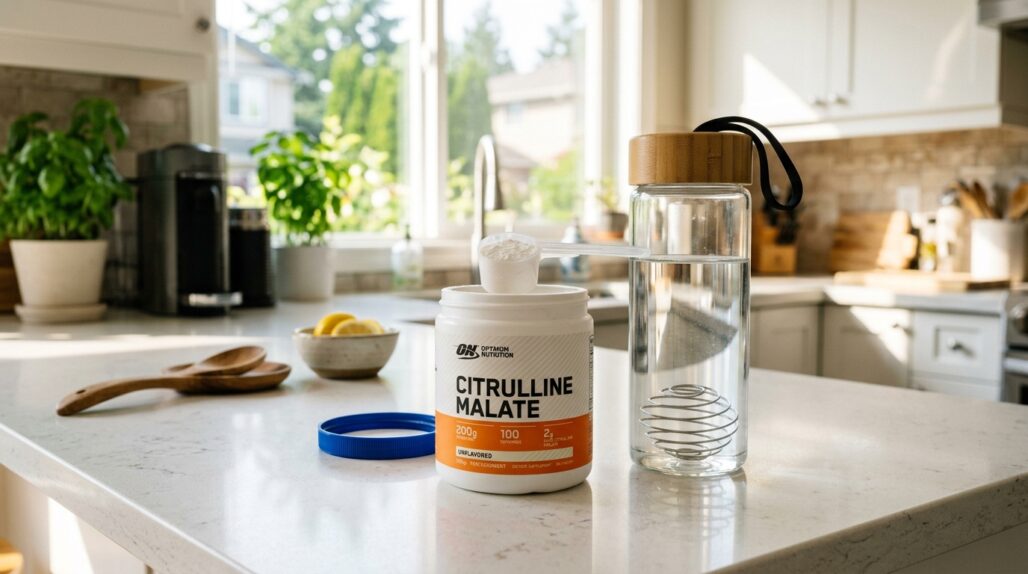
L-citrulline is an amino acid. Once swallowed, it converts to arginine in the kidneys, and arginine is the substrate the enzyme nitric oxide synthase uses to make nitric oxide. Oddly, taking citrulline raises blood arginine more reliably than taking arginine itself does, because citrulline sidesteps the gut and liver breakdown that blunts oral arginine. That is why citrulline became the go-to for blood-flow effects.
You will see two forms. Plain L-citrulline is the amino acid on its own. Citrulline malate binds citrulline to malic acid, usually at a 1:1 or 2:1 ratio; an 8 g dose of 1:1 malate delivers roughly 4.2 g of actual citrulline. The malate is sometimes credited with a separate role in energy metabolism, though that part is not well nailed down.
Evidence grade: mixed. The most-cited positive trial is Perez-Guisado and Jakeman's 2010 bench-press study, where 41 men took 8 g of citrulline malate and managed about 53% more reps on their final set, with roughly 40% less soreness at 24 and 48 hours. Impressive on paper. But better-controlled work has not reliably reproduced it. A randomized double-blind crossover using German Volume Training in 15 trained men and women found no improvement in total reps (90.9 with citrulline malate versus 94.0 with placebo) and, awkwardly, more soreness on the supplement. A critical review of the citrulline malate literature sums it up bluntly: the evidence is ambiguous and inconsistent, effect sizes are small, there is no benefit for maximal strength, and little support for cycling.
So citrulline is plausibly useful for resistance-training volume and the pump, with a real but unsettled signal. It is not a guaranteed win.
Beetroot: the nitrate-nitrite-nitric-oxide route
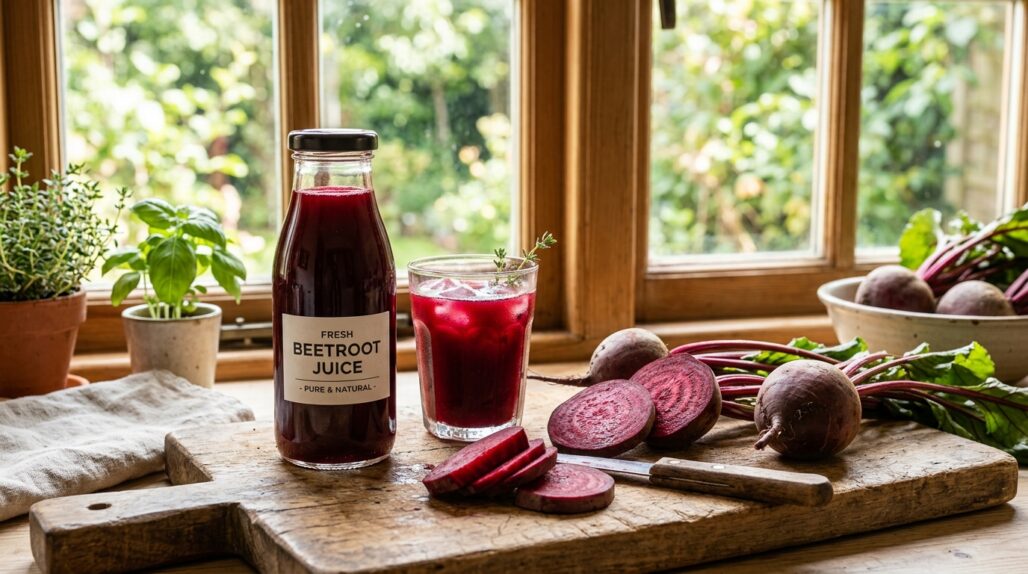
Beetroot does not bother with the arginine enzyme at all. It is rich in dietary nitrate. You swallow nitrate, bacteria on your tongue reduce some of it to nitrite, and in the low-oxygen, acidic conditions of hard-working muscle, nitrite converts to nitric oxide. This backup pathway runs best exactly when the enzyme route struggles, which is part of why nitrate is so good for endurance.
The endurance payoff is specific: nitrate lowers the oxygen cost of submaximal exercise. You burn less oxygen to hold the same wattage or pace, which pushes back the point of exhaustion.
Evidence grade: stronger and more consistent for the right job. An umbrella review of 20 systematic reviews found a consistent benefit for time-to-exhaustion (seven of eight reviews agreed; pooled effect size 0.33) but no reliable benefit for time-trial performance (pooled effect essentially zero) and no bump in VO2max. A separate meta-analysis of nitrate on high-intensity time trials lands in the same place. Reported reductions in submaximal oxygen cost run about 1.5% to 5%, and time-to-exhaustion gains can reach the mid-teens in percentage terms for recreational athletes.
One honest caveat: the effect is bigger in everyday and recreationally trained people than in elite athletes, who seem to have less headroom. The fitter you already are, the smaller the edge.
Citrulline vs beetroot, head to head
| Factor | Citrulline | Beetroot (nitrate) |
|---|---|---|
| Best for | Gym pump, resistance-training volume, possibly soreness | Endurance economy, holding a submaximal pace, time-to-exhaustion |
| Evidence | Mixed; one strong positive trial, several null results, small effect sizes | More consistent for time-to-exhaustion and oxygen cost; weak for time trials |
| Onset | Acute, taken about 60 minutes pre-workout | Acute bolus 2-3 hours pre, or load over 3 or more days |
| Typical dose | 6-8 g L-citrulline, or 8 g citrulline malate (about 4.2 g citrulline) | At least 5-6 mmol nitrate (roughly 310-372 mg) per day |
| Main downside | Results are unreliable; some people notice nothing | Lowers blood pressure; can tint urine and stool pink (harmless) |
The pattern is clear. Citrulline targets the pump and resistance work where the data are shakier. Beetroot targets submaximal endurance where the data are firmer but the use case is narrower. Neither one wins outright across the board, and pretending otherwise would be dishonest. The right answer depends on what you are training for. When you are ready to shop, our roundup of the best citrulline supplements and our pick of the best beetroot supplements cover form, dosing and third-party testing for each.
Who should pick which
Pick citrulline if you lift for size. Bodybuilders, physique trainees and anyone chasing a pump and more quality reps in the back half of a set are betting on the pathway citrulline serves. Go in with realistic expectations: it might give you a noticeable lift, it might not move the needle, and that variability is baked into the current evidence.
Pick beetroot if you go the distance. Runners, cyclists, rowers, swimmers and rucking or hiking types benefit from a lower oxygen cost at a steady effort. If you are recreationally trained rather than elite, you are exactly the person most likely to feel it. To dial in your own number, our citrulline dose calculator helps with the pump side, and either way it is worth seeing where these two sit among the best nitric oxide supplements overall.
Pick neither, yet, if you have not nailed the basics. Sleep, total carbohydrate around training and caffeine timing move performance more than either of these. Treat both as a small edge on top of a solid foundation.
Which one to buy


As an Amazon Associate, UsefulVitamins.com earns from qualifying purchases at no extra cost to you.
UsefulVitamins may earn a commission from purchases made through the links below, at no extra cost to you. It does not change our verdict.
Match the pick to your training. Lifters reaching for a pump want the citrulline option. Endurance athletes want the beetroot option. If you do both kinds of training, or you simply want one tub that covers both nitric oxide routes, the combination pre-workout is the value play, since the two ingredients work through separate pathways.
Can you take both together?
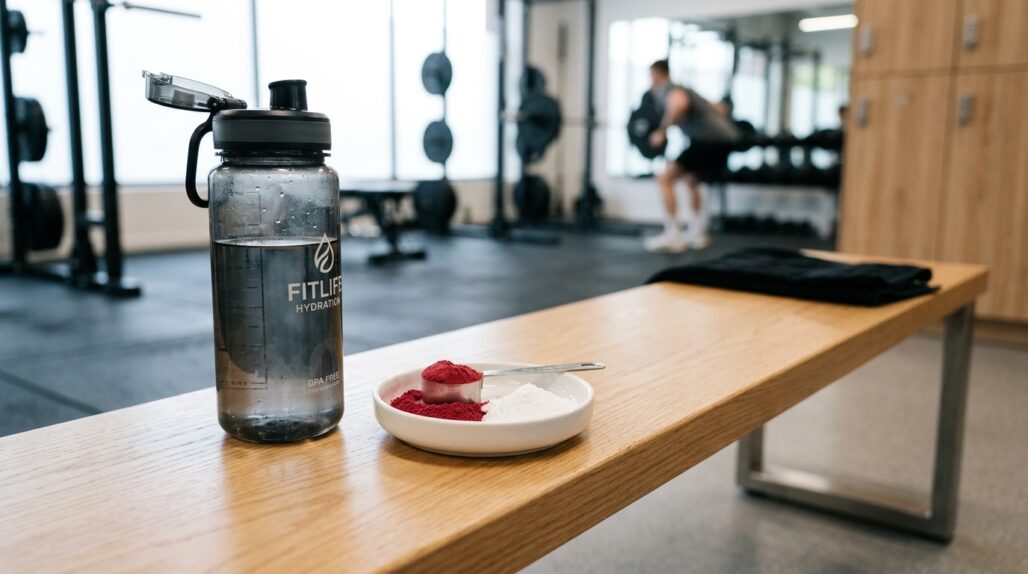
Yes, and stacking them is reasonable, not redundant. Citrulline feeds the arginine enzyme pathway while beetroot feeds the nitrate-nitrite pathway. Because those are two different on-ramps to the same nitric oxide, the effects can layer rather than overlap, which is exactly why combined pre-workouts exist.
Practical timing: take citrulline about 60 minutes before training, and take beetroot 2 to 3 hours before, or load it daily for several days leading into an event. There is no daily-versus-cycle drama here; both can be used continuously.
The safety note that matters. Both lower blood pressure, and beetroot nitrate does so measurably; one crossover study found beetroot juice produced a short-lived drop in central (aortic) systolic pressure of about 5 mmHg shortly after dosing, though the effect faded over the day. Stacked together, that drop can add up. If you already take blood-pressure medication, you could push your pressure too low. More seriously, dietary nitrate should not be combined with PDE5 inhibitors such as sildenafil or tadalafil without medical advice, because the additive vasodilation can cause a dangerous fall in blood pressure. Do not start, stop or change any prescription on your own. If you take any cardiovascular medication, clear this stack with your clinician first. The pink tint these can give your urine or stool is harmless and not a reason to worry.
FAQ
Is citrulline or beetroot better for a gym pump? Citrulline is the better fit for pumps and resistance-training volume because it serves the arginine pathway, though the human evidence is mixed and not everyone responds.
Which one helps endurance more? Beetroot. Dietary nitrate has more consistent human data for lowering the oxygen cost of submaximal exercise and extending time-to-exhaustion, especially in recreational athletes.
How long before a workout should I take each? Citrulline works best taken about 60 minutes before training. Beetroot is usually taken 2 to 3 hours before, or loaded daily for several days before an event.
Will beetroot really turn my pee pink? It can, in some people. Beeturia is harmless and comes from the pigment, not from any problem. It is not a sign the supplement is working or failing.
Can I just eat beets instead of taking a supplement? You can, but you need a meaningful nitrate dose (at least 5 to 6 mmol). Concentrated juice or a standardized extract makes hitting that target far easier than eating whole beets every day.
Is it safe to combine them with caffeine pre-workout? For most healthy people, yes, and many products already blend all three. If you have high blood pressure or a heart condition, run the full stack past a clinician first.
The bottom line
These two are not rivals so much as specialists. Pick citrulline if you lift for size and want pumps and a bit more in your later sets, knowing the evidence is mixed. Pick beetroot nitrate if you train endurance and want to hold a pace at a lower oxygen cost, where the data are more consistent. There is no single overall winner, because they are built for different jobs. Can you take both? Yes, and the combination is sensible because they raise nitric oxide through separate pathways, but keep an eye on your blood pressure and check with your clinician if you take any cardiovascular or PDE5 medication.
This article is educational and not medical advice. Talk to a qualified healthcare professional before starting any supplement, especially if you take medication or have a health condition.
Reviewed by the UsefulVitamins Editorial Team.
