
What is actually happening in your gut
GLP-1 medicines like semaglutide and tirzepatide slow how fast your stomach empties. That is part of why they curb appetite, but it is also why food can sit heavy, why you feel full fast, and why waste can move more slowly through the colon. So the nausea and constipation are not random. They are the predictable downstream of a slower gut.
The reassuring part is that these effects are common and usually temporary. In a systematic review and meta-analysis of GLP-1 trials in people with overweight, nausea was among the most reported side effects, and constipation showed up in a meaningful share of users too. For most people the queasiness is worst right after a dose increase and settles as the body adapts, often within the first one to three months. Constipation can be a little more stubborn and sometimes lingers longer.
This page walks through gentle, low-cost supports you can try, how to time them so they are easier to tolerate, and the clear lines where a supplement is the wrong tool and a phone call to your prescriber or pharmacist is the right one.
A few supports worth knowing about (and their limits)
None of these treats the medication or its side effects. They are ordinary comfort measures, the same ones you might use for an off-week stomach, and the evidence behind them is uneven. Read each one as "may help some people," not "will fix this."
For constipation: fiber and fluids first. The slow-gut problem responds best to the basics. Soluble fiber, especially psyllium, has the most support for improving stool frequency and consistency, and it works only when you drink enough water with it. A clinical review of dietary fiber from NCBI StatPearls puts a reasonable daily target around 25 grams for women and 38 grams for men, and notes most adults fall well short. Build up slowly, because a sudden jump in fiber without enough fluid can make bloating and fullness worse, which is the last thing you want on a GLP-1.
For constipation, second line: magnesium. Magnesium draws water into the bowel, which is why some forms act as a gentle laxative. The NIH Office of Dietary Supplements magnesium fact sheet sets the upper limit for supplemental magnesium at 350 mg a day for adults, and the reason that number exists is telling: diarrhea was the side effect that capped it. That same laxative effect is what people are after for constipation, but it is easy to overshoot into cramping and loose stools. This is a good thing to size with a pharmacist rather than guess at.
For nausea: ginger. Ginger has the most evidence for nausea in pregnancy, with mixed results elsewhere. The NCCIH overview of ginger calls it helpful for nausea and vomiting associated with pregnancy while staying honest that its role in other settings is less clear. It has not been studied head-to-head for GLP-1 nausea specifically, so treat it as a reasonable, low-risk thing to try, not a proven remedy. Ginger can cause heartburn or stomach upset of its own, and the same source flags that herbs can interact with medicines, so mention it to your pharmacist if you take anything else.
For low energy: fluids, electrolytes, and protein. Fatigue on a GLP-1 often tracks with eating and drinking less. Smaller meals and a dulled thirst can leave you under-hydrated and short on electrolytes, which feeds the tired, foggy feeling. Steady fluids matter, and many people benefit from keeping protein up to protect muscle while they lose weight. These are nutrition basics, not a stimulant. If you are dragging despite eating and drinking reasonably, that is worth raising at your next visit.
| Symptom | Reasonable first try | Honest evidence level | Easy to overdo? |
|---|---|---|---|
| Constipation | Soluble fiber (psyllium) plus more water; magnesium as a second step | Moderate for psyllium; magnesium is mechanism-plus-experience | Yes – too much fiber bloats, too much magnesium loosens |
| Nausea | Ginger (tea, chews, or capsules) | Best in pregnancy; mixed elsewhere | Can cause heartburn at higher amounts |
| Low energy | Steady fluids, electrolytes, adequate protein | Basic nutrition, not a treatment | Electrolyte products vary – check sodium if you have BP issues |

How to time them so they are tolerable
Timing is where most of the comfort comes from. A slower stomach means anything you swallow lingers, so big pills and big servings land harder. The fix is to go small and spread things out.
Try the placement below as a starting point. Adjust it to your own meals and the day you inject, and move things earlier or later based on how you feel rather than the clock.
- Morning, with a small breakfast: sip water steadily, take fiber with a full glass, and eat a little protein. Starting the day hydrated tends to blunt both nausea and the afternoon energy slump.
- Midday: keep meals small and frequent rather than large. If nausea tends to build, this is a sensible window for ginger before or with food.
- Evening: if you use magnesium for constipation, many people find it sits better away from a heavy meal. Keep water on the nightstand.
- Around your injection day: queasiness often peaks here, especially after a dose increase. Lean lighter on food, heavier on fluids, and do not pile on new supplements the same day.
A printable version you can keep on the fridge with zero apps:
| Time block | What to take or do | Done today? |
|---|---|---|
| Morning | Water, fiber with a full glass, some protein | [ ] |
| Midday | Small meal, ginger if queasy, more water | [ ] |
| Evening | Magnesium if needed for constipation, water nearby | [ ] |
| Injection day | Lighter food, extra fluids, no new additions | [ ] |
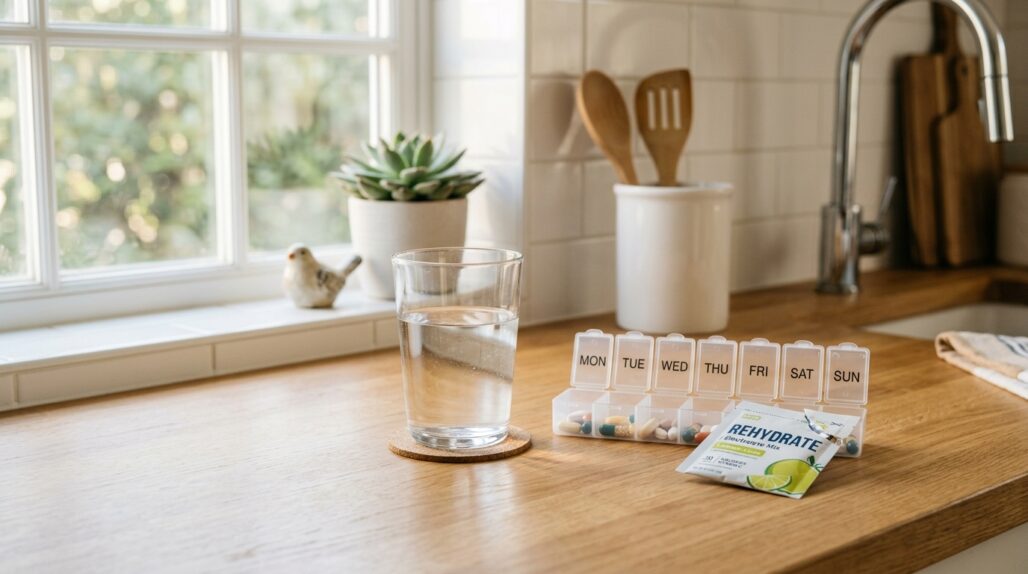
The thing that makes any of this work is doing it on the days you feel worst, which are exactly the days it is easiest to forget. Pin the grid somewhere you will see it, or set an alarm on your phone for each block. Side-effect support only helps if it is consistent and well timed, so if a paper checklist keeps slipping, StackMyMed (our own free app) lets you set reminders for things like magnesium or electrolytes and keep them on schedule even on rough days, and you can flag anything you are unsure about to raise with your pharmacist rather than assuming it is fine. A pill box with morning and evening slots does the same job offline. For more on spacing supplements around meals and your shot, see our GLP-1 timing schedule.
What not to do
This is where good intentions go sideways, so a short list of guardrails.
- Do not mega-dose anything. More magnesium does not mean better; past the 350 mg supplemental ceiling you are mostly buying diarrhea. The same logic holds for fiber and ginger.
- Do not use supplements to push through severe symptoms. If you are vomiting repeatedly, cannot keep fluids down, or have bad stomach pain, that is not a fiber-and-ginger situation. Stop trying to manage it solo and call your prescriber.
- Do not stack on top of your other diabetes medicines without asking. Some "natural" additions and electrolyte blends matter more than they look, especially if you take other drugs. A quick check beats a guess. Our interaction checker hub is a place to start before you call.
- Do not assume rough side effects are just the price of admission. They often are not.

When the dose is the real problem
Here is the part that matters most. Persistent or severe nausea and vomiting frequently mean the dose climbed too fast or is simply too high for you right now, and no supplement fixes that.
The evidence on titration is fairly clear: slowing down the dose increases sharply reduces how sick people feel, and it cuts the number who quit over side effects. That is a conversation for your prescriber, who can adjust the schedule. It is not something to manage by skipping a dose or doubling up on stomach remedies. Rapid escalation has also been linked to more serious gut slowing in some reports, which is another reason to route this to a clinician rather than tough it out.
So the rule of thumb is simple. Mild and improving over a few weeks: comfort measures are reasonable. Severe, persistent, or getting worse: that is a dose-and-medication question for your prescriber or pharmacist, full stop. Keeping a short log of what you took and how you felt makes that conversation faster and more useful; our note on building a supplement self-audit has a simple format.
FAQ
How long do GLP-1 side effects usually last? For many people, nausea is worst in the first weeks and after each dose increase, then eases as the body adapts, often within one to three months. Constipation can run longer. If yours is not improving, that is worth raising with your prescriber.
Will magnesium help my GLP-1 constipation? It might, because magnesium pulls water into the bowel and can act as a mild laxative. But the supplemental upper limit is 350 mg a day for adults, and overshooting causes diarrhea and cramping. Fiber and fluids are the gentler first step, and a pharmacist can help you size magnesium safely.
Does ginger actually work for nausea? The strongest evidence is for nausea in pregnancy; for other situations the picture is mixed, and it has not been tested specifically for GLP-1 nausea. It is low-risk to try, though it can cause heartburn, and you should mention it to your pharmacist if you take other medicines.
Why am I so tired on a GLP-1? Low energy often tracks with eating and drinking less, which can leave you under-hydrated and short on electrolytes. Steady fluids and enough protein help. Persistent fatigue despite that is worth flagging at your next visit, since other causes exist.
Should I stop my medication if the side effects are bad? Do not start or stop a prescription on your own. Severe or persistent symptoms usually point to a dose that needs adjusting, which is a prescriber decision. Call them rather than changing the schedule yourself.
Can I just take a “GLP-1 support” stack I saw online? Be cautious. Bundled products can double up on nutrients or interact with your other medicines, and electrolyte blends vary widely in sodium. Bring the full list to your pharmacist before adding anything, especially if you take other diabetes drugs. You can also read our guide to supplements that pair with these drugs first.

The bottom line
Mild GLP-1 nausea, constipation, and low energy are common and usually fade. Gentle, well-timed support – fiber and fluids, a careful amount of magnesium, ginger, enough protein – may make the early weeks easier, but every one of these is a comfort measure with limits, and none of them treats the medication. The single most useful move is to separate the two situations cleanly: mild and improving means basic supports are fine, while severe, persistent, or worsening symptoms mean the dose may be too high, which is a prescriber conversation, not a supplement fix. When in doubt, bring your full list and your questions to your pharmacist or doctor and let them make the medical call.
This article is for general information and is not medical advice. It does not diagnose or treat any condition, and it is not a substitute for guidance from your own pharmacist, doctor, or other qualified clinician. Do not start, stop, or change any prescription or supplement based on what you read here.
StackMyMed is made by UsefulVitamins. It helps you organize your list and flag things to discuss with a pharmacist or doctor; it is not a diagnosis or treatment tool and does not replace professional medical advice.
Reviewed by the UsefulVitamins Editorial Team.
