
What changes when you start a GLP-1
A GLP-1 medication like semaglutide or tirzepatide slows how fast your stomach empties. Food sits longer, you feel full sooner, and many people eat smaller meals without planning to. That is the point of the drug, but it quietly reshapes the day your supplements were built around.
If you used to take a handful of pills with a big breakfast, that big breakfast may be gone. Nausea is common, especially in the first weeks and after a dose increase. The result is that the same vitamins, minerals, and protein you took before now need a new home in your day.
This guide gives you a simple daily schedule and a method you can run on paper, with no app required. None of it changes your GLP-1 dose or your prescriptions. It is about where things land in the day, not what you take. If you are still deciding which supplements belong on your list, our separate notes on supplements people pair with Ozempic and what to be cautious about cover that question; this page assumes the list is set and focuses on timing.
Why timing matters more now
Three things shift at once. Your meals get smaller, so there is less food to take fat-needing vitamins with. Your stomach is slower and sometimes queasy, so the order things go in matters. And you may be paying closer attention to protein and minerals because appetite is low.
Some supplements need fat to absorb. The fat-soluble vitamins A, D, E, and K are taken up in the intestine in the presence of dietary fat, according to the NIH Office of Dietary Supplements. On smaller meals, pairing them with the meal that actually has some fat in it helps.
Others are about avoiding clashes. A thyroid pill is the clearest example, and it sets the shape of the whole morning.

The one rule that anchors the morning
If you take levothyroxine for your thyroid, it comes first and it stands alone. The levothyroxine reference in StatPearls (NIH/NCBI) says to take it on an empty stomach at least 30 to 60 minutes before breakfast, or 3 to 4 hours after dinner, and to keep it at least 4 hours away from anything containing iron or calcium.
So a calcium or iron product taken with breakfast can blunt a thyroid pill taken at the same time. The fix is spacing, not skipping. Take the thyroid pill on waking, then build the rest of the day at a distance from it.
This same spacing idea applies to a few other medicines too, which is exactly the kind of detail a pharmacist can confirm for your specific list.
A sample daily schedule
Here is a layout that works for many people on a GLP-1. Adjust the meal you anchor to based on which one sits best that day, and treat this as a starting point to bring to your pharmacist, not a prescription.
| Time slot | What goes here | Why |
|---|---|---|
| On waking, empty stomach | Thyroid pill (e.g. levothyroxine), water only | Absorbs best fasting and needs distance from calcium and iron |
| Your best-tolerated meal | Vitamin D and other fat-soluble vitamins, iron if prescribed | Fat-soluble vitamins need food fat; food eases iron on the stomach |
| Midday or with protein | Protein source, B vitamins, vitamin C near iron | Spreads protein out; vitamin C may aid iron uptake |
| Evening | Magnesium, away from the thyroid pill window | Often easier on the stomach later; helps some people with regularity |
A few notes on why each slot is shaped this way:
- Iron with food. Taking iron supplements with food can reduce the upset stomach, nausea, and constipation that the NIH ODS iron fact sheet links to high doses, especially on an empty stomach. On a GLP-1, where the gut is already touchy, with-food usually wins.
- Vitamin C near your iron, calcium away from it. Vitamin C may help iron absorb. Calcium tends to work against it, so they belong in different slots.
- Magnesium in the evening. Magnesium can pull water into the bowel, which is why high supplemental doses can cause loose stools. That same effect is why some people find it helps the constipation that GLP-1s often cause.
Spacing the minerals so they do not fight
Minerals are the part people get wrong. The pattern to remember is simple: keep iron and calcium apart from each other and apart from a thyroid pill.
- Thyroid pill alone on waking, with water.
- Iron with a tolerated meal, and a vitamin C source nearby if your clinician suggested it.
- Calcium at a different meal, not the same one as iron.
- Magnesium in the evening.
This keeps each item in a clean window. You do not need a stopwatch, just a rough sense of morning, midday, and evening.
Watch the cumulative dose, not just the timing
Timing is half the job. The other half is not stacking the same nutrient across several products. On a low-appetite plan it is easy to add a multivitamin, a separate vitamin D, a greens powder, and a mineral blend that all overlap.
A few upper limits from the NIH Office of Dietary Supplements are worth knowing. The tolerable upper intake level for adults is 100 mg a day for vitamin B6 (chronic high intake has been linked to nerve symptoms), 45 mg for iron, 40 mg for zinc, and 350 mg for supplemental magnesium before the laxative effect tends to kick in. Counting only what is on the label, across every product, keeps you under these. This is general information, not advice to change anything you were told to take.
Protein gets its own attention
Appetite drops on a GLP-1, so protein often falls without you noticing. Reviews in the literature, such as this one on protein intake while using GLP-1 receptor agonists (NCBI/PMC), describe many people falling short of their protein needs during weight loss, which matters for holding onto muscle.
Spreading protein across your smaller meals is easier than forcing one big serving. If a protein powder is gentler than solid food on a queasy day, that can be a practical bridge. How much protein is right for you is a conversation for your prescriber or a dietitian, not a number to copy from an article. For more on why this matters, see our overview of holding onto muscle while losing weight on these drugs.
Does the weekly shot day change anything?
Mostly, no. Per the FDA prescribing information for Ozempic, the injection is given once weekly on the same day, at any time of day, with or without meals, and the day can be moved as long as doses stay at least 48 hours apart. Your supplement schedule does not need to bend around it.
What can shift is how you feel. If injection day or the day after brings more nausea, take the gentler, food-friendly supplements with whatever meal sits best and let the rest ride. Skipping a single optional supplement for a day is low stakes for most people. A prescription is a different matter, so check before you skip or move one of those.
Keep it current once it works
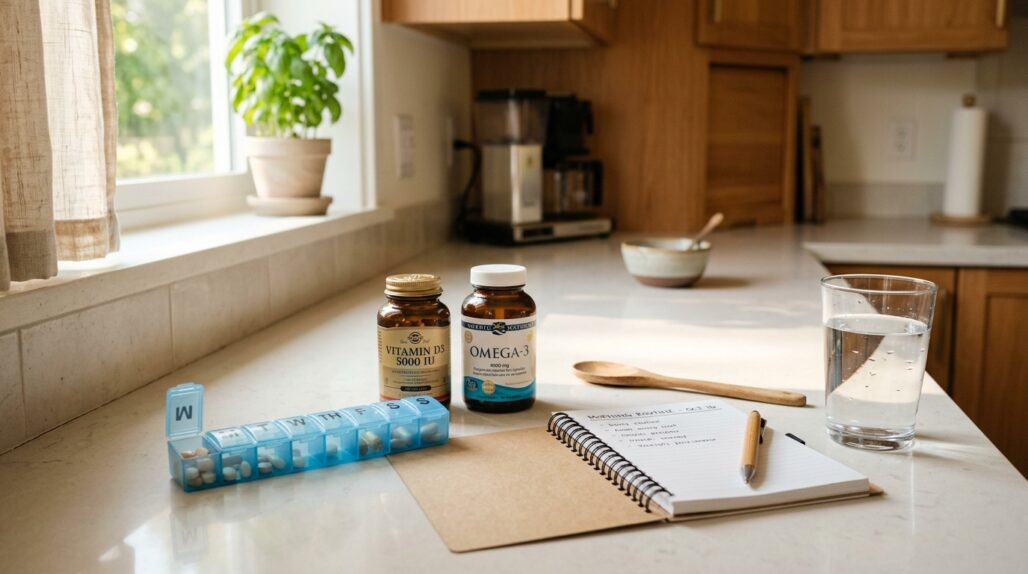
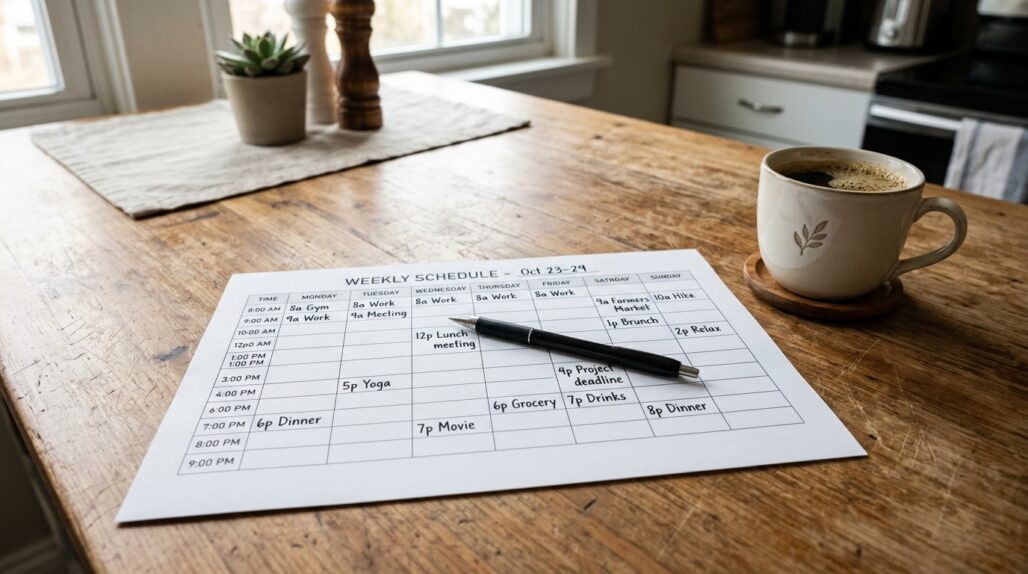
Once your slots feel right, the only real task is doing them the same way each day and updating the plan when a dose or product changes. A weekly pill organizer with morning and evening compartments does most of this for free, and a printed copy of the schedule grid above, taped inside a cabinet, keeps it visible.
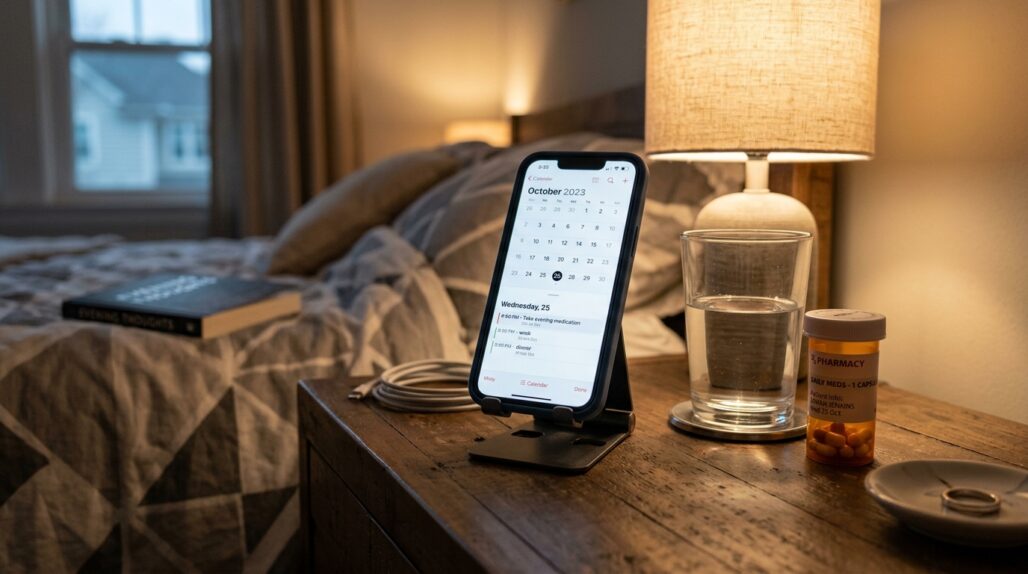
If keeping a morning, with-meal, and evening slot straight is the hard part, StackMyMed (our own free app) lets you set a dose reminder for each one so the schedule runs itself instead of living in your head. A paper template or a phone note does the same job at zero cost, so use whichever you will actually keep up. For anything about whether a supplement is safe alongside your GLP-1 or other prescriptions, that decision belongs with your pharmacist, not an app.
When something does need a second opinion, you can run your list through our drug and supplement interaction checker to spot questions worth raising before your next visit.
FAQ
Should I take all my supplements at the same time to keep it simple? Simple is good, but not at the cost of clashes. A thyroid pill needs to stand alone, and iron and calcium do better in separate windows. Group what is compatible, and keep the few exceptions apart.
My meals are tiny now. Will fat-soluble vitamins still absorb? They absorb best with some dietary fat, so pair vitamin D and other fat-soluble vitamins with whichever small meal actually contains a little fat. If every meal is very low fat, mention it to your pharmacist or dietitian.
Can magnesium help the constipation my GLP-1 causes? For some people it does, because magnesium can soften stool. It can also cause loose stools at higher doses. Talk to your pharmacist about a form and amount that fits you rather than self-treating with a large dose.
Do I move my supplements on injection day? Usually not. The shot can be taken with or without food on any day, so your supplement slots stay put. On a high-nausea day, just take the gentle ones with your best-tolerated meal.
Is it safe to stop a supplement if it upsets my stomach on the GLP-1? An optional over-the-counter supplement is generally low risk to pause for a day. Anything prescribed, including prescription-strength vitamin D or iron, should not be stopped on your own. Call your pharmacist or doctor first.
How do I know if my supplements clash with my other medications? You cannot always tell from the label. Bring a full list of everything you take to a pharmacist, who can flag real interactions and timing issues for your specific medications.
The bottom line
On a GLP-1, your supplements do not change, but their place in your day should. Keep an empty-stomach thyroid pill alone in the morning, take fat-soluble vitamins and iron with the meal that sits best, space iron and calcium apart, and move magnesium to the evening. The single most useful step is writing your slots down once and keeping the list current.
Before you lock it in, hand the full list to your pharmacist or doctor so the timing and any interactions are checked against your actual prescriptions.
This article is for general information and is not medical advice. It does not replace guidance from your doctor, pharmacist, or other qualified health professional, and nothing here is a recommendation to start, stop, or change any medication or supplement. Always talk to a professional about your own situation.
StackMyMed is made by UsefulVitamins. It helps you organize your list and flag things to discuss with a pharmacist or doctor; it is not a diagnosis or treatment tool and does not replace professional medical advice.
Reviewed by the UsefulVitamins Editorial Team.
