
Introduction
If you’re low in iron, the right iron supplements can raise hemoglobin and ferritin, reduce fatigue, and support healthy oxygen delivery – but only if you choose the right form and dosing plan. Many people quit early because of nausea, constipation, or “metal mouth,” even though the fix is often as simple as changing timing or taking iron every other day. This guide breaks down what research says about iron deficiency, how to dose iron for better absorption, which types tend to be easier on the stomach, and how to monitor progress safely.
Summary / Quick Answer
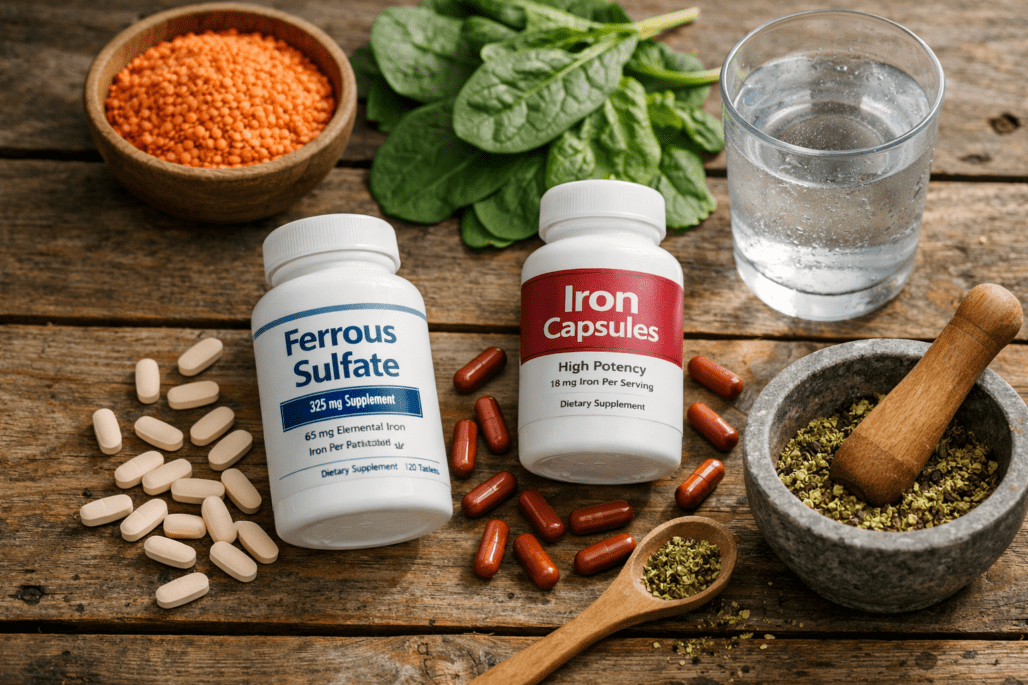
Most people do best with iron supplements taken in a way that maximizes absorption and minimizes side effects – often using an every-other-day schedule.
Here’s the practical, science-aligned approach:
- Confirm need with labs: hemoglobin, ferritin, and transferrin saturation (ask your clinician).
- Dosing (common range): 40-150 mg elemental iron every other day is often effective and better tolerated than daily dosing.
- Timing: take on an empty stomach (or with a small snack if needed), ideally away from calcium, coffee/tea, and high-fiber meals.
- Boost absorption: pair with vitamin C or a vitamin C-rich drink.
- Expect a timeline: hemoglobin often improves in 2-4 weeks; ferritin can take 8-12+ weeks to rebuild.
- If side effects hit: lower the dose, switch form, or use alternate-day dosing before giving up.
Iron Deficiency: What It Feels Like, Who’s at Risk, and Why It’s So Common
Iron deficiency is the world’s most common micronutrient deficiency, and it often hides in plain sight. People may blame stress or poor sleep, while their body is quietly running low on the mineral needed to make hemoglobin – the protein that carries oxygen in red blood cells. According to the American Society of Hematology’s Iron Deficiency Initiative, iron deficiency is widespread and can affect health and function long before it becomes severe anemia.
Symptoms that often point to low iron
Iron deficiency can look “everyday normal” until it doesn’t. Common clues include:
- Persistent tiredness or low stamina
- Headaches or lightheadedness
- Shortness of breath with exercise
- Cold hands and feet
- Restless legs
- Brittle nails or hair shedding
- Unusual cravings like chewing ice (a classic sign in iron-deficiency anemia)
If you’re also managing thyroid disease, it gets even trickier. Fatigue can overlap with medication timing and absorption issues. Two Useful Vitamins resources can help you untangle that: Iron Thyroid Medication Timing and Fatigue Iron Thyroid Meds.
Who’s most likely to need iron support?
Risk rises when iron intake is low, needs are high, or losses increase. Common higher-risk groups include:
- Women with heavy menstrual bleeding
- Pregnant and postpartum individuals
- Frequent blood donors
- People with low-meat diets or limited iron intake
- Those with gut conditions that reduce absorption
- Endurance athletes, especially females
Female athletes deserve a special mention. Ongoing research highlights a high prevalence of “suboptimal” ferritin in women athletes, often using cutoffs like ≤50 µg/L, which can matter for training tolerance and performance. A registered clinical trial is currently comparing every-other-day low-dose ferrous sulfate, yeast-bound iron, and higher-dose iron strategies in female athletes to evaluate iron status, performance, and gut effects.
Quick visual: iron deficiency snapshot
| Topic | What to know | Why it matters |
|---|---|---|
| Early deficiency | Low ferritin, normal hemoglobin | Symptoms can start before anemia |
| Iron-deficiency anemia | Low hemoglobin + low iron stores | Often needs supplements |
| Common drivers | Menstrual loss, pregnancy, low intake, malabsorption | Treat the cause, not only the labs |
| Athlete risk | High training load + iron loss | Can affect energy and adaptation |
If you’re unsure whether your symptoms match a deficiency pattern, start with the Vitamin Deficiency Quiz and then confirm with lab testing.
Iron Supplements and Dosing: Daily vs Alternate-Day (What the Evidence Says)
Most people assume “more often” means “more effective.” Iron doesn’t work that way. Your body regulates absorption using a hormone called hepcidin. After you take an iron dose, hepcidin can rise and temporarily reduce how much iron you absorb from the next dose. Think of it like a bouncer at the door – once a large group gets in, the bouncer tightens entry for a while.
That’s why alternate-day dosing has gained traction: it may allow hepcidin to fall between doses, improving absorption and reducing side effects for many people.
What studies show about alternate-day dosing
A 2024 systematic review summarized trials (mostly in women of reproductive age) using doses around 60-200 mg elemental iron and found that both daily and alternate-day schedules improved hemoglobin from baseline, without consistent differences between groups. A 2025 meta-analysis of 11 randomized controlled trials (N=1014) reported similar hemoglobin outcomes for daily vs alternate-day dosing, with daily dosing associated with a higher risk of metallic taste. The University of Illinois Chicago Drug Information Group provides a clinician-friendly evidence summary here: UIC FAQ on alternate-day oral iron dosing.
A 2025 consensus panel also leaned toward alternate-day regimens when tolerability is an issue, even though the certainty of evidence is still rated low. The key point for real life is simple: if daily iron makes you feel worse, alternate-day dosing often keeps you on track long enough to actually fix the deficiency.
A practical dosing framework (not medical advice)
Use this as a discussion guide with your clinician:
- Mild deficiency (low ferritin, no severe anemia)
- Often: 40-65 mg elemental iron every other day
- Iron-deficiency anemia (confirmed)
- Often: 60-150 mg elemental iron every other day or daily if tolerated
- Severe anemia or urgent correction
- Higher dosing may be used, but side effects rise and follow-up matters
Visual: daily vs alternate-day at a glance
| Strategy | Common schedule | Pros | Cons |
|---|---|---|---|
| Daily dosing | 1 dose every day | Simple routine | More GI side effects for many |
| Alternate-day dosing | 1 dose every other day | Often better absorption and tolerability | Requires calendar habit |
| Split dosing | 2 smaller doses/day | Sometimes used historically | May worsen hepcidin effect |
One more safety note: iron can interact with medications. Before starting, scan your med list and timing using Ultimate Drug Supplement Interactions.
<
Types of Iron Supplements: Ferrous Salts, “Gentle” Options, and What to Choose
The “best” iron supplement is the one you can absorb and tolerate. Many people start with ferrous sulfate because it’s widely available and effective, but it’s also the form most associated with nausea, constipation, dark stools, and stomach pain. Those side effects are not just annoying – they’re the top reason people stop treatment early.
The most common forms (and what they’re like)
Ferrous sulfate
- Often used in research and standard care
- Effective, inexpensive
- Higher rate of GI complaints in many users
Ferrous fumarate / ferrous gluconate
- Similar category (ferrous salts)
- Some people tolerate one better than another
Food-based or “bound” iron (including yeast-bound options)
- Designed to be gentler for some users
- In athletes, yeast-bound iron (such as Lalmin Fe10) is being studied in every-other-day low-dose regimens to see if it supports iron status with fewer gut downsides (see the ongoing trial listing on ClinicalTrials.gov).
Newer gut-friendly concepts (research-stage)
A press release from the American Chemical Society described a “triple threat” approach combining an iron complex with a prebiotic fiber (millet) and a probiotic (Lactobacillus rhamnosus). In anemic mice, it restored iron status quickly without signs of inflammation or gut dysbiosis, outperforming standard iron in that model. This is not a consumer-ready clinical solution yet, but it signals where product development may go.
How to read labels: “elemental iron” matters
Supplement labels can be confusing because the pill weight is not the same as the iron dose your body uses. What you dose is elemental iron.
Examples you may see:
- “Ferrous sulfate 325 mg” often provides about 65 mg elemental iron
- Other forms vary widely
If you’re comparing products, compare elemental iron per serving, not capsule size.
Visual: choosing a form based on your main problem
| Your main issue | What to try first | Why |
|---|---|---|
| Constipation or nausea | Lower elemental dose every other day | Often improves adherence |
| “Metal mouth” | Alternate-day dosing or different ferrous salt | Daily dosing may increase risk |
| Sensitive stomach | Take with a small snack, or consider gentler forms | Better consistency beats perfect fasting |
| Athlete with low ferritin | Low-dose every other day plan + labs | May support training without GI drag |
For product roundups, Useful Vitamins doesn’t rely on hype lists, but it can be useful to see how mainstream reviewers evaluate options. Fortune’s overview discusses common picks and highlights a high-potency option for anemia: Fortune’s best iron supplements list. Healthline also maintains a regularly updated overview of options emphasizing tolerability: Healthline’s best iron supplements.
How to Take Iron for Better Absorption (and Fewer Side Effects)
Most “iron didn’t work for me” stories come down to one of three issues: the dose was taken in a way that blocked absorption, side effects made adherence inconsistent, or the root cause of deficiency wasn’t addressed. The goal is not to take the most iron. The goal is to take enough iron, consistently, in a way your body can use.
Timing and food rules that actually matter
Iron absorption is reduced by several common foods and supplements. The biggest practical blockers are:
- Calcium (supplements and high-calcium meals)
- Coffee and tea (polyphenols can reduce absorption)
- High-fiber meals (can bind minerals in some people)
For many adults, a workable routine is:
- Take iron in the morning with water
- Add vitamin C (tablet or citrus drink)
- Wait 1-2 hours before coffee or a calcium-heavy breakfast
If fasting makes you nauseated, take iron with a small snack. Consistency beats the “perfect” protocol you can’t stick to.
If you take thyroid medication, spacing is essential. Use Iron Thyroid Medication Timing as a guide, and confirm your exact schedule with your prescriber.
Side effects: what’s normal vs what’s a red flag?
Common, expected effects:
- Dark stools
- Mild stomach upset
- Constipation
Often-helpful fixes:
- Switch to alternate-day dosing
- Reduce dose, then build up
- Increase fluids and dietary fiber (but not right with the pill)
- Consider magnesium at night if appropriate for you (ask your clinician)
Call a clinician urgently if you have severe abdominal pain, vomiting, signs of allergic reaction, or if a child might have ingested iron. Iron overdose is dangerous, especially for kids.
Monitoring: don’t guess, test
Most people need follow-up labs to confirm they’re responding and to avoid overshooting. Typical monitoring includes:
- Hemoglobin (often improves within 2-4 weeks)
- Ferritin (iron stores, often slower to rise)
- Sometimes transferrin saturation and other indices
Many studies check outcomes at 4 and 12 weeks, which is a reasonable rhythm for reassessment in real life too.
Visual: “do this, not that” for iron success
| Do | Not that | Why |
|---|---|---|
| Take every other day if daily upsets your stomach | Quit after a week | Adherence drives results |
| Separate from calcium and coffee | Take with latte + yogurt | Absorption drops |
| Recheck labs | Assume symptoms tell the full story | Symptoms lag behind labs |
| Address heavy periods or GI issues | Treat iron only | Deficiency will return |
<
Conclusion
Iron deficiency is common, treatable, and often missed until symptoms pile up. Research suggests that alternate-day iron supplements can raise hemoglobin similarly to daily dosing for many people, with fewer side effects and better follow-through. The best plan is the one you can take consistently, with smart timing, the right elemental dose, and lab monitoring.
Next step: if fatigue is your main complaint, compare your symptoms and risks using the Vitamin Deficiency Quiz, then review your medication schedule and interactions with Ultimate Drug Supplement Interactions. If thyroid meds are part of your routine, revisit Fatigue Iron Thyroid Meds to tighten up timing and expectations.
