
Affiliate disclosure: this article contains affiliate links. As an Amazon Associate, UsefulVitamins.com earns from qualifying purchases at no extra cost to you.
Before you buy
The phrase "is ARMRA worth it" hides two separate questions. One is whether bovine colostrum does anything at all. The other is whether ARMRA specifically earns its price.
Treat them as one and you either dismiss a legitimate ingredient or overpay for a thin dose. So we will keep them apart.
Colostrum is the first milk a cow makes after calving. That biology is real and well described. The decision in front of you is narrower: how many grams of it ARMRA puts in your glass, what those grams cost, and whether the benefit shows up at the dose you will actually take.
ARMRA's marketing leads with what colostrum is. The value of the purchase turns on how much you get. We will walk the mechanism, then land on the number.
What bovine colostrum actually is
Picture colostrum as a carrier for three kinds of bioactive molecules, each with its own proposed job.
- Immunoglobulins (mostly IgG, plus IgA and IgM) are antibodies. In the gut they are thought to bind pathogens and antigens locally rather than being absorbed whole.
- Lactoferrin is an iron-binding protein with antimicrobial and anti-inflammatory behavior.
- Growth factors such as IGF-1 and EGF drive the "gut repair" story, signaling intestinal cells to regenerate and helping reinforce the gut barrier.
There is mechanistic support for colostrum shoring up that barrier, partly by inducing TGF-beta, a signaling protein that helps seal the intestinal lining.
Here is the part worth holding onto. These effects are dose-dependent, and most of the action happens in the gut, not the bloodstream. So total grams delivered to the gut is the lever that matters, not any "bioavailability" framing. Colostrum is not a tiny-dose nutrient where a milligram does the work; it is a bulk protein concentrate where you generally need grams.
If you want the broader principle of why a nutrient's form and amount change what your body can use, our primer on bioavailable nutrient forms is the companion read. The short version: a colostrum product's value lives in two numbers, grams per serving and the immunoglobulin content inside those grams. ARMRA is unusually quiet about the second.
What the evidence supports vs what the ads imply
Colostrum has some of the better evidence in the wellness aisle, but only for specific outcomes. Being precise here pays off.
Gut barrier and intestinal permeability
This is the strongest signal. A systematic review of bovine colostrum and intestinal permeability in athletes found mostly positive results, with several markers of "leaky gut" improving on supplementation.
The authors did not oversell it. Only nine studies qualified, protocols varied widely, and they called for better-designed trials to settle the optimal dose, per the systematic review in PMC. Those study doses ran from 500mg to 60g per day, with most landing in the 10-20g band. For the wider category, see our guide to supplements for leaky gut.
Immune and respiratory support
A meta-analysis of randomized trials in exercising adults found colostrum cut the number of upper-respiratory symptom days versus placebo, with a rate ratio of 0.56 (roughly a 44% reduction in symptom days), reported in the BMC Sports Science meta-analysis.
That is a real if modest effect, and it was studied mostly in athletes under training stress, not the general public. If everyday immunity is your goal, weigh it against the broader options in our best supplements for the immune system roundup.
Hair, skin, and the rest of the glow-up
Here the marketing outruns the data. Independent analysis is blunt that there is no human clinical evidence for oral colostrum improving hair or skin, as Biology Insights lays out. Those claims rest on the presence of growth factors, not on trials. File them under speculative.
The pattern holds across all three: the supported outcomes came from doses well north of one gram.
ARMRA's dose vs the studied dose
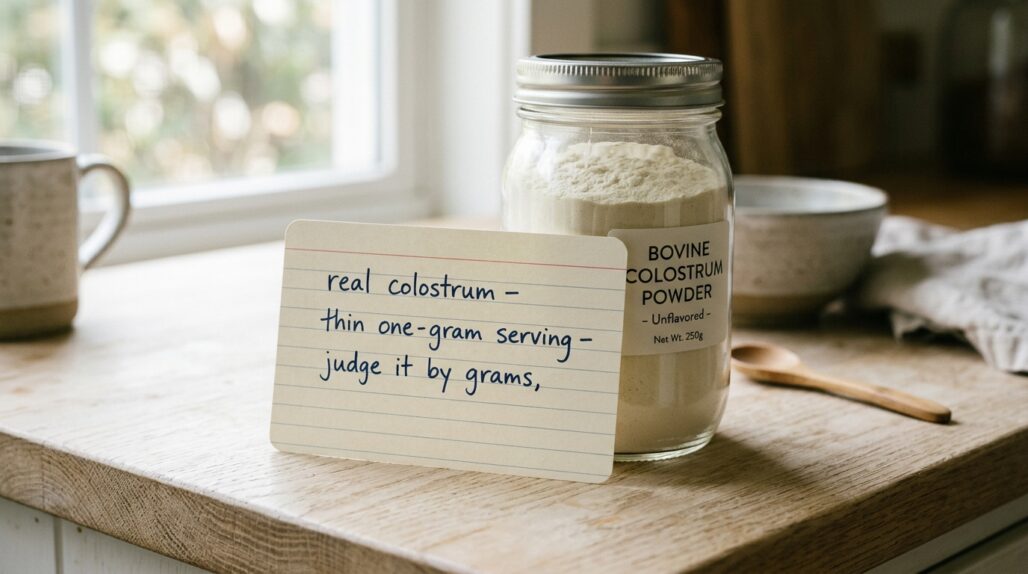
Now the number that decides everything. ARMRA's serving is about 1 gram of colostrum concentrate, confirmed by Innerbody and BarBend. One gram sits at the very bottom of the studied range.
ARMRA knows this. On its large unflavored jar the brand recommends working "4+ scoops" into your daily routine, and that jar ships as 120 servings, per the ARMRA product page.
Read that carefully. A single 1g "serving" is a marketing unit, not the dose the company steers you toward. Four-plus scoops is 4-plus grams, closer to a research-relevant dose. It also means a "120-serving" jar is really about a 30-day supply, and your real cost per day is four times the per-serving label number.
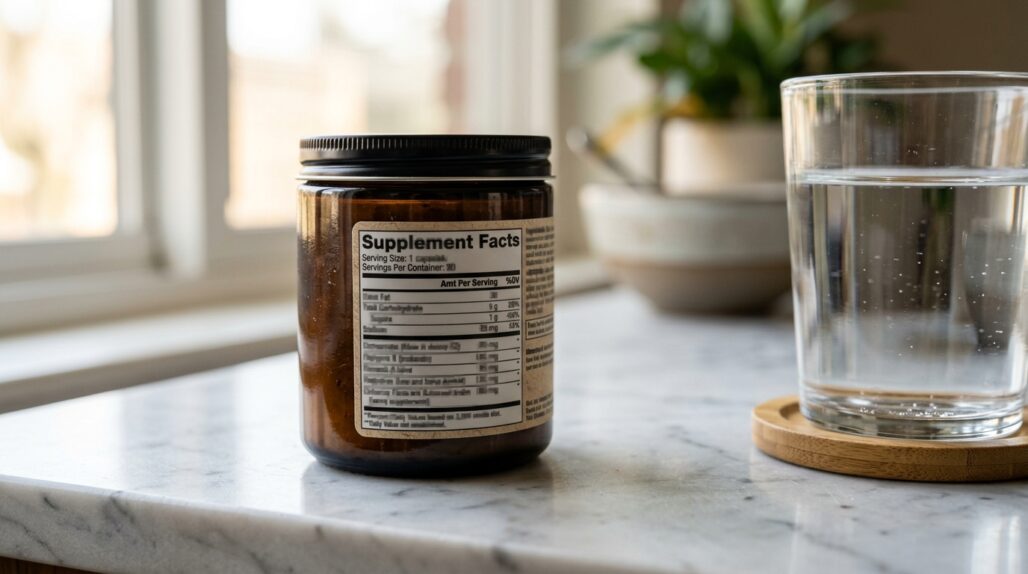
There is a second gap a careful buyer should weigh. ARMRA does not publish the IgG content per serving on the label. Reviewers flag this, because IgG concentration is the best single spec for judging colostrum potency, and its absence makes a clean quality comparison impossible, as BarBend notes.
Marketing puts IgG above 35-40%, while outside estimates for typical colostrum concentrates often land lower. Without an on-label number, you cannot reconcile the two. "Proprietary concentrate" reads as reassurance; it is not a substitute for a figure.
So the science verdict is split: the ingredient is legitimate and the quality controls look serious, but the default serving is sub-therapeutic, and reaching a studied dose multiplies your cost.
Quality and third-party testing
Credit where it is due. This is the part of the value case that holds up. ARMRA is stronger than most colostrum brands on quality signals.
The brand states its colostrum comes from grass-fed, pasture-raised U.S. dairy on a "calf-first" basis, is processed with a low-heat "Cold-Chain BioPotent" method, and is tested for heavy metals, contaminants, and microbiological safety by third-party, FDA-registered, ISO/IEC-certified labs. It also carries Certified Non-GMO, Keto-Certified, and Glyphosate-Free marks, per the ARMRA product page.
Two honest asterisks.
- ARMRA does not name the certifying lab or post a public certificate of analysis, so reviewers rate its testing transparency only middling despite the claims, per BarBend.
- The "Cold-Chain" process is plausible but unverified against ordinary colostrum in any published head-to-head. You are trusting that the gentler method preserves more bioactivity, without data showing the finished product beats a standard one, a point Biology Insights raises.
For the framework we use to grade any brand's testing and label honesty, see our supplement quality indicators guide. The short of it: ARMRA's testing posture is a genuine plus, but "tested" and "published the results" are different bars, and it clears the first more cleanly than the second.
Cost per serving, and per gram
Prices move, so treat these as approximate, as of writing, and check the current price before you buy.
| Format | Approx. price | Per 1g serving | Real cost at 4 scoops/day |
|---|---|---|---|
| Large unflavored jar (120 x 1g) | ~$110 one-time, a little less on subscription | ~$0.90 | ~$3.60/day; jar lasts ~30 days |
| Travel stick boxes (30 x 1g) | ~$40 unflavored, a touch less on subscription | ~$1.33 | ~$5.30/day |
| Generic bovine colostrum (transparent, 2-10g serving) | often ~$25-$45/tub | frequently a fraction of ARMRA per gram | typically lower for the same grams |
The per-serving sticker looks fine until you remember a serving is one gram and the brand wants four-plus. On a per-gram basis, the metric that maps to the evidence, ARMRA is one of the pricier ways to get colostrum.
Depending on format you are paying roughly $0.90 to $1.50 per gram. One independent analysis put transparent competitors around $0.25 to $0.30 per gram for similar or higher doses, such as Adapt Naturals at 2.5g and Miracle Moo at 1.5g per serving, per Biology Insights. On a per-gram basis ARMRA sits well above the category.
Where to buy and the value pick
If you have decided you want colostrum, price it per gram, not per serving, and put ARMRA next to a transparent generic that lists its colostrum grams and ideally its IgG percentage.
Buy from a seller with verifiable testing. If you are after a studied effect, plan for a multi-gram daily dose, not the single-scoop default.


As an Amazon Associate, UsefulVitamins.com earns from qualifying purchases at no extra cost to you.
UsefulVitamins earns commissions from qualifying Amazon purchases at no extra cost to you. That never changes our verdicts; we would rather tell you to dose up a cheaper colostrum than push a pricier one.
A quick filter for any colostrum, in order:
- Grams per serving. The lever. One gram is a starter; the evidence sits in the several-grams-a-day range.
- IgG disclosure. A brand that lists IgG percentage is telling you what a "proprietary blend" hides.
- Testing you can see. A certificate of analysis or named lab beats a vague "third-party tested" badge.
- Cost per gram at your real dose. Multiply the per-serving price by the scoops you will actually take.
- Tolerance. Colostrum is a dairy product. If you react to milk, it is a hard no.
FAQ
Is ARMRA colostrum worth the money? It is worth it if you specifically want a clean, third-party-tested brand, you will take 4 or more scoops daily, and price is not your main concern. If your priority is a research-relevant dose at the lowest cost, a transparent generic bovine colostrum usually wins on cost per gram.
How much colostrum is in one ARMRA serving? About 1 gram per scoop, which sits at the bottom of the studied range. ARMRA’s own large jar suggests “4+ scoops” daily, so the realistic dose is 4 or more grams a day, and a 120-serving jar lasts roughly a month at that rate.
Does bovine colostrum actually work for gut health? The best evidence is for the gut barrier and intestinal permeability, where a systematic review in athletes found mostly positive results, though the authors stressed the small number of studies. A separate meta-analysis showed fewer upper-respiratory symptom days in exercising adults. Most of these studies used several grams up to about 20 grams a day.
Will ARMRA improve my hair and skin? There is no human clinical evidence that oral colostrum improves hair or skin. Those claims rest on the presence of growth factors rather than on trials, so treat them as speculative and not a reason to buy.
Who should not take ARMRA colostrum? Anyone with a dairy or milk allergy should avoid it, since colostrum is milk-derived and the label notes it contains milk. People who are pregnant, immunocompromised, or managing a medical condition should check with a clinician first.
Is there a cheaper alternative that does the same thing? Often, yes. A transparent generic that lists grams per serving, and ideally IgG content, frequently delivers more grams per dollar. Since the bioactive value tracks total grams reaching the gut, a well-dosed budget colostrum can match the studied effect for less.
The verdict
ARMRA passes the test that trips up most of the wellness aisle. It is a real ingredient with a defensible quality process, not vaporware, and the gut-barrier and exercise-immune evidence behind colostrum is among the better stories in the category.
The problem is arithmetic. The studied benefits came from multi-gram daily doses. ARMRA's serving is one gram, the brand nudges you to four-plus, and per gram it is one of the more expensive colostrums you can buy, all while declining to publish the IgG number that would justify the premium.
So the measured call. If you love the brand, will dose up, and do not blink at roughly $4 a day, ARMRA is a perfectly legitimate, clean choice. For most people the science-honest move is to buy a transparent colostrum that lists its grams, dose it into the studied range, and pocket the difference. The benefit lives in the grams, not the logo.
This article is informational and not medical advice. Colostrum is dairy-derived; if you have a milk allergy, avoid it. Talk to a clinician or pharmacist before starting any supplement, especially during pregnancy or with a medical condition. Prices and formulas change, so verify current details before you buy.
Reviewed by the UsefulVitamins Editorial Team.
