
If you're wondering whether collagen is really worth taking, you've probably seen the powders, the chewable beauty gummies, and the influencer claims that a daily scoop will rebuild your skin, hair, nails, and knees. The honest answer: for most adults who already eat enough protein, the signal is modest at best, but a few specific groups do see a real, repeatable effect in the trial data..
You'll also get a dietitian-flavored read on the amino-acid-pool argument vs the bioactive-peptide hypothesis, plus a refer-out checklist for joint pain that needs rheumatology before any supplement.
1. TL;DR: Is Collagen Really Worth Taking?
Short answer: collagen has a small but reproducible signal in skin elasticity (Proksch 2014), in knee osteoarthritis pain at the UC-II dose (Lugo 2016), and in tendon synthesis biomarkers (Shaw 2017), but it's almost certainly overhyped for the average healthy adult eating 1.0 g/kg of protein.
- Worth taking for: postmenopausal women targeting skin elasticity, athletes with chronic tendon load (paired with vitamin C), adults with diagnosed knee osteoarthritis using the UC-II form, and people whose total protein intake is genuinely low
- Not worth taking for: anyone hoping a powder will reverse photoaging (use sunscreen and a retinoid for that), anyone using it to "fix" nails or hair without first ruling out iron, ferritin, or biotin gaps, or anyone substituting collagen for whole-protein meals
- What to do first: confirm your daily protein intake (1.0 to 1.6 g/kg by activity and age), get vitamin C through diet, and treat skin aging with the dermatology basics (sunscreen, topical retinoid, sleep) before paying for a $40 powder
- Decision shortcut: if you already eat 100 to 120 g of mixed protein per day and you're under 45, collagen is probably noise; if you're postmenopausal, an athlete with tendon issues, or have rheumatology-confirmed knee OA, the small signal may be worth a 12-week trial
This is a dietitian read, not a marketing pitch. The amino acid math matters here.
2. The Claim: "Collagen Rebuilds Your Skin, Hair, Nails, Joints"
Walk into any wellness store, scroll any beauty TikTok, or open a women's-health magazine and you'll meet the same set of claims. Collagen, the marketing goes, is the body's "scaffolding protein" that begins declining in your mid-twenties at roughly 1 percent per year. The fix, you're told, is to swallow more of it. The category has grown into a roughly $4 billion global market as of 2026, with hydrolyzed bovine powders, marine peptides, eggshell-membrane capsules, "beauty" gummies, bone broth concentrates, and ready-to-drink shots all selling versions of the same story.
The claims usually cluster into four buckets:
- Skin: restored elasticity, fewer fine lines, a "plumper" dermis
- Hair and nails: thicker hair, faster nail growth, fewer brittle splits
- Joints: less wear-related pain, smoother cartilage, longer training careers
- General "anti-aging": gut lining repair, slower aging, vague reductions in inflammation
There's a structural problem with all of this. Collagen does decline with age. Skin, tendon, and cartilage do contain a lot of it. But "the body needs collagen" and "swallowing collagen rebuilds collagen" are not the same statement, and the gap between them is where the marketing lives.
When you eat collagen, your gut doesn't absorb it as collagen. Pepsin and pancreatic enzymes break it down to free amino acids and small di- and tripeptides, the same way they handle any protein. Whether those amino acids preferentially rebuild dermal or articular collagen, or just enter the general pool the way amino acids from chicken breast and lentils do, is the central scientific question. The advertising treats that question as settled. It isn't.
A second problem: most of the cleanest trials in this category were funded by the company selling the ingredient (Verisol, Peptan, UC-II from InterHealth). Industry-funded research isn't disqualifying. It is the norm in supplements. But it sets the prior. Replication outside the sponsoring brand has been slower to arrive than the marketing implies.
So the real question isn't "does collagen do anything," it's "does swallowed collagen do enough, over and above adequate dietary protein, to be worth your money, and for whom."
3. The Evidence: What the Better RCTs Actually Show
Here are the trials the category leans on, read honestly.
Skin elasticity: Proksch 2014 (Verisol)
In a 2014 double-blind, placebo-controlled RCT (Proksch et al., n=69 evaluated, Verisol bovine collagen peptides 2.5 g/day, 8 weeks), women aged 35 to 55 showed a roughly 7 to 20 percent improvement in skin elasticity (cutometric measurement) vs placebo. The effect was statistically significant. It was also modest in absolute terms, the population was specifically selected (mature women, not "everyone"), and the trial was funded by the patent holder of the peptide. The follow-up paper from the same group (Proksch 2014, n=114, eye-wrinkle volume) showed a measurable but again modest reduction in periorbital wrinkle volume.
That's the strongest skin signal in the literature. It's real. It is not "rebuilds your face." It is "in postmenopausal-adjacent women, a small but measurable improvement in a single biomechanical marker after two months."
Knee osteoarthritis: Lugo 2016 (UC-II)
In a 2016 randomized trial (Lugo et al., n=191, 6 months), undenatured type II collagen at 40 mg/day was compared against glucosamine 1500 mg plus chondroitin 1200 mg in symptomatic knee osteoarthritis. UC-II showed a larger reduction in WOMAC pain scores than the glucosamine-chondroitin arm. The mechanism is proposed to be oral tolerance: tiny doses of intact type II collagen training gut-associated lymphoid tissue to dampen autoimmune attack on joint cartilage. The dose is unusual (40 mg, not grams) and form-specific.
This is the cleanest "joint" signal collagen has, and it's a very different protocol from a 10 g skin powder.
Athlete joint pain: Clark 2008
A 24-week trial (Clark et al., n=147 athletes, 10 g hydrolyzed collagen daily vs placebo) showed reduced activity-related joint pain in a college-athlete population. Effect size was modest, the population was healthy and young, and the outcome was subjective pain reporting. Useful evidence, not definitive.
Tendon synthesis: Shaw 2017
The most mechanistically interesting trial (Shaw et al., n=8, crossover) gave subjects 15 g of vitamin C-enriched gelatin one hour before a 6-minute targeted loading bout. Serum markers of collagen synthesis (PINP) roughly doubled vs placebo. The n is tiny, the outcome is a biomarker (not a clinical injury endpoint), and replication is still limited. But the timing-with-vitamin-C protocol is now widely cited in sports nutrition.
Mechanism: amino acid pool vs Pro-Hyp signaling
The skeptical position is simple. Collagen breaks down to amino acids, those amino acids enter the systemic pool, and tissues pull glycine, proline, and hydroxyproline from that pool whether the source was bone broth, collagen powder, or chicken thigh. By this logic, collagen is a moderately overpriced, incomplete protein (it lacks tryptophan).
The "targeted delivery" counter-position points to pharmacokinetic studies showing that small di- and tripeptides, especially proline-hydroxyproline (Pro-Hyp), survive digestion intact, appear in plasma, and may act as signaling molecules at fibroblasts and chondrocytes. That part is real. The leap from "Pro-Hyp shows up in plasma" to "Pro-Hyp meaningfully rebuilds your face or your knee cartilage" is where the data thins.
The honest read: both pathways probably operate. Most swallowed collagen feeds the amino acid pool. A small fraction of specific bioactive peptides may add a low-amplitude signaling effect at the tissue level. That model is consistent with the trial data, which shows real but modest effects over 8 to 24 weeks, not the dramatic transformations the marketing implies.
Actionable takeaway: when you read a collagen claim, ask which trial it cites, who funded it, what the population was, what the dose was, and how big the effect actually was in absolute terms. Most claims fail at one of those questions.
4. The Verdict: Modestly Worth Taking, for Specific People
Here's the dietitian read. Collagen is modestly worth taking if you fit one of these specific profiles:
- You're postmenopausal and targeting skin elasticity. The Proksch population was 35 to 55, and the signal is real if modest. A 2.5 to 10 g/day hydrolyzed peptide trial for 12 weeks is reasonable, paired with adequate dietary vitamin C, sunscreen, and ideally a topical retinoid prescribed by a dermatologist.
- You have rheumatology-confirmed knee osteoarthritis. UC-II at 40 mg/day, taken daily for 3 to 6 months, has the cleanest evidence of any oral supplement for OA pain. This is not a replacement for an orthopedic or rheumatology workup, and it doesn't undo structural damage; it's an adjunct to whatever your specialist recommends.
- You're an athlete with chronic tendon load. 15 g hydrolyzed collagen plus 50 mg vitamin C, taken 30 to 60 minutes before targeted loading, follows the Shaw 2017 protocol. The signal is small but the mechanism is plausible.
- Your total protein intake is genuinely low. If you're an older adult, a small-appetite eater, or someone tracking under 0.8 g/kg of protein per day, any added quality protein helps and collagen is one option, though not the cheapest or the most complete one.
Collagen is probably overhyped for most healthy adults who already eat 1.0 g/kg or more of mixed protein per day. There's a difference between the dose that fixes a real gap and the dose that just stacks up in your kidneys as urea. For the average 30-year-old eating eggs, salmon, beans, and Greek yogurt, an extra 10 g of incomplete protein per day is unlikely to change anything visible.
A few claims earn the strongest skepticism:
- "Fixes leaky gut." Speculative claim. Not supported by current trial data.
- "Reverses gray hair, regrows hair." No reliable evidence. If your hair is thinning, check ferritin, iron, thyroid, and vitamin D first.
- "Fixes brittle nails." Possibly modest, but biotin and iron deficiencies are usually the real culprits, and a blood panel is more useful than a powder.
- "Anti-aging from the inside out." Most "skin aging" is photoaging. The single highest-evidence intervention for skin appearance over a decade is daily sunscreen. After that, sleep, hydration, smoking cessation, and a topical retinoid (prescription tretinoin, not over-the-counter "retinol" creams) outrank collagen by a wide margin.
5. What Works Instead: The Boring, Better-Evidence Path
Before spending $30 to $50 a month on a powder, here's what the evidence actually supports for skin, joints, and connective-tissue health.
Adequate protein, not specifically collagen
The general adult RDA is 0.8 g/kg of body weight, but most clinical nutrition guidance now puts a healthy target at 1.0 to 1.2 g/kg for general adults and 1.4 to 1.6 g/kg for older adults, athletes, and people in weight loss. For a 70 kg adult, that's 70 to 112 g of protein per day. If you're hitting that with eggs, fish, poultry, dairy, beans, and lentils, your body has the amino acid pool to build collagen and everything else.
Food-first sources rich in glycine, proline, and the precursors that matter for connective tissue:
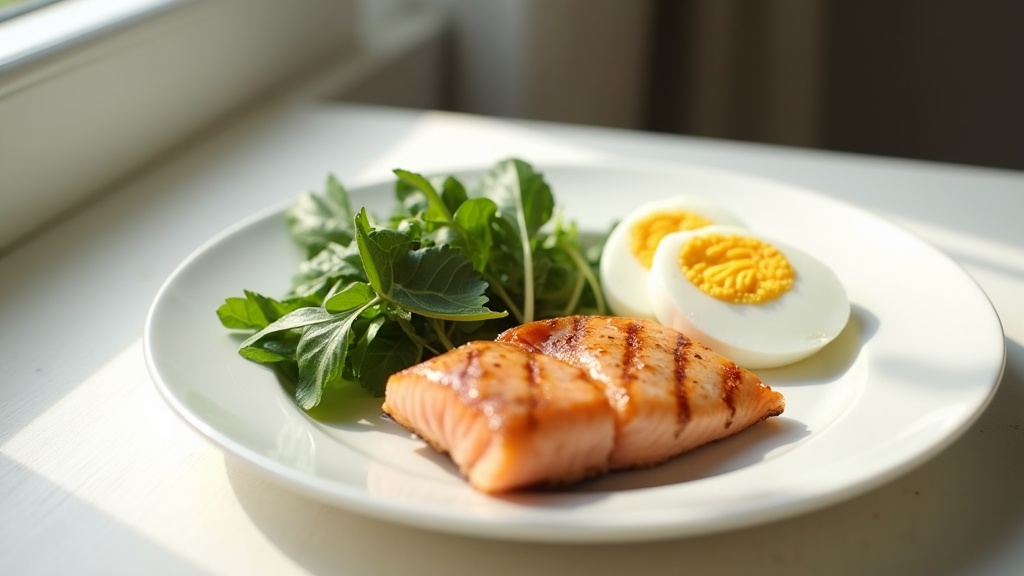
- Eggs (especially the whites for protein, the yolks for choline)
- Fatty fish, skin-on (salmon, sardines, mackerel)
- Slow-simmered cuts on the bone: oxtail, shank, short ribs, chicken thighs with skin
- Beans, lentils, tofu, tempeh for plant protein bulk
- Greek yogurt, cottage cheese, kefir for distributed dairy protein
- Traditional bone broth (a cup or two daily for variety, though gram-content is variable)
Vitamin C as a real cofactor
Hydroxylation of proline and lysine into hydroxyproline and hydroxylysine, the structural workhorses of the collagen triple helix, is vitamin-C-dependent. The RDA is modest (75 mg for women, 90 mg for men), easily covered by one bell pepper, one kiwi, or a cup of strawberries. Most healthy adults eating produce daily are fine. Smokers need more (about 35 mg extra). True scurvy presents as connective-tissue failure, which is the cleanest possible evidence that collagen synthesis depends on the C, not on whether you swallowed extra collagen.
Strength training
Resistance training is the single most studied intervention for muscle, tendon, and joint resilience across age. It increases tendon stiffness, supports cartilage health through cyclic loading, improves bone density, and protects against the muscle-and-mobility loss that drives most "I feel old" complaints. Two to three sessions a week, progressively loaded, does more than any powder.
Sleep, hydration, and sunscreen for skin
For visible skin aging, the actual evidence base is photoprotection plus dermatology. Daily broad-spectrum sunscreen (SPF 30 or higher) has the strongest, most replicated effect on slowing visible facial aging over a decade. After that, consistent 7 to 9 hours of sleep, adequate hydration, and a topical retinoid (prescription tretinoin if you can access dermatology) outrank every oral supplement for the same goal.
A Mediterranean-style eating pattern
Whole-food patterns rich in olive oil, fish, legumes, vegetables, and whole grains are associated with better inflammatory profiles, better skin aging in observational data, and broadly better metabolic and joint outcomes than any single supplement.
Actionable takeaway: if you're choosing between buying a $45 collagen tub and spending the same $45 on better groceries, a tube of sunscreen, and a single dermatology visit, the second option wins on evidence almost every time.
There's a difference between a supplement that closes a real gap and a supplement that closes a marketing gap. Ask your doctor about a blood test for ferritin, vitamin D, B12, and a basic metabolic panel before assuming "collagen" is what your skin or nails actually need. The labs change the question.
6. FAQ + Conclusion: The Bottom Line on Whether Collagen Is Really Worth Taking
Does collagen help skin elasticity?
Modestly, in specific populations. The Proksch 2014 RCT in women aged 35 to 55 showed a small but statistically significant elasticity gain at 2.5 g/day Verisol over 8 weeks. The effect was real but limited, and the trial was sponsored by the patent holder. For younger adults with no skin complaint, the signal is weak.
Is bone broth as good as collagen powder?
Roughly equivalent on amino acids, less consistent on dose. A long-simmered cup of beef bone broth delivers maybe 5 to 10 g of collagen-derived protein, but the gram count varies widely. Powder is standardized and trial-tested at known doses. Broth has the whole-food matrix and the gentler cultural framing. Both are reasonable. Neither is magic.
How long until I see results?
Trial data shows measurable changes at 8 to 12 weeks for skin endpoints and 12 to 24 weeks for joint endpoints. If a brand promises results in two weeks, that promise isn't grounded in the trial literature.
Will collagen help my hair and nails?
Possibly modestly, but the cleaner first step is checking ferritin, iron, biotin, thyroid, and vitamin D status. Many cases of brittle nails and shedding hair are downstream of a nutrient gap or a thyroid issue, not a collagen gap. A blood panel costs less than a year of powder.
Is marine collagen better than bovine?
Slightly smaller peptides, sometimes faster absorption in pharmacokinetic studies, but no convincing clinical outcome differences. Choose by allergy profile (skip marine if shellfish or fish allergy), heavy-metal third-party testing, and price per gram.
Can I get collagen if I'm vegan?
No. Collagen is animal-sourced. You can support endogenous synthesis with adequate plant protein, vitamin C, copper, zinc, and a varied amino acid intake, but you cannot swallow collagen itself without an animal or marine source.
Conclusion: the bottom line on whether collagen is really worth taking
Read the trials honestly and collagen is a modest, real, narrowly useful supplement for specific people, not the connective-tissue rebuild the marketing promises. The strongest evidence sits with postmenopausal skin elasticity (Proksch 2.5 g Verisol), with knee osteoarthritis at the UC-II 40 mg dose (Lugo 2016), and with athlete tendon synthesis when paired with vitamin C and pre-load timing (Shaw 2017). Outside those buckets, most healthy adults eating 1.0 to 1.2 g/kg of mixed protein with daily produce will see little or no measurable benefit. The "anti-aging" framing is the weakest claim in the category; sunscreen, sleep, strength training, and a Mediterranean eating pattern have more evidence per dollar than any powder.
If you fit a high-evidence profile and want to try collagen for 12 weeks, do it deliberately. If you don't, the money is almost certainly better spent on the boring basics.
Next steps:
- Read our complete guide to collagen for dose, forms, and a fuller trial walk-through if you've decided to try a structured 12-week protocol
- If your goal was specifically nail strength, see best supplements for nail health for the iron, biotin, and ferritin context that often matters more
- Review our editorial process at how we review supplements and the dietitian credentials behind this read at author/sarah-thompson
As an Amazon Associate, I earn from qualifying purchases. Product recommendations are based on real reviews and independent research.
This article is for informational purposes and not medical advice. Collagen and related supplements can interact with medications and health conditions, and skin, joint, or nail symptoms can reflect underlying issues that need evaluation. Consult a licensed physician, dermatologist, or rheumatologist before starting any supplement, particularly if you are pregnant, nursing, taking prescription medications, or managing a chronic condition.
Reviewed by Sarah Thompson, Registered Dietitian, focused on vitamin and mineral nutrition.
