
Affiliate disclosure: this article contains affiliate links. As an Amazon Associate, UsefulVitamins.com earns from qualifying purchases at no extra cost to you.
Before you buy
ConcenTrace gets sold two completely different ways, and that is where buyers go wrong. The label and the marketing lean on "72+ ionic trace minerals" and "250 mg of magnesium per serving." That makes it sound like a magnesium supplement.
In practice, it is a water-remineralizing concentrate first and a magnesium product a distant second. The real decision is simple. If you want better-tasting, mineralized water, this is one of the cheapest tools that exists. If you want a clinically meaningful magnesium dose, you will almost certainly underdose yourself with these drops.
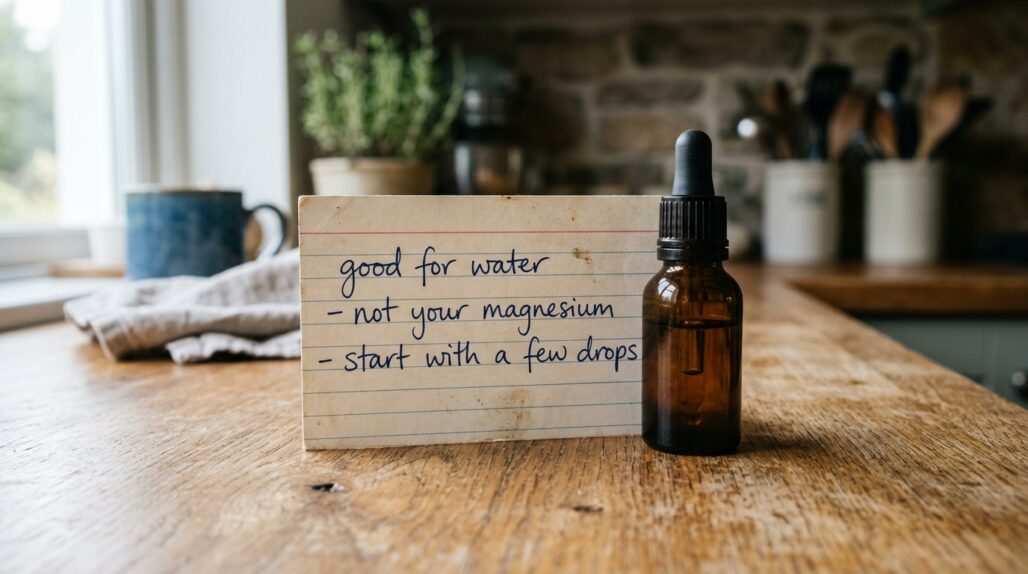
The reason is taste. The full serving is 40 drops (1/2 tsp), and at that volume the liquid tastes sharply salty and bitter. Most people land at a few drops per glass, which is great for water and weak for magnesium.
So before you add it to your cart, answer one question: are you buying this for your water, or for your mineral panel? The answer changes whether it is worth it.
What ConcenTrace actually is
ConcenTrace is a liquid mineral concentrate made by Trace Minerals Research, harvested from the Great Salt Lake in Utah. The brand removes most of the sodium and concentrates what is left into ionic, dissolved form.
What you get is essentially inland sea water with the salt stripped out. The drops carry magnesium, chloride, potassium, sulfate, lithium, boron, and dozens of minor trace elements that show up in tiny, mostly nutritionally irrelevant amounts.
"Ionic" is the brand's favorite word. It means the minerals are dissolved as charged particles rather than bound into a solid. That is a fair description of any mineral dissolved in water – it is not a special absorption technology, despite how it reads on the box.
The honest framing: this is a concentrated mineral salt solution, not a designed magnesium formula. That distinction drives everything below.

What is really in a dose
Here is the part the marketing soft-pedals. The numbers below come from the official Trace Minerals Research product page for the full 1/2 tsp serving.
| What you take | Magnesium | Taste at this amount | Realistic use |
|---|---|---|---|
| Full label dose (40 drops / 1/2 tsp) | ~250 mg (about 60% DV) | Strong, salty-bitter | Rare – most people will not tolerate it daily |
| Typical sip (8-10 drops) | ~50-65 mg | Noticeable but manageable | Common everyday dose |
| Remineralizing water (a few drops per glass) | ~15-25 mg | Barely there | The main reason most people buy it |
See the gap? The advertised 250 mg only happens at the full 40-drop dose, and that dose tastes like diluted, bitter sea water. Realistically most users sip 5 to 12 drops at a time, which lands them somewhere around 50 mg of magnesium or less per glass.
For context, the NIH Office of Dietary Supplements puts the adult magnesium RDA at roughly 310 to 420 mg per day. A typical ConcenTrace sip covers a small slice of that.
The other minerals are even smaller. Potassium comes in at a few milligrams per serving against a daily need in the thousands. Treat the trace minerals as a rounding error, not a meal.
Third-party testing and the heavy-metals question
This is where buyers get nervous, and it deserves a straight answer. Because ConcenTrace is concentrated from lake water, it naturally contains trace heavy metals – arsenic, lead, and similar elements show up in tiny amounts, the same way they appear in leafy greens, rice, and seafood.
Trace Minerals Research says the product is third-party tested in the USA for purity, potency, and heavy metals, and that batch Certificates of Analysis are available on request, with reported levels below FDA and WHO limits. We could not independently verify each batch, so treat the "below safe limits" claim as the brand's, supported by COAs you can request.
The product is also Non-GMO Project Verified, vegan, kosher, and gluten-free.
Two honest caveats. First, the brand has faced California Proposition 65 heavy-metals scrutiny in the past, which is common for sea-and-soil-derived mineral products. Second, the FDA notes that arsenic and similar contaminants are present across the food supply, so the relevant question is dose, not presence. At the few-drops-per-glass amounts most people use, exposure is small.
If heavy-metal exposure worries you, request the COA before buying, and do not megadose. That is a reasonable, low-drama way to use it.

What it is genuinely good at
Strip away the supplement marketing and ConcenTrace earns its keep in a narrow lane. It remineralizes stripped water cheaply and effectively.
If you drink reverse-osmosis or distilled water, that water has had its minerals filtered out, which is why it can taste flat. The brand's own instruction is to add 20-40 drops per gallon, and that is the use case where the product shines.
Good, realistic reasons to buy it:
- Remineralizing RO or distilled water so it tastes less flat. The CDC notes minerals are a normal part of drinking water.
- A light electrolyte add to plain water during long, sweaty days, alongside real sodium and potassium from food or a proper electrolyte mix.
- A small magnesium top-up if you already eat reasonably well and just want a little extra in your water.
What it is not good for: treating a diagnosed magnesium deficiency, replacing a real electrolyte product for hard training, or acting as a daily multimineral. For a full primer on getting enough magnesium, see our complete guide to magnesium.
The taste, and how people actually use it
You should know the taste going in, because it shapes the whole experience. Taken at the full dose, ConcenTrace tastes sharply salty and bitter, often described in reviews as licking a battery or drinking heavily diluted, mineral-heavy sea water.
That is why the practical dose drifts so far below the label. People reflexively dial it down until the water tastes fine, which usually means a handful of drops, not forty.
A few usage notes that come up repeatedly in reviews:
- Shake the bottle. The minerals settle, so the last pours taste stronger.
- Hide it in flavored liquid. Juice, tea, or a flavored electrolyte drink masks the bitterness far better than plain water.
- Do not chase the full 40 drops fast. A large magnesium hit on an empty stomach can have a laxative effect – that is the magnesium, not a defect.
If the taste is a dealbreaker, that is a legitimate reason to choose something else entirely.
Cost, and a cheaper or tastier swap


As an Amazon Associate, UsefulVitamins.com earns from qualifying purchases at no extra cost to you.
We may earn a commission from purchases made through the links above, at no extra cost to you.
On price, ConcenTrace is reasonable for what it is. The 8 oz bottle runs around $40 as of writing, with Subscribe and Save near $30; check current price. At the full 40-drop dose that is roughly 96 servings, but since most people sip far less, a bottle realistically lasts months.
The catch is the cost-versus-purpose mismatch. As a water mineralizer, that is cheap. As a magnesium source, you are paying a premium for a small, hard-to-hit dose.
Here is the honest split on what to buy instead:
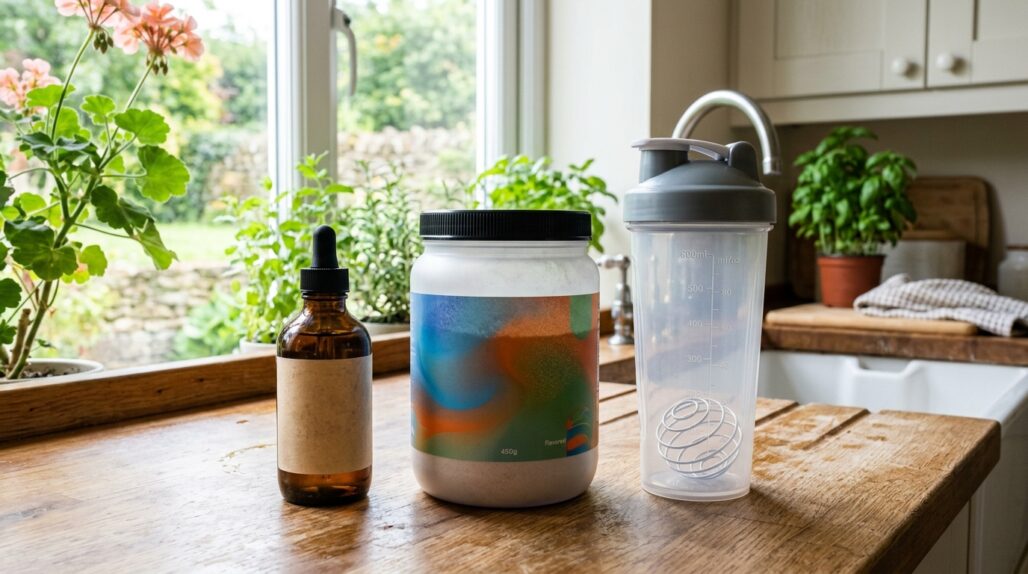
- If you want a real magnesium dose, skip the drops and buy a magnesium glycinate capsule. It is gentle, well-absorbed, tasteless, and gives you a known dose every time. Our cheap magnesium glycinate picks cover dependable budget options.
- If you want hydration with flavor, a flavored electrolyte powder with real sodium and potassium beats trace drops on both taste and function for training or hot days.
- If you only want better-tasting filtered water, ConcenTrace itself is a fine, low-cost pick – this is the one job it does best.
Form matters more than people think when comparing magnesium products. Our breakdown of magnesium forms and bioavailability shows why a chelated capsule beats sipping diluted lake minerals if absorption is the goal.
FAQ
How much magnesium is really in ConcenTrace? The full label serving of 40 drops (1/2 tsp) provides about 250 mg, but most people take only a few drops per glass, which works out to roughly 15-65 mg per use. Plan around your actual sip size, not the headline number.
Is ConcenTrace safe given the heavy-metals talk? The brand says it is third-party tested with batch COAs showing levels below FDA and WHO limits, and trace heavy metals occur naturally in any sea-or-soil-derived mineral. At normal few-drop doses, exposure is small. If it concerns you, request the COA before buying.
Why does ConcenTrace taste so bad? It is concentrated mineral salts, so at higher doses it tastes salty and bitter, like very diluted sea water. Mixing it into flavored drinks or using only a few drops per glass largely solves the taste problem.
Can I use ConcenTrace to remineralize reverse-osmosis water? Yes, and this is its best use. The brand suggests 20-40 drops per gallon to add minerals back to distilled or RO water and improve flat taste.
Will ConcenTrace fix a magnesium deficiency? Not reliably. A diagnosed deficiency usually calls for a measured, well-absorbed dose, which a capsule delivers more consistently than sipped drops. Talk to a clinician and consider a glycinate supplement instead.
Does ConcenTrace interact with medications? Concentrated minerals can affect absorption of some drugs and matter for people with kidney issues. If you take prescriptions, check our drug and supplement interactions guide and ask your pharmacist.
The verdict
ConcenTrace is worth it for one specific job and oversold for another. As a cheap way to put minerals back into filtered, distilled, or RO water, it works and lasts a long time. That is a real, useful product, and the price is fair.
As a magnesium supplement, it falls short. The advertised 250 mg only lands at the full 40-drop dose, and that dose tastes strong enough that almost nobody takes it daily. Sip a few drops, as most people do, and you are getting a modest top-up, not a therapeutic dose.
So here is the honest call. Buy ConcenTrace if your goal is your water. If your goal is your magnesium, buy a glycinate capsule instead and use it for the water only. Either way, do not expect drops to cover a real deficiency.
Next step: decide which job you actually need solved, then either keep this in the cupboard for your water pitcher or put the money toward a measured capsule. For most people chasing a magnesium target, the capsule is the smarter spend.
This article is for general information only and is not medical advice. Supplement needs, magnesium dosing, and interactions vary by person, and prices and formulations change. Talk to a qualified healthcare professional before starting any supplement, especially if you have kidney concerns or take medication.
Reviewed by the UsefulVitamins Editorial Team.
