
Affiliate disclosure: this article contains affiliate links. As an Amazon Associate, UsefulVitamins.com earns from qualifying purchases at no extra cost to you.
Before you buy
Natural Vitality Calm is the magnesium powder you have seen on every shelf and in every "wind down" video. It is the category's best seller, and most of the buzz is earned: it tastes fine, it dissolves into a warm fizzy drink, and it does make a lot of people feel relaxed.
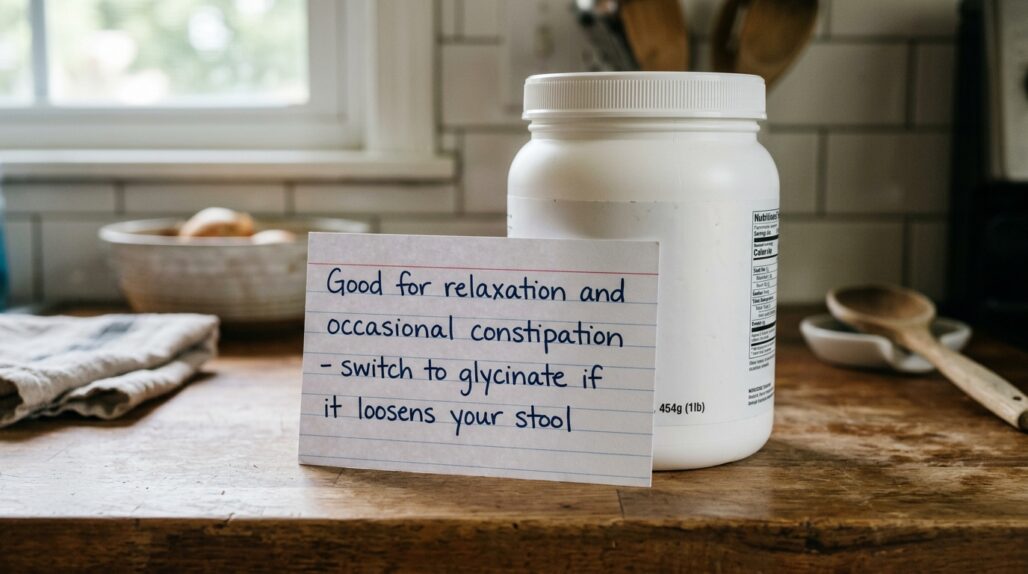
The real decision is not whether Calm "works." It is whether magnesium citrate is the right form for what you actually want. Citrate is a perfectly good magnesium – it just has a built-in side effect that the marketing does not lead with.
That side effect is loose stools. For someone who is mildly constipated, that is the feature. For someone taking magnesium at 10 p.m. to sleep better, it can be the thing that wakes them up at 2 a.m.
There is also a quieter question floating around Calm: heavy metals. The evidence there is messier than either side admits, and we will walk through what is actually known versus what is loud online.
What Natural Vitality Calm actually is
Calm is a magnesium drink powder, not a capsule. The original unflavored tub delivers 350 mg of elemental magnesium per 2-teaspoon (4 g) serving, which the brand's official Calm Powder page lists at 350 mg, about 83% of the 420 mg adult daily value.
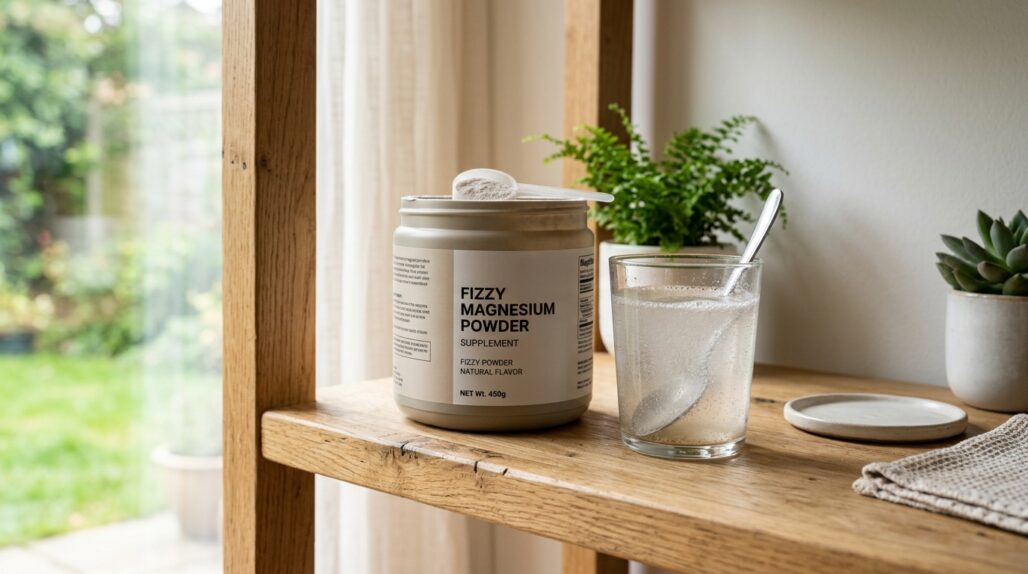
Here is the part worth understanding. The tub does not contain pre-made magnesium citrate. It contains magnesium carbonate plus citric acid, and those two react when you add hot water – that is the fizz – to form magnesium citrate in your glass. Natural Vitality’s separate MaxCalm line adds glycinate, but the standard Calm powder reviewed here is citrate only.
So the form you actually drink is mostly citrate. That single fact drives almost everything below: the absorption, the relaxation, and the bathroom timing.
It is vegan, gluten free, non-GMO, sugar free, and comes unflavored or in flavors like raspberry lemon, cherry, and orange. The flavored versions add stevia and natural flavoring and run a slightly lower magnesium dose per serving.
The dose, and how to actually take it
Do not start at a full serving. The label says to begin with half a teaspoon (about 1 g) and build up to the full 2 teaspoons (350 mg) over a few days. That advice exists for a reason, and most people who say Calm "wrecked them" skipped it.
The NIH Office of Dietary Supplements sets the upper limit for supplemental magnesium at 350 mg a day – and that limit exists specifically because, per the NIH magnesium fact sheet, some people get diarrhea even at doses others tolerate easily.
A full serving of Calm sits right at that 350 mg threshold. That is not dangerous for healthy adults, but it explains why a few people need to drink it in two smaller portions.
If you want calm and sleep more than a bathroom result, start low, take it earlier in the evening, and back off the dose if your stool loosens. Timing it 60 to 90 minutes before bed gives the relaxation a window without the surprise.
If you take prescription medications, run any new magnesium past a pharmacist – it can bind certain antibiotics and thyroid meds and blunt their absorption. Our drug and supplement interaction guide covers the basics of timing magnesium away from those.
Citrate vs glycinate: the part the label downplays
This is the whole ballgame, so here it is plainly.
Magnesium citrate is well absorbed, but the fraction your gut does not absorb pulls water into the bowel. That osmotic effect is why citrate is a go-to for constipation and why a big dose can move things along within hours. Sources comparing the two, including Rupa Health's breakdown of glycinate vs citrate, describe citrate as the more laxative form and glycinate as the gentler one.
Magnesium glycinate is absorbed more completely and is far less likely to loosen your stool. That makes it the better default for nightly sleep and stress use, especially if your gut is touchy.
Neither form is "better" in a vacuum. They are tools for different jobs.
| Form | Best job | Laxative effect | Good for sleep/stress? |
|---|---|---|---|
| Magnesium citrate (Calm) | Relaxation plus occasional constipation | Moderate to strong at full dose | Yes, if your gut tolerates it |
| Magnesium glycinate | Nightly sleep, anxiety, sensitive stomachs | Minimal | Yes, this is its strength |
| Magnesium oxide | Cheap antacid and short-term constipation | Strong, poorly absorbed | Not really |
If you want to go deeper on which form fits which goal, our magnesium forms and bioavailability comparison lays out the full lineup side by side.

The heavy-metals question, handled honestly
This is where Calm gets noisy, so we will separate what is documented from what is dramatic.
A few independent testers have raised flags. Lead Safe Mama (Tamara Rubin) has published XRF screening of various Calm products over the years; some came back as "non-detect" and landed on her safer-choices list, while one unflavored powder write-up reports detectable lead, cadmium, and arsenic. One honest caveat: that post is presented as independent third-party laboratory testing, but it does not publish the precise parts-per-million in its main text, so the magnitude of contamination is hard to judge from the write-up alone.
There is also an older dispute involving the testing lab Labdoor, which says it stood by its original certificate of analysis after a recalculation disagreement, described in its public statement on Natural Vitality Calm. That episode is years old and is about lab methodology, not a recall.
Here is the sober read. There is no published, current certificate of analysis from the brand showing per-batch heavy-metal results, and the independent data that exists is mixed and method-dependent. That does not prove Calm is contaminated. It means the transparency is thinner than we would like at this price.
Minerals like magnesium are mined from the earth, so trace heavy metals in any magnesium product are not unusual – the question is always dose and disclosure. If batch-level testing matters to you, choose a brand that publishes its COAs or carries a third-party seal, and treat the loudest internet claims with the same skepticism as the marketing.
Cost per serving, and the value picks
On price, Calm is reasonable. The 16 oz unflavored tub runs around $36 and lists about 113 servings, which works out to roughly $0.32 per 350 mg serving as of writing – check current price, since it moves with promotions and pack size.
That is mid-pack. A plain magnesium glycinate capsule can land cheaper per dose, and a fizzy citrate ritual will always cost a little more for the experience.
Here is the cleaner-buy logic if Calm is not quite your fit.
- Want the same relaxing-drink ritual but gentler on the gut: look for a glycinate-forward powder.
- Want pure sleep and stress support with no bathroom surprises: a magnesium glycinate capsule is the straight upgrade.
- Want published batch testing: prioritize a brand with a visible COA or NSF/USP-style seal over the best-seller badge.


As an Amazon Associate, UsefulVitamins.com earns from qualifying purchases at no extra cost to you.
UsefulVitamins is reader-supported. We may earn a commission from purchases made through the links above, at no extra cost to you. We only recommend products we would buy ourselves.
A popular capsule alternative people compare against Calm is the 7-form blend covered in our Magnesium Breakthrough review, and we put the two head to head in Magnesium Breakthrough vs Natural Calm if you are deciding between powder and capsules.
Who Calm is for, and who should pass
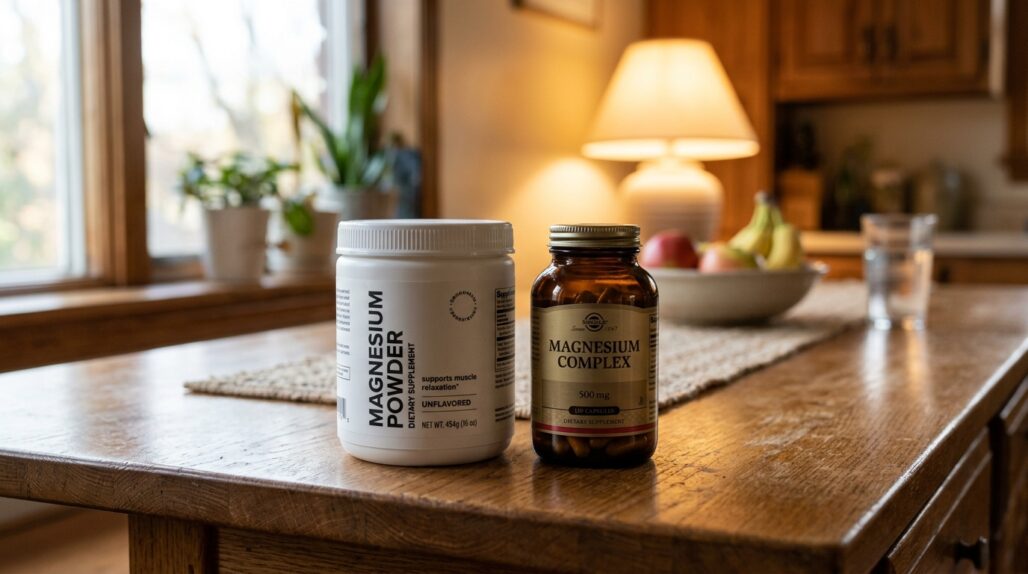
Buy Calm if you like the warm-drink wind-down habit, you want general relaxation, and a gentle laxative push is welcome or at least neutral for you. For that person it is a genuinely pleasant, fairly priced product.
Pass on Calm if you have a sensitive stomach, you are dosing magnesium nightly for sleep, or you want batch-level purity data on the label. In those cases a magnesium glycinate does the job with fewer trade-offs.
The honest verdict is not "Calm is bad." It is "Calm is a citrate, and a lot of people buying it for sleep actually wanted a glycinate."
FAQ
Does Natural Vitality Calm really make magnesium citrate in the glass? Yes. The tub contains magnesium carbonate and citric acid, and adding hot water reacts them into magnesium citrate, which is what produces the fizz and the drink you swallow.
Will Natural Vitality Calm give me diarrhea? It can. Citrate’s unabsorbed fraction pulls water into the bowel, so a full 350 mg serving may loosen your stool. Start at half a teaspoon and build up slowly, and split the dose if needed.
Is Calm safe for heavy metals? There is no published per-batch certificate of analysis from the brand, and independent testing is mixed and method-dependent. Trace heavy metals are common in any mineral supplement, but if disclosure matters to you, pick a brand that posts its COAs.
Is Calm or magnesium glycinate better for sleep? Glycinate is the better default for nightly sleep because it is absorbed well without the laxative effect. Calm can help with relaxation too, but only if your gut tolerates citrate at that dose.
How much magnesium is in one serving of Calm? The unflavored powder provides 350 mg of elemental magnesium per 2-teaspoon serving, which is right at the NIH’s 350 mg upper limit for supplemental magnesium, so most people should not stack it with other magnesium pills.
Can I take Calm with my medications? Check first. Magnesium can interfere with the absorption of certain antibiotics and thyroid medication, so space them several hours apart and ask a pharmacist if you take prescription drugs.
The verdict
Natural Vitality Calm earns its best-seller spot on ritual and taste, and at about $0.32 a serving it is fairly priced for what it is. The catch is the form. Calm is magnesium citrate, which is great for relaxation and occasional constipation but a poor match for sensitive guts or nightly sleep use.
On heavy metals, the evidence is mixed rather than damning – the bigger knock is that the brand does not publish per-batch testing at a price where we would expect it.
Our honest call: if you want the warm fizzy wind-down and do not mind a gentle laxative effect, Calm is a fine buy. If you mainly want sleep, calm, and a settled stomach, buy a magnesium glycinate instead. Your next step is to decide which job you are hiring magnesium for, then match the form to it – start there and the rest gets easy.
This article is for general information only and is not medical advice. Supplements can interact with medications and health conditions. Talk to your doctor or pharmacist before starting magnesium, especially if you are pregnant, have kidney problems, or take prescription drugs.
Reviewed by the UsefulVitamins Editorial Team.
