
Affiliate disclosure: this article contains affiliate links. As an Amazon Associate, UsefulVitamins.com earns from qualifying purchases at no extra cost to you.
If you searched for sleep supplements for shift workers, you have probably already tried a low-dose melatonin tablet, found it helped a little but not enough, and want the layer most articles skip: how light, timing, and a small number of evidence-backed adjuncts actually rebuild sleep architecture across a rotating roster.
Quick Answer: the circadian repair stack that actually works
No supplement reorganizes your circadian rhythm without coordinated light, timing, and behavior. Melatonin sets the clock signal. Glycine, magnesium glycinate, and theanine support the sleep window once you arrive in it.
- Best for: rotating-roster workers (healthcare, first responders, aviation, manufacturing) who already understand the basics and want the next protocol layer beyond a generic bedtime capsule.
- Not ideal for: anyone using supplements as a substitute for blackout, light exposure timing, or a clinician evaluation when symptoms persist past three months. The bottle without the protocol does not move the dial much.
- What to do first: install 10,000-lux bright light at desired wake time (30 to 60 minutes), full blackout for daytime sleep, clear blue-light blocking glasses in the last hour of a night shift, and a hard caffeine cutoff 6 hours before sleep window. Those four behaviors move circadian phase and sleep depth more reliably than any pill.
- Decision shortcut: if you only adopt one new layer this month, make it a 10,000-lux light box at desired wake time. The phase-shifting effect dwarfs any single capsule.
This article is the deeper companion to our broader best supplements for shift workers roundup. There the focus was the supplement landscape. Here the focus is the meta-protocol: light, timing, sleep architecture, and the receptor-level pharmacology of the adjuncts that survive scrutiny.
What shift work actually does to circadian biology
Shift work sleep disorder (SWSD) is the formal ICSD-3 diagnosis when a non-traditional schedule produces insomnia during the intended sleep window and excessive sleepiness during the intended wake window, persisting at least three months. The underlying biology is a misalignment between the central pacemaker and the imposed schedule.
The suprachiasmatic nucleus (SCN), a paired structure of roughly 20,000 neurons in the anterior hypothalamus, runs an endogenous near-24-hour rhythm. It is entrained primarily by light. Specifically, intrinsically photosensitive retinal ganglion cells (ipRGCs) expressing melanopsin project to the SCN via the retinohypothalamic tract. These cells respond most strongly to short-wavelength light around 480 nm (the blue-green band). The SCN then drives the master rhythm: cortisol awakening response in the early morning, melatonin onset roughly two hours before habitual sleep, core body temperature minimum about two hours before habitual wake.
For a night-shift worker, this architecture is inverted relative to the imposed schedule. Daylight on the commute home suppresses melatonin precisely when the worker needs the signal to rise. Core temperature is climbing while the worker is trying to sleep. Cortisol curve flattening (loss of the normal morning peak and evening trough) is a consistent finding in long-term shift workers and tracks with the cardiometabolic risk profile documented in a 2014 meta-analysis by Wang and colleagues showing elevated coronary event risk in night-shift populations.
The harshest backdrop: the International Agency for Research on Cancer classifies night shift work as a Group 2A probable human carcinogen, with the strongest signal in breast cancer. Supplements do not reverse this. The primary interventions, in the order they actually matter, are structural (employer schedule reform to limit cumulative night exposure), behavioral (light, blackout, fixed sleep window), and only then pharmacological or nutritional.
Actionable takeaway: think of shift work as an irreducible biological cost that the protocol below modifies at the margins. Honesty about the ceiling is part of the protocol.
Light therapy: the strongest entrainment signal you have

No supplement competes with light for phase-shifting power. The human circadian system's phase response curve to a single bright light pulse, mapped by Khalsa and colleagues in 2003, shows that 6.7 hours of bright light timed in the late biological night can shift dim-light melatonin onset by roughly 1 to 2 hours in a single exposure. Even shorter exposures of 30 to 60 minutes at 10,000 lux produce reliable phase advances when delivered at the right time on the curve.
Light timing logic for night workers:
- At desired wake time (your "morning"): 30 to 60 minutes of 10,000-lux bright light therapy box at roughly arm's length, eyes open but not staring at the panel. This is the dominant entrainment signal. For someone working 11 p.m. to 7 a.m. who wants to sleep from 9 a.m. to 4 p.m., the light box belongs at 4 p.m., not at noon.
- At shift start: workplace lighting bright enough to suppress melatonin. Most workplaces fall short. A second light box at the desk during the first 1 to 2 hours of shift is reasonable for fixed-night workers.
- Last hour of shift, commute home, and immediately before bed: clear blue-blocking glasses (filtering 380 to 500 nm) to allow melatonin to rise before the sleep window. Amber lenses can be used in the bedroom transition but are not required outdoors during the commute, where you also need to see safely.
- During daytime sleep: full blackout curtains plus a contoured sleep mask. Even modest light leak through eyelids during daytime sleep suppresses pineal melatonin output and fragments the second half of the sleep period.
The Czeisler group's classic work on bright light induction of strong phase advances and delays remains the cleanest demonstration that timed bright light can functionally re-entrain humans to an imposed schedule. Phase delays (later sleep) are easier than phase advances (earlier sleep) because the endogenous period is slightly longer than 24 hours. For night workers, this means the body is biologically more cooperative with forward-rotating rosters (day to evening to night) than backward-rotating ones.
Actionable takeaway: if you can afford one piece of equipment for SWSD this year, buy a 10,000-lux light therapy box from a reputable medical-device manufacturer and use it at your desired wake time. It outperforms any single capsule on this list.
Melatonin protocols: phase response, not just sedation
The melatonin section of the broader best supplements for shift workers article covered the dose-trial gap (0.3 to 0.5 mg trial-supported versus 3 to 10 mg retail dominant). Here the deeper layer is timing logic.
Melatonin's own phase response curve is roughly the mirror image of the light PRC. Exogenous melatonin taken in the late biological day (your "evening") causes phase advances. Taken in the early biological day, it causes phase delays. The clinical relevance for shift workers is that timing matters more than dose for circadian entrainment, while dose matters more than timing for sedation.
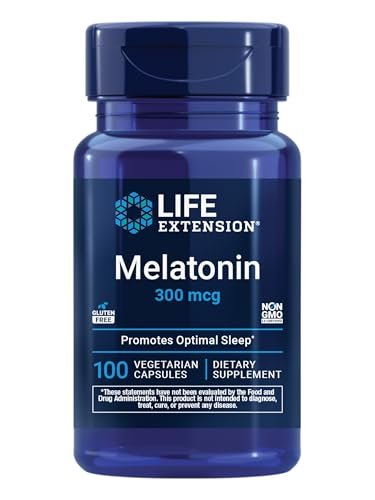
Phase-advancing protocol (you want to sleep earlier): low-dose melatonin (0.3 to 0.5 mg) 30 to 60 minutes before the intended new sleep window. The 2018 Sletten meta-analysis of melatonin for SWSD found consistent reductions in sleep-onset latency of roughly 6 to 8 minutes and a small reliable increase in total daytime sleep of about 20 to 25 minutes at this dose range. Burgess and colleagues showed that 0.3 to 0.5 mg produces measurable phase advances of dim-light melatonin onset, while doses above 3 mg do not advance phase more and remain in circulation long enough to cause grogginess into the next wake cycle.
Phase-delaying protocol (you want to sleep later, common in westward-shifting schedules): low-dose melatonin in the morning of your old schedule, paired with bright light in the evening. This is a clinician-supervised protocol; do not improvise it on a complex rotating roster.
The 2020 AASM clinical practice guideline for intrinsic circadian rhythm sleep-wake disorders places behavioral measures and timed light first, with melatonin as a conditional adjunct for SWSD. Wakefulness-promoting agents (modafinil, armodafinil) are reserved for documented residual sleepiness despite good sleep hygiene and are prescription-only after a clinician rules out untreated sleep apnea. They are mentioned here for completeness; they are not supplements and do not belong in a self-managed stack.
Interaction watch: fluvoxamine (an SSRI used for OCD) strongly inhibits CYP1A2 and CYP2C19, the enzymes that metabolize melatonin, and can raise melatonin levels several-fold per the Drugs.com fluvoxamine monograph. Warfarin coadministration has reported bleeding interactions. Pregnant and nursing workers should defer melatonin until cleared by an OBGYN.
Beyond melatonin: the architecture layer
Once the light and melatonin signals are aligned, three supplements have the cleanest mechanism-plus-RCT signal for sleep depth and continuity during the daytime sleep window.
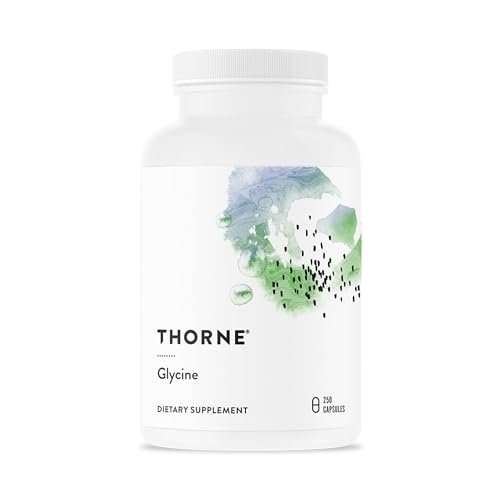
Glycine 3 g at sleep onset
Mechanism: glycine is an inhibitory amino acid that acts as a co-agonist at the NMDA receptor in the SCN and prefrontal cortex. At a 3 g oral dose it crosses the blood-brain barrier, modulates NMDA receptor signaling, and reliably produces a small drop in core body temperature, which is one of the physiological signals that initiates and deepens sleep.
What the trials show: the Yamadera et al. 2007 RCT of 3 g glycine before bed in adults with mild subjective insomnia found improved sleep quality on the Pittsburgh Sleep Quality Index, shorter sleep-onset latency, and polysomnographic shifts including reduced wakefulness after sleep onset and improved slow-wave sleep architecture. Sample sizes are small (n under 30) and there is no SWSD-specific glycine RCT, but the mechanism translates directly to the core-temperature physiology that daytime sleepers struggle with.
Dose used in trials: 3 g of plain glycine powder dissolved in a small glass of water, taken 30 to 60 minutes before the sleep window. The dose-trial-supplement gap is small here because most capsule products are honestly labeled; the gap is that most consumers buy 500 mg capsules and would need six of them per dose.
Form: USP-grade glycine powder. Skip combination "amino acid sleep" blends that bury 300 mg of glycine in a proprietary formula.
Skip if: you are on clozapine (theoretical interaction at the NMDA receptor) without prescriber review.
Magnesium glycinate 200 to 400 mg
Mechanism: magnesium is a cofactor for NMDA receptor modulation and GABA-A allosteric activity, both of which gate sleep depth and arousal threshold. Shift workers carry a high baseline risk of subclinical magnesium deficit from diet quality drift and stress-driven urinary excretion.
What the trials show: RCTs in older adults with insomnia have shown sleep-onset latency reductions of roughly 15 to 20 minutes at 320 to 500 mg of elemental magnesium daily over 8 weeks. There are no SWSD-specific magnesium architecture trials.
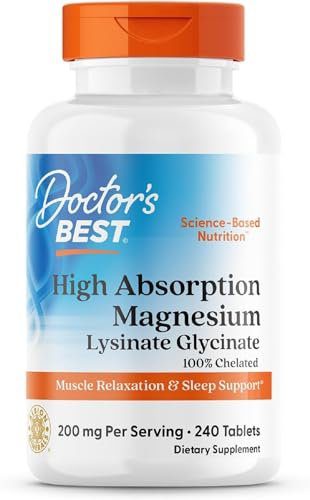
Dose: 200 to 400 mg of elemental magnesium taken at the start of the sleep window. The glycine in glycinate adds a second sleep-supportive mechanism on top of the magnesium itself.
Form: magnesium glycinate or bisglycinate. Skip magnesium oxide for daily sleep use; bioavailability is poor and the GI burden is real.
L-theanine 200 mg
Mechanism: L-theanine modulates glutamate uptake and reliably increases alpha-wave EEG activity, the signature of relaxed alertness. For shift workers it has a dual role: paired with caffeine pre-shift in a 1:1 or 2:1 ratio to smooth the jittery edge without sacrificing focus, or alone at the start of the sleep window to reduce sleep-onset latency.
What the trials show: a 2019 double-blind RCT of 200 mg/day L-theanine in stressed adults found significant improvements in sleep-onset latency, sleep efficiency, and self-reported stress over 4 weeks compared with placebo. Effect sizes were small to moderate.
Form: Suntheanine (patented L-isomer with the cleanest trial data) or any standardized L-theanine, not D,L-theanine.
Caffeine + theanine timing note: front-load caffeine to the first half of your shift, hard stop at least 6 hours before your sleep window. Theanine can be paired with the early caffeine doses and can also be taken standalone pre-sleep without conflict.
What's different for shift workers versus day workers
Several health risks are elevated by chronic shift work and supplements modify the edges, not the core. Naming them honestly is part of the voice of an evidence-led protocol.
- Cardiometabolic risk: the 2014 Wang meta-analysis and subsequent cohort work consistently show elevated risk of type 2 diabetes, hypertension, and atherosclerotic cardiovascular disease in long-term shift workers. Cortisol curve flattening and insulin resistance are mechanistic mediators. Omega-3 (1 to 2 g EPA+DHA daily) and a corrected lipid panel matter more than another sleep capsule.
- Vitamin D status: cross-sectional data in shift workers consistently show lower 25(OH)D than day-shift controls, driven by reduced daylight exposure. Most workers benefit from 2,000 to 4,000 IU/day D3, titrated to a serum target of 30 to 50 ng/mL.
- Depression and anxiety risk: chronic shift work meaningfully elevates depressive symptom prevalence. This is a clinician-referral lane, not a supplement lane.
- Cancer risk: the IARC Group 2A classification stands. No supplement reverses it. Structural change (schedule reform, limiting cumulative night exposure) is the primary intervention.
When supplements are not enough
Stop self-managing and contact a clinician or sleep specialist if any of the following apply.
- Excessive daytime sleepiness severe enough to cause near-misses driving home from shift. This is an urgent safety issue. Prescription wakefulness-promoting agents exist for documented residual SWSD sleepiness under clinician oversight.
- Persistent low mood, hopelessness, or thoughts of self-harm. Contact the 988 Suicide and Crisis Lifeline (US), your local crisis line, or a clinician promptly.
- Witnessed apneas, loud snoring with daytime fatigue, or unexplained morning headaches. Untreated obstructive sleep apnea masquerading as SWSD is common.
- Symptoms persisting beyond three months on a stable schedule despite good behavioral structure.
FAQ
Should I use the same melatonin dose I used as a day worker?
Usually a lower dose, used as a timing signal rather than a sedative. 0.3 to 0.5 mg taken 30 to 60 minutes before your intended daytime sleep window is the trial-supported dose for both sleep onset and phase shifting. Higher doses are not more effective for shift workers and often produce grogginess into the next shift. For a deeper brand-by-brand comparison, see our best melatonin supplement guide.
Is a 10,000-lux light box really worth it over a sunny window?
For most night workers, yes. A bright outdoor sky is brighter than any indoor light box but is rarely available at your biological wake time if you are sleeping during the day. A standardized 10,000-lux box delivers a predictable, timing-reproducible dose at your kitchen table. The phase-shifting work referenced above used controlled bright-light protocols precisely because workplace and home lighting are not bright enough.
Can I use blue-blocking glasses instead of blackout curtains?
No, those are two different interventions. Blue-blockers reduce melatonin suppression from screens and ambient blue light in the hour before sleep. Blackout curtains and a sleep mask reduce light reaching the retina during sleep. Daytime sleep needs both layers, because room light still suppresses melatonin even through closed eyelids.
How long should I expect this protocol to take to work?
Reliable phase shifts typically take 2 to 4 weeks of consistent light, melatonin, and behavior. The architecture supplements (glycine, magnesium, theanine) typically show subjective benefit within 1 to 2 weeks. If you see no benefit at 6 to 8 weeks of consistent protocol, that is a sleep-clinic conversation.
Conclusion: the bottom line on sleep supplements for shift workers
For shift work sleep disorder, the meta-protocol is light first, melatonin as a timing signal not a sedative, and a small architecture stack (glycine 3 g, magnesium glycinate 200 to 400 mg, L-theanine 200 mg) layered on top of full blackout and a fixed daytime sleep window. The cardiometabolic and oncologic backdrop of chronic night work does not respond to capsules; structural and behavioral changes do most of the actual work. Supplements modify the edges. Light, timing, and schedule move the center of mass.
Next steps:
- Add a 10,000-lux bright light therapy box at your desired wake time before adjusting your supplement stack. This is the highest-yield change.
- Buy melatonin at 0.3 to 1 mg, not 5 to 10 mg, and time it 30 to 60 minutes before your intended sleep window.
- For UV's evidence framework and review methodology, see how we review supplements and Maria Rodriguez's author page.
Reviewed by Maria Rodriguez, MS Nutrition Science, focused on cognitive and mood biochemistry.
Top picks on Amazon
As an Amazon Associate, I earn from qualifying purchases. Product recommendations are based on real reviews and independent research.
